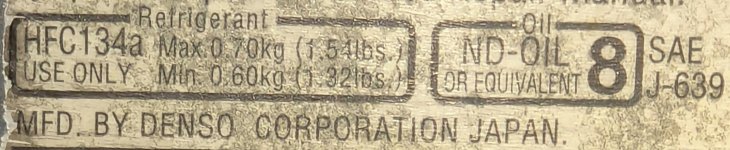
I'm in a battle with a Toyota dealer about the a/c or lack thereof on the 2006 4R I bought in June. I need to know the total capacity of freon for the system in lbs. Thanks!
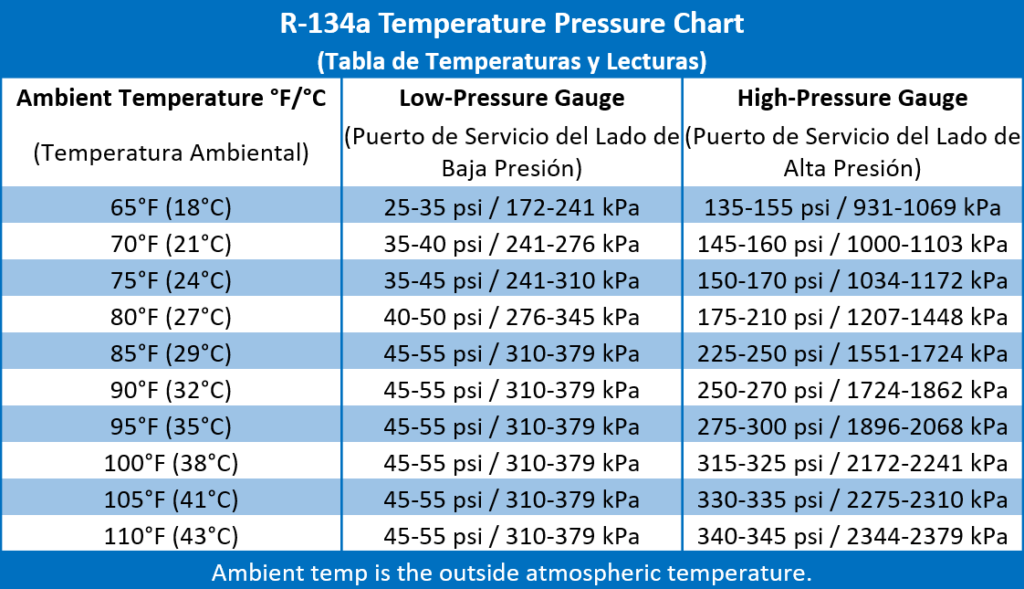
There is no pressure rating. The pressure inside will vary depending on how hot it is outside. Systems are filled by weight, not volume or pressure of the r134a
There is no pressure rating. The pressure inside will vary depending on how hot it is outside. Systems are filled by weight, not volume or pressure of the r134a
am lil confused here: so if ur system needs some top up...how would you know the exct weight to put in?....i though it should be pressure based, so that you can know when its full from the guages?
There is no pressure rating. The pressure inside will vary depending on how hot it is outside. Systems are filled by weight, not volume or pressure of the r134a
4.7 06 T4R has 1.46lbs of refrigerant. I’m sure there is a tolerance there.
My system was leaking and had gotten down to .16lbs.
Hoping that it holds for a while. They added dye so my second hopeful wish is that the dye shows up on a line and not the evaporator in the box. Replacing that costs about $1200-$1500.
If it did though... I’d get them to replace the solenoid control for the HVAC at the same time as it is causing a clicking noise. Which seems to be typical on he 4th gens.
I'm in a battle with a Toyota dealer about the a/c or lack thereof on the 2006 4R I bought in June. I need to know the total capacity of freon for the system in lbs. Thanks!
The third way is to use the sight glass. Fill until the bubbles go away. You should see liquid when compressor is running and bubbles when it disengages. Fluid all the time = too much. Bubbles all the time = too little. (Check while engine is at 1500 rpm.
The third way is to use the sight glass. Fill until the bubbles go away. You should see liquid when compressor is running and bubbles when it disengages. Fluid all the time = too much. Bubbles all the time = too little. (Check while engine is at 1500 rpm.