swapped_mini
New member
Welp, my truck decided to blow a headgasket last week and I decided to take a gamble on this motor since the price was right.
The story is that it came from a truck with only 5,000 miles on it that had an engine bay fire. It ended up at the dealer since it was under warranty and instead of replacing external parts they just put a whole new motor into the customers car. It was in the way at the dealership so one of the mechanics gave it to his friend who had a tacoma so he could have a spare engine. It was supposed to be a solid motor at the time. I asked if it ran when pulled and was told yes, but after looking at the wiring I doubt it was started. All of this was second hand from the mechanic, at it happened 20 plus years ago. It sat in this guys garage since the late 90's until he decides to list it on Craigslist this past weekend.
Enter me, in need of a motor and willing to take chances.
I checked it out yesterday and the owners were happy to let me take my time inspecting it. As I am looking it over it clearly is a low miles engine as the inside of the intake is ridiculously clean, appears to have the factory plugs in it, NGK's in the passenger and Denso's in the driver. Piston tops have some carbon but a thin layer. No evidence of rodents in the exhaust or intake. Still had 5 quarts of oil in it, it appeared used but was nice and clean so I assume it is the oil that was last run in it 20 years ago and it looked just fine, no metal etc. The valve cover gaskets never leaked a drop! The engine turns over very smoothly, they had turned it before I got there so I can't say it wasn't stuck the first time, but I was told it wasn't.
Everything is going well until I do a leak down test. The cylinder nearest where the fire was, front on the drivers side (2?), only reads about 28 psi vs around 80 for the others with a 90psi input. I am not sure what the % would be because my chart doesn't go that low, but clearly there is an issue. There air is being lost out the intake and exhaust and I can't detect any coming out of the oil filler cap or cooling system.
At that point I was going to walk away but we came to a price that I couldn't turn down, basically less than what it is likely worth as parts.
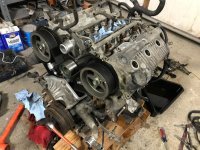
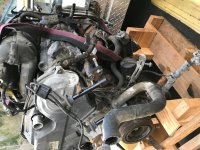
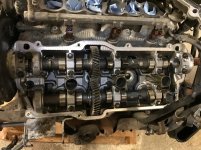
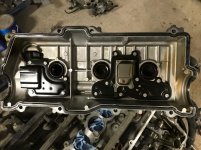
I pulled the intake and drivers side exhaust manifold last night and the valves look totally fine, no different than any of the other cylinders. I checked the lash and the intakes are less than .008 which was my thinnest feeler, the exhaust was .012 and .013 if I remember correctly. I pulled the melted timing cover off as well and the timing belt looks brand new, I don't see any signs of heat damage, although I obviously won't be using the belt ever. I appears that the heat was concentrated right on the corner of the motor, it melted the oil filler cap and timing cover, totally burned the wiring going to the starter and alternator, melted the OBD1 connector, but didn't touch either radiator hose or oil cooler hoses. Underneath the valve covers looks nearly brand new and I don't see any discoloration from heat or anything at all that would signal problems. the silicone on the front semi-circle plug is still pliable and doesn't seem affected by heat. The spark plug tube gaskets are also soft and pliable and seem to have no damage, if the head had gotten very hot I would think those would show signs of heat. There is what I believe to be dry chemical fire extinguisher stuff all over outside of the motor but none of it seems to have made it inside. It honestly looks like they put the fire out quickly especially because a fuel hose is burned in half and I would have expected that to cause a total loss of the car, but the fire seems to have been contained to just that corner of the motor.
The valves appear to operate normally but obviously aren't sealing tight. I am not sure whether I should pull the cams to try and diagnose the problem, maybe some light hammer taps on the valve stems could seat them if they are just stuck? Pull the head and take it to a machine shop for diagnosis/rebuild? Put it in the truck and see if the valves seat under compression?
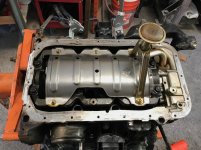
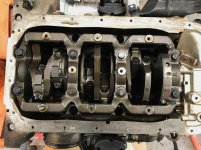
I am pretty tempted to fire this thing but at the same time don't want to do any damage to what may be a perfectly good and nearly new bottom end. From what I can see of the cylinder walls they look great, like a fresh hone.
Of course I will prime it and do my best to oil the cylinders before firing if I go that route, mostly interested in what you all think could be the issue with the valves and what route is best. This is my third 3.4 but I have not taken one of these heads apart yet.
I think it is from a 99, not sure whether a tacoma or 4 runner. It has brown injectors and the second dipstick location is drilled and plugged which puts it in that range I think, and I was told this happened in the 90's.
I will try to post some pictures.
The story is that it came from a truck with only 5,000 miles on it that had an engine bay fire. It ended up at the dealer since it was under warranty and instead of replacing external parts they just put a whole new motor into the customers car. It was in the way at the dealership so one of the mechanics gave it to his friend who had a tacoma so he could have a spare engine. It was supposed to be a solid motor at the time. I asked if it ran when pulled and was told yes, but after looking at the wiring I doubt it was started. All of this was second hand from the mechanic, at it happened 20 plus years ago. It sat in this guys garage since the late 90's until he decides to list it on Craigslist this past weekend.
Enter me, in need of a motor and willing to take chances.
I checked it out yesterday and the owners were happy to let me take my time inspecting it. As I am looking it over it clearly is a low miles engine as the inside of the intake is ridiculously clean, appears to have the factory plugs in it, NGK's in the passenger and Denso's in the driver. Piston tops have some carbon but a thin layer. No evidence of rodents in the exhaust or intake. Still had 5 quarts of oil in it, it appeared used but was nice and clean so I assume it is the oil that was last run in it 20 years ago and it looked just fine, no metal etc. The valve cover gaskets never leaked a drop! The engine turns over very smoothly, they had turned it before I got there so I can't say it wasn't stuck the first time, but I was told it wasn't.
Everything is going well until I do a leak down test. The cylinder nearest where the fire was, front on the drivers side (2?), only reads about 28 psi vs around 80 for the others with a 90psi input. I am not sure what the % would be because my chart doesn't go that low, but clearly there is an issue. There air is being lost out the intake and exhaust and I can't detect any coming out of the oil filler cap or cooling system.
At that point I was going to walk away but we came to a price that I couldn't turn down, basically less than what it is likely worth as parts.
I pulled the intake and drivers side exhaust manifold last night and the valves look totally fine, no different than any of the other cylinders. I checked the lash and the intakes are less than .008 which was my thinnest feeler, the exhaust was .012 and .013 if I remember correctly. I pulled the melted timing cover off as well and the timing belt looks brand new, I don't see any signs of heat damage, although I obviously won't be using the belt ever. I appears that the heat was concentrated right on the corner of the motor, it melted the oil filler cap and timing cover, totally burned the wiring going to the starter and alternator, melted the OBD1 connector, but didn't touch either radiator hose or oil cooler hoses. Underneath the valve covers looks nearly brand new and I don't see any discoloration from heat or anything at all that would signal problems. the silicone on the front semi-circle plug is still pliable and doesn't seem affected by heat. The spark plug tube gaskets are also soft and pliable and seem to have no damage, if the head had gotten very hot I would think those would show signs of heat. There is what I believe to be dry chemical fire extinguisher stuff all over outside of the motor but none of it seems to have made it inside. It honestly looks like they put the fire out quickly especially because a fuel hose is burned in half and I would have expected that to cause a total loss of the car, but the fire seems to have been contained to just that corner of the motor.
The valves appear to operate normally but obviously aren't sealing tight. I am not sure whether I should pull the cams to try and diagnose the problem, maybe some light hammer taps on the valve stems could seat them if they are just stuck? Pull the head and take it to a machine shop for diagnosis/rebuild? Put it in the truck and see if the valves seat under compression?
I am pretty tempted to fire this thing but at the same time don't want to do any damage to what may be a perfectly good and nearly new bottom end. From what I can see of the cylinder walls they look great, like a fresh hone.
Of course I will prime it and do my best to oil the cylinders before firing if I go that route, mostly interested in what you all think could be the issue with the valves and what route is best. This is my third 3.4 but I have not taken one of these heads apart yet.
I think it is from a 99, not sure whether a tacoma or 4 runner. It has brown injectors and the second dipstick location is drilled and plugged which puts it in that range I think, and I was told this happened in the 90's.
I will try to post some pictures.
Last edited: