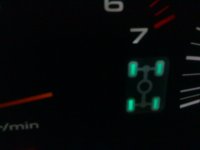
I have a 97 4wd sr5 and I think I may be using the 4wd wrong. My understanding was if you're going to be driving highway speeds and want 4wd, you need to park the truck or be stopped and in neutral and shift it into 4wd high. Then you would just drive 4wd high all day, wether stop and go or highway. 4wd lo you only use if you're stuck or towing. Is this wrong? How come when I'm in 4wd high and say in a parking lot trying to park, it feels like it barely wants to move and you really have to hit the throttle to get it going, and it feels like you're doing something wrong. CAn you please explain to me what I'm doing wrong? And you can never shift from one to another while moving, right?

You are using an out of date browser. It may not display this or other websites correctly.
You should upgrade or use an alternative browser.
You should upgrade or use an alternative browser.
A little help understanding 4wd
- Thread starter Muti007
- Start date
Register to hide this ad

496 BB
New member
You dont want to use 4wd on dry pavement. What you feel is the front wheels engaged thru the transfer case. Its easy to break parts when on dry pavement and 4wd is you turn steering wheel too much ect... It also kills your gas mileage. You can put the 4wd in High upto I think like 55mph and does not need to be in park or neutral. 4 Low you have to be stopped and in neutral to do so.
You dont want to use 4wd on dry pavement. What you feel is the front wheels engaged thru the transfer case. Its easy to break parts when on dry pavement and 4wd is you turn steering wheel too much ect... It also kills your gas mileage. You can put the 4wd in High upto I think like 55mph and does not need to be in park or neutral. 4 Low you have to be stopped and in neutral to do so.
Ok thank you. So driving in 4wd high in the wrong condition, ie dry road, can damage it? So if it's snowing out or raining real bad, is it ok then? We get alot of flooding around here and I was thinking in rain with the possibility of deep puddles or flooding, I should be in 4h. Is that ok or do yiu want to avoid 4wd if you can? I'm surprised that yiu can actually break things if the road conditions aren't right, now I'm scared to use it.

jsmarine
New member
You don't need 4wd for rain either IMO, you should treat 4wd kind of like a spare tire, you don't use it until you need it.
As far as Low or Hi range, you would use Hi range if you are going to be traveling faster than maybe 20mph and Low range for creeping along at 5-10mph. Hope that makes sense
As far as Low or Hi range, you would use Hi range if you are going to be traveling faster than maybe 20mph and Low range for creeping along at 5-10mph. Hope that makes sense
Last edited:
496 BB
New member
Hate to tell you this but 4wd is not going to do squat for puddles or rain in general. The water doesnt care and 4wd wont help at all unless you know how to use to your advantage but thats a whole nother story and unless you mudrun or play on trails you wont understand. Thats the misconception people have about 4wd....they think its invinsible. Its not....by far. If you dont make the front wheels work for you its pointless anyways in an advanced setting. I hardly ever put it in 4wd even with 10" of snow on the ground. I like the challenge of 2wd.
But for city folk (lol) when you feel uncomfortable put it in 4wd going under 55 mph and you will magically have balls of steel
In realality you should use it for poor traction enviroments. If your experiencing this from rain you have bigger problems to worry about cause your about to float away! Lol.
But for city folk (lol) when you feel uncomfortable put it in 4wd going under 55 mph and you will magically have balls of steel
In realality you should use it for poor traction enviroments. If your experiencing this from rain you have bigger problems to worry about cause your about to float away! Lol.

Clemsonfan15
New member
Use 4 hi for almost everything. 4 lo keeps you in a low gear and revs really high when you go too fast. You can engage 4 hi until like 59 or 55 MPH or something like that by just pressing the button on the side of the 4wd shifter. If you are going too fast the 4wd light indicator will just flash at you and it will not shift into 4wd.
If you are going straight you are fine using 4wd, but do not ever use it to turn on dry pavement. It will cause big problems.
If you are going straight you are fine using 4wd, but do not ever use it to turn on dry pavement. It will cause big problems.

turbodudey2
New member
Dry pavement won't hurt 4wd
Unless you have a locking front differential, you're not going to hurt anything by driving on dry pavement in 4wd.
You will probably get poor gas milage, and wear your tires more than necessary if you drive in 4wd all the time, but you're certainly not going to break anything.
Think of it this way: Lots of vehicles are front wheel drive, and they work just fine. Simply adding FWD to the already RWD, isn't going to damage anything. (that's what it was designed to do afterall) Other than the possible reduction in fuel economy and tire wear, that's about the worst that will happen driving in 4wd on dry pavement. (and turning shaply won't hurt anything either)
Other than that, I agree... it's really not "necessary" most of the time, unless you encounter lots of mud, snow, and steep grades all the time.
Unless you have a locking front differential, you're not going to hurt anything by driving on dry pavement in 4wd.
You will probably get poor gas milage, and wear your tires more than necessary if you drive in 4wd all the time, but you're certainly not going to break anything.
Think of it this way: Lots of vehicles are front wheel drive, and they work just fine.
Simply adding FWD to the already RWD, isn't going to damage anything. (that's what it was designed to do afterall) Other than the possible reduction in fuel economy and tire wear, that's about the worst that will happen driving in 4wd on dry pavement. (and turning shaply won't hurt anything either)Other than that, I agree... it's really not "necessary" most of the time, unless you encounter lots of mud, snow, and steep grades all the time.
Last edited:
Clemsonfan15
New member
Unless you have a locking front differential, you're not going to hurt anything by driving on dry pavement in 4wd.
You will probably get poor gas milage, and wear your tires more than necessary if you drive in 4wd all the time, but you're certainly not going to break anything.
Think of it this way: Lots of vehicles are front wheel drive, and they work just fine.
Other than that, I agree... it's really not "necessary" most of the time, unless you encounter lots of mud, snow, and steep grades all the time.
That's totally wrong. If you take turns with 4wd engaged you are going to mess something up.

redcbs
New member
Let's not forget
You can have the best 4wd system and brakes in the world, but without a good set of tires, might as well have the world's best pedal drive system. Yes, 4wd will help better distribute the engine power, but if you dont have any friction with the ground....
Good luck living up North... Then again, sounds like people know how to drive there, rather than down here in ATL where a drop of water hits the pavement and everyone forgets how to drive. :redbrick:
You can have the best 4wd system and brakes in the world, but without a good set of tires, might as well have the world's best pedal drive system. Yes, 4wd will help better distribute the engine power, but if you dont have any friction with the ground....
Good luck living up North... Then again, sounds like people know how to drive there, rather than down here in ATL where a drop of water hits the pavement and everyone forgets how to drive. :redbrick:
turbodudey2
New member
That's totally wrong. If you take turns with 4wd engaged you are going to mess something up.
What exactly do you think will get "messed up"?
I'm just curious...
Clemsonfan15
New member
What exactly do you think will get "messed up"?
I'm just curious...
3rd Gens don't have a center differential therefore binding will occur when turning because the wheels don't turn at the same speeds. Binding causes breakage.
Not sure where you are getting your information from, but this has been discussed so many times around here.

twitchee2
Member
When in 4wd, the front and rear tires are locked together by the transfer case. when you make a turn the front and rear tires spin at different rates. if there is no place for the stress to release (ie: tires spinning on slippery or loose surfaces) you can cause problems. same idea as a rear locker ( you will hear tires cherping when you turn because the inside turns slower then the outside. if you have a 99+(i think) 4runner, you can use 4high in any condition because it has a selectable center differential until you lock the center diff, then it becomes true 4wd and you cannot drive on dry pavement. Pre 99 is all true 4wd and cannot be driven on dry pavement. rule of thumb, you dont need 4wd on the street unless you are in deep/slippery snow or off road.
hope that helps
hope that helps
turbodudey2
New member
3rd Gens don't have a center differential therefore binding will occur when turning because the wheels don't turn at the same speeds. Binding causes breakage.
Not sure where you are getting your information from, but this has been discussed so many times around here.
Yes, I understand this. However, my point is that the difference in radius between the front turning circle and the rear is still quite small. (4runners don't exactly turn on a dime) And especially at speed, the difference between the front and rear becomes very small.
I haven't been on the this forum much, so I haven't seen the other discussions. I was just trying to dispell the fear that the transfer case would blow up if you engaged 4wd on pavement. You'll get the tire wear, and perhaps a little extra heat in the t-case, sure. Usually not catastrophic failure.
As we said, it's never really necessary to do that, so it shouldn't really be a problem to begin with. That's all.

blue4r
New member
When in 4wd, the front and rear tires are locked together by the transfer case. when you make a turn the front and rear tires spin at different rates. if there is no place for the stress to release (ie: tires spinning on slippery or loose surfaces) you can cause problems. same idea as a rear locker ( you will hear tires cherping when you turn because the inside turns slower then the outside. if you have a 99+(i think) 4runner, you can use 4high in any condition because it has a selectable center differential until you lock the center diff, then it becomes true 4wd and you cannot drive on dry pavement. Pre 99 is all true 4wd and cannot be driven on dry pavement. rule of thumb, you dont need 4wd on the street unless you are in deep/slippery snow or off road.
hope that helps
Correct. My truck rides happily all day in 4HI (unlocked) on dry pavement without any tire squealing or steering wheel difficulty whatsoever.
Correct. My truck rides happily all day in 4HI (unlocked) on dry pavement without any tire squealing or steering wheel difficulty whatsoever.
Doesn't that contradict what everyone else is saying? I think I'm more confused now then before I started this thread, lol.

Mr. Leary
New member
Ok thank you. So driving in 4wd high in the wrong condition, ie dry road, can damage it? So if it's snowing out or raining real bad, is it ok then? We get alot of flooding around here and I was thinking in rain with the possibility of deep puddles or flooding, I should be in 4h. Is that ok or do yiu want to avoid 4wd if you can? I'm surprised that yiu can actually break things if the road conditions aren't right, now I'm scared to use it.
Put it in 4hi on ice or on dirt roads going below 40 or so (55 is what the engineers say, but above 40, you are not feeling the benefits of 4wd anyways... btw, most of those race trucks you see at Baja ar 2wd)
You don't need 4wd for rain either IMO, you should treat 4wd kind of like a spare tire, you don't use it until you need it.
As far as Low or Hi range, you would use Hi range if you are going to be traveling faster than maybe 20mph and Low range for creeping along at 5-10mph. Hope that makes sense
4lo is brute force. It should be used, as noted at low speeds, for steep mountain climbs, etc. If you are doing a deep water crossing (flooding), you need to be in 4lo in case you come across a submerged obstacle and need the extra torque to get over it. Pretty much anything harder and slower than a poorly maintained road should be done in 4lo to give your transmission a break.

brian2sun
Elite Member
Here's a breakdown:
Turboduty2, you are incorrect. Driving in 4WD on pavement can and will bind and damage your transfer case and other drive components. That's the reason they came up with AWD. AWD allows slippage so the front and rear axles may be allowed to turn at different speeds. In 4x4, they are locked together and must move at the same speed, and although it may take a while to break, continued driving on pavement (even when it's wet) will screw your 4x4 up.
The AWD w/ 4x4 feature of the 99+ Limited models and all '01 and '02 models is a cool thing! They made this feature so you can drive in (a form of) 4x4 on wet roads, but still have regular 4Hi and 4Lo for off road. For the rest of us pre-'99s, it's 2wd on pavement.
Turboduty2, you are incorrect. Driving in 4WD on pavement can and will bind and damage your transfer case and other drive components. That's the reason they came up with AWD. AWD allows slippage so the front and rear axles may be allowed to turn at different speeds. In 4x4, they are locked together and must move at the same speed, and although it may take a while to break, continued driving on pavement (even when it's wet) will screw your 4x4 up.
The AWD w/ 4x4 feature of the 99+ Limited models and all '01 and '02 models is a cool thing! They made this feature so you can drive in (a form of) 4x4 on wet roads, but still have regular 4Hi and 4Lo for off road. For the rest of us pre-'99s, it's 2wd on pavement.
blue4r
New member
Doesn't that contradict what everyone else is saying? I think I'm more confused now then before I started this thread, lol.
Do you have a button on your 4wd shifter that says "4wd"? Around 1999 some 4runners and surfs got a center diff, which made it possible to drive in 4wd on dry pavement. I can only drive in 4HI on dry pavement by pressing the 4wd button WITHOUT moving the transfer case shifter from 2HI) As long as the amber light is off the truck can be in 4HI all day, and apart from the green tires displayed on the dash 4wd display, the difference on dry pavement between 2 and 4wd is almost none.
You can also check out the 3rd gen section of this:
Toyota 4Runner - Wikipedia, the free encyclopedia