According to Odyssey, 31M-PC2150 is not suitable for our application

jicko

New member
FYI. So a single Odyssey 31M-PC2150 or DieHard Platinum 31M is "not good enough". :-(

ARB Fridge cut off setting "HIGH" at 11.8V

As a general rule, most stock automotive alternators are not meant to be deep discharge recovery chargers. They are meant to do very shallow top off and maintain the battery at a full state of charge while supplying the loads of the vehicle when in use. Minimum battery installation voltage is 12.65V or charging would be recommended prior to installation. This is about 85% state of charge or 15% depth of discharge (DOD) for any ODYSSEY battery, however you wish to look at it. At 15% DOD you would need to return about 16Ah back into the battery to return it to a full state of charge. Assuming your alternator charges at full available (less vehicle loads) current for 5-10 minutes at about 100A (for example) it would get 8-16Ah returned to the battery depending on how long it get’s full current and at what voltage. Most systems charge at about 14.2V.

odyssey_battery_01-vi.png


Based on the charge chart below, at 11.2V with a PC2150 at 100% DOD it would take 1.6 hours at a constant current of 100A to get it to 80% state of charge then an additional charge of 4 hours at 14.7V to complete the charging process.

odyssey_battery_02-vi.png


If the vehicles charging system is not getting the battery fully charged with the amount of driving being done, then periodic auxiliary charging would be required to properly maintain the battery. Low voltage cutoffs are to protect the battery from over-discharge or going so low the vehicle won’t start or to protect electronics that won’t run properly below a certain voltages where a battery is a power supply. The OEM group 24F battery is rated at 50Ah, 95 RCM and 710 CCA. If a comparable 50Ah rated PC1230 ODYSSEY battery for example needs to be at least 12.2V (50% DOD) to turn over the engine then the PC2150 needs to be at least 11.9V or 25% state of charge to do the same thing with the understanding that at 75% state of charge a standard alternator charging system will never truly get the battery back up to a full state of charge regardless of how long the vehicle runs.

We would recommend a dual battery with isolator system with an upgraded higher am alternator with a charging voltage of at least 14.5V (not to exceed 15.0V) for this type of auxiliary load situation and possibly an auxiliary charger at 35A minimum and 14.7V absorption voltage as well to ensure full charge.

Your setup will prevent over discharge of the battery but it will not fully charge the battery properly and at 11.8V it may not start the vehicle. Consistent undercharging will lead to premature failure due to sulfation or walk down voltage of the battery until it won’t perform properly to start your vehicle or even run the fridge. This is not an ideal setup.

Kathy Mitchell
EnerSys/OdysseyBattery Representative
 
Last edited:
Register to hide this ad
The amount of time it would take for your 4Runner to recharge a deep cycle battery after powering your portable fridge is unreasonable.
:rockon:
 
FYI. So a single Odyssey 31M-PC2150 or DieHard Platinum 31M is "not good enough". :-(

ARB Fridge cut off setting "HIGH" at 11.8V

It would limit your usable amp hours, however if you set cutoff to 12.2 instead of 11.8 there's no long term negative impact to an AGM battery. I use Lifeline (Concord) group 31's in various applications. 50% of there discharge capacity puts them at 12.2. So a 110 amp hour battery give me 55 usable. When boon docking I use 4 in parallel, provides 220 and powers what I need in a 24 hour period.
 
I had a Diehard version in my 80 series that died right before the replacement warranty ended (3 years). Would regular overnight trickle charging remedy this issue?
 
I don't know about all the technical talk but I ran a larger single Yellow Top in my FJ for a couple years with my ARB fridge in the truck 24/7. Set to medium. It was my daily driver so about a 30 minute commute each way. Never had a problem. Only reason I stopped is because I sold the FJ and went to a car for a while
 
Seems like it's saying that a stock charging system isn't good enough, not that the battery isn't good enough. And that's really only if you drive somewhere and park for three days and let the fridge drain the battery. In those situations you really should have a 50watt+ solar charger hooked up to keep the battery V up.

And a stock charging system wouldn't be good enough for a dual battery system in the same usage scenarios either. Dual batteries would need just as much charging, it's just that you can isolate one so that deep discharging the other will not prevent you from being able to start your car.

Personally, my typical case is that I camp overnight but during the day I'm driving around and exploring/offroading and my Die Hard group31 is always topped off daily. I have some 75 watt solar panels I use to recharge my scope batteries, but they are pretty large. I've been meaning to get a 50 watt one which would fit nicely on the roof rack and would still be decent for propping up the battery if sitting for an extended period of time.
 
Last edited:
The alternators main function is not charging the battery, it's there to power the vehicles electrical system. It does charge the battery as a secondary function but only a top off charge as the article above states. When vehicles had limited electronics they came with 85-95 amp alternators. Now it's Not uncommon for a vehicle to have a 130 amp or more because of all the electronic systems in new vehicles. Even with the higher output alternator the charging of the battery is a secondary function and you have to drive a long time to restore a deeply discharged battery. The best way is to use a battery charger of some sort. If I was in need of electricity while camping I would think a small generator would be a better alternative. Or you could just use a really good cooler with dry ice, which works extremely well also.
 
English please. :hello:

Sorry guys, I have had more than a couple of technical discussion with her before it come down to this, that's the reason why she went all technical on this response.

For those who are in the knows, what she said will make sense.

I am waiting for someone to suggest either alternative battery, or system, or improvements to existing system to make it "more suitable".

Maybe a different alternator? Or a 2nd "smaller" fridge battery (which requires much less charging current, while also have a limited battery life, before you would switch over to your main battery). Or a 2nd trip battery tender like what Warthog is getting at (solar panel, which we, southerners can take advantage of).
 
Anyone has the specification of our 4Runner's alternator? And its charging capability?

Also.... what's the running current our 4Runner "generally" consume? Just a rough idea?
 
Anyone has the specification of our 4Runner's alternator? And its charging capability?

Also.... what's the running current our 4Runner "generally" consume? Just a rough idea?

Here ya go dude. http://www.toyota-4runner.org/5th-gen-t4rs/172070-4runner-alternator-upgrade-gen-5-a.html Make sure you read the whole thread before jumping in on that idea. Sounds good right? Now read this thread http://www.toyota-4runner.org/5th-gen-t4rs/182436-do-i-need-auto-tech-priest.html and see if you want to go down that road. Post #25 is where you want to start.
You really need to learn how to search if you are going to keep asking questions.
 
Last edited:
Huh. My Northstar battery seems to work just fine. 3 years old and managed to fully drain it twice but it still starts the truck in -35C no problems. Guess all those guys who left Odyssey to start Northstar knew what they were doing.
 
Practically speaking, how does this effect the guys who've installed one of these batteries but haven't made any other modifications to the vehicles electrical system? I know a lot of us have put these in for peace of mind while running more accessories.
 
What about the Odyssey 34R-PC1500T-A for this application?

My take away is our trucks charge at 14.2V, while these batteries(any Odyssey) are designed to be charged at above 14.5V - 15V; hence, even if we run our trucks forever long, it will NEVER be able to fully charges these batteries (sucks that I have a 31M-PC2150 in transit to me).

Also, that 11.8V cut off for my ARB fridge may be "too low" for the battery to guarantee being able to "start" my car. :-(

Damn, this means, if I do all this work to install the 31M-PC2150, I am still NOT guarantee that the battery will start my car when ARB fridge trip the low batt "high" state.

Good that I will always have my "Stanley Emergency Starter Battery" with me.
 
My take away is our trucks charge at 14.2V, while these batteries(any Odyssey) are designed to be charged at above 14.5V - 15V; hence, even if we run our trucks forever long, it will NEVER be able to fully charges these batteries (sucks that I have a 31M-PC2150 in transit to me).

Also, that 11.8V cut off for my ARB fridge may be "too low" for the battery to guarantee being able to "start" my car. :-(

Damn, this means, if I do all this work to install the 31M-PC2150, I am still NOT guarantee that the battery will start my car when ARB fridge trip the low batt "high" state.

Good that I will always have my "Stanley Emergency Starter Battery" with me.

I have voltage gauges for both my AGM batteries in my truck that I've monitored for almost 5 years and I've never seen it charge over 14.0V and that was usually only briefly on start up if the battery was really low. Usually the alternator is putting out 13.0 or 13.1V with in 10 minutes of start up and 13.2-13.3V at night with the lights on.

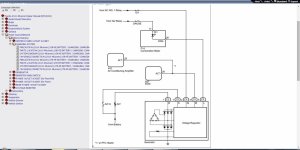
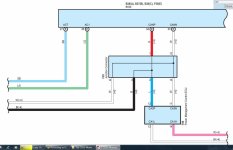
The reason for this is our trucks and many modern vehicles have Power Management ECU's to take the load off the alternator and thus conserve energy and thus mpgs. It's on a Canbus tied into the main ECU as well as others and may,and I say may likely be the reason for the possible troubles with the one guy who used a high output alternator.I've learned to stay away from the factory wiring and wire all my own circuits with separate fuse boxes and relays.

I've learned to manage my batteries with a pair of isolators,one being the Cole Hersee 200A Smart relay and the other a switched 200A relay. I learned to still top them off with a proper AGM charger every couple of months because as I had one Odyssey go bad. Mostly that was because I was using my 20 year old Diehard charger on it that was not meant for charging AGM's and it plates sulfated til one went bad. I bought a Diehard Platinum 31M and havn't had problems since getting a new charger.Next up for me is a solar charger for the roof made for dual AGM's as my truck doesn't get driven much anymore like it used to and does sit outside most days.
 

Attachments

  • RM.jpg
    RM.jpg
    70.6 KB · Views: 1,663
  • POWER MGMT.jpg
    POWER MGMT.jpg
    65.5 KB · Views: 1,682
[MENTION=8206]harper7[/MENTION] this kind of concludes that without the proper external battery management (an external charger that one would need to hook up to the car), using a single Odyssey 31M-PC2150 or Diehard Platinum 31M is NOT the ultimate solution for our trucks when we want to run a fridge or so always ON accessories. :(

I was hoping that it is the solution, but further research yields unfavorable answer (sucks that I have an Odyssey 31M-PC2150 in transit already).

This may also be the reason why many 4Runner(or automobile) owner ran into problems with these batteries (otherwise should be very good and should have an ultra long life).
 

Members online

No members online now.

Forum statistics

Threads
278,316
Messages
3,554,124
Members
248,016
Latest member
Advally Service

Trending content

Back
Top