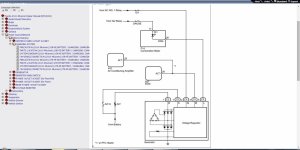
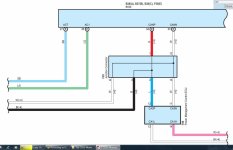
FYI. So a single Odyssey 31M-PC2150 or DieHard Platinum 31M is "not good enough". :-(
ARB Fridge cut off setting "HIGH" at 11.8V
ARB Fridge cut off setting "HIGH" at 11.8V
As a general rule, most stock automotive alternators are not meant to be deep discharge recovery chargers. They are meant to do very shallow top off and maintain the battery at a full state of charge while supplying the loads of the vehicle when in use. Minimum battery installation voltage is 12.65V or charging would be recommended prior to installation. This is about 85% state of charge or 15% depth of discharge (DOD) for any ODYSSEY battery, however you wish to look at it. At 15% DOD you would need to return about 16Ah back into the battery to return it to a full state of charge. Assuming your alternator charges at full available (less vehicle loads) current for 5-10 minutes at about 100A (for example) it would get 8-16Ah returned to the battery depending on how long it get’s full current and at what voltage. Most systems charge at about 14.2V.

Based on the charge chart below, at 11.2V with a PC2150 at 100% DOD it would take 1.6 hours at a constant current of 100A to get it to 80% state of charge then an additional charge of 4 hours at 14.7V to complete the charging process.

If the vehicles charging system is not getting the battery fully charged with the amount of driving being done, then periodic auxiliary charging would be required to properly maintain the battery. Low voltage cutoffs are to protect the battery from over-discharge or going so low the vehicle won’t start or to protect electronics that won’t run properly below a certain voltages where a battery is a power supply. The OEM group 24F battery is rated at 50Ah, 95 RCM and 710 CCA. If a comparable 50Ah rated PC1230 ODYSSEY battery for example needs to be at least 12.2V (50% DOD) to turn over the engine then the PC2150 needs to be at least 11.9V or 25% state of charge to do the same thing with the understanding that at 75% state of charge a standard alternator charging system will never truly get the battery back up to a full state of charge regardless of how long the vehicle runs.
We would recommend a dual battery with isolator system with an upgraded higher am alternator with a charging voltage of at least 14.5V (not to exceed 15.0V) for this type of auxiliary load situation and possibly an auxiliary charger at 35A minimum and 14.7V absorption voltage as well to ensure full charge.
Your setup will prevent over discharge of the battery but it will not fully charge the battery properly and at 11.8V it may not start the vehicle. Consistent undercharging will lead to premature failure due to sulfation or walk down voltage of the battery until it won’t perform properly to start your vehicle or even run the fridge. This is not an ideal setup.
Kathy Mitchell
EnerSys/OdysseyBattery Representative
Last edited: