Airing Down help...

Winter is upon us and I can't wait to hit up the local trials that will be covered with snow as of Thanksgiving (according to our weather reports!):biggrin2:

Traveling in the snow country, I try to ensure I always have someone else to wheel with. It can be really easy to get stuck in the white fluffy stuff!

BigBear1-17-09040.jpg~original


DSC01952.jpg~original


Core to a successful day out in the snow is airing down to get the tires to float over snow covered ground.

Deflating tires is pretty easy. Deflating can be achieved using a host of commercial deflators or even a key or a screwdriver placed on the valve.

Inflating is another issue. Either an air compressor, CO2, or driving on the blacktop to your nearest gas station are all options.

At Overland Warehouse, we are having a sale on our basic air compressors that are suitable for up to 33" tires.

These compressors are a must have for pretty much all offroading situations, whether crusing graded dirt roads where deflating tires gives a much smoother ride (say around 30PSI), on rocks where siedewall flex can make the difference between getting over an obstacle or not (maybe 18PSI) or on sand dunes where tire float is crucial (maybe as low as 15SPI).

See our Sale here http://www.toyota-4runner.org/overland-warehouse/102633-winter-sale.html#post915786


Do you deflate your tires? How about posting up your experiences? Give us details of tire dimensions, trail conditions, and your PSI setting. This would be really useful for people who have not yet tried deflating and the benefits to offroading. We will give away a basic air compressor to the best post with pictures related to airing down on a trail. Short story or experiences and photos mean a better chance to win!


Its surprising how far you can get when aired down!

LytleTrail004.jpg~original


**Anyone interested in some winter wheeling in SoCal shoot me an email at [email protected].
 
Last edited:
Register to hide this ad
Airing down is a given for most off roading, especially rock crawling.
The tire can better mold itself to the terrain, providing more traction, like the pic in my sig line.
10 psi works well for my truck.
 
I'm not in it for the air compressor givaway. I just happened to be composing a post for our blog on the subject and figured I would share.

Airing down, Part 1

IMG_0010F.jpg~original


Adjusting tire pressure according to terrain is one of the easiest ways to increase the capability and versatility of your truck. Increasing tire pressure for street use will improve fuel economy and prevent destructive heat buildup in the carcass of the tire. Decreasing tire pressure for off road use will increase traction by up to 250%, soften the bumps to make the ride more comfortable, increase braking ability, and allow the tire to conform to objects that would normally cause damage. We will elaborate breifly below on these important points.

Traction is the key variable in all off road operations. There are many ways to maximize the available traction on a trail or dirt road, but none are as effective as the simple practice of dropping the tire pressure. As an example, we will use Mr. Leary’s 1999 4Runner with 255/85/R16 sized tires (33.5” tall). On the street, he operates at 46 lbs. in both front tires and 48 lbs. in both rear tires. This yeilds an average fuel economy of 17.2 miles per gallon and prevents the tires from getting excessive tire wear on the side lugs. When aired down to 18 lbs., the contact surface area is increased by 125% and is ideal for dirt roads and mild trails, while still returning a decent fuel economy average of 13.6 miles per gallon in 4HI. For tougher terrain and sand, he airs down to 11 lbs. in the front tires and 12 lbs. in the rear tires. This increases his contact surface area by 225% over street pressure, and the traction improvements are supreme, although his fuel economy average in 4LO drops to an average of 7.8 miles per gallon. The further the tire pressure is reduced, the more available traction will be captured. Just keep in mind that on road handling characteristics drop with the tire pressure, and very low tire pressure can increase the risk of losing the bead on the tire.

Ledge.jpg~original


Most overland trips are more of an endurance race than a test of the vehicle’s capability in the nastiest of terrain. Reducing tire pressure can improve ride quality on unpaved surfaces. This increases comfort for the passengers as well as protecting sensitive vehicle components from the violent jarring that washboard roads can impart. On Central Overland trips, we have suffered more mechanical breakdowns as the result of the effects of washboard roads than from water crossings and extreme terrain combined. Its important to protect yourself and your vehicle, especially as the trips get longer.

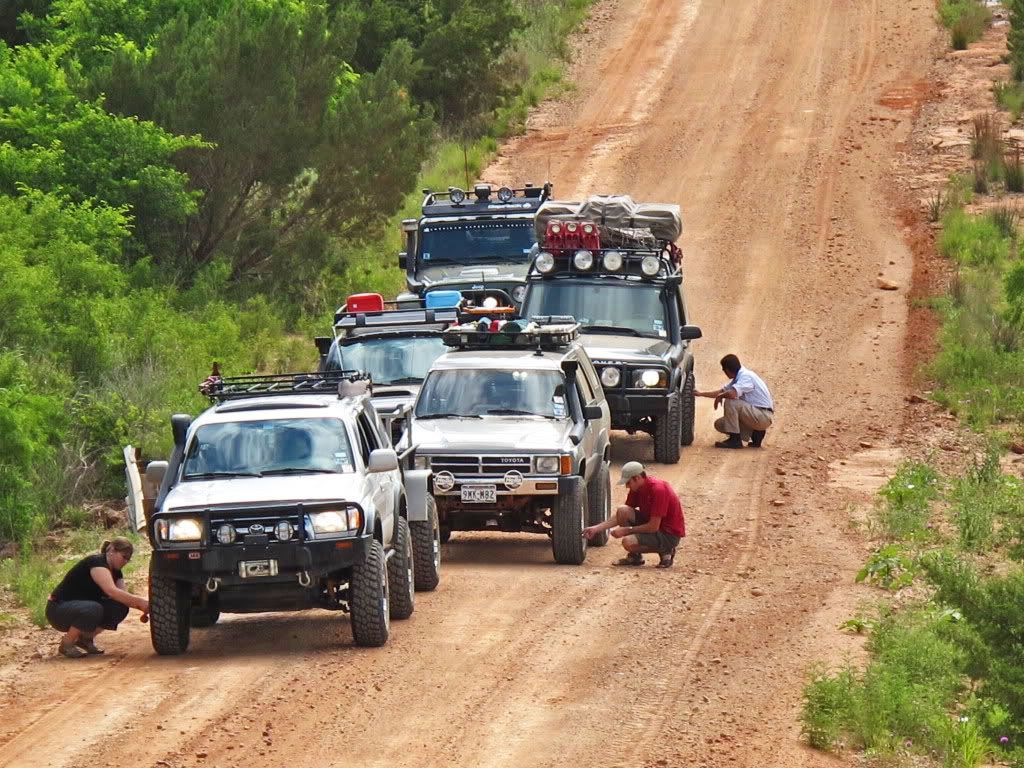
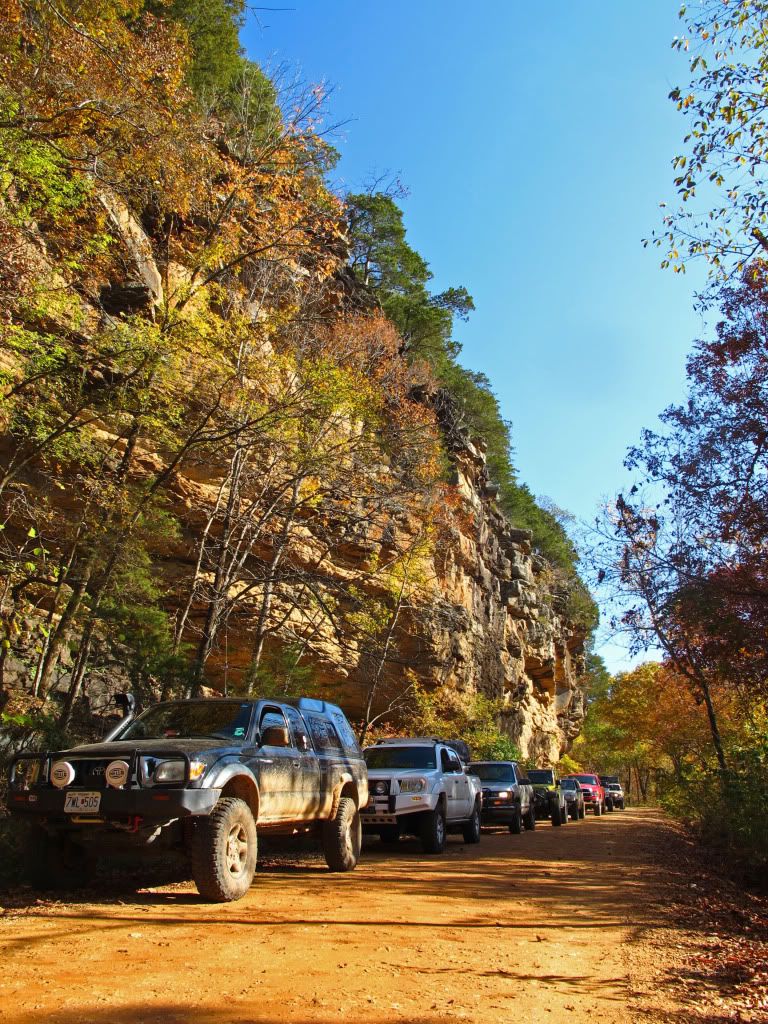
Maximizing the braking ability of a vehicle in less than ideal traction conditions is an important safety measure. At Central Overland, we travel mostly in convoys. The presence of multiple vehicles and the decreased visibility caused by trail dust increases the risk of an accident. Due to this concern, we always travel with our lights on and recommend that participants drop their tire pressure in order to have a greater contact pattern with the trail or road. A greater contact pattern means greater braking ability. Safety first, guys!

IMG_0882F.jpg~original


Tires must be tough to stand up to off road use, but even the sturdiest tires are still vulnerable to damage. The sidewalls are the weakest components of the tire, and often incur damage leading to failure. This problem can be partially mitigated by adjusting the tire pressure. Lower pressure allows the tire to wrap around obstacles that would normally cut a fully airerd up sidewall. This will not remove the risk of a shredded tire, but should limit the number of times you have to break out your spare.

On all of our trips at Central Overland, we recommend that participants air down shortly after leaving pavement.

Stay tuned for Part 2…
 
Last edited:
Airing Down, Part 2

IMG_3024.jpg~original


So the big question remains… when do I air down and how low do I go?

There are a couple ways to determine this, but the best way we have found is to use the height of the sidewall as the indicator.

Step 1 is to measure the height of the sidewall at maximum. This will likely require that the tire be aired up above normal street pressure.

Step 2 will be to deflate the tire until the height is 70% of the height of the maximum. Record the pressure at this height, it will be your minimum tire pressure for off road operation.

Step 3 is to determine what is comfortable for your driving habits. Very rarely will you want to deflate all the way to your minimum. CO recommends delfating to between 85% and 90% of sidewall height for use on dirt roads and most mild trails.

The composition of the terrain is also an important factor in determining ideal tire pressure. Dry rocky terrain will require different tire pressure then thick mud, etc.

Rocks

IMG_1508F.jpg~original


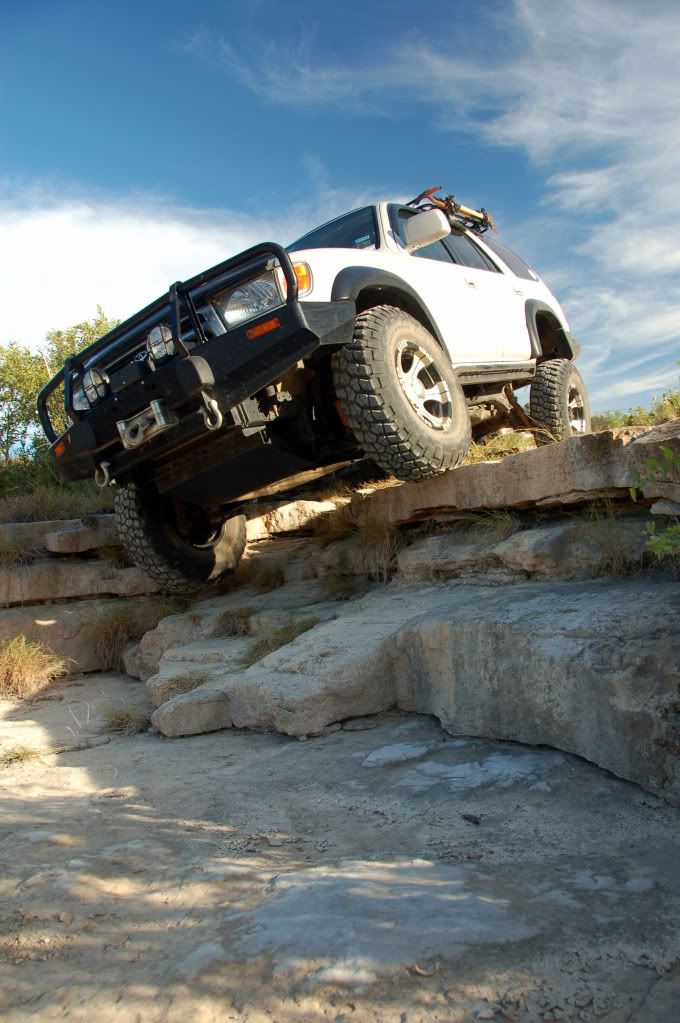
Low tire pressure will allow your tires to wrap around the rocks and “bite,” or gain traction where a fully inflated tire will not. CO recommends reducing tire pressure to near 75% for this difficult terrain type. This is always a balancing act as these conditions often require lots of clearance. You will have to determine the appropriate balance of traction and clearance for the conditions.

Sand

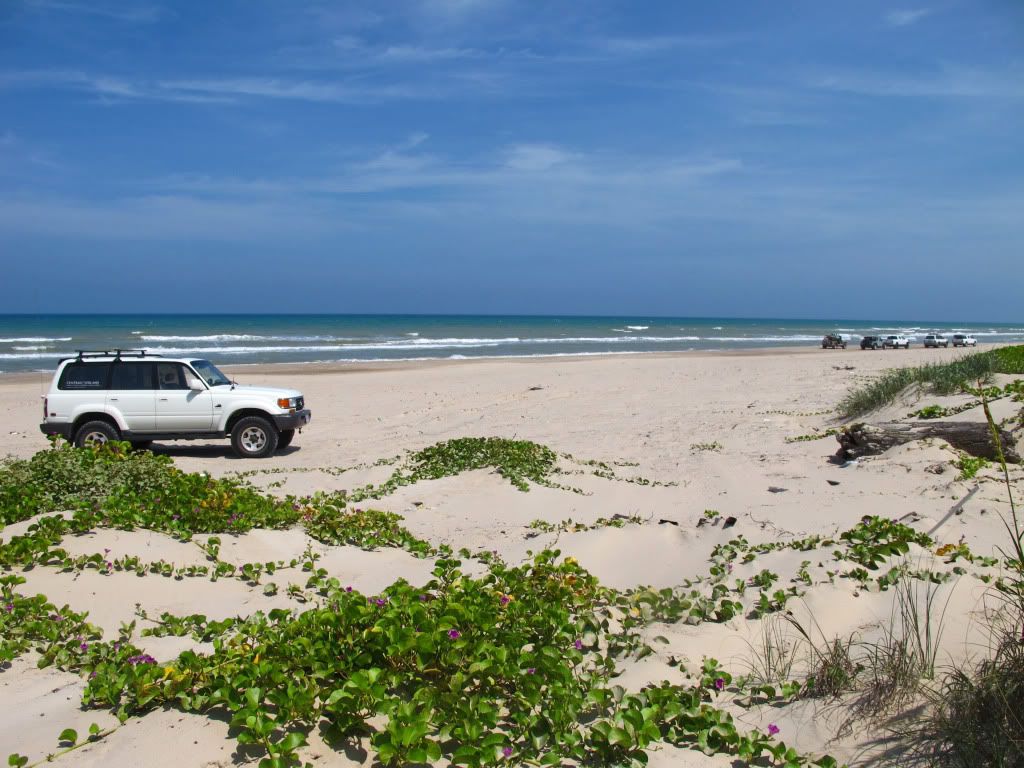
IMG_0479F.jpg~original


Performance in sand is all about flotation and your ability to keep moving. In deep sand, you should air down to your 70% minimum in order to combat the tendency of your truck to dig itself into a hole. The rule is as low as you can go without risking the loss of a bead.

Mud

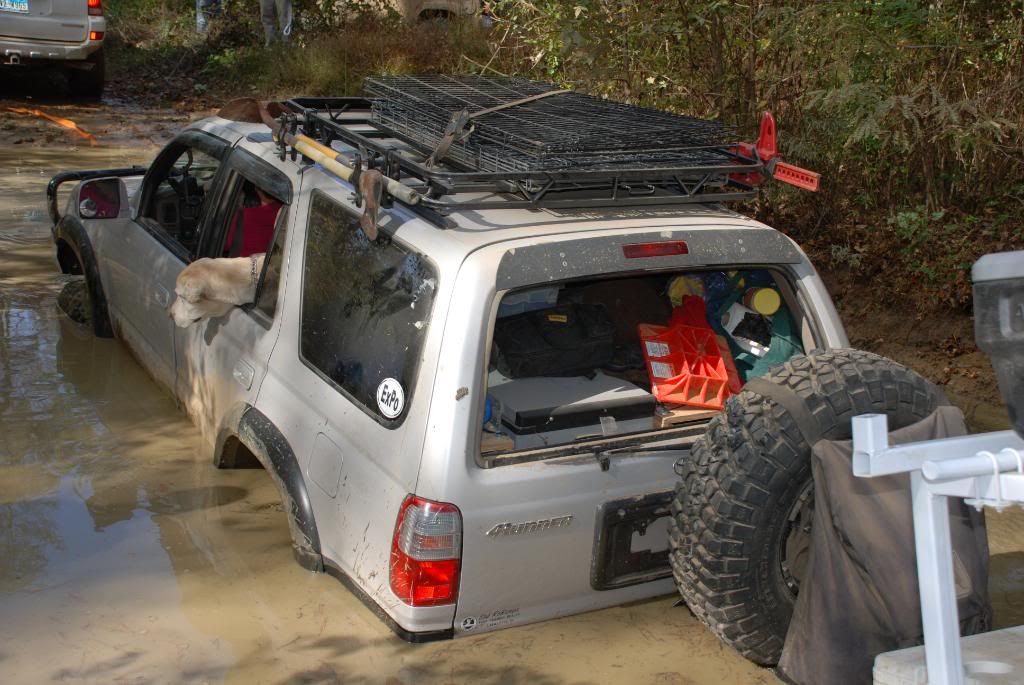
Fall2010Expedition289.jpg~original


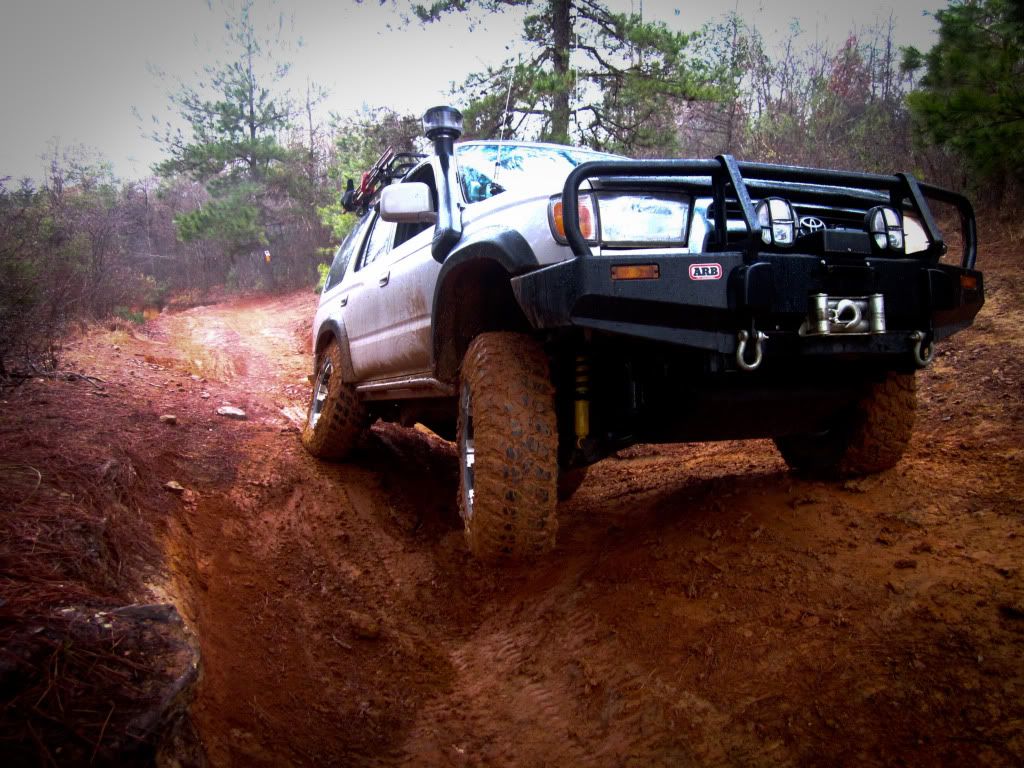
Mud is one of the most widely varying terrain types, and hence makes the job of determining proper tire pressure quite difficult. As the mud gets deeper, your tire pressure should increase to preserve ground clearance. A general rule of thumb is to air down enough to allow your sidewalls to aid in traction while preserving most of your vehicle’s ground clearance. A good place to start is between 85% and 90% of your sidewall height, and adjust from there based on conditions. Do not be afraid to spin your tires in the mud, as this helps to clear debris buildup in between the tire lugs, but remember that most parts are broken when the skinny pedal is used a little too much. Just remember, don’t stop!

Towing a trailer

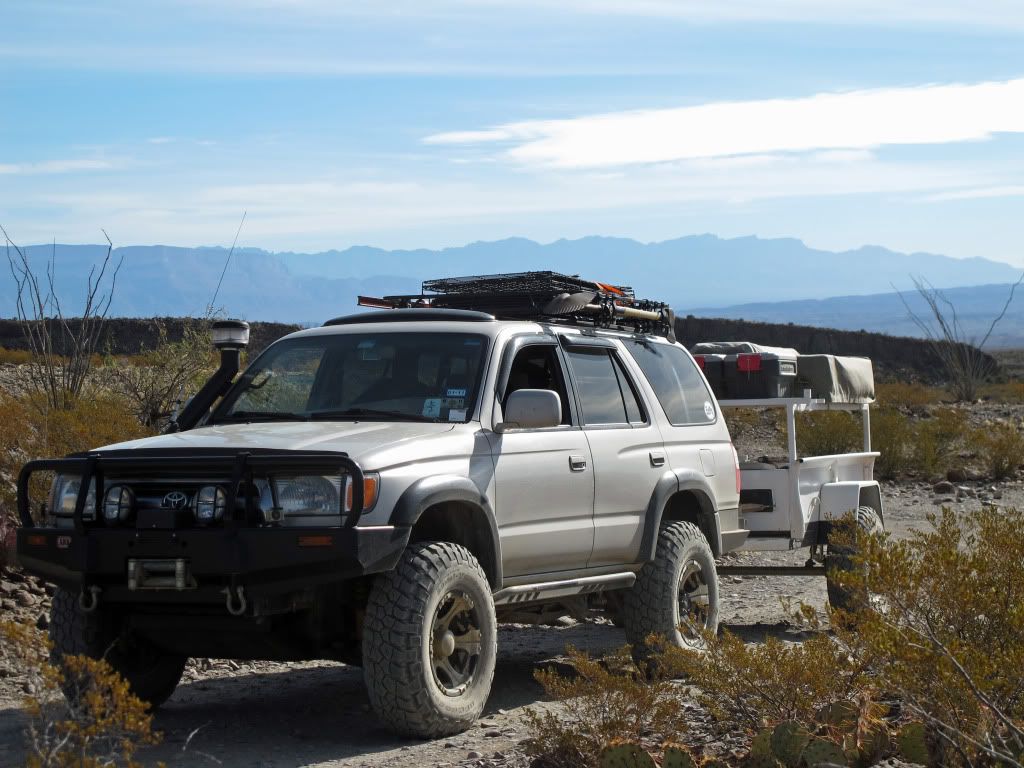
BigBend424F.jpg~original


Adjusting the tire pressure in the trailer is more about suspension performance and braking ability than anything else. The tires on your trailer will likely be under far less weight then the ones on your truck, so reducing sidewall height to 70% may not be possible or practical. For most applications, trailer tires can be deflated to 85% to 90% of sidewall height for the entire trip. The trailer axle will not be under power, so traction is only a factor for the brakes.

We hope that this information is helpful for our fellow overlanders. So blow off some hot air, and get out and explore!
 
Went to a Park in NY last year with my Local off road club. Was nasty clay mud ontop of frozen rocks. I was the smallest rig there (31s open/open) but was able to run most of the trails with a few tugs here and there. Was running about 13 psi on KM2s. Loved it. Tires cleaner out well and were ale to get some grip on the frozen rocks. Currently using a cheap walmart compressor to blow the tires back up. Takes about 5 min per tire. Haha. Its works, but I usually bum air of others if I can.
I made it up this hill too, but no pics of that.

69727_1688738105751_1456664681_1732656_1784792_n.jpg


My trail rig (92 pickup, sorry, not a 4runner) has 10 psi in the tires always. Seems to get good grip for being an average mud terrain.

380204_529487197824_157300716_30633780_932890278_n.jpg


385534_529486244734_157300716_30633729_849098182_n.jpg


374249_529487711794_157300716_30633801_1108249354_n.jpg

Looks like a 4runner from the front, so it counts. Haha.


298870_821366472910_6901657_39648083_690485903_n.jpg

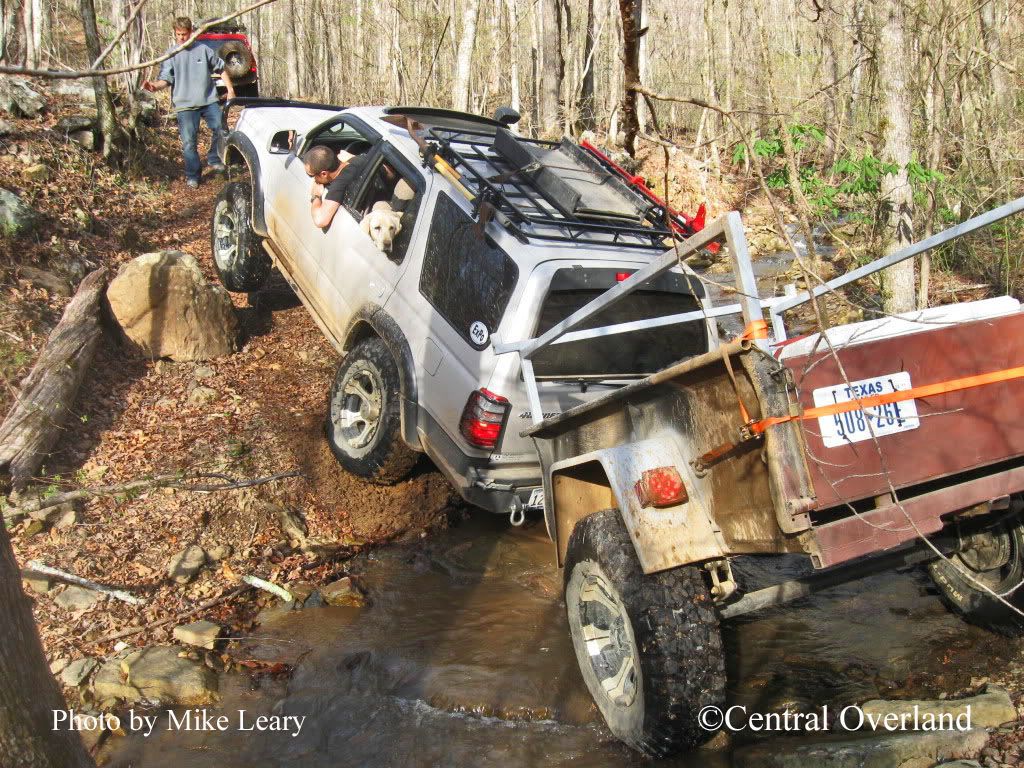
This was close to home so I drove it on the road there, and didnt want to air back up with my dinky pump so I have about 20psi in the tires. You can see how the middle of the tires are black, and not dirty like the out side. They have been spinning over rocks instead of conforming around them. I didnt make this hill, I might have if I aired down.
 
Last edited:
ill play!
airing down is the best way to get full traction out of any tire in an offroad situation. when im playin on the rocks, i usually air down to about 15psi which for most of the guys i wheel with is still too high. the guys with the trailer queens will usually airdown to about 5psi to get the most out of their set of $2k tires...

314816_10150304919572580_659932579_7762701_5518308_n.jpg

307183_10150412042347580_659932579_8328486_1556039317_n.jpg

63253_478862077579_659932579_5645458_7660613_n.jpg
 
As someone brand spanking new to offroading this is super helpful and probably some of the most concrete advice I've seen (sorry to necro this thread I can't create my own yet).
 
As someone brand spanking new to offroading this is super helpful and probably some of the most concrete advice I've seen (sorry to necro this thread I can't create my own yet).


Of course one must air down for serious rocks, sand, etc. On CO high-elevation trails airing down is, above all, safer.

However, a vehicle with capable suspension traveling at speed in the desert or on a dirt road will want to stay at good pressures (I stay street or go down to 28 if quite rocky but no lower) to avoid tire and/or wheel issues.
 
Of course one must air down for serious rocks, sand, etc. On CO high-elevation trails airing down is, above all, safer.

However, a vehicle with capable suspension traveling at speed in the desert or on a dirt road will want to stay at good pressures (I stay street or go down to 28 if quite rocky but no lower) to avoid tire and/or wheel issues.

Yeah, I've definitely found mine still works quite well at what I think is highway pressure (it's a 98 that is basically stock on weight but does have Falken Wildpeak 265/70r17s and I'm at 30 while door suggests 29) when on any dirt road with speed with the exception of bad washboards of course. Got dragged on my first wheeling adventure 3 days after I purchased it (3rd gen guy I consulted on the purchase invited me) on a moderate trail in the alpine and felt so bad being that noob that had no clue what pressures I should go down to and had no equipment for airing down or back up. My first purchase for this new to me truck is a Viair 300p and parts to make a 4way inflator/deflator setup. Should have the stuff in next week, will be nice having that piece of mind that I can deflate any time I want and quickly get it back up to highway pressures.
 
daw89446-albums-old-off-road-images-picture56846-swansea-cerro-gordo-4x4-trail.jpeg


daw89446-albums-old-off-road-images-picture56533-dedeckera-canyon-ca.jpeg


[
daw89446-albums-old-off-road-images-picture56854-lower-wyman-canyon-white-mountains-ca.jpeg


daw89446-albums-old-off-road-images-picture56843-sierra-nevada-near-coyote-flats.jpeg


I don’t do the off roading I used to do with my 2002 Tacoma TRD. I’m in my senior years now and really only trail during hunting season nowadays. In the years the photos above were taken, I lived in the eastern Sierra Nevada and wheeled all over the Sierra, Death Valley and Nevada. I replaced the Tacoma with my ‘18 T4R SR5 and have lived in north central Nevada since 2008.

I’ve run BFG All Terrain T/A tires on my 4x4 trucks for decades. On the Tacoma and my current 4Runner I’ve run load range E.

Off road I’d drop to around 15 psi, using a simple deflator made of four knurled aluminum pieces that screwed together for storage and had a key ring at one end. They wouldn’t shut off, but after a few uses it was easy to time things so as not to over deflate.

In those years I often wheeled with a buddy with another Tacoma TRD and he carried a small scuba tank filled with compressed air; which made it quick and simple to air up our rigs when getting back on pavement. When I was alone, I had a Truck Air 12v compressor that plugged into a 12V socket. It was slow - 45 minutes to go from 18 to 35 psi - and got red hot, but it never failed on me. Always wanted something better, but never did. Often, I’d just drive home at off road pressure if less than 20 miles from home. But I’ve gone much farther. Those BFG’s always took the beating without issue. I don’t recommend it for safety reasons.

I’ve dropped the tire pressure of my BFG All Terrain T/A KO2s on my 4Runner a couple times only. I carry a jump starter box in the truck, which has a built in compressor. At this stage of my life and limited off roading, I have dropped the notion of installing a nice built in air system in my rig.
 

Members online

Forum statistics

Threads
278,304
Messages
3,554,040
Members
248,016
Latest member
Advally Service

Trending content

Back
Top