Altitude Sickness ?

Bob22222

New member
My 93 experiences rather interesting if not down right scary symptoms of high tank pressure and boiling of fuel in the tank under severe conditions. I'll try to give details the best I can.

1993 , 3.0 V6, standard trans, 4 wheel drive, limited slip rear dif short bed pickup (basically the same as a 2nd gen runner and this seems the most knowable and experienced forum for these vehicles). 150k on the truck and 30k on this set of head gaskets, belt, pump,ect. Bone stock it's been (other than the head gasket issue, lol) the most reliable and trust worthy vehicle I've owned. It beats my 4th generation Sport edition V8 4Runner on everything but comfort, power, and high speed handling. I'm using the readily available fuel with 10% alcohol. I always fill at an altitude of about 8800 feet at a rural top tier (Conaco) station. Which means no winter/summer or urban blending. Reg gas for this truck.

In very warm (90f +) conditions after driving down from 9000 feet into city traffic now at an altitude of about 6000 feet. After, about an hour an a half of sitting in the very hot high-altitude mid-day sun and about an hour of running several errands in stop and go traffic I head back up the hill. A drive of about 2900 hundred feet of elevation gain in 12 miles or so with lots of heavy tourist traffic. Drive through small mountain town and decide to get gas even though I'm at just over 3/4 quarter because the cost of gas goes up about 60 cents a gallon onward from here.
Upon slightly opening the fuel cap there was an extended high pressure release of vapor. After about 2 minutes (not exaggerating time here) the venting force seemed to slow abit and I cracked the cap a bit more open. Another 20 or so seconds the venting pretty slowed to a stop. Upon removing the cap a was meet with spalter of boiling gas. I waited a Few minutes for things to calm a bit and was finally able to fill up and be on my way. BTW, I'm good a accurately checking gas mileage and i figure i lost about 3/4 of a gallon fuel (sorry, Greenpeace) to the vapor gods.
Ok, about 3 years ago a simalar thing happened in like conditions (only that time the tank was below half) . I hasn't happened since an I'd pretty much forgotten about it. Ive searched could not find an firm answers. I'm pretty sure my fuel return and feed lines are not reversed. Is my evaporative canister shot? Some vent line or valve restricted? Something I'm not thinking of...?
Or, is the system simply being overloaded given the extreme conditions and today's fuels. I'm interested in any theory and any simalar experiences.

And, not to worry. As much as a like this truck it's mostly a winter rig and I won't be doing this type of thing to it till I find an answer.

There is a station, and I don't know at what price, in the area that sells alcohol free primium. Maybe worth a shot if it's still this warm around here when I'm done with my currently full tank. But that will take a couple or three tanks to get the alcohol completely out of the system.

Thanks....
 
Register to hide this ad
Sounds like it's not releasing the built up pressure on the evap canister. Take the evap feed line off during your trip and put it into a pop bottle with a hole at the top so liquid will get trapped in the bottle and vapor will escape. As soon as you can check the tank and see if you get the hiss of pressure. This will determine if the tank to evap is clogged or if the evap or evap to manifold is clogged. You can rupture you tank with that much pressure. Also make sure the evap to manifold goes to a vacuum line and not a output line. You could be pressurizing your tank without knowing it. Unlikely but possible.


Sent from my iPhone using Tapatalk
 
I too would suspect the fuel canister and/or some associated valving. The evap canister's sole purpose in life is to trap tank vapors in the charcoal when the tank has to vent excess pressure. Then under conditions of low tank pressure it purges the vapors back out of the canister and into the intake manifold.

You could also ask the question here 86-95 Trucks & 4Runners - YotaTech Forums. Yotatech is a more active forum for 2nd gen 4runners and trucks of this vintage.
 
Sounds like it's not releasing the built up pressure on the evap canister. Take the evap feed line off during your trip and put it into a pop bottle with a hole at the top so liquid will get trapped in the bottle and vapor will escape. As soon as you can check the tank and see if you get the hiss of pressure. This will determine if the tank to evap is clogged or if the evap or evap to manifold is clogged. You can rupture you tank with that much pressure. Also make sure the evap to manifold goes to a vacuum line and not a output line. You could be pressurizing your tank without knowing it. Unlikely but possible.


Sent from my iPhone using Tapatalk

Thanks B_V, that's pretty much what I'm looking for. First the pop bottle test then if my suspensions are correct I'll begin the quest to understand and unravel the the vacuum line layout. I'm almost hoping it's as simple as replacing the (pricey) evap canister but have serious doubts nthat the root of the issue. Yeah, ruptured tank. That's why I won't be using the 93 in these conditions until I figure this out. Like I've stated it only happens in extreme circumstances and that's an issue. Meaning how to replicate the conditions without pushing it too far, considering they all build more than slight pressure in described conditions.
One thing I haven't observed is how much pressure builds up just sitting in the hot sun, which may be a good place to start. (Note: for those of you who haven't experienced it the high altitude Colorado sun on what is considered a "Severe Clear Day" can be quite extreme.)
So, if I'm thinking right, I should be suspect of connections and routing between the evap canister and the intake manifold, correct? Unless nothing is being emitted from the canister.
One thing I'll check. Is there some type of one way pressure valve between the canister and the manifold or is such valving incorporated into the canister?
 
sounds like your gas cap is bad... they are made to release pressure slowly.. sounds like its not happening... Gas caps are made to equalize pressure..thats why during a smog test they normally test that system..


Blaaaahhhhhhhh
 
I too would suspect the fuel canister and/or some associated valving. The evap canister's sole purpose in life is to trap tank vapors in the charcoal when the tank has to vent excess pressure. Then under conditions of low tank pressure it purges the vapors back out of the canister and into the intake manifold.

You could also ask the question here 86-95 Trucks & 4Runners - YotaTech Forums. Yotatech is a more active forum for 2nd gen 4runners and trucks of this vintage.

Thanks Ron, for sure that's the way it's suppose to work. The question is why it's not. I might try the yota group again but last time this happened (unaware of this group I only found it after getting my 4th gen) I searched there and it only seemed to run me around in circles with the issue.
 
sounds like your gas cap is bad... they are made to release pressure slowly.. sounds like its not happening... Gas caps are made to equalize pressure..thats why during a smog test they normally test that system..


Blaaaahhhhhhhh

Ah...thanks, but
Where on earth did you gleam this wisdom?
 
If you have that much built up pressure in a closed fuel system, whatever it is that's supposed to release pressure is obviously not working.

Guess what??? The gas cap has a valve to vent pressure out! Guess what else???? Its not doing its job!!! In case you don't know how a gas cap is assembled, here's a diagram:

gascap1.jpg


Note the two areas that show you the seal plate and pressure spring, those are obviously not allowing the pressure to release.

To add to your issue with high pressure, you're rising in elevation, and your tank is acting much like a sealed bag of potato chips would, the air is expanding inside the tank as you drive uphill, much more than it normally would with just the ambient heat!

While you may not have to deal with smog nazis in Colorado, California actually failed me one year because my gas cap did NOT release pressure or hold vacuum properly! New cap and I passed. While I though it was silly at the time, I can now see how this could create a big problem with vapor lock and other issues.

I'd say just replace the cap, its only a couple bucks at the parts store, and if you still have the issue on your next trip, then start looking at what others have posted. Unfortunately, I don't know of anyone with a machine to "test" vacuum and pressure of a fuel cap, but I suspect having it checked would cost more than just replacing the item! A quick check on oreilly's site shows them at 9 bucks.
 
sounds like your gas cap is bad... they are made to release pressure slowly.. sounds like its not happening... Gas caps are made to equalize pressure..thats why during a smog test they normally test that system..


Blaaaahhhhhhhh

I guess I'm not yet too old too learn something new. My apologies it seems according to flyinhawaiian01.
 
If you have that much built up pressure in a closed fuel system, whatever it is that's supposed to release pressure is obviously not working.

Guess what??? The gas cap has a valve to vent pressure out! Guess what else???? Its not doing its job!!! In case you don't know how a gas cap is assembled, here's a diagram:

gascap1.jpg


Note the two areas that show you the seal plate and pressure spring, those are obviously not allowing the pressure to release.

To add to your issue with high pressure, you're rising in elevation, and your tank is acting much like a sealed bag of potato chips would, the air is expanding inside the tank as you drive uphill, much more than it normally would with just the ambient heat!

While you may not have to deal with smog nazis in Colorado, California actually failed me one year because my gas cap did NOT release pressure or hold vacuum properly! New cap and I passed. While I though it was silly at the time, I can now see how this could create a big problem with vapor lock and other issues.

I'd say just replace the cap, its only a couple bucks at the parts store, and if you still have the issue on your next trip, then start looking at what others have posted. Unfortunately, I don't know of anyone with a machine to "test" vacuum and pressure of a fuel cap, but I suspect having it checked would cost more than just replacing the item! A quick check on oreilly's site shows them at 9 bucks.

The things you (I) learn. Thanks Chris, I was certain all pressure relieve was done within the system from the cap down. I'll try a new cap and see. It might be awhile before we have such extreme conditions here to replicate the problem.
Two questions. Where does the cap vent the over pressure to? Open air Via the overflow? Doesn't seem like the EPA or California would like that much.
And I've never known I pressure relief valve to fail closed. Do you suppose there is foreign object logged in a passage within the cap?
One more thing, having grown up (or thinking I'd grown up) in the Bay Area in the 50s and 60s I'm not so certain the air pollution " nazis" as you would call them have been such a bad thing. I guess anyone who longs for the good old days before pollution regulation could always move to somewhere like Jakarta and enjoy ambient air or lack there of.
 
This is not an uncommon problem. It happens in my 1994 Land Cruiser. The major cause is due to the reformulation of gasoline over the years. I have just learned to deal with it. Sometimes the venting will go on for more than two minutes.

There are some things you can try.

1.The cheapest and easiest solution is to try a new gas cap as already suggested.

2. Go through the EVAP system. Check your charcoal canister and associated lines. Check the VSV system that should kick in to clear out canister when driving. These things are pretty easy to check and the FSM should have it outlined.

3. Fuel return line. I'm not sure on the 4Runner tank, but the Land Cruiser tank has a check valve for the return fuel line. If this is not working properly you can get boiling gas.

I replaced my gas cap with an OEM gas cap. This helped a great deal, but I would still occasionally get the boiling gas thing. I have replaced all the hoses in the EVAP system, checked the charcoal canister and associated VSV. Those all checked out fine. I do have a new OEM charcoal canister, but haven't been concerned enough to swap it in yet. I dread checking the fuel return check valve as I'll have to drop the tank.

Excessive fuel tank pressure | IH8MUD Forum

I wonder..fuel tank pressure,engine temps... | IH8MUD Forum

It happened to me, gas venting issue | IH8MUD Forum
 
One more thing, having grown up (or thinking I'd grown up) in the Bay Area in the 50s and 60s I'm not so certain the air pollution " nazis" as you would call them have been such a bad thing. I guess anyone who longs for the good old days before pollution regulation could always move to somewhere like Jakarta and enjoy ambient air or lack there of.

I'm not against the whole smog testing thing, but California takes it to an extreme! They tried to fail me for an open element air intake once! I had to show them that it was CARB certified (luckily, it was), but silly things like failing "smog" because of a gas cap or aftermarket intake filter is just silly, as neither of these things will elevate the amount of pollution from a vehicle's tailpipe. There's a lot of other things they do too that don't make sense, but I won't get into it here.

Anyways, I hope the gas cap works for you. I don't know if something is blocking it or if the rubber seal has glued itself down tight and isn't letting anything escape, or if there's dirt buildup that's keeping the spring from moving and releasing the pressure, but something just doesn't sound right about it. If it doesn't work, at least its a cheap test, unlike a new canister! Again, I always say, start with the cheapest and/or easiest repairs first!
 
I'm not trying to pop anyone's cork and drink their champagne here. But in the interest of reality:
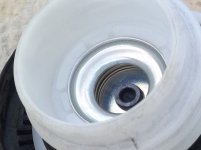
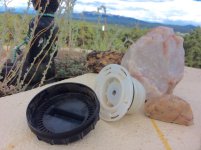
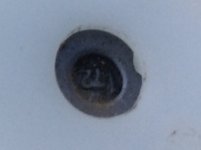
Two hours, 40 miles of driving, and two saw bucks lighter I can assure you that my gas cap has no outward pressure relief valve. There is however some type of "safety" cork that appears to be designed to pop inward upon excessive vacuum. The only relief valve incorporated has a one way flow. That being outside to inside. The rubber cork (embossed with the 73) in the photos has a ridge that keeps it from going in. I suppose it might pop outward with enough pressure before the tank blows. But, by then I would imagine there would be such a rush of pressurized fuel exiting the system it would likely find its way to the hot exhaust anyway. Don't want to push it that far for sure. I think you can see this from the attached images if I can manage to get them up.
 

Attachments

  • image.jpeg
    image.jpeg
    98.9 KB · Views: 343
  • image.jpg
    image.jpg
    126 KB · Views: 350
The close shot of the stopper thing. And I meant number 72 embossed, I guess
 

Attachments

  • image.jpeg
    image.jpeg
    30.5 KB · Views: 339
The gas cap is not allowed to have a pressure relief to the outside. You'll fail smog if yours does (assuming you have smog checks). The whole idea is to keep gasoline vapors from venting to the atmosphere, so they are routed through the charcoal canister first which traps the vapors and lets the air through. Then the canister is purged by reversing the flow and sucking clean air through it back into the engine.

That system has been around on cars since the 70's.
 
The gas cap is not allowed to have a pressure relief to the outside. You'll fail smog if yours does (assuming you have smog checks). The whole idea is to keep gasoline vapors from venting to the atmosphere, so they are routed through the charcoal canister first which traps the vapors and lets the air through. Then the canister is purged by reversing the flow and sucking clean air through it back into the engine.

That system has been around on cars since the 70's.

Exactly what I thought before reading a couple of the above posts. One from someone I might or might not have had enough respect for to believe his scoldings were correct. Live and learn, and re-learn, I guess. (Please, dont let the kids know it's one more case for my marbles have begun to rust.) It is true that while there is much information on the web. Much of said information is quite actually mis-information blown out the wrong hole to make use of a gas cap analogy, anyway.

By the by, this is no time to be messing with gas heat and pressure up here. As it seems like half the districts along the Front Range are dealing with some type of fire. But, when I get back to it I think I'll looking at that valve thing behind the intake manifold, the check valve in the canister, and heavens forbid some type of internal blockage in the tank itself blocking off the evap system. One thing I can check easily without warming the truck is the mystery of the vacuum lines. It runs great, better or at least as good as before the last head gasket issue. But it seems that this pressure thing went unnoticed prior to that point. I didn't do the gaskets myself because at the time I was pre-occupied with the maintance and operation a coffee roasting facility.
 
I should have added that the gas cap does have a vacuum relief, to prevent the tank from collapsing.

Until you get this fixed, it may not hurt to leave the cap a bit loose to provide some pressure bleed-off. Just not so loose that you spill gasoline - that's not good either. Either that or take an old cap and punch a small (1/8 inch or so) hole in it. You'll be violating emissions but in South Park, CO, it won't matter much for a brief time.
 
Until I figure this out I will not be using that truck. At least that's what I promised Smoky Bear when he threatened to rip out my entrails if he finds me in that truck again before the next snow.
 
Really?


Quoted directly from Autozone:

The fuel cap contains an integral pressure and vacuum relief valve. The vacuum valve acts to allow air into the fuel tank to replace the fuel as it is used, while preventing vapors from escaping the tank through the atmosphere. The vacuum relief valve opens after a vacuum of -0.5 psi (3.45 kPa). The pressure valve acts as a backup pressure relief valve in the event the normal venting system is overcome by excessive generation of internal pressure or restriction of the normal venting system. The pressure relief range is 1.6-2.1 psi (11.0-14.5 kPa). Fill cap damage or contamination that stops the pressure vacuum valve from working may result in deformation of the fuel tank.

Altitude created much more pressure than the closed system could purge off, hence the reason why after opening the tank cap, pressure continued for a much longer time than normal.

With a pressure relief at ~2psi, either the OP exaggerated the amount of pressure in his system, or the cap did NOT relieve the excessive amount of pressure.

I don't throw around mis-information, and if I'm wrong or unsure about something, I will admit to it. This is not one of those times. Again, 9 dollar part to check if that's the problem, or 60 dollar charcoal canister to see if that works, which should you pick first?

I don't really care either way, you do what you like with your money, its none of my business. I'm on this forum to try to help folks with their 4runners, not get into wars about gas caps.
 
Really?


Quoted directly from Autozone:

The fuel cap contains an integral pressure and vacuum relief valve. The vacuum valve acts to allow air into the fuel tank to replace the fuel as it is used, while preventing vapors from escaping the tank through the atmosphere. The vacuum relief valve opens after a vacuum of -0.5 psi (3.45 kPa). The pressure valve acts as a backup pressure relief valve in the event the normal venting system is overcome by excessive generation of internal pressure or restriction of the normal venting system. The pressure relief range is 1.6-2.1 psi (11.0-14.5 kPa). Fill cap damage or contamination that stops the pressure vacuum valve from working may result in deformation of the fuel tank.


Altitude created much more pressure than the closed system could purge off, hence the reason why after opening the tank cap, pressure continued for a much longer time than normal.

With a pressure relief at ~2psi, either the OP exaggerated the amount of pressure in his system, or the cap did NOT relieve the excessive amount of pressure.u

I don't throw around mis-information, and if I'm wrong or unsure about something, I will admit to it. This is not one of those times. Again, 9 dollar part to check if that's the problem, or 60 dollar charcoal canister to see if that works, which should you pick first?

I don't really care either way, you do what you like with your money, its none of my business. I'm on this forum to try to help folks with their 4runners, not get into wars about gas caps.
Wrong! The only caps I ever incountered anything like on that the diagram you posted have be on some type of chainsaw, motorcycle, string trimmer, motorcycle, ect cap. Did it occur to you that AUTOZONE (the sound of just rings with quailty) might be just as wrong as you. Things might have changed in very late model trucks, but I quite doubt it.
Here's a place for you to being: Charcoal canister: maintenance and repair | Mechanical /Maintenance Forum | Bob Is The Oil Guy
If I'm wrong on this and that cap I replaced on your advice has a pressure relief valve I'll eat it and send you a video of me doing so
 

Members online

No members online now.

Forum statistics

Threads
278,306
Messages
3,554,045
Members
248,016
Latest member
Advally Service

Trending content

Back
Top