
You are using an out of date browser. It may not display this or other websites correctly.
You should upgrade or use an alternative browser.
You should upgrade or use an alternative browser.
Anyone done the big three upgrade?
- Thread starter lowcel
- Start date

Diver Deuce
New member
I probably should have posted a link to rigtec's, but hey I'm glad he came through. Super helpful guy!

Chieftain
New member
Ok, whats the big 3?
1. Alternator
2. Battery?
3. ??
This upgrade replaces or augments three key cables in the electrical system with 1/0 or 4 gauge wires: the battery ground to chassis wire, the chassis to engine block wire, and the alternator plus to battery plus wire.

rigtec
New member
What purpose does this serve? Thank you.
Hi enapa,
The reason for this: When you're adding accessories to you vehicle e.g., lights, winch, refrig...etc, you must keep in mind that the cables that the factory installed were appropriately sized for the standard accessories only! When adding amenities you must take into consideration the extra current that will run through those oem cables because if overloaded they will get very hot and can be damaged or may cause damage (from overheating) to the many junctions throughout the vehicle. So as a precaution we need to UPGRADE (in part) the electrical system wiring for safety first, and then for performance!
Cheers

Randyman...
New member
Hey lowcel - Just saw your "Big 3" post on my DIYMA T4R build thread! But I'll reply here:
If you are not upgrading to a HO alternator, then I personally don't see any gains from upgrading the Alternator to Fusebox lead. The stock lead is plenty sufficient to handle the stock 130Amp alternator, and seeing that most of our T4R's have a largeish 400Watt factory inverter (with a rather healthy continuous current requirement), I really feel the Alternator lead is sufficient in stock form. You might gain .25v-.5v at the full 130Amps - nothing I'm gonna worry about IMO...
I simply swapped in a Diehard 31M, upgraded the battery-to-body ground wire to an OFC 1/0, and then ran the OFC 1/0 from the Diehard's extra "+" terminal thru a 300-Amp ANL fuse, and then to a distribution block in the rear by the amps. This system has been in place for close to 3 years now - never had an electrical system issue.
Even when I'm slamin' along at close to the full 4000Watt RMS rating of my system (not cheater watts - real RMS watts with Switch mode regulated power supplies), I have never had issues cranking over the next day. Sure I get some voltage sag at ear tingling SPL's, but nothing the Diehard can't handle, and the stock alternator easily keeps up with the overall power draw (music is not a constant draw, but extremely dynamic in its load requirements).
Unless you listen to lots of sine-wave based bass lines at or above clipping or if you're looking to squeak every last watt from an unregulated power amplifier, your alternator doesn't need to be anywhere near the current capacity the audio system can actually pull. Had 3KW in my Tacoma on the stock 80 amp alternator for over a decade! Alternator never failed and never had a dead battery that wasn't an op error
PS - Hi there Rigtec!

If you are not upgrading to a HO alternator, then I personally don't see any gains from upgrading the Alternator to Fusebox lead. The stock lead is plenty sufficient to handle the stock 130Amp alternator, and seeing that most of our T4R's have a largeish 400Watt factory inverter (with a rather healthy continuous current requirement), I really feel the Alternator lead is sufficient in stock form. You might gain .25v-.5v at the full 130Amps - nothing I'm gonna worry about IMO...
I simply swapped in a Diehard 31M, upgraded the battery-to-body ground wire to an OFC 1/0, and then ran the OFC 1/0 from the Diehard's extra "+" terminal thru a 300-Amp ANL fuse, and then to a distribution block in the rear by the amps. This system has been in place for close to 3 years now - never had an electrical system issue.
Even when I'm slamin' along at close to the full 4000Watt RMS rating of my system (not cheater watts - real RMS watts with Switch mode regulated power supplies), I have never had issues cranking over the next day. Sure I get some voltage sag at ear tingling SPL's, but nothing the Diehard can't handle, and the stock alternator easily keeps up with the overall power draw (music is not a constant draw, but extremely dynamic in its load requirements).
Unless you listen to lots of sine-wave based bass lines at or above clipping or if you're looking to squeak every last watt from an unregulated power amplifier, your alternator doesn't need to be anywhere near the current capacity the audio system can actually pull. Had 3KW in my Tacoma on the stock 80 amp alternator for over a decade! Alternator never failed and never had a dead battery that wasn't an op error
PS - Hi there Rigtec!

lowcel
New member
Hey lowcel - Just saw your "Big 3" post on my DIYMA T4R build thread! But I'll reply here:
If you are not upgrading to a HO alternator, then I personally don't see any gains from upgrading the Alternator to Fusebox lead. The stock lead is plenty sufficient to handle the stock 130Amp alternator, and seeing that most of our T4R's have a largeish 400Watt factory inverter (with a rather healthy continuous current requirement), I really feel the Alternator lead is sufficient in stock form. You might gain .25v-.5v at the full 130Amps - nothing I'm gonna worry about IMO...
I simply swapped in a Diehard 31M, upgraded the battery-to-body ground wire to an OFC 1/0, and then ran the OFC 1/0 from the Diehard's extra "+" terminal thru a 300-Amp ANL fuse, and then to a distribution block in the rear by the amps. This system has been in place for close to 3 years now - never had an electrical system issue.
Even when I'm slamin' along at close to the full 4000Watt RMS rating of my system (not cheater watts - real RMS watts with Switch mode regulated power supplies), I have never had issues cranking over the next day. Sure I get some voltage sag at ear tingling SPL's, but nothing the Diehard can't handle, and the stock alternator easily keeps up with the overall power draw (music is not a constant draw, but extremely dynamic in its load requirements).
Unless you listen to lots of sine-wave based bass lines at or above clipping or if you're looking to squeak every last watt from an unregulated power amplifier, your alternator doesn't need to be anywhere near the current capacity the audio system can actually pull. Had 3KW in my Tacoma on the stock 80 amp alternator for over a decade! Alternator never failed and never had a dead battery that wasn't an op error
PS - Hi there Rigtec!
Thanks for the reply. I'll be adding this little guy in a couple of weeks and giving it around 1,600 watts RMS.


Randyman...
New member
WOW! Is that a 21"? Looks larger than an 18", but I don't think Sundown makes 21"s???
You are a madman Going with a nice low-tuned ported box I assume? Looks like you'll need 7 cu ft or so (plus the insane port area that beast will require!)!?! I'm a hair over 4 cu ft sealed for all three W12GTi 12"s in my sub stage - can't even see my box from the driver's seat (box is shorter than the rear seat tops), but still gets down like crazy
Please post build pics here when done...
You are a madman
Going with a nice low-tuned ported box I assume? Looks like you'll need 7 cu ft or so (plus the insane port area that beast will require!)!?! I'm a hair over 4 cu ft sealed for all three W12GTi 12"s in my sub stage - can't even see my box from the driver's seat (box is shorter than the rear seat tops), but still gets down like crazy Please post build pics here when done...
lowcel
New member
WOW! Is that a 21"? Looks larger than an 18", but I don't think Sundown makes 21"s???
You are a madman
Please post build pics here when done...
It is a Sundown SA18. I'm having a box built by CSCStang off of the car audio forum. It will be 5.5 net cubic feet with an octoport tuned to 36 hz. It will be two or three weeks until I receive the enclosure.
rigtec
New member
Hey lowcel - Just saw your "Big 3" post on my DIYMA T4R build thread! But I'll reply here:
If you are not upgrading to a HO alternator, then I personally don't see any gains from upgrading the Alternator to Fusebox lead. The stock lead is plenty sufficient to handle the stock 130Amp alternator, and seeing that most of our T4R's have a largeish 400Watt factory inverter (with a rather healthy continuous current requirement), I really feel the Alternator lead is sufficient in stock form. You might gain .25v-.5v at the full 130Amps - nothing I'm gonna worry about IMO...
I simply swapped in a Diehard 31M, upgraded the battery-to-body ground wire to an OFC 1/0, and then ran the OFC 1/0 from the Diehard's extra "+" terminal thru a 300-Amp ANL fuse, and then to a distribution block in the rear by the amps. This system has been in place for close to 3 years now - never had an electrical system issue.
Even when I'm slamin' along at close to the full 4000Watt RMS rating of my system (not cheater watts - real RMS watts with Switch mode regulated power supplies), I have never had issues cranking over the next day. Sure I get some voltage sag at ear tingling SPL's, but nothing the Diehard can't handle, and the stock alternator easily keeps up with the overall power draw (music is not a constant draw, but extremely dynamic in its load requirements).
Unless you listen to lots of sine-wave based bass lines at or above clipping or if you're looking to squeak every last watt from an unregulated power amplifier, your alternator doesn't need to be anywhere near the current capacity the audio system can actually pull. Had 3KW in my Tacoma on the stock 80 amp alternator for over a decade! Alternator never failed and never had a dead battery that wasn't an op error
PS - Hi there Rigtec!
Hahaha... hi there Randy!! I just wanted to say that your post echos my sentiment 120%! Thanks for chiming in!
rig
lowcel
New member
Hahaha... hi there Randy!! I just wanted to say that your post echos my sentiment 120%! Thanks for chiming in!
rig
Well if nothing else it should look purdy. :naughty:
rigtec
New member
First, I wanna say...
I really appreciate [MENTION=10638]randyman[/MENTION] knowledge and years of experience in the audio systems field; his thoughts on 'The Big Three' will help bring back to reality some of the extreme, misguided theory I've heard on the subject out there! Having said that... There's a lot to be gained by upgrading your electrical system; both the wiring and the power plant (alternator). Sometime back in the early part of 2014 I added a 'Second' 'JL Audio' amp to my truck's subwoofer system matching the first one. After the install was completed, I wanted to run some tests on the truck's electrical system to see how it would hold up under the stress of ALL of it's stock accessories (worst case scenario) e.g., wipers, highbeams, foglights, hvac system blower (high), heated seats... along with the aftermarket accessories... PIAA fogs, 1500 watt (true RMS) subwoofer system. ...the results were less than impressive; take a look: http://www.toyota-4runner.org/5th-gen-t4rs/172070-4runner-alternator-upgrade-gen-5-a.html
If you saw my test results, then the reason that I did the alternator upgrade is self explanatory. But I didn't want to leave my travelling fate to chance. Just one look at the extremely light gauge (#8ga?) electrical cables, and a 525 CCA oem Panasonic battery for starting up I was already convinced that an electrical system upgrade was due in short order! Conclusive thoughts... If you just added a few small personal extras... an aftermarket foglight kit or a trailer hitch LED, then I wouldn't suggest you perform an alternator swap or B-3 upgrade, your stock denso 130A will likely handle it. But if you enjoy some extremes like so many of us do around here, then an electrical system upgrade may be in your future... Best to you!
I really appreciate [MENTION=10638]randyman[/MENTION] knowledge and years of experience in the audio systems field; his thoughts on 'The Big Three' will help bring back to reality some of the extreme, misguided theory I've heard on the subject out there! Having said that... There's a lot to be gained by upgrading your electrical system; both the wiring and the power plant (alternator). Sometime back in the early part of 2014 I added a 'Second' 'JL Audio' amp to my truck's subwoofer system matching the first one. After the install was completed, I wanted to run some tests on the truck's electrical system to see how it would hold up under the stress of ALL of it's stock accessories (worst case scenario) e.g., wipers, highbeams, foglights, hvac system blower (high), heated seats... along with the aftermarket accessories... PIAA fogs, 1500 watt (true RMS) subwoofer system. ...the results were less than impressive; take a look: http://www.toyota-4runner.org/5th-gen-t4rs/172070-4runner-alternator-upgrade-gen-5-a.html
If you saw my test results, then the reason that I did the alternator upgrade is self explanatory. But I didn't want to leave my travelling fate to chance. Just one look at the extremely light gauge (#8ga?) electrical cables, and a 525 CCA oem Panasonic battery for starting up I was already convinced that an electrical system upgrade was due in short order! Conclusive thoughts... If you just added a few small personal extras... an aftermarket foglight kit or a trailer hitch LED, then I wouldn't suggest you perform an alternator swap or B-3 upgrade, your stock denso 130A will likely handle it. But if you enjoy some extremes like so many of us do around here, then an electrical system upgrade may be in your future... Best to you!
lowcel
New member
First, I wanna say...
I really appreciate [MENTION=10638]randyman[/MENTION] knowledge and years of experience in the audio systems field; his thoughts on 'The Big Three' will help bring back to reality some of the extreme, misguided theory I've heard on the subject out there! Having said that... There's a lot to be gained by upgrading your electrical system; both the wiring and the power plant (alternator). Sometime back in the early part of 2014 I added a 'Second' 'JL Audio' amp to my truck's subwoofer system matching the first one. After the install was completed, I wanted to run some tests on the truck's electrical system to see how it would hold up under the stress of ALL of it's stock accessories (worst case scenario) e.g., wipers, highbeams, foglights, hvac system blower (high), heated seats... along with the aftermarket accessories... PIAA fogs, 1500 watt (true RMS) subwoofer system. ...the results were less than impressive; take a look: http://www.toyota-4runner.org/5th-gen-t4rs/172070-4runner-alternator-upgrade-gen-5-a.html
If you saw my test results, then the reason that I did the alternator upgrade is self explanatory. But I didn't want to leave my travelling fate to chance. Just one look at the extremely light gauge (#8ga?) electrical cables, and a 525 CCA oem Panasonic battery for starting up I was already convinced that an electrical system upgrade was due in short order! Conclusive thoughts... If you just added a few small personal extras... an aftermarket foglight kit or a trailer hitch LED, then I wouldn't suggest you perform an alternator swap or B-3 upgrade, your stock denso 130A will likely handle it. But if you enjoy some extremes like so many of us do around here, then an electrical system upgrade may be in your future... Best to you!
I will probably go the second battery route prior to the upgraded alternator route. I'm currently running 750 watts with zero issues. I doubt I get so lucky when I upgrade to 2100 watts.
Hi enapa,
The reason for this: When you're adding accessories to you vehicle e.g., lights, winch, refrig...etc, you must keep in mind that the cables that the factory installed were appropriately sized for the standard accessories only! When adding amenities you must take into consideration the extra current that will run through those oem cables because if overloaded they will get very hot and can be damaged or may cause damage (from overheating) to the many junctions throughout the vehicle. So as a precaution we need to UPGRADE (in part) the electrical system wiring for safety first, and then for performance!
Cheers
Thank you!
rigtec
New member
I will probably go the second battery route prior to the upgraded alternator route. I'm currently running 750 watts with zero issues. I doubt I get so lucky when I upgrade to 2100 watts.
Hi lowcel,
You realize that using a second battery is done for a different reason than one who opts to implement an H.O. alternator... just sayin'
rig
lowcel
New member
Hi lowcel,
You realize that using a second battery is done for a different reason than one who opts to implement an H.O. alternator... just sayin'
rig
Yes sir. It seems that in car audio the second battery is generally done prior to the alternator and is generally enough for "small" systems like mine. I will probably go with the XS Power D925. The battery will allow more time listening to the stereo when parked.
Things have changed a lot since I used to compete but some things have stayed the same.

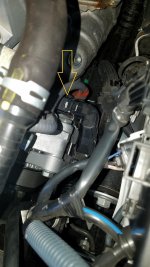
Sorry to bring up this old thread as I don't have enough posts to start a new thread. Anyhow, I'm attempting to do the big 3 with my stock alternator. on my 2016 SR5. Does anybody know how to get this cap off of the positive terminal of the alternator in order to expose the nut? I can't seem to get it off unless I physically cut and break the cap. Any ideas on how to get to it? Thanks all.
Attachments
rigtec
New member
Sorry to bring up this old thread as I don't have enough posts to start a new thread. Anyhow, I'm attempting to do the big 3 with my stock alternator. on my 2016 SR5. Does anybody know how to get this cap off of the positive terminal of the alternator in order to expose the nut? I can't seem to get it off unless I physically cut and break the cap. Any ideas on how to get to it? Thanks all.
Hi sdub22,
Removing the output stud cover is pretty simple; sorry, but this is the best photo that I could fine since Photo-bucket has been fukin with my albums, but this may still may be helpful if you could see the stud's vertical position and the base that the cover snaps on to. There is a plastic latch that keeps the hinged cover on until you unsnap it using your fingers and just lift the cover up! ..."see below":


Hope this will be of some help; 'Best to you',
rig
Last edited:
rigtec
New member
Oh...
Because this thread is on the subject of the big-three, (I hope the OP doesn't mind, if so I'll be glad to remove it!), I'm leaving a link on the subject that I scribbled down a lil' while ago; but it's still very relative! http://www.toyota-4runner.org/5th-gen-t4rs/224382-big-three;-how-works.html
rig, Cheers!
Because this thread is on the subject of the big-three, (I hope the OP doesn't mind, if so I'll be glad to remove it!), I'm leaving a link on the subject that I scribbled down a lil' while ago; but it's still very relative! http://www.toyota-4runner.org/5th-gen-t4rs/224382-big-three;-how-works.html
rig, Cheers!
Similar threads
- Replies
- 8
- Views
- 1K
- Replies
- 13
- Views
- 4K

- Replies
- 5
- Views
- 2K


