DougR
Member
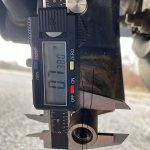
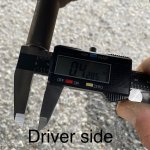
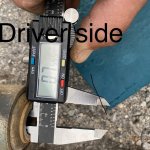
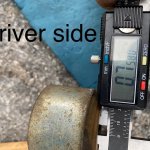
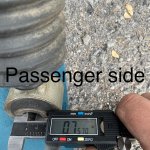
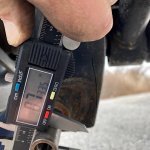
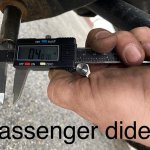
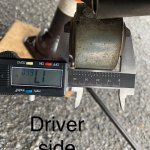
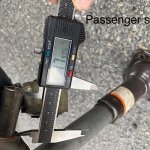
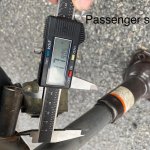
Your ID and OD measurements on the bushing sleeve look good. Clearance is needed so that the shock can be removed when rust is present.
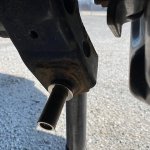
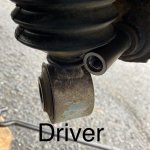
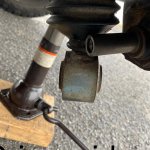
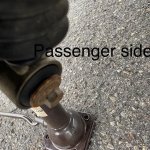
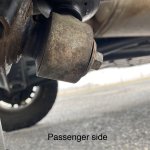
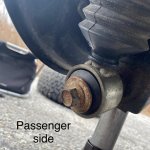
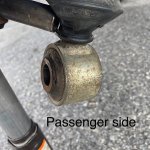
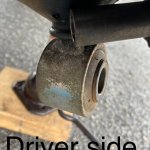
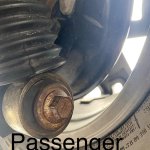
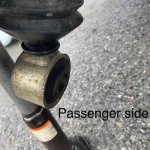
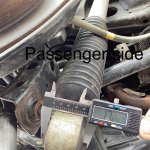
If the shock bushing sleeve was tightly clamped, I would have expected less rust on the clamped ends of the sleeve. Looking at the photos, it appears there is no clamping force on the passenger side and light clamping force on the drivers side. I suspect the passenger side was clunking and drivers side either less clunking or not clunking at all.
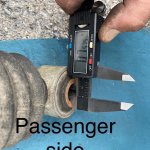
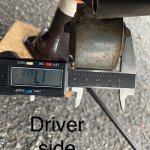
Measure overall length of the shock bushing metal sleeves. The sleeves on my shocks measure 1.785 inches.
Use the depth rod to measure the length of the shank on which shock is mounted. This measurement should be a little bit less than the bushing sleeve overall length in order to produce a clamping force on the bushing sleeve.
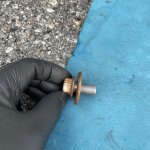
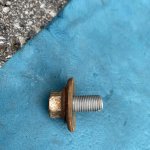
Post images of both shock mount bolts showing the portions that clamp against the shock bushing sleeve. I want to see how the load bearing surfaces are machined. When the bolt is tightened, the clamping surface must bear down on the shock bushing sleeve, and not touch the shock mount shank.
Post photos of the shock mount shanks, focusing on the area of the differential bracket, to see if there is excessive wear on the clamping surfaces in that location.
If the shock bushing sleeve was tightly clamped, I would have expected less rust on the clamped ends of the sleeve. Looking at the photos, it appears there is no clamping force on the passenger side and light clamping force on the drivers side. I suspect the passenger side was clunking and drivers side either less clunking or not clunking at all.
Measure overall length of the shock bushing metal sleeves. The sleeves on my shocks measure 1.785 inches.
Use the depth rod to measure the length of the shank on which shock is mounted. This measurement should be a little bit less than the bushing sleeve overall length in order to produce a clamping force on the bushing sleeve.
Post images of both shock mount bolts showing the portions that clamp against the shock bushing sleeve. I want to see how the load bearing surfaces are machined. When the bolt is tightened, the clamping surface must bear down on the shock bushing sleeve, and not touch the shock mount shank.
Post photos of the shock mount shanks, focusing on the area of the differential bracket, to see if there is excessive wear on the clamping surfaces in that location.
Last edited:

 )
)