Crawford Eco Block

I have been holding off on commenting until i have some more miles logged, i have not gone through a full tank of gas yet, but i have to say from the looks of it i am going to have several more miles to the first tank of gas than before.Also i started out driving aggressively to see what i noticed, seems to have a little better top end, then i settled down and started driving my normal range,(comfort zone if you will.) What i noticed here is having to use less throttle, i'm thinking more torque, less shifting, this was around town driving and very noticeable for me. I will keep you updated as i put more miles on. I am very happy with the Eco-Block so far.I had already gone through a little over a 1/4 of a tank when i installed the Eco-Block, and i can see a 50 mile increase in miles per tank. I will fill up in the mourning and see what the miles per gallon show. :p
 
I have been holding off on commenting until i have some more miles logged, i have not gone through a full tank of gas yet, but i have to say from the looks of it i am going to have several more miles to the first tank of gas than before.Also i started out driving aggressively to see what i noticed, seems to have a little better top end, then i settled down and started driving my normal range,(comfort zone if you will.) What i noticed here is having to use less throttle, i'm thinking more torque, less shifting, this was around town driving and very noticeable for me. I will keep you updated as i put more miles on. I am very happy with the Eco-Block so far.I had already gone through a little over a 1/4 of a tank when i installed the Eco-Block, and i can see a 50 mile increase in miles per tank. I will fill up in the mourning and see what the miles per gallon show. :p
Look, nothing against you or this spacer but 1/2 tank with one person and using the mies to empty or instant average function of the truck really means nothing. If you think you are getting better mpg or more power then good for you. If you really want to help the people of this forum then you need to run your truck for a year with no spacer and keep great records of fuel consumption. Then run it for a year with the spacer on and then compare. Even then that is just you so we need 20 more doing the same thing for the results to mean anything.
Again glad you are happy. Keep good records.
 
Look, nothing against you or this spacer but 1/2 tank with one person and using the mies to empty or instant average function of the truck really means nothing. If you think you are getting better mpg or more power then good for you. If you really want to help the people of this forum then you need to run your truck for a year with no spacer and keep great records of fuel consumption. Then run it for a year with the spacer on and then compare. Even then that is just you so we need 20 more doing the same thing for the results to mean anything.
Again glad you are happy. Keep good records.

Sorry, I was just trying to let folks know what i am feeling, and seeing in my world. Some of us are not anal enough to keep those kind of records. I could give myself a heart attack trying to do that. Anywho thanks for the pep talk.
 
Sorry, I was just trying to let folks know what i am feeling, and seeing in my world. Some of us are not anal enough to keep those kind of records. I could give myself a heart attack trying to do that. Anywho thanks for the pep talk.

Just trying to be realistic.
 
I just got my Eco block today. I have refrained from posting on this thread for various reasons but would like to point a few things out. After a quick drive, my placebo effect is telling me the eco light is coming on a bit quicker than normal. I did not floor the truck since I doubt I could possibly notice any seat of the pants gain. Anyway, here are the things I would like to point out.


I would Like to thank "The Wraith" since I am stealing his picture. I called Charlie Sheen and he approved it as well... There are a few things to note about this intake. First, the meter is not in the same location or clocked the same. It's also behind a point where the intake tube necks down so airflow will be different than the stock location. Next notice it's mounted higher so it's further out of the air stream than the stock location, much like the Crawford this is indicated by the red circle and lines. The intake tube is also also a thicker material than the factory tube which pulls the meter further out of the air stream. Also does anyone know the I.D. of the intake tube?


Here is a picture of the Crawford spacer mounted on a 5th gen 4Runner. Notice the factory location has the meter further in the intake the red line shows the factory mounting position. The factory intake might also flow less than the TRD which is something to also take into consideration.


I would really like to see the AFR in various conditions since this would give us what we truly need. I have spent tons of time on dynos over the years with lot's of cars and I know mass air meters can be more than finicky. I have seen meters that were clocked different from the factory give different readings on NA cars so this is also something to keep in mind as well. Has anyone ever blown a motor because of the TRD intake? Anyway, with all this being said, I hope we can get some real data on this. P.S. I have "NO SKIN" in this game I am just pointing out some obvious facts.
 
Last edited:
It's not hard to keep records. I just put the miles and gallons into Fuelly each time I fill up, and there are other apps that can keep track, too. For me there's a lot of variance between tanks because I don't drive to the same places all the time, so the only way to know if something has an effect is to keep track long-term. It's also a good way to check the health of the vehicle since fuel economy may drop if something is wrong.

If you care about fuel economy it's definitely worth keeping track. Plenty of people don't care much, and that's fine. For me it's kind of a game to see how high I can get it without doing unreasonable things. If I really wanted better mileage I would drive something else.

I can't remember if I've posted this in this thread yet, but here's my profile:
http://www.fuelly.com/car/toyota/4runner/2007/m85476585/314608/fuelchart
 
I just got my Eco block today.
.
.
.
After a quick drive, my placebo effect is telling me the eco light is coming on a bit quicker than normal.
.
.
.
Also does anyone know the I.D. of the intake tube?
.
.
.
I would really like to see the AFR in various conditions since this would give us what we truly need.
.
.
.
P.S. I have "NO SKIN" in this game I am just pointing out some obvious facts.


Glad you're enjoying your purchase. Personally I turned off the eco-drive after about 1000 miles and starting driving normally. I saw my mpg increase when I just drove easy without the light. The eco light tended to make me dwell and always accelerate just a hair to slowly so I was always accelerating and "never" making it up to speed. I do have my mpg charted, but since I turned off the eco light early on I figure the mpg change could also be attributed to the vehicle 'breaking-in'.

The ID of the TRD CAI at the MAF is approximately 3.25". The stock intake box at the MAF is approximately 3.75". The TRD necks down from 4.125 to 3" over the length and the MAF is positioned approximately 5" (7" downstream of the filter?) from the intake box while the stock MAF is positioned on the intake box about 2" downstream from the filter. If the stock intake has a flow velocity index of 1 (flow velocity / stock flow velocity), then the TRD has a flow velocity index at the MAF of 1.33 (higher velocity average) based upon X-sectional area. The MAF has a few sensors on it and I'm calling one a static probe and another a dynamic probe. On the TRD the dynamic probe is about .25 from the ID wall while the static probe is about .625 from the ID wall. On the stock the dynamic probe is about .4375 from the ID wall while the static probe is about .8125 from the ID wall. Subtract the Eco Block numbers from the stock lengths to come up with your new protrusions. What we really need are a few pressure probe measurements at WOT for various RPMs to compare stock vs. TRD vs. CEB. FYI, stock also has a small 'flow straightener' just upstream of the MAF, while the TRD does not.

I ran a little OBDII action today after an ECU reset (battery disconnect) and I monitored lambda (AFR/stoich, computer calculated) and some long term fuel trims. The long term fuel trims seemed to settle out after about 15 minutes~10 miles. There's an interesting tid-bit about our ECUs here (from 2004 so hopefully the tech has only gotten better):
4x4Wire - Tech: Understanding OBDII Engine Systems and Fuel Mixture Control
“Long Term Trim is a learned value over time which changes gradually in response to conditions such as fuel oxygen content, engine wear, air leaks, variation in fuel pressure, altitude and so on. Long term trim is a component of what Toyota technical literature refers to as the "Basic Injection Duration". Basic Injection Duration data is stored in a nonvolatile RAM and is not erased even when the engine is shut down. This information is used during warm up and wide open throttle conditions.”

Let us know your hard hitting results. :snacker:
 
Last edited:
Glad you're enjoying your purchase. Personally I turned off the eco-drive after about 1000 miles and starting driving normally. I saw my mpg increase when I just drove easy without the light. The eco light tended to make me dwell and always accelerate just a hair to slowly so I was always accelerating and "never" making it up to speed. I do have my mpg charted, but since I turned off the eco light early on I figure the mpg change could also be attributed to the vehicle 'breaking-in'.

The ID of the TRD CAI at the MAF is approximately 3.25". The stock intake box at the MAF is approximately 3.75". The TRD necks down from 4.125 to 3" over the length and the MAF is positioned approximately 5" (7" downstream of the filter?) from the intake box while the stock MAF is positioned on the intake box about 2" downstream from the filter. If the stock intake has a flow velocity index of 1 (flow velocity / stock flow velocity), then the TRD has a flow velocity index at the MAF of 1.33 (higher velocity average) based upon X-sectional area. The MAF has a few sensors on it and I'm calling one a static probe and another a dynamic probe. On the TRD the dynamic probe is about .25 from the ID wall while the static probe is about .625 from the ID wall. On the stock the dynamic probe is about .4375 from the ID wall while the static probe is about .8125 from the ID wall. Subtract the Eco Block numbers from the stock lengths to come up with your new protrusions. What we really need are a few pressure probe measurements at WOT for various RPMs to compare stock vs. TRD vs. CEB. FYI, stock also has a small 'flow straightener' just upstream of the MAF, while the TRD does not.

I ran a little OBDII action today after an ECU reset (battery disconnect) and I monitored lambda (AFR/stoich, computer calculated) and some long term fuel trims. The long term fuel trims seemed to settle out after about 15 minutes~10 miles. There's an interesting tid-bit about our ECUs here (from 2004 so hopefully the tech has only gotten better):
4x4Wire - Tech: Understanding OBDII Engine Systems and Fuel Mixture Control
“Long Term Trim is a learned value over time which changes gradually in response to conditions such as fuel oxygen content, engine wear, air leaks, variation in fuel pressure, altitude and so on. Long term trim is a component of what Toyota technical literature refers to as the "Basic Injection Duration". Basic Injection Duration data is stored in a nonvolatile RAM and is not erased even when the engine is shut down. This information is used during warm up and wide open throttle conditions.”

Let us know your hard hitting results. :snacker:

Thanks for the Info! Don't know about "Hard Hitting!":snacker: Also I don't use the Eco light for my right foot...
 
Last edited:
Does the install for the eco block involve disconnecting the battery? It probably does because that's good practice when disconnecting any kind of wiring. It's possible that some of the difference before and after is a result of the ECU forgetting some of whatever it learns over time and going back to a more default programming.
 
Does the install for the eco block involve disconnecting the battery? It probably does because that's good practice when disconnecting any kind of wiring. It's possible that some of the difference before and after is a result of the ECU forgetting some of whatever it learns over time and going back to a more default programming.

There is no need to disconnect the battery during installation. Doing so will not hurt anything and can only help but don't feel that it's a must.
 
It's not hard to keep records. I just put the miles and gallons into Fuelly each time I fill up, and there are other apps that can keep track, too. For me there's a lot of variance between tanks because I don't drive to the same places all the time, so the only way to know if something has an effect is to keep track long-term. It's also a good way to check the health of the vehicle since fuel economy may drop if something is wrong.

If you care about fuel economy it's definitely worth keeping track. Plenty of people don't care much, and that's fine. For me it's kind of a game to see how high I can get it without doing unreasonable things. If I really wanted better mileage I would drive something else.

I can't remember if I've posted this in this thread yet, but here's my profile:
http://www.fuelly.com/car/toyota/4runner/2007/m85476585/314608/fuelchart

I don't really obsess with miles per gallon, I drove this for 9 years as a DD. :biggrin1:
 

Attachments

  • 003.jpg
    003.jpg
    136 KB · Views: 714
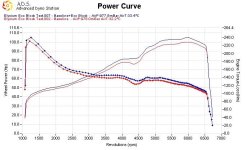
I know its not from a T4R but it is another dyno graph from a car with our Eco Block installed. 14 Honda CR-V 2.4L from Indonesia.
 

Attachments

  • 14 Honda CR-V 2.4L.jpg
    14 Honda CR-V 2.4L.jpg
    41.2 KB · Views: 818
Poster presented a potential product to the forum - forum questioned product data and testing - product developer/seller response to the theories of how it works and members give input/see butt dyno and gas mileage improvements from other forums - some members still say snake oil, some members buy product .

If you want more you will have to take time to read the thread
 
This is a generic Denso post style meter that is also used in other Toyota's & their sister Lexus with different engines. Any idea what other vehicles besides Toyota's this is used in Quirt?
 
Last edited:

Members online

Forum statistics

Threads
278,312
Messages
3,554,088
Members
248,016
Latest member
Advally Service

Trending content

Back
Top