Cruise Range w/ Sprint Booster

Mudhorn

New member
Have you noticed a change in cruising range with the sprint booster?

I took a long road trip I drive 4x a year. This is the first time with the Sprint Booster, previously using the Pedal Commander. I drove the first leg with Green 6 and second leg off. Both legs were similar with 50 miles less range than previous trips. Only difference was it was colder on this trip (15 degrees).

Is there a better setting that will help the cruise range?
 
Register to hide this ad
did your area switch to the less desirable "winter blend fuel" I get worse MPG with winter gas. Not sure if thats a thing in FLA.
 
did your area switch to the less desirable "winter blend fuel" I get worse MPG with winter gas. Not sure if thats a thing in FLA.

Interesting, I have not heard of that.

I drove one more leg with Green 4. I noticed when cruise control was on the RPM went from ~2500 to ~3500. I’ll drive my return next week with it unplugged to compare.

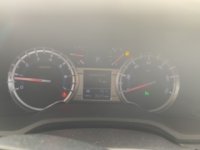
Not a great pic, but 263 miles on a full tank.
 

Attachments

  • A64BB677-BF00-443D-9340-7E1F2FC89AE4.jpeg
    A64BB677-BF00-443D-9340-7E1F2FC89AE4.jpeg
    14.1 KB · Views: 469
Any significant headwind by chance? That can do a number on you also in this situation.

For instance, I drove about 120 miles the other weekend into a pretty nasty west wind while a front was coming in down here. I usually get around 17 mpg highway. I think I was struggling to keep it in the 13s (albeit, I was hauling around 80 to 85 mph a good bit of the way on I10).
 
Were you going to the same location as last time?

Same tires/wheels?

Anything mounted to the exterior that was different from last time?

Was it windy the days you were driving?

Winter fuel came to the market in early November. Winter fuel fuel results in about 5% lower fuel economy.

If the cruise was showing 3,500rpm vs 2,500rpm, it means you were in 4th gear on the highway, not 5th. That alone will suck out mpg. My guess is either 1) you were inadvertently in manual mode or 2) (most likely), the Sprint Booster messes with the cruise control and makes it want to use 4th all the time vs going into 5th.
 
Inside of the module which we refer to as the “gas pedal” is the Accelerator Pedal Position sensor (APP). This is simply a transducer, or potentiometer, that outputs a signal (actually two: a primary and redundant signal) to the Engine Control Module (ECM) based on how far the pedal is depressed. Approx 0 volts = idle speed, approx 5 volts = full throttle. The ECM uses this input, and inputs from several other sensors, to control the engine.

The Sprint Booster (SB) is plugged in between the APP and ECM and merely amplifies the output signal so it reaches full scale output sooner. For example, without the SB say you push the pedal down 1/4 of the way you might get 2.0 volts out. With the SB installed you might press the same distance and get 2.5 volts and a corresponding feeling of “boosting” the response of the engine. Each incremental adjustment of the SB setting might increase that voltage by 0.1 volts or so, and you get a quicker engine response for the same amount of pedal pressure. The pedal position to output voltage response curve is steeper but it still tops out at approx 5 volts.

You don’t get any more horsepower, or better MPGs directly from the SB. Any gas mileage differences you see would be due to your awareness of it and changing your driving habits, for better or worse. Or due to the multitude of other factors that are variable over a multi day trip, like gasoline blend, air temp, tire inflation, wind, elevation, hills, etc.

That said, I have one and I do enjoy it. It overcomes that sluggish pedal response feeling in the stock 4Runner. If it ever fails I’ll get a replacement.

As far as using cruise control with the SB installed, I don’t believe there is any interaction at all. The ECM, with all of its speed sensors, etc. can do all the control without any input from the pedal. There is no mechanical linkage to the pedal, it’s all wires.

 
Inside of the module which we refer to as the “gas pedal” is the Accelerator Pedal Position sensor (APP). This is simply a transducer, or potentiometer, that outputs a signal (actually two: a primary and redundant signal) to the Engine Control Module (ECM) based on how far the pedal is depressed. Approx 0 volts = idle speed, approx 5 volts = full throttle. The ECM uses this input, and inputs from several other sensors, to control the engine.

The Sprint Booster (SB) is plugged in between the APP and ECM and merely amplifies the output signal so it reaches full scale output sooner. For example, without the SB say you push the pedal down 1/4 of the way you might get 2.0 volts out. With the SB installed you might press the same distance and get 2.5 volts and a corresponding feeling of “boosting” the response of the engine. Each incremental adjustment of the SB setting might increase that voltage by 0.1 volts or so, and you get a quicker engine response for the same amount of pedal pressure. The pedal position to output voltage response curve is steeper but it still tops out at approx 5 volts.

You don’t get any more horsepower, or better MPGs directly from the SB. Any gas mileage differences you see would be due to your awareness of it and changing your driving habits, for better or worse. Or due to the multitude of other factors that are variable over a multi day trip, like gasoline blend, air temp, tire inflation, wind, elevation, hills, etc.

That said, I have one and I do enjoy it. It overcomes that sluggish pedal response feeling in the stock 4Runner. If it ever fails I’ll get a replacement.

As far as using cruise control with the SB installed, I don’t believe there is any interaction at all. The ECM, with all of its speed sensors, etc. can do all the control without any input from the pedal. There is no mechanical linkage to the pedal, it’s all wires.

^^^This...
I have the Sprint Booster to. It hasn’t effected my mileage at all. As far as the cruise control goes no difference there either.
That being said I do think the Booster has made the 4Runner more enjoyable in traffic around town.
 
Thank you all. I’ll experiment on the return trip as well. Only environmental difference I noticed was the temperature difference, did not realize that the fuel swaps in the winter (winterized I assume, we do this with airplanes adding in mixtures so it makes sense it will happen with unleaded).

Same destination and route, with the vehicle setup the same. Only difference was switched to sprint booster from pedal commander (which I like both a lot and recommend as an early mod). This was the first time I noticed the RPM differences with cruise control, but maybe it has always done that, I was searching more closely.
 
Nothing "seriously wrong" out of 263 miles on a full tank, but as a caveat, the least I got in the mountains running 85 octane swill with a 3" lift and Firestone 285 MT noisemakers was 275-280.
 
Inside of the module which we refer to as the “gas pedal” is the Accelerator Pedal Position sensor (APP). This is simply a transducer, or potentiometer, that outputs a signal (actually two: a primary and redundant signal) to the Engine Control Module (ECM) based on how far the pedal is depressed. Approx 0 volts = idle speed, approx 5 volts = full throttle. The ECM uses this input, and inputs from several other sensors, to control the engine.

The Sprint Booster (SB) is plugged in between the APP and ECM and merely amplifies the output signal so it reaches full scale output sooner. For example, without the SB say you push the pedal down 1/4 of the way you might get 2.0 volts out. With the SB installed you might press the same distance and get 2.5 volts and a corresponding feeling of “boosting” the response of the engine. Each incremental adjustment of the SB setting might increase that voltage by 0.1 volts or so, and you get a quicker engine response for the same amount of pedal pressure. The pedal position to output voltage response curve is steeper but it still tops out at approx 5 volts.

You don’t get any more horsepower, or better MPGs directly from the SB. Any gas mileage differences you see would be due to your awareness of it and changing your driving habits, for better or worse. Or due to the multitude of other factors that are variable over a multi day trip, like gasoline blend, air temp, tire inflation, wind, elevation, hills, etc.

That said, I have one and I do enjoy it. It overcomes that sluggish pedal response feeling in the stock 4Runner. If it ever fails I’ll get a replacement.

As far as using cruise control with the SB installed, I don’t believe there is any interaction at all. The ECM, with all of its speed sensors, etc. can do all the control without any input from the pedal. There is no mechanical linkage to the pedal, it’s all wires.


I'm new to this site and new to 4Runner. Actually I don't even have mine yet. Fingers Crossed ... Next week.

I've seen talk about these devices and was wondering why? On my test drive I did notice stroke v acceleration was strange compared to my F150.

At any rate are you saying these simply give me more acceleration with shorter peddle travel? Or is there another advantage?

THX
 
I'm new to this site and new to 4Runner. Actually I don't even have mine yet. Fingers Crossed ... Next week.

I've seen talk about these devices and was wondering why? On my test drive I did notice stroke v acceleration was strange compared to my F150.

At any rate are you saying these simply give me more acceleration with shorter peddle travel? Or is there another advantage?

THX

Lots of people get this device to perk up the sluggish electronic accelerator pedal on the 4Runner. There are lots of posts discussing this on the forum.

Here’s one thread to review:

Sprint Booster SALE for 5th gen 4Runner, Limited time...

A member sells them and offers a 5 year warranty and a 30 day trial period.

Burtman Industries
 
One data point to use for comparison for each condition won't tell you squat regardless if you drove the same route. Too many variables.

If you drive similar patterns, then at least 6 or more data points per setting might yield something worth noting but, still, you need to consider variables.
 
One data point to use for comparison for each condition won't tell you squat regardless if you drove the same route. Too many variables.

If you drive similar patterns, then at least 6 or more data points per setting might yield something worth noting but, still, you need to consider variables.

Yeah, too many variables. I recently drove a 2000+ mile trip across 3 states and I recorded data and calculated MPG by hand at each fillup. Ten fillups driving at highway speeds yielded a different number each time, from 17.3 to 21.1 MPG. Two fillups driving a lot of slow 4WD mixed with highway speeds yielded 14.7 and 15.3. And there was nothing I could tell by comparing outbound and return driving.
All you can really deduce is that it falls within the EPA estimates of 17 city, highway 20, mixed 18.
 

Members online

Forum statistics

Threads
278,312
Messages
3,554,087
Members
248,016
Latest member
Advally Service

Trending content

Back
Top