Electronic Rust Protection

Kmvreter

New member
Has anyone every heard of or had experience with an "Electronic Rust Protection" system from CounterAct? Canadian Tire here has just started selling them. I noticed they are on sale (C$100.00 off initial promotion) until the end of today. Their website www.counteractrust.com has some decent info on the systems. Any comments or input?
 
Register to hide this ad
That web site is filled with impressive-sounding words and hype about active rust/corrosion protection. But it hardly describes what the product is or how it works.

This paragraph about the product itself is a great example:

"A small, self-regulating , pulsed DC power supply-control module utilizing "smart technology" (in the case of a typical passenger vehicle system about the size of a pack of cigarettes) is the heart of our corrosion proofing systems. The power supply is all solid state circuitry embedded in electronics grade (UL 94V-0 flame retardant) epoxy encapsulant for long life and durability in any climate. The power supply/control unit utilizes internal self-diagnostics with a simple intuitive led indicator which provides warning of low battery voltage, ground faults or short circuits. This eliminates the need for specialized testing instruments or failure prone PC docking ports and static sensitive internal. componentry. On automobile and light trucks it is typically installed under the hood or in the trunk (wherever the battery is located)) where it runs off the 12V from the vehicle battery drawing less current than a typical digital clock."

I still have no idea what this product does, but I was especially impressed by the flame-retardant UL-listed epoxy encapsulant!

I certainly wouldn't buy something that's 90% hype and maybe 10% substance.
 
Back where i come from, which is the island of Guam our climate is quite rough on the cars since we are surounded by the ocean. Most cars i've seen sold on the dealerships, especially the toyota ones have these installed in the engine bay.

I could probably say myself that this wouldn't prevent rust, but rather just slow it down.
 
Mashimaru said:
Most cars i've seen sold on the dealerships, especially the toyota ones have these installed in the engine bay.

I could probably say myself that this wouldn't prevent rust, but rather just slow it down.

You're right. They don't claim to prevent, just protect and slow the process.

The site does like to hype but it also gives good info:

"1. A small, self-regulating , pulsed DC power supply-control module utilizing "smart technology" (in the case of a typical passenger vehicle system about the size of a pack of cigarettes) is the heart of our corrosion proofing systems...

2. A removable modular wiring harness with fused power lead (to permit easy access to the power supply/control module for inspection or for easy transferability of our corrosion control devices to another vehicle.)...

3. One or more of our unique "programmed capacitive couplers". These capacitive couplers, which are attached to the protected metal surface with aircraft grade adhesive, are charged by the power supply/control module and function as if they were the positive half of a capacitor. They are wired to the power supply in parallel (each on individual circuits) and meticulously engineered and controlled so that each serves to produce a measured and specific limited range of capacitance and thus deliver a measured and specific limited range electrostatic charge via capacitive coupling...

Together these three components serve to induce a measured and specific negative electrostatic surface charge on the metal surface being protected (your vehicle's body for instance) thus capacitive coupling treats the metal body as if it were the negative half of a capacitor. This negative surface charge serves to interfere with the normal electrochemical corrosion processes that create corrosion on metals..."

They also explain elsewhere the difference between their new approach versus traditional systems (which I've heard of before, ie. underground pipe systems.) They are basically covering the vehicle with an ongoing static charge.
I'll be the guinea pig. It can't hurt to try. The sale was ending yesterday so I sprang for one at the last minute. Now to find time for the easy install.

 
boy im sure they make good and convincing job resume as well. they have some sweet candy words to sell thier product. :artist:
 
It will Increase horsepower by 15% and might improve your gas milage by up to 10% it will also increase your penis size by 5% :D . LOL, do not waste your money on it it does not work, if it did automakers would install them during assembly.
 
Rust

Cathodic protection makes the iron a cathode in a battery formed whenever water contacts the iron and also a sacrificial anode made from something with a more negative electrode potential, commonly zinc or magnesium. The electrode itself doesn't react in water, but only to provide electrons to prevent the iron rusting.

They install these on massive bridges too to prevent corrosion.
 
The electronic underwater bridge support corrosion protection systems rely on a closed circuit between an anode, and the bridge support which is a cathode, with water functioning as the electrolyte or conductor. This is based on well known electrochemical properties and is not BS.

Unfortunately, there is no way to do this with an automobile. The corrosion cell on automobile bodies is extremely small and there is no practical way to apply a current to conteract it.

In short, those electronic corrosion protection devices for automobiles are in the same league as the magnetic fuel molecule aligners seen in the JC Whitney catalogue and (in days past) on late night TV infomercials.

The good news is that it probably won't hurt anything either.
 
I know there is a lot of skepticism about this but like was said it can't hurt. I got it on sale. Finally getting around to posting the install pics.

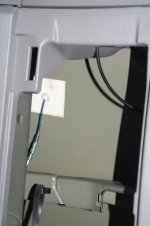
Ran the wire to the back along the frame rail and attached the rear coupler pad on the inside sheet metal behind the jack/tools:
 

Attachments

  • t4rcounteract01.jpg
    t4rcounteract01.jpg
    101.7 KB · Views: 3,713
Last edited:
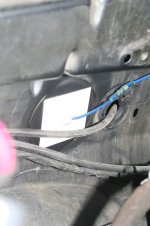
Attached the front coupler pad on the passenger side in the engine bay ahead of the firewall:
 

Attachments

  • t4rcounteract02.jpg
    t4rcounteract02.jpg
    128.2 KB · Views: 4,434
Last edited:
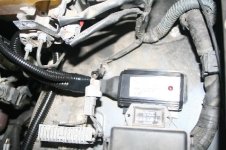
Mounted the control unit behind the fuse box. Cleaned up the wiring with wire loom and made the battery connections (may clean this up more by hiding the wiring more.)

I plan on running a long term test by mounting some professionally painted test panels (one grounded; the other insulated) just to see if there is any validity to what they claim.
 

Attachments

  • t4rcounteract03.jpg
    t4rcounteract03.jpg
    81.1 KB · Views: 4,382
Last edited:
Looks exactly what i see on Guam based Toyota vehicles. I tell ya that ocean air is jus killer on our cars. Let us know how it goes Kmv, thanks for being the guinea pig hehe :D
 
Long term update?

Mounted the control unit behind the fuse box. Cleaned up the wiring with wire loom and made the battery connections (may clean this up more by hiding the wiring more.)

I plan on running a long term test by mounting some professionally painted test panels (one grounded; the other insulated) just to see if there is any validity to what they claim.

Hey KM

I think I just joined the club - I have a deposit down on an '07 Limited V8. The stealership graciously provided me with a way to give them more money, and I figure your 4 year run is a good test. Has it worked?

Chris
 
FWIW, I had this electronic rustprooofing thing installed on my Tacoma since they are notorious for rusting. Idk if it's gonna work but what I wanted more was the 10 year warranty specifically for rust that comes with it. The brand of my unit is "ProCoat"
 
Rust is a problem in Hawaii too? I thought road salt was the main cause of rust. Do you guys have issues with salt from ocean water?
 
I'm an EE with 30 years in automotive...

Please spend your money wisely.
Clarke,
Those sound like the words of a skeptic. Unlike many skeptics (or advocates) you have some serious credentials. Please enlighten me/us.

What I have personally witnessed: Early '80's Honda's rusted like crazy. My best friend was a parts manager at a Honda dealership for many years in Connecticut. I'd go visit him often and have personally reviewed many Honda's that benefited from similar devices. It was a great 'lab' because they were all the same vintage & model Honda's. The ones that had electronic rust protection fared much better.

I can absolutely accept that these type of devices would work differently in different climates (wetness/humidity specifically). If I understand the theory correctly the wetter the better in terms of effectiveness (or at least the wetter it is the faster the anode gets used up).

These types of systems are great on boats, bridges and many other things. I accept that applying them onto a car is like driving a nail by hitting it with a pry-bar. It'll work, sort of. It will get the nail in if you work it just right but the pry-bar as a hammer leaves a lot to be desired.

Open up a can of that engineering techno on us:D
:cheers:
 
Last edited:
Rust is a problem in Hawaii too? I thought road salt was the main cause of rust. Do you guys have issues with salt from ocean water?

It's only a real problem here if you live near the ocean or drive by the coastline frequently...all of that salty mist/air is like cancer for a frame. It can get bad here but I still think those guys up where they salt the roads have it worse.

At least the 4Runner's undercarriage was painted well so there is minimal rust underneath, mostly on the rear axle. However, the Tacomas are known for the half ass paint job on their undercarriage so that worries me. (At the time of purchase, I didn't know it, but it already had rust!) :mad:
 

Members online

Forum statistics

Threads
278,307
Messages
3,554,056
Members
248,016
Latest member
Advally Service

Trending content

Back
Top