Frame Rust Anonymous

shahsmerdis

New member
Hi everyone I'm bob, and I have a rust problem. I knew about my rust problem for about 6 months now, but Didn't want to admit it to myself....

Okay my name isn't bob. The story---

I have a few holes in the frame near the front cross member. small, but none the less there. I would say 90% of the frame is solid, with a little bit of yellow. Its fluid film so it shouldn't get worse...

anyway, so I carefully looked on google before going to get an inspection here in New york state, and the only thing I saw was

"Chassis/frame - check for breaks, cracks, or severe rust at the suspension attachment points"

this isn't a suspension attachment point, but they still failed me for safety. I have 30 days to fix this. Are these guys just trying to cover there asses, or is NYS super anal about frame rust? I went to the dealer btw. I've seen plenty of rusted 4runners, and mine isn't nearly as bad except for that one area....

I guess, this is a wake up call that I won't be putting anymore money into this car. But the sad thing is I Really put a lot of time into getting this car to tip top shape, now I feel some one hit me in the balls. I was hoping to get another 2-3 more years out of it. What are your thoughts?

Thanks.
 
Register to hide this ad
Not looking to hijack your thread but I feel your pain and it always gets me to thinking about this in the salty states. Is this usual for all cars or are some just more susceptible than others? And, is there a way if caught early enough to seal the frame with some epoxies or chemicals of some kind? Curious about this in case I ever find myself moving to one of these states...
 
Last edited:
Not looking to hijack your thread but I feel your pain and it always gets me to thinking about this in the salty states. Is this usual for all cars or are some just more susceptible than others? And, is there a way if caught early enough to seal the frame with some epoxies or chemicals of some kind? Curious about this in case I ever find myself moving to one of these states...

no you arent hijacking at all, I figure I'd leave this open ended, didn't really have a point to the thread, the solution is very easy, weld it up or get another car.

In all fairness two half dollar size holes is considered early enough. Some people notice in when half the frame is gone or lower control arm fell off. etc. If my dad power washed it more often, probably wouldn't have been as bad. I now know to fluid film every season.... No chemicals would fix the hole, but only prevent it from getting worse. Only solution would be to weld now. only prevenative maintain that could have been done was heavy degreaser + fluid film.

Um, someone was telling on reddit, VW puts a very tick layer of undercoating nearly 2mm and he has no spec of rust after 10 years. While some GM's use cheap brake lines fuel lines that fail after 5-10 years (doesn't affect 4runners). Those rust out and that is the worst. In the case of the taco frames, Toyota outsourced the frame to another company, and that company f****ed up the factory coating because it was dipped in sealer that was at the wrong temperature or something to that effect. so it wasn't to spec. Depends on the level of detail on the manufactures part, and where they get there parts outsourced .....

Pretty much its a maintenance item. Just like how you change your oil you need to wash the underbody of your car. If manufactures just put that into there maintenance schedule and emphasis that it is as important as an oil change or tire rotation, maybe we would have a fighting chance.

Edit: it is also highly location dependent liquid brine really seems to be the killer of all cars. Those areas that don't salt, don't have an issue.
 
no you arent hijacking at all, I figure I'd leave this open ended, didn't really have a point to the thread, the solution is very easy, weld it up or get another car.

In all fairness two half dollar size holes is considered early enough. Some people notice in when half the frame is gone or lower control arm fell off. etc. If my dad power washed it more often, probably wouldn't have been as bad. I now know to fluid film every season.... No chemicals would fix the hole, but only prevent it from getting worse. Only solution would be to weld now. only prevenative maintain that could have been done was heavy degreaser + fluid film.

Um, someone was telling on reddit, VW puts a very tick layer of undercoating nearly 2mm and he has no spec of rust after 10 years. While some GM's use cheap brake lines fuel lines that fail after 5-10 years (doesn't affect 4runners). Those rust out and that is the worst. In the case of the taco frames, Toyota outsourced the frame to another company, and that company f****ed up the factory coating because it was dipped in sealer that was at the wrong temperature or something to that effect. so it wasn't to spec. Depends on the level of detail on the manufactures part, and where they get there parts outsourced .....

Pretty much its a maintenance item. Just like how you change your oil you need to wash the underbody of your car. If manufactures just put that into there maintenance schedule and emphasis that it is as important as an oil change or tire rotation, maybe we would have a fighting chance.

Edit: it is also highly location dependent liquid brine really seems to be the killer of all cars. Those areas that don't salt, don't have an issue.

Living in a Canadian snow belt, I am meticulous (aka Anal) about rust prevention & have made several 15-20 year old vehicles last without needing any frame repairs. Some of these used/high mileage vehicles even sold with original brake lines & exhaust. The chemical problem we face is:
- Sodium Chloride Prewet with Magnesium chloride is common on our roads in winter

Why aren’t salt and sand used every time there is ice or snow on a highway?
When the temperature dips below -10 Celsius (or 14 degrees Fahrenheit), salt (sodium chloride) is not very effective. Calcium chloride and
magnesium chloride are used in some colder parts of the province as de-icing agents and to freeze-proof sand piles.
Sand is primarily used for traction, but in high winds it will blow off the road.

Some random thoughts:

a) I believe the Volvo line, has some of the best of the best factory undercoating - in terms of stopping new rust in its tracks & extra sound deadening is the added bonus.
- new body shell sheet metal that are galvanized, prior to paint top coat
- is a premium Manufacturing operation, that many vehicle brands don't bother with...$$
- the unibody coating is like a urethane truck bed liner, approx. 1/16" thick
- sprayed on before cancer has a chance to start

b) Brake & Fuel Lines - NiCopp® is a nickel-copper alloy brake tubing that meets SAE Standard J1047 and ISO 4038, meeting all international and U.S. requirements for brake tubing. This alloy is approximately 9.2% nickel, 1.4% iron, 0.8% manganese, and 88.6% copper. Under the UNS system, this alloy is designated as UNS C70600. NiCopp® therefore has the strength and structural integrity of steel lines, but with the added benefit of being much more corrosion resistant. NiCopp® is also easier to bend and form than steel tubing. Nickel-copper, commonly referred to as '90-10 copper', has been used on several European vehicle brake systems since the 1970's, including: Volvo, Audi, Porsche, and Aston Martin.
• NiCopp® Does Not Rust or Corrode
• DOT Approved for Hydraulic Brake Systems
• Bends 58% Easier than Steel Tubing
• Available in Coils of 25', 50', and 100'
• Finished Lines Available for Domestic & Import
• Black Oxide Fittings 2X Corrosion Resistance
NiCopp® Archives - AGS Company AGS Company
https://www.amazon.com/Copper-Nickel-Brake-Line-CN-316/dp/B00651OAVS

c) Wax-Oils like Fluid Film, needs to be sprayed on every fall, using a hoist and proper spray equipment.
- its cheap insurance to greatly prolong vehicle life, against the ravages of winter road salt

d) More undercoat reading: That evil salt cancer trying to kill our babies / see Post #29
http://www.toyota-4runner.org/gener...-evil-salt-cancer-trying-kill-our-babies.html

e) I've used POR15 decades ago / technically I don't like the thought of encapsulating rust, that needs to be sand blasted off.
Even old Zeibart coatings, will dry out & crack, and greatly speed up the hidden rust process.

f) I am not a fan of Krown or Rust Check undercoat products either (pretty much the same) / seem to be water soluble, and wash off quickly.
- while still 100x better, than no rust treatment preventive maintenance

g) Proper application of wax-oil undercoating sprays - has to get into the hidden panels / main Key Success Factor (KSF).
- good example is bottom of doors (for tight seams), inside frame rails & floor pan cross members, and inside rocker &
quarter panels wheel arch lips

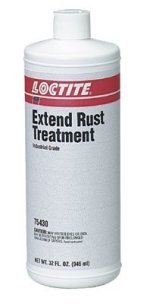
h) For specific rust spot treatment, on dry metal - Extend is an excellent product IMO / 8oz cans, sold at O'Riley's Auto Parts...like $7-$8.
- Loctite 75430® Extend® Rust Convertor provides one-step rust treatment that destroys old rust, prevents new rust. Just brush or spray it on. Within 10 minutes, rust disappears and is converted to a durable black protective coating. Surface rust must be present. Use as a primer or finish coat. Specially formulated to be used with body filler and fiberglass.
 

Attachments

  • 4runner4.jpg
    4runner4.jpg
    20.4 KB · Views: 454
  • Extend75430.jpg
    Extend75430.jpg
    13.2 KB · Views: 431
Last edited:
Easy to apply with a brush, you have to do two coats as per the instructions and it sets quick in warm weather. I did my rear axle in 3 parts, left, right and all the shock and lca mounts, so that was 3 days at 1.5 hours per day. The frame I hit the welds with and angle grinder with a brush on it then used an old Wagner power sprayer to spray the whole chassis forward of the rear axle. Even though it wasted a $60 sprayer because I couldn't clean it afterwards man did it save me so much time. I can hit the stuff with a hammer and it won't chip. I pressure washed the frame half assedly and it still adhered really well. I went back to an original section I did and ground down a spot that had a little surface rust and it was still mint under the coating. The only way I've messed this stuff up is by dragging the rear pumpkin over a rock, which was a quick and easy fix: paint cup and a brush with a little rust trap. Read the instructions and it's easy to use.
 
Living in a Canadian snow belt, I am meticulous (aka Anal) about rust prevention & have made several 15-20 year old vehicles last without needing any frame repairs. Some of these used/high mileage vehicles even sold with original brake lines & exhaust. The chemical problem we face is:
- Sodium Chloride Prewet with Magnesium chloride is common on our roads in winter

Why aren’t salt and sand used every time there is ice or snow on a highway?
When the temperature dips below -10 Celsius (or 14 degrees Fahrenheit), salt (sodium chloride) is not very effective. Calcium chloride and
magnesium chloride are used in some colder parts of the province as de-icing agents and to freeze-proof sand piles.
Sand is primarily used for traction, but in high winds it will blow off the road.

Some random thoughts:

a) I believe the Volvo line, has some of the best of the best factory undercoating - in terms of stopping new rust in its tracks & extra sound deadening is the added bonus.
- new body shell sheet metal that are galvanized, prior to paint top coat
- is a premium Manufacturing operation, that many vehicle brands don't bother with...$$
- the unibody coating is like a urethane truck bed liner, approx. 1/16" thick
- sprayed on before cancer has a chance to start

b) Brake & Fuel Lines - NiCopp® is a nickel-copper alloy brake tubing that meets SAE Standard J1047 and ISO 4038, meeting all international and U.S. requirements for brake tubing. This alloy is approximately 9.2% nickel, 1.4% iron, 0.8% manganese, and 88.6% copper. Under the UNS system, this alloy is designated as UNS C70600. NiCopp® therefore has the strength and structural integrity of steel lines, but with the added benefit of being much more corrosion resistant. NiCopp® is also easier to bend and form than steel tubing. Nickel-copper, commonly referred to as '90-10 copper', has been used on several European vehicle brake systems since the 1970's, including: Volvo, Audi, Porsche, and Aston Martin.
• NiCopp® Does Not Rust or Corrode
• DOT Approved for Hydraulic Brake Systems
• Bends 58% Easier than Steel Tubing
• Available in Coils of 25', 50', and 100'
• Finished Lines Available for Domestic & Import
• Black Oxide Fittings 2X Corrosion Resistance
NiCopp® Archives - AGS Company AGS Company
https://www.amazon.com/Copper-Nickel-Brake-Line-CN-316/dp/B00651OAVS

c) Wax-Oils like Fluid Film, needs to be sprayed on every fall, using a hoist and proper spray equipment.
- its cheap insurance to greatly prolong vehicle life, against the ravages of winter road salt

d) More undercoat reading: That evil salt cancer trying to kill our babies / see Post #29
http://www.toyota-4runner.org/gener...-evil-salt-cancer-trying-kill-our-babies.html

e) I've used POR15 decades ago / technically I don't like the thought of encapsulating rust, that needs to be sand blasted off.
Even old Zeibart coatings, will dry out & crack, and greatly speed up the hidden rust process.

f) I am not a fan of Krown or Rust Check undercoat products either (pretty much the same) / seem to be water soluble, and wash off quickly.
- while still 100x better, than no rust treatment preventive maintenance

g) Proper application of wax-oil undercoating sprays - has to get into the hidden panels / main Key Success Factor (KSF).
- good example is bottom of doors (for tight seams), inside frame rails & floor pan cross members, and inside rocker &
quarter panels wheel arch lips

h) For specific rust spot treatment, on dry metal - Extend is an excellent product IMO / 8oz cans, sold at O'Riley's Auto Parts...like $7-$8.
- Loctite 75430® Extend® Rust Convertor provides one-step rust treatment that destroys old rust, prevents new rust. Just brush or spray it on. Within 10 minutes, rust disappears and is converted to a durable black protective coating. Surface rust must be present. Use as a primer or finish coat. Specially formulated to be used with body filler and fiberglass.

good info bud. I had to use por15, because it is what it is. I would like to try the loctite
 

Members online

Forum statistics

Threads
278,307
Messages
3,554,056
Members
248,016
Latest member
Advally Service

Trending content

Back
Top