Help Noise after Dealer Transmission Fluid exchange

DaddySteve

New member
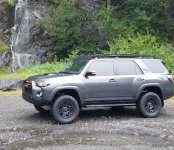
2018 TRD ORP 50k miles. Took it in to the dealer this morning for a Trans Fluid exchange. As soon as I left the dealer I noticed a strange noise right side about where cooler lines are while accelerating between 1st and 2nd. Only when accelerating. No noise and low speed or in higher range gears or low rpm.

Turned around and went straight back. 4 others from dealer drove the truck and noticed same noise. They gave me a rental and told me a Toyota Service Specialist would have to come and diagnose the problem. WTF!!!

I am :redbrick: for taking it in to dealer. I have done all the maintenance myself since new. I had a $50 off coupon so decided to let them do it. So pissed!

Any ideas or help would be greatly appreciated
 
Register to hide this ad
crazy! but not surprised. My question would be "Shouldnt a 'toyota service specialist' be doing the work in the first place?"

they always seem to have the lackeys doing the "service" work.

I would be seriously pissed and demand that they take you back into the shop and check the trans level in front of you as an assurance that everything is right.
 
Thank your lucky stars that your still under warranty! I bet money that if you were outside the warranty, they would tell you it's normal.
 
I'd have to hear it to have some idea of what could possibly be causing it. Otherwise it's just guessing.

Good luck.
 
I'll be sure to post the outcome. Hopefully its a good one!
 

Attachments

  • 20210922_130804.jpg
    20210922_130804.jpg
    79.2 KB · Views: 1,227
I'd have to hear it to have some idea of what could possibly be causing it. Otherwise it's just guessing.

Good luck.

Kind of sounds like fluid running thru a line. Or air in a line. vary faint. similar to when fluid is running thru the heater core in dash. But very faint. I know thats kind of vague reference.
 
Dealer is saying its the Rear Diff causing the noise. And that it needs to be replaced. Doesn't sound right to me. Who knows....They are covering it under warranty.
 
I had the same EXACT thing happen to me! It was low fluid after a transmission fluid change. Mine went about 1 month before I noticed and it temporarily resulted in some harsh shifts(almost like a torque converter lock up issues).

Fortunately the lead tech went on a ride along with me and I was able to show him the sound and the unfortunate effect of the low fluid shifts. He flushed and made sure to top off the transmission properly. I'm guessing some of the rookie techs aren't following the proper procedure of the transmission fluid swaps and aren't bring it up to temp or something.

Its been 6 months and nothing has happened again. My vehicle was out of warranty but the tech performed it all for free, probably to avoid litigation.

I hope this helps.
 
I would never, ever take my vehicles to a dealer. I can do the job faster and better than the time to and from plus the waiting. Just not worth it and I have the peace of mind knowing it’s done right.
 
I wonder if the fluid level is low? They might be one of those dealers that has a contract with someone like BG/Valvoline and do machine flushes? I remember the BG guys were trying to sell us that their machine doesn't require you to have to set the level. Me and a couple guys never bought that BS and found the fluid levels to always be off and needed to be adjusted after the service.

Another possibility is the technician forgot to install the fill plug. We've had a that happen once or twice with... persons who are no longer employed at my shop... we'll just leave it at that...

But if they're warranting the rear diff, that doesn't seem like a "oops we didn't do it right" issue.
 
Biggest lesson to learn from this is Do Not take it to dealer for anything unless they are a known trusted group. I'm an aircraft line mech for a major airline. I am sure they are having trouble finding quality workers just like we are.

I still don't believe its a Diff. This vehicle has been flawless in operation. Diffs don't just all of the sudden go bad. Ive had experience with Bad Diffs in other vehicles so I am familiar with those sounds.

I believe its just what the other guy said above. Not enough Fluid in the Tranny.

I left a message this evening for service manager to call me. I want to know how they determined the noise was coming from the Rear Diff. What actually has failed in the Rear Diff. The Service provider told me that I probably put the wrong fluid in it when I did it at 30k. I said ahhh no I put the Toyota 75/85 gear oil. He said oh but you did not put any conditioner in with it. I was like say what. Then he back pedaled and said look we are going to make this right and get it fixed thats all that matters. :ybrick::ybrick::ybrick:
 
Biggest lesson to learn from this is Do Not take it to dealer for anything unless they are a known trusted group. I'm an aircraft line mech for a major airline. I am sure they are having trouble finding quality workers just like we are.

I still don't believe its a Diff. This vehicle has been flawless in operation. Diffs don't just all of the sudden go bad. Ive had experience with Bad Diffs in other vehicles so I am familiar with those sounds.

I believe its just what the other guy said above. Not enough Fluid in the Tranny.

I left a message this evening for service manager to call me. I want to know how they determined the noise was coming from the Rear Diff. What actually has failed in the Rear Diff. The Service provider told me that I probably put the wrong fluid in it when I did it at 30k. I said ahhh no I put the Toyota 75/85 gear oil. He said oh but you did not put any conditioner in with it. I was like say what. Then he back pedaled and said look we are going to make this right and get it fixed thats all that matters. :ybrick::ybrick::ybrick:

I'd just be like, "Why would I need to add conditioners? I used a GL-5 75w-90 gear oil as specified by Toyota, it should already have the correct additives and formulation for the application." Unless said advisor is confusing his services with an older LSD rear diff.

I agree, the rear diff seems a bit suspicious to me also; but I have no idea what the sound is or what they determined. But yeah, I'm guessing a fill plug was left out or something unless they did a 4WD service on your vehicle and forgot to fill the diffs... which would be a whole other issue.

why bother with a transmission fluid exchange at only 50k miles?

Not a bad idea, if you look at your maintenance schedule it does specify a "severe conditions" interval (despite it supposedly being a "lifetime fluid"). Almost all our SUVs/Trucks in this area qualify under Toyota's "severe conditions" guidelines if not by geography/climate, by modifications and uses. I did the first transmission fluid service on my '04 at 100k and follow the manual with 5yr/50k coolant services and also do my transmission fluid at the same time for convenience rather than waiting until 60k. I also have my doubts that the fluid really holds up that long in anything other than constant freeway cruising.

why bother with a transmission fluid exchange at only 50k miles?


Post Note-

Thank you for mentioning the group thing, most people forgot/don't realize that dealerships in the US are not Toyota, they're private franchise entities owned by companies/family groups and so how one dealership operates is not equivalent to all dealerships.
 
Last edited:
I had the power trans flush at our local Toyota dealership recently, at 146,000 miles (I know... crazy to have waited that long). They said after 150,000 miles they won't do it if you haven't done the fluid flush/ exchange before.

Everything seems fine except it's a bit more reluctant than before to downshift while gradually pressing down on the accelerator.

Could this mean my tans fluid level is a bit low?
 
I'd just be like, "Why would I need to add conditioners? I used a GL-5 75w-90 gear oil as specified by Toyota, it should already have the correct additives and formulation for the application." Unless said advisor is confusing his services with an older LSD rear diff.

I agree, the rear diff seems a bit suspicious to me also; but I have no idea what the sound is or what they determined. But yeah, I'm guessing a fill plug was left out or something unless they did a 4WD service on your vehicle and forgot to fill the diffs... which would be a whole other issue.


Not a bad idea, if you look at your maintenance schedule it does specify a "severe conditions" interval (despite it supposedly being a "lifetime fluid"). Almost all our SUVs/Trucks in this area qualify under Toyota's "severe conditions" guidelines if not by geography/climate, by modifications and uses. I did the first transmission fluid service on my '04 at 100k and follow the manual with 5yr/50k coolant services and also do my transmission fluid at the same time for convenience rather than waiting until 60k. I also have my doubts that the fluid really holds up that long in anything other than constant freeway cruising.


Post Note-

Thank you for mentioning the group thing, most people forgot/don't realize that dealerships in the US are not Toyota, they're private franchise entities owned by companies/family groups and so how one dealership operates is not equivalent to all dealerships.

50 seems early no matter how "severe" unless you're in 4x4 off road for half those miles. ESPECIALLY if there are ZERO shifting issues or any cooked fluid smells.

That being said, i have a fear of touching the transmission fluid for the OP's very reason lol. So i may be biased.
 
I think it would be really interesting to be able to do either long term testing or have some way to collect enough data to see if transmissions that get serviced last longer than ones that don't. Based on the small sample set on this forum, my bet would be that your odds are better by doing nothing other than possibly adding a cooler than by having the trans fluid changed. It seems that almost every transmission failure that I've read about on this forum is the result of a fluid change and there are very few or no transmission failures I've read about that were due to not changing the fluids or for any other reason in transmissions that had not been serviced. Based on very little data, I'd probably say that fluid changes done right really is the best choice, but unless you're doing it yourself and know exactly what you're doing, it's better to leave the OEM fluid in for life. And that there's a high probability that 300k miles or more is pretty consistently do-able without ever changing the fluid. So unless you're towing heavy regularly or working it really hard, I'd favor not changing the fluid ever.

Now for my hypocrisy...lol. I have a couple cases of WS fluid in my shop and was planning to change my 4Runner trans fluid at 75k before I sold it. I used it pretty hard and thought it was probably a good idea to exchange the fluid. I'll probably use the fluid to swap out my Tundra trans. Mostly because I have the fluid and the use history is unknown. Based on the condition of the truck and the fact that the inside of the hitch and hitch pin hole have almost no visible signs of wear or chipped paint, I'd bet a that the truck never once had a hitch put in or towed anything. I'll change that. Haha. First trip I'll take will be towing a travel trailer to Alaska in June. So it'll get a little workout. I've been watching the classifieds for a used space shuttle to tow, but the market right now is pretty tight.

I've been kicking around some ideas on how to make an idiot proof transmission fluid exchanger that would swap the exact amount of fluid back in as comes out. It would seem like that should make the exchange very reliable and avoid a lot of the under-fill issues we see. But I haven't come up with a way to do it inexpensively with easy to find off the shelf parts. The biggest issues I am struggling to find the solution to are how to make it automatic without electronics. The obvious solution I see is to use a vessel with a barrier so that the fluid pumped out displaces the same volume of fluid back into the transmission. The problem is that it needs to be a low friction diaphragm. So a floating piston type design won't work. And a bellows type separator is expensive. Not sure what else there is out there that would work well. I don't think air pressure between two sealed vessels is a good solution. And the second problem is temperature. The volume expands when warm so if you remove warm fluid and exchange for cold fluid, you'll likely end up with too much fluid or the reverse. So you'd need the new fluid to be at the same temp as the old fluid. And mineral based oils expand at different rates than synthetic oils. But the basic info suggests something like 10% expansion between 32* and 200*F. If the fluid going in is room temp and the fluid coming out is operating temp, you'd overfill by 8-10% using the same volume. That's over a quart too much. I'm guessing that's why the fluid exchange machines fail to get a proper fill.

So maybe it's just not practical to do a perfect swap without the final fluid check. IMO it would be pretty useful for Toyota/Aisin to re-design the trans fill system and oil pan so there's a wider range of acceptable fluid volume and ideally make it so that it can be checked when hot or cold. Maybe that means two check plugs in the pan and you use one or the other depending on trans temp. Having the trans pan just a bit larger so it could be plus or minus 1 quart would go a long way toward avoiding most of these issue I think.

I hope in this case the dealer figures out what went wrong and fixes it. The dealer should be following the FSM procedure to do the trans fluid exchange. I'm not sure why they'd do anything else. If you have a vehicle lift, the FSM procedure handy and all the tools, it's really pretty straight forward. And that's what you expect at a dealership - you pay more for them to do it by the book as intended by the engineers who designed it. Unfortunately that's not always what you get.

 
Last edited:
I think it would be really interesting to be able to do either long term testing or have some way to collect enough data to see if transmissions that get serviced last longer than ones that don't. Based on the small sample set on this forum, my bet would be that your odds are better by doing nothing other than possibly adding a cooler than by having the trans fluid changed. It seems that almost every transmission failure that I've read about on this forum is the result of a fluid change and there are very few or no transmission failures I've read about that were due to not changing the fluids or for any other reason in transmissions that had not been serviced. Based on very little data, I'd probably say that fluid changes done right really is the best choice, but unless you're doing it yourself and know exactly what you're doing, it's better to leave the OEM fluid in for life. And that there's a high probability that 300k miles or more is pretty consistently do-able without ever changing the fluid. So unless you're towing heavy regularly or working it really hard, I'd favor not changing the fluid ever.

Now for my hypocrisy...lol. I have a couple cases of WS fluid in my shop and was planning to change my 4Runner trans fluid at 75k before I sold it. I used it pretty hard and thought it was probably a good idea to exchange the fluid. I'll probably use the fluid to swap out my Tundra trans. Mostly because I have the fluid and the use history is unknown. Based on the condition of the truck and the fact that the inside of the hitch and hitch pin hole have almost no visible signs of wear or chipped paint, I'd bet a that the truck never once had a hitch put in or towed anything. I'll change that. Haha. First trip I'll take will be towing a travel trailer to Alaska in June. So it'll get a little workout. I've been watching the classifieds for a used space shuttle to tow, but the market right now is pretty tight.

I've been kicking around some ideas on how to make an idiot proof transmission fluid exchanger that would swap the exact amount of fluid back in as comes out. It would seem like that should make the exchange very reliable and avoid a lot of the under-fill issues we see. But I haven't come up with a way to do it inexpensively with easy to find off the shelf parts. The biggest issues I am struggling to find the solution to are how to make it automatic without electronics. The obvious solution I see is to use a vessel with a barrier so that the fluid pumped out displaces the same volume of fluid back into the transmission. The problem is that it needs to be a low friction diaphragm. So a floating piston type design won't work. And a bellows type separator is expensive. Not sure what else there is out there that would work well. I don't think air pressure between two sealed vessels is a good solution. And the second problem is temperature. The volume expands when warm so if you remove warm fluid and exchange for cold fluid, you'll likely end up with too much fluid or the reverse. So you'd need the new fluid to be at the same temp as the old fluid. And mineral based oils expand at different rates than synthetic oils. But the basic info suggests something like 10% expansion between 32* and 200*F. If the fluid going in is room temp and the fluid coming out is operating temp, you'd overfill by 8-10% using the same volume. That's over a quart too much. I'm guessing that's why the fluid exchange machines fail to get a proper fill.

So maybe it's just not practical to do a perfect swap without the final fluid check. IMO it would be pretty useful for Toyota/Aisin to re-design the trans fill system and oil pan so there's a wider range of acceptable fluid volume and ideally make it so that it can be checked when hot or cold. Maybe that means two check plugs in the pan and you use one or the other depending on trans temp. Having the trans pan just a bit larger so it could be plus or minus 1 quart would go a long way toward avoiding most of these issue I think.

I hope in this case the dealer figures out what went wrong and fixes it. The dealer should be following the FSM procedure to do the trans fluid exchange. I'm not sure why they'd do anything else. If you have a vehicle lift, the FSM procedure handy and all the tools, it's really pretty straight forward. And that's what you expect at a dealership - you pay more for them to do it by the book as intended by the engineers who designed it. Unfortunately that's not always what you get.

Your conclusions are based more on emotion than real actual data. The reason you don’t hear about failures with non-serviced transmissions is that that the owners sold them before that occurred. You yourself did the same with wishful thinking evidenced by bottles of WS still on the shelf.

You are over thinking on the fluid swap measurement device, which is completely unnecessary. The final measurement is done with the fluid temp at a range 104 to 115. The amount of fluid expansion is immaterial. Just get it to temp by idling 20 minutes and starting your fluid change approximately 2 quarts at time until clear or you’ve replace the entire amount (based on empty fluid bottles). When done, pull the fluid level drain and top up if necessary, or let drain if too full.

We have 300K on 2014 SR 5 transmission. I’ve done fluid changes every 120K miles on the transmission using Valvoline Synthetic ATF. If you believe some here, I’ve done everything wrong, yet the scoreboard says otherwise.

Knowledge spawns confidence. Ignorance spawns fear.
 
Last edited:
The temperature range is relatively wide as long as you're starting from a cool drivetrain. You can even skip needing the scantool or jumping pins (though jumping pins puts it into a "let's warm up faster" logic) and use a decent quality IR Thermometer to measure the pan (make sure the pan is relatively clean, doesn't need to be spotless, just not caked in dirt or mud) because the temperature sensors are in the valve body, so if you shoot for roughly the middle of the spec you should be fine. The fluid itself doesn't expand, but I have noticed that once it starts getting into the temp range you may notice the fluid volume coming out may increase a little, my guess is some sort of thermal bypass or something. It doesn't have to be super precise, the tolerances for the temperature and the slightly vague "watch for dribble" to measure give you some leeway.

It is also totally fine to overfill it a quart or so while you're doing the flush, as long as you drain/adjust it before driving a significant amount. I will often overfill the transmission by a a half to a quart and pull the check plug within 5° of spec to adjust, it's a bit easier than trying to quickly top off when you're at the edge of spec.

Also, make sure the A/C is off and that you're not loading up the vehicle so the idle stays stable
Idle fluctuations will mess up the reading. It's a bit convoluted, but not rocket science.
 
People saying 50k is too early...I am of the mindset that an ounce of prevention is better than a pound of cure. Old, burnt, dirty fluid is the enemy of transmissions. I would definitely change my fluid often (either myself or a competent shop). I know it's a different animal, but my C63 needed the trans fluid changed every 40k per the manual and it was always black and burnt. I kept up with the maintenance for 100k, sold the car, and then within 500 miles the trans gave out. Now I don't know if it was abused after sale or not (I suspect), but I wish I had done the trans fluid more often to keep fresh, clean fluid in there. I think 50k seems more than reasonable.

I also agree that if the diff wasn't making noise before, it likely isn't the source of the sound. I'm betting on the fluid level being low
 

Members online

Forum statistics

Threads
278,316
Messages
3,554,120
Members
248,016
Latest member
Advally Service

Trending content

Back
Top