
How to calculate correct shocks?

illzoni

New member
My 1987 4Runner has the Chevy spring mod in the rear with little lift (torsion bars and spacers) in the front. It rides a bit like a stinkbug and the front is too stiff. I'd like to lower the rear end as I did here:
1987 Toyota 4Runner

Unfortunately, when I did that the shocks were too compressed and the ride went to crap. To lower it as I did and get a good ride, I assume I need to take some measurements in the rear end and get some new and properly sized shocks. Can anyone point me to a guide? Offer direct advice?

Here's a good view of the rear for reference:
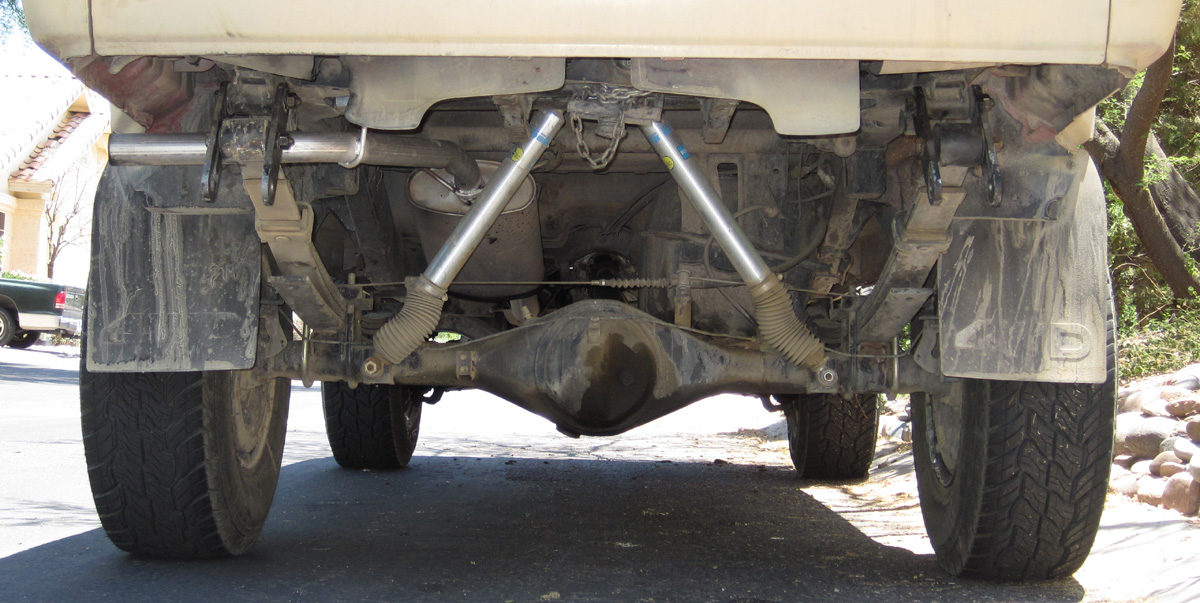
100531_0390.1200.jpg


Oh, I did return to the full length of the shackles as I couldn't tolerate the harsh ride. Once I get the rear lowered and proper shocks installed, I'll also ease up the torsion bars up front and hopefully have a better riding T4R. ;-)

I posted under Suspension rather than Classics as I think the general suspension concepts should apply.

Thx,
Jon
 
Register to hide this ad
I found some pretty good info here:
4X4REVIEW.COM: Be A Genius - Shock Absorbers

For giggles, let's assume my shocks were vertical:
"In the easiest of all situations, the shock is mounted straight up and down. The measurement is fairly easy. Measure the distance from the suspension bump stop to surface that it makes contact with, and add a ½" for compression of the bump stop. This measurement is your compression travel. Now measure from your upper shock mounting point, to the lower mounting point. For explanation purposes, lets say that the distance from the bump stop to the contact surface is 5.5" and we add a ½" we now have 6". Lets also say that the distance from the top mounting point of the shock to the lower mounting point is 14". Given these two measurements it is easy to see that you have a difference of 8". This 8" measurement is the length of the shock body you would need to control travel, measured from the mounting eye to the top of the shock body, and not limit suspension travel. In this situation you would actually have approximately 8" of rebound or droop travel in the shock and 6" of compression travel."

Later on they discuss calculating the figures with shocks at angles. Or I could apply the highschool geometry I'm helping my daughter with.

Or more simply, I could apply this:
"The easiest way to determine the length of shock you need is to cycle the suspension from its loaded resting point to the point were it compresses the bump stop. With the suspension compressed again measure the distance from the upper and lower shock mounting points. Again from explanation purposes only lets say that the total distance between these two points is now 9". You can now see that as the suspension cycles through its 6" of compression travel you are only using 3 inches of shock travel, 12" original measurement minus the 9" you now measured. This means that a shock with a measurement from the lower shock eye to the top of the shock body of 9" would not limit suspension compression or rebound for this application."

After reading the full article a couple of times, and looking at the photo I attached above, those shocks are WAY too long even with the shackles at full length. The shock body is at least 2/3 if not 3/4 of the total length. I'll be getting new shocks sooner rather than later.
 
The extreme angle at which you have your shocks mounted has a big effect on how they work. Also, except for a few types of shocks on the market that can be mounted either way, yours are mounted upside down (which you may know). So those are 2 things that may be working against u. You may want to experiment with what you have before jumping to new shocks.
 

Members online

Forum statistics

Threads
278,309
Messages
3,554,075
Members
248,016
Latest member
Advally Service

Trending content

Back
Top