I love my 4Runner, but...

BlazingThrasher

New member
So I have a 2002 Toyota 4runner Sport I believe. Had about 228K miles on it. My problem is the registration is 2015 due it failing smog. It has codes P0300, P0420 and P0770. Two auto shops including a Toyota dealship said the misfire is caused by coolant leaking into the cylinder. Also that the p0770 is because I need a new shift Slolnoid E but also said that might not do the trick and if not I'll need a new transmission. I forgot the P0420, but they wanted 600 to fix it. And around 1.5K for head gasket and another 600 for slolnoid. My questions is:

is that right?

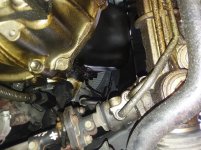
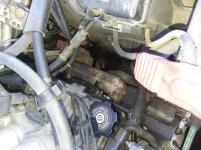
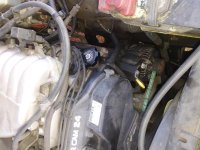
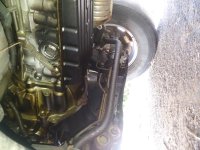
I'm pretty sure I have a leak by the looks from underneath.

I used to drive it to work everday with the P0300 code on for about a year before others popped up. Work and back is around 100 miles and really didn't have problems besides heating up at a drive thru. Only a little later I noticed loss of power and tranny slippage.

What are your guys thoughts?

Oil cap isn't milky.

Oh and small auto shop with 4.8 ratting outta 5 wants 3.5K for all work and Toyota estimated me at 10K
 
Register to hide this ad
Here's some photos. Can post more if needed.
 

Attachments

  • 20170430_104134.jpg
    20170430_104134.jpg
    132 KB · Views: 911
  • 20170430_104200.jpg
    20170430_104200.jpg
    138.2 KB · Views: 868
  • 20170430_104558.jpg
    20170430_104558.jpg
    133.4 KB · Views: 933
  • 20170430_104606.jpg
    20170430_104606.jpg
    129 KB · Views: 916
Definitely looks like you have an oil leak which probably isn't related to any of those codes. Sounds like you're going to have to decide if this 4runner is worth it to you to spend the money to fix it or get something different. Those prices sound a little high so I'd get some other quotes if you're interested in fixing it. The other option may be to find a relative or friend that lives somewhere that a smog check isn't required and register the vehicle there while you save up for the repairs or a different vehicle.
 
Definitely looks like you have an oil leak which probably isn't related to any of those codes. Sounds like you're going to have to decide if this 4runner is worth it to you to spend the money to fix it or get something different. Those prices sound a little high so I'd get some other quotes if you're interested in fixing it. The other option may be to find a relative or friend that lives somewhere that a smog check isn't required and register the vehicle there while you save up for the repairs or a different vehicle.

Thank you, I'd like to fix it up and keep it going. I like Toyotas. My first car was a 1990 Toyota Tercel before I got this one. Drove that thing from 220K miles to 304K before I got my 4Runner.

I was hoping maybe just buying the parts and trying it myself. But I would need a good walk-through video or picture guide. I don't have much exp with auto repair, but good with my hands and have tool knowledge.
 
Look into a good used motor and transmission with warranty. Might be able to do a whole swap cheaper. Just a thought.

Just a quick look online there are some lower mileage ones out there for decent pricing. 1-2 year parts and labor warranty probably run another $200. Then just find local shop to swap for you. These prices are engine only but gives you an idea. Transmission wouldn't be that much more if the engine is already out. Labor probably going to run 15-20hrs of mechanical labor at your local rate. So you could decide which is the better option. Especially if you're​ considering the $3500 to rebuild what you have. Just another option to think about.

One of these listed shows 99k miles...

ca30395297919e35929aec23bc19d312.jpg
ed4d44f5a53c0982821d3e4dd20ae474.jpg
 
Last edited:
Look into a good used motor and transmission with warranty. Might be able to do a whole swap cheaper. Just a thought.

Just a quick look online there are some lower mileage ones out there for decent pricing. 1-2 year parts and labor warranty probably run another $200. Then just find local shop to swap for you. These prices are engine only but gives you an idea. Transmission wouldn't be that much more if the engine is already out. Labor probably going to run 15-20hrs of mechanical labor at your local rate. So you could decide which is the better option. Especially if you're​ considering the $3500 to rebuild what you have. Just another option to think about.

One of these listed shows 99k miles...

ca30395297919e35929aec23bc19d312.jpg
ed4d44f5a53c0982821d3e4dd20ae474.jpg

Yes, Thank you. Just checked and I can get a 2001 engine and transmission for under 1500$ and under 90K miles. I'm guessing labor another 1500$?
 
Yes, Thank you. Just checked and I can get a 2001 engine and transmission for under 1500$ and under 90K miles. I'm guessing labor another 1500$?

I think your labor estimate might prove out a bit low. You should get a discount for your engine compartment being so clean. Still, I think there are other issues to consider when doing a major swap with used parts like that. These are a few I've run across.
1. An engine swap generally takes more time and "little parts" like motor mounts, belts, radiators, plugs, wires, etc... "while you are there" . And all of that is likely a good idea if your going that route.
2. If there is an issue with the used unit it double labor and shipping in the best possible case.
3. Over the years I've seen the unwitting experience the following too many times: I there is an issue it often becomes a circle of the installer blaming the supplier. Worse yet sometimes the innocent consumer or cargo carrier get the blame tossed their way. These issues can also arise when a re-manufactured or re-built unit is installed by a third party shop. Unfortunate many folks would rather pass the blame than step up and except it. From what I've witnessed that's unfortunately a large part of human nature than a sign of the times.
4. Used units are probably best suited for the owner who can do the job himself and whose personal would be such that a re-do would be a domestic disaster.

That's just my take on salvage parts.

And at 230k? I'm not really sure if I'd go half-way and just get the top end done either. Unfortunately it will likely get up to over $5k to have a qualified shop that can and will stand behind their work do it correctly. But you are already half way there with your salvage parts strategy. Even that's a gamble so I would advise you to be damn sure about the shop before going that route. And about the true condition on the rest of the vehicle.
I do hope things work out well for you.
 
I think your labor estimate might prove out a bit low. You should get a discount for your engine compartment being so clean. Still, I think there are other issues to consider when doing a major swap with used parts like that. These are a few I've run across.
1. An engine swap generally takes more time and "little parts" like motor mounts, belts, radiators, plugs, wires, etc... "while you are there" . And all of that is likely a good idea if your going that route.
2. If there is an issue with the used unit it double labor and shipping in the best possible case.
3. Over the years I've seen the unwitting experience the following too many times: I there is an issue it often becomes a circle of the installer blaming the supplier. Worse yet sometimes the innocent consumer or cargo carrier get the blame tossed their way. These issues can also arise when a re-manufactured or re-built unit is installed by a third party shop. Unfortunate many folks would rather pass the blame than step up and except it. From what I've witnessed that's unfortunately a large part of human nature than a sign of the times.
4. Used units are probably best suited for the owner who can do the job himself and whose personal would be such that a re-do would be a domestic disaster.

That's just my take on salvage parts.

And at 230k? I'm not really sure if I'd go half-way and just get the top end done either. Unfortunately it will likely get up to over $5k to have a qualified shop that can and will stand behind their work do it correctly. But you are already half way there with your salvage parts strategy. Even that's a gamble so I would advise you to be damn sure about the shop before going that route. And about the true condition on the rest of the vehicle.
I do hope things work out well for you.

Thanks! So I should just get the head gasket repaired?
 
Thanks! So I should just get the head gasket repaired?

That's hard to say from here. Is there a shop you can trust? Did you talk to the dealers in area about a remanufactored unit with a solid warranty? Probably close to the low blue book value of the truck. But if you really love the truck....
But I'd kind of think of selling to a shade tree machinic type-they often think they can repair things cheaper and better than they really can. But if you tell them the issues that's their problem.
Then I'd look for a reasonably priced well cared for one or two owner unit to replace it with. I always favor "grocery getters" that we're serviced and traded in at the same dealership they were purchased at. With reasonable (8-14k per year) mileage may 150k and well cared for should be at about 50% of its life or less. A good Toyota or Lexus GX470?) dealer will give something like a 6 month power train warranty and 30 day on the rest of it. Out here some dealers will undo the deal for 2 days, three days, or up to 30 days at some of the good dealerships. I'm capable of doing the work myself but I'd have a lot of conversation with myself before doing an engine swap. Maybe I'd pull the heads and look!
Be careful don buy someone else's problems.
Older good units are out there at good prices.
 
You don't say where you are in SoCA, but if you are anywhere near Corona I'd take it to Yotamasters and see what they have to say about it.

It doesn't sound like you have the experience, but I would be tempted to do a head gasket repair if I could prove coolant was leaking. I would get something to pressurize the coolant system to make sure there is truly a leak.
 
Ran into this in a car magazine a few years back. Might help with determining of the head gasket is the problem:

Being fooled by chemical testing/infrared testing of the cooling system for head gasket failure(s), I stumbled on a better method, which is much faster and more accurate, too. Next time, try this:

1. Remove all the spark plugs from the engine.
2. Fill the cooling system right to the rim of the radiator neck.
3. Disable the ignition system.
4. Insert one spark plug in a cylinder and then crank the engine for five to 10 seconds, while watching the radiator level. (A remote starter comes in real handy here.)
5. Repeat step 4 above for all cylinders.
The idea behind this is simple: This uses the engine�s compression to pressurize the combustion chamber and force this pressure past any potential head gasket/cylinder head leakage into the cooling system. Should there be a leak, the level in the radiator will overflow. The reason all other spark plugs are left out is to allow the starter to spin the engine faster, without shaking so much and helps to identify which cylinder is the culprit. Why not let the 150 to 200 psi compression do the testing? Now, 13 to 15 psi in the radiator to test it just doesn�t seem up to the job anymore, does it?

Brad Petersen, Owner, ASE L1 Master Technician
Petersen Automotive, Escondido, CA
 
Ran into this in a car magazine a few years back. Might help with determining of the head gasket is the problem:

Being fooled by chemical testing/infrared testing of the cooling system for head gasket failure(s), I stumbled on a better method, which is much faster and more accurate, too. Next time, try this:

1. Remove all the spark plugs from the engine.
2. Fill the cooling system right to the rim of the radiator neck.
3. Disable the ignition system.
4. Insert one spark plug in a cylinder and then crank the engine for five to 10 seconds, while watching the radiator level. (A remote starter comes in real handy here.)
5. Repeat step 4 above for all cylinders.
The idea behind this is simple: This uses the engine�s compression to pressurize the combustion chamber and force this pressure past any potential head gasket/cylinder head leakage into the cooling system. Should there be a leak, the level in the radiator will overflow. The reason all other spark plugs are left out is to allow the starter to spin the engine faster, without shaking so much and helps to identify which cylinder is the culprit. Why not let the 150 to 200 psi compression do the testing? Now, 13 to 15 psi in the radiator to test it just doesn�t seem up to the job anymore, does it?

Brad Petersen, Owner, ASE L1 Master Technician
Petersen Automotive, Escondido, CA

I'll have to try this on the weekend. Thank you.

What would I be looking for in seeing if I have a bad fuel injector? Appearance wise.
 
leak

depending on how bad the leak is/location , you could use something like blue devil. Just have a shop pour that while getting a oil change. fixed my honda pilot awhile back.
 

Members online

Forum statistics

Threads
278,312
Messages
3,554,085
Members
248,016
Latest member
Advally Service

Trending content

Back
Top