Is "Hitch Shackle" a good idea? Also, recommendation for a tow strap.

jicko

New member
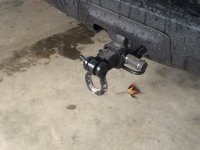
I have seen many having something like this:

11234-01.jpg


Is this a good idea?

Or a hitch hook? (which one should I get if I am to pick one)

smittybilt-tow-hook-for-2-inch-receiver-hitch-universal.jpg


I tried to read up/research about this..... most said "do not exceed hitch capacity".... what's the hitch capacity of our 5th gen 4Runners stock hitch? 5000lb? This is not the same as "towing capacity", right?

Any recommendation for a tow strap that I should get and put in the vehicle?

Lastly, what's the and how to find the "hitch capacity" of the stock hitch for the 2014 Highlander?

Thanks in advance!
 
Last edited:
Register to hide this ad
Whoever said hitch capacity is full of it. In a straight line pull you can pull until you reach shear strength of bolts or bending strength of the hitch. Both are much greater than your truck's GVW. Either choice is fine. There is already an attachment point on the rear though that does just fine. 2X GVW on strap. There are 100 threads on this exact topic.
 
Last edited:
I love the Smittybilt version... have used it a few times to yank people out of snow banks when in Oregon.

Its sticks about as far out as I would want it... these things can really hurt if you catch them on your shin. I think the hook is kind of dangerous left mounted in a receiver all the time....

Re: tow strap- Any off-road store will have them (ORW in San Diego).. they are always littered over the showroom floor somewhere!
 

Attachments

  • IMG_1214.JPG
    IMG_1214.JPG
    104.4 KB · Views: 17,641
Last edited:
Strap

Keep it simple, no shackle, put the end of the strap into the receiver and put the hitch pin through it.

Tow strap or yank strap? A yank strap will stretch and reduce the shock when pulling someone out. It's also called a snatch strap.

_____________________________________________________________________
 
Never liked the hook version but use a D shackle all of the time and one lives permanently in my rear hitch. Smart to carry at least one extra to use with straps. Don't skimp on either.

When using a shackle remember to turn back a 1/4 turn after tightening so it doesn't bind.
 
Keep it simple, no shackle, put the end of the strap into the receiver and put the hitch pin through it.

Tow strap or yank strap? A yank strap will stretch and reduce the shock when pulling someone out. It's also called a snatch strap.

_____________________________________________________________________

While this may work in a pinch, I would not recommend it for consistent usage. The hitch pin is not designed to take an inconsistent load from the end of a strap. Its breaking point is much higher when distributed over the load of a designed tow bar (receiver shackle or hook in this case).
 
Never liked the hook version but use a D shackle all of the time and one lives permanently in my rear hitch. Smart to carry at least one extra to use with straps. Don't skimp on either.

When using a shackle remember to turn back a 1/4 turn after tightening so it doesn't bind.

Great tips!

Are there any generally considered good brands? I am trying to pick something up from Amazon: Smittybilt? WARN? Rugged Ridge? CURT?
 
I love my Factor 55 HitchLink

10723.jpg


Product Description

Use your receiver as a recovery tow point.
•Lightweight precision CNC machined 6000 series aluminum
•Weighs only 1.9 pounds. Steel versions weigh up to 8 pounds
•Rated at 9500 pounds
•Ultimate failure at 51,000 pounds
•Fits standard 2 inch receivers
•Fits common ¾ screw pin shackles/D-Rings
•Anodized or powder coated for oxidation protection

MADE IN USA
WARNING:
Never exceed factory receiver hitch pull rating

Always use a quality steel alloy 5/8” hitch pin

Always pull in line with the hitch, do not bind or side load the shackle
 
Great tips!

Are there any generally considered good brands? I am trying to pick something up from Amazon: Smittybilt? WARN? Rugged Ridge? CURT?

I have maybe a dozen spread throughout the truck, tractor, atvs, etc and usually buy 3/4" Smittys from Amazon. They also make decent recovery straps of all sizes and capabilities.

Here is a good start http://www.amazon.com/gp/product/B001CF1A7O/ref=oh_aui_search_detailpage?ie=UTF8&psc=1 Then you just buy extra D rings if needed.

Also love these
http://www.amazon.com/Master-Lock-1...m_auto_25?ie=UTF8&refRID=1TPW08WKV50S7G3CQ290
 
Last edited:
I would spend a little (ok a lot) extra for the Factor55 bling Hitchlink merely for its weight difference from something like the Warn. Southeast Overland in Seneca has both tow and snatch straps. Steve can tell you exactly what you should get based on what you tell him are your needs. He teaches recovery courses for the off road world as well as running his shop.
 
Have the Factor55 on front attached to the winch line but that and more the rear I've always thought were answers to an unasked question :)
 
I would get an ARB snatch strap.

ARB Snatch Strap 17,600lb (ARB705)

This is the one I use (the 17,600lb one).

You get quite a bit of power / force from the elasticity and dynamic effect of the strap stretching and yanking. Think of it as a huge rubber band. I pulled out a lifted, fat-tired F-150 that was buried up to the hubs in the bottom of a lake with this thing (and my 4runner). It offers much more power than just a static tow strap.

Contrary to most people's tendencies, going bigger is not better for a snatch strap. You really want - per recommended instructions - the strap to be rated for somewhere between 2 and 3 times the vehicle weight you're snatching with. So, for a five or six thousand pound loaded 4runner, you wouldn't want any bigger than this.
 
Keep it simple, no shackle, put the end of the strap into the receiver and put the hitch pin through it.

Tow strap or yank strap? A yank strap will stretch and reduce the shock when pulling someone out. It's also called a snatch strap.

_____________________________________________________________________
^^^ this and it won't impact departure....
 
About straps, the min would be one 25-30' long AND one 6-10' long to wrap around a tree. The extra D ring connects them.

And not many people may know but there is a decent amount of space in the compartment forward of the jack towards the rear seat which is perfect to storing straps.

Somebody mentioned the truck weight but keep in mind that just truck weight is fine if pulling on pavement with no incline. Pulling up hill means working against gravity. But you will most likely not need to pull yourself out of a mall parking spot and much more pulling power will be needed to get yanked out of mud, which is a much more likely possibility.
 
Last edited:
^^^ this and it won't impact departure....
And even lighter than the $80 Factor55 hitch link.

Damn this thread for making me look at their website. Now I want a Flatlink Expert. I have the Flatlink but dislike the fact it only works on the pin side of a shackle.

3-1-2015%2011-58-16%20AM.jpg
 
Last edited:
I didn't see this, when I was reading the post, but don't get a hook. Use an option that allows your strap to be secure if yanked. Straps and cables and chains can come off a hook.
 
[MENTION=78273]Jeremy556[/MENTION] I saw those! go figure they announced that literally a week after I bought a flat link.

I have got a factor 55 Hitch link too, thing is solid.

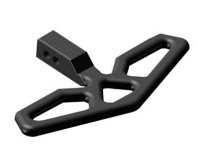
I think this is a damn fine piece of hardware myself, Smittybilt BeaverStep. It makes for a nice step and recovery point:
 

Attachments

  • beaverStep.jpg
    beaverStep.jpg
    10.2 KB · Views: 6,803
Last edited:
Good info!

What about the front shackles? and links? what are some recommendations for the front
 
Last edited:

Members online

Forum statistics

Threads
278,316
Messages
3,554,120
Members
248,016
Latest member
Advally Service

Trending content

Back
Top