Is the 285 really worth the hit in mpgs, opposed to the 275?

Curious what load rating you had? I've had C's on mine for 20k miles and it's seen a fair amount of dirt and no sidewall issues. Had an 80 Series Cruiser with E rated and 25k miles on them with no issues either.

If you get off road be cautious of buying DuraTracs. I had 3 sidewall failures with them vs none with BFG's. On the pavement they're good though.
 
i mentioned it because I was bummed because I paid more for the 275's and it wasn't any wider the the 265's...

Me after spending extra $$$: :roadkill:

If you google tire size calculator they have a neat feature that allows you to compare 2 different tire sizes side by side with everything down to the width of the tire.. :p
 
I haven't gotten a precise mpg measurement since I upped to 285s, but based on the fuel gauge reading on my normal commutes, if fuel economy has changed, it hasn't been much.

Sent from my SM-G935V using Tapatalk
 
I haven't gotten a precise mpg measurement since I upped to 285s, but based on the fuel gauge reading on my normal commutes, if fuel economy has changed, it hasn't been much.

Sent from my SM-G935V using Tapatalk

Yeah, it seems like people in this thread think 285/70/17 and 275/70/17 are way different. They are practically the same tire!!! The 285 is .4" wider and .6" taller (effectively .3" taller for gearing purposes).

Doubt anybody would notice a difference between the two.

You could easily argue wider tires have less rolling resistance due to less sidewall flex which would absorb energy. The contact patch of a wider tire is obviously wider but also more narrow front-to-back compared to a skinnier tire which means the tread is in contact with the pavement for a longer time making the 'sidewall deflection zone' larger. This has actually been proven on bicycle tires by a lab.
 
Probably the most accurate way to measure the mpg difference would be to use gps measuring with the different sets of wheels and tires over a specific set distance.
Larger diameter tires will indicate lower mpg by default over the same distance due to actually rolling fewer times.
 
My simple calculation: fuel up tank, reset ODO. Next fuel up: divide #miles driven by #gallons fueled up. Top off same way.
 
My simple calculation: fuel up tank, reset ODO. Next fuel up: divide #miles driven by #gallons fueled up. Top off same way.

You would get a more accurate MPG if you multiplied the miles driven by a correction factor, to take into account for larger tire size.
Ex: 33"/31"=1.0645
 
Going from 260s to 285s was almost exactly a 10% differential. Easier to gauge on the speedo.

Sent from my SM-G935V using Tapatalk
 
Slight difference

But validates having a V8. Seems like a missed opportunity if you go with a 6 that's only slightly better MPG, whereas you get all the oomph, fun, and towing capacity of the 8. YMMV.
 
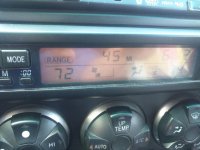
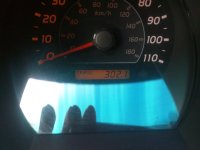
This equates to about 320 miles when accounting for my Falken AT3Ws 275s. I also have a rola rack. Tires are 60lbs a piece.
 

Attachments

  • IMG_20170824_181233.jpg
    IMG_20170824_181233.jpg
    130.3 KB · Views: 1,591
  • IMG_20170824_181216.jpg
    IMG_20170824_181216.jpg
    142.8 KB · Views: 1,578
Rotational Inertia, not rolling resistance

I mean the wise decision is 275 but I think 285s are sweet but I know that the rolling resistance with the 285s will be more so there a loss of mpgs. It's just a tough decision in this game of inches.

I know this post is 6 years old but the issue is not rolling resistance, as everyone says. The rolling resistance will be less with a taller, larger diameter tire. Once rolling the tire will roll over objects, bumps, gravel and dirt easier due to its larger size. I want taller tires on my trailer for the same reason.

Rotational inertia is what affects gas mileage, acceleration and braking. The taller or heavier tire has more rotational inertia, which resists accelerations and decreases gas mileage. Rotational inertia is a tendency of spinning objects (tires) to stay at rest when stopped or keep rolling once it's spinning. It's very similar to linear inertia, which is the tendency of mass to stay at rest or keep moving.

I plan to upgrade to the 285/70/17. Rotational inertia be damned.
 
I know this post is 6 years old but the issue is not rolling resistance, as everyone says. The rolling resistance will be less with a taller, larger diameter tire. Once rolling the tire will roll over objects, bumps, gravel and dirt easier due to its larger size. I want taller tires on my trailer for the same reason.

Rotational inertia is what affects gas mileage, acceleration and braking. The taller or heavier tire has more rotational inertia, which resists accelerations and decreases gas mileage. Rotational inertia is a tendency of spinning objects (tires) to stay at rest when stopped or keep rolling once it's spinning. It's very similar to linear inertia, which is the tendency of mass to stay at rest or keep moving.

I plan to upgrade to the 285/70/17. Rotational inertia be damned.

As tires get taller, they often get wider. Does this have an effect on the rolling resistance?
 
But the tire patch area is only a function of the weight on each tire and the PSI in each tire. Meaning you can find the weight pushing down on each tire by measuring the area of the tread in contact with the ground and measuring air pressure in each tire.

Since the area is the same the wider tire has a wider contact patch but the tread is in contact with the ground for less time because the patch is shorter.

Which one has less rolling resistance now? Diameter, load range, tread design, and what air pressure you run at has a way larger effect rolling resistance (gas mileage) IMO.

Does rotational inertia have an effect once you are cruising? No. It only effects acceleration and braking (also acceleration just in the reverse sense). Not sure this has a huge effect on gas mileage.
 
But the tire patch area is only a function of the weight on each tire and the PSI in each tire. Meaning you can find the weight pushing down on each tire by measuring the area of the tread in contact with the ground and measuring air pressure in each tire.

Since the area is the same the wider tire has a wider contact patch but the tread is in contact with the ground for less time because the patch is shorter.

Which one has less rolling resistance now? Diameter, load range, tread design, and what air pressure you run at has a way larger effect rolling resistance (gas mileage) IMO.

Does rotational inertia have an effect once you are cruising? No. It only effects acceleration and braking (also acceleration just in the reverse sense). Not sure this has a huge effect on gas mileage.

A contributor to rolling resistance is sidewall deflection. If we're talking about a tire that's both taller and wider, yes, it'll have more rolling resistance if all else is equal (pressure, corner weights, etc.) If you're talking about two tires that are 100% equal in every way except for width, it's hard to say. My experience tells me the narrower, longer contact patch will have less rolling resistance than the wider, shorter one. Truth be told, I can't be bothered to get off my ass and look it up in Milliken & Milliken.

Either way, I don't think it's a huge player, like you said. There are many other variables at work.
 
I love the comments about picking a tire because it looks better...

It reminds me of a couple I observed in a speaker shop once... "Hey honey, these speakers LOOK great"
 
Get 285's! Go big or go home. I love mine.

Spoken like someone who has never owned a 255

I became a believer after trying it... more grip, better traction, overall a better performing truck.

Smaller contact patch, more pounds per square inch on tread, more grip.

Reduced weight, rolling resistance, less un-sprung mass.
 
Spoken like someone who has never owned a 255

I became a believer after trying it... more grip, better traction, overall a better performing truck.

Smaller contact patch, more pounds per square inch on tread, more grip.

Reduced weight, rolling resistance, less un-sprung mass.

I would agree with your analysis.

However, let the record show that my LT285/60R18 BFG KO2's were purchased purely in the name of vanity.

100% satisfied with purchase.

Is it practical? Maybe, they fit ok.

Does it look awesome?

OH YEAH! :guitar3:
 
Spoken like someone who has never owned a 255

I became a believer after trying it... more grip, better traction, overall a better performing truck.

Smaller contact patch, more pounds per square inch on tread, more grip.

Reduced weight, rolling resistance, less un-sprung mass.

The physics would suggest the two tires have the same exact contact patch area. The area is only dependent on the psi and the mass of the vehicle that each tire transmits to the ground. Measuring it would be an easy way to determine whether the theory is correct. Slide a piece of paper underneath the sides of the tire, drive off, and measure. Say, don't you have an extra set or two of tires?...

Your results IMO are either placebo or another factor such as tread compound or design maybe. The mass you could probably feel too. I just don't think it has to do with the contact area.
 

Members online

Forum statistics

Threads
278,315
Messages
3,554,128
Members
248,016
Latest member
Advally Service

Trending content

Back
Top