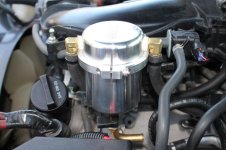
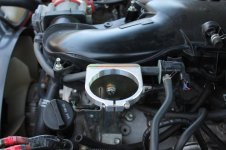
Just checked my oil catch can..

jahdai42

Member
So I put this sucker on 22 days ago and it already has an ounce of oil in there. It is also pitch black. I should have got one of these when it was new.
 
Register to hide this ad
The oil in your catch can isn't necessarily an accurate representation of what's in your engine unless you have let it sit for a long time. It gets black and gunky from the moisture, but the oil in your engine burns most of that off when it gets hot enough. The oil in the catch can stays at roughly ambient temperature under the hood.
 
I installed one a couple weeks ago, looking forward to seeing what mine catches.
 

Attachments

  • can mounting1.JPG
    can mounting1.JPG
    127.5 KB · Views: 7,008
  • can1.jpg
    can1.jpg
    51.7 KB · Views: 7,465
I could see a benefit if the vehicle was subject to long term steep incline/decline. Not sure what the benefit would be for normal daily driving. It's designed to go without the catch can.
 
I could see a benefit if the vehicle was subject to long term steep incline/decline. Not sure what the benefit would be for normal daily driving. It's designed to go without the catch can.

It really is just to keep that gunk out of the intake plenum. Nothing more.
 
I could see a benefit if the vehicle was subject to long term steep incline/decline. Not sure what the benefit would be for normal daily driving. It's designed to go without the catch can.


Because that oil vapor condenses in the in the intake system and coats it. It can build up in the intake runners and on the back of the valves, more so on direct injection engines. It can coat and cause issues with the throttle body if it’s plumed in before it. The vaporized oil mixture is also probably not great for the combustion process, because it’s messing with the air/fuel ratios

The system is there for emissions/EPA.


Sent from my iPhone using Tapatalk
 
Last edited:
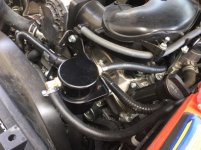
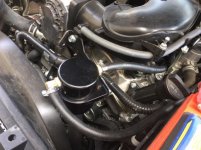
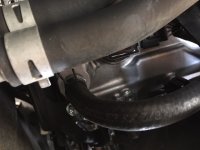
Easy install. First I bought the catch can below on Amazon. After doing research on catch cans and decided what kind of internal construction was best for catching contaminates.

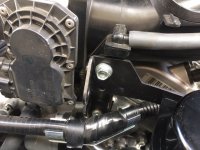
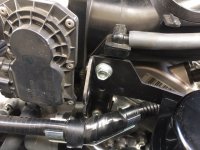
Second, I removed that factory bolt on front of engine in picture, it had a small lip sticking out on factory bracket that kept my bracket from sitting flush so i ground that tab off, drilled a hole in my catch can bracket and bolted it back on.

Third, replace the pcv hose with your own hose going from the pcv to the catch can, then run a second hose from catch can to where the PCV valve originally went back into engine.

https://www.amazon.com/gp/product/B07647RBC8/ref=ppx_yo_dt_b_asin_title_o00_s01?ie=UTF8&psc=1
 

Attachments

  • can mounting1.JPG
    can mounting1.JPG
    127.5 KB · Views: 6,508
  • can1.jpg
    can1.jpg
    51.7 KB · Views: 6,509
  • pcv valve location.JPG
    pcv valve location.JPG
    77.7 KB · Views: 6,636
After saying what I said earlier. It really isn’t all that harmful in general, possibly depending on the condition of the engine.

But if you’re a person that buys vehicle and keeps it, it is a preventative measure. I think it’s something that should help keep the intake track cleaner, possibly helping reduce problems later.

I just pulled the intercooler off my 02 WRX thinking it would help me get to a hose I need to replace.

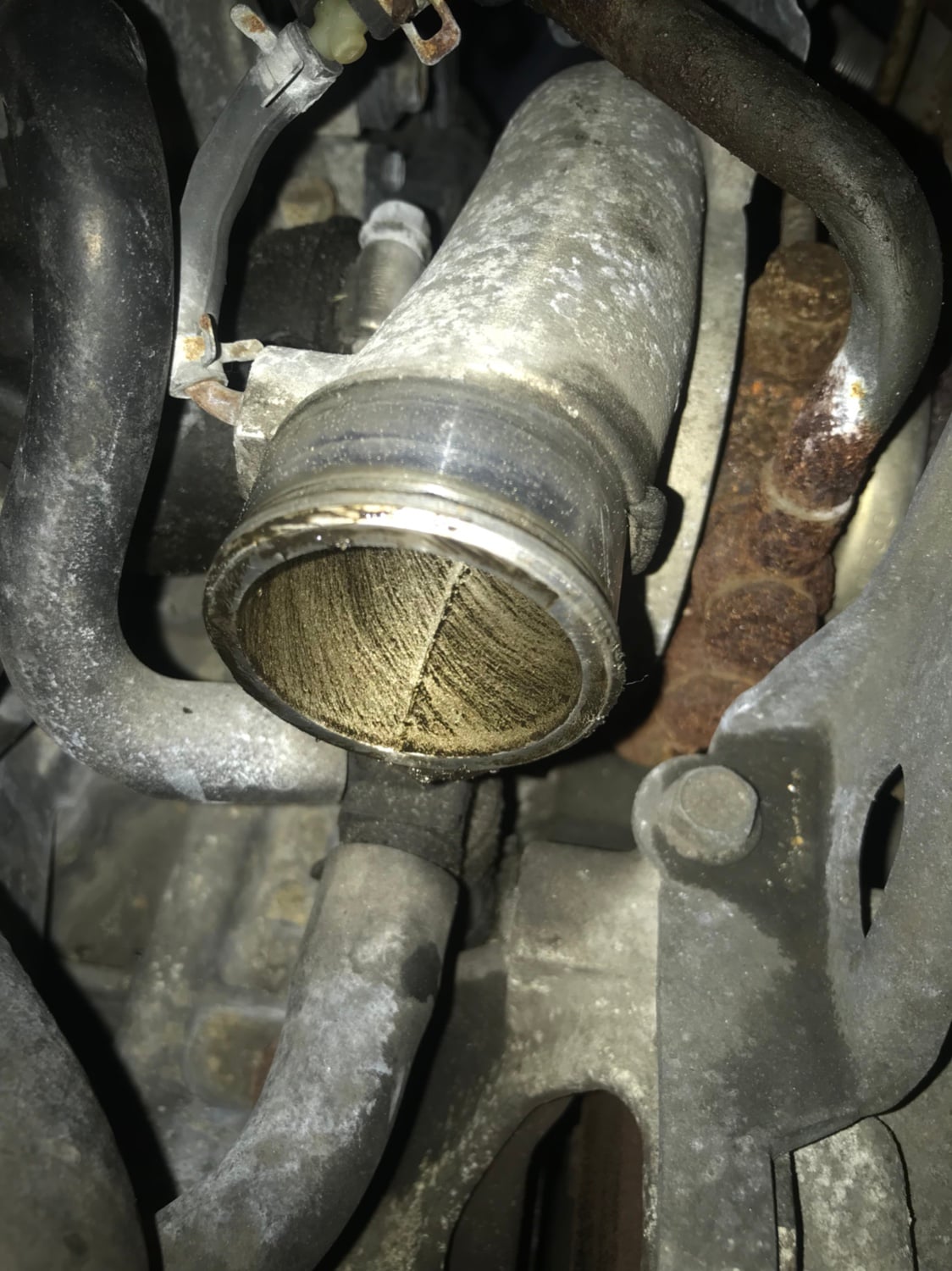
Stock PCV set up, which is routed in just before the turbo. 280,000 miles

Turbo outlet

68f9f52fa2ce5d96d151c3a1f9985eae.jpg


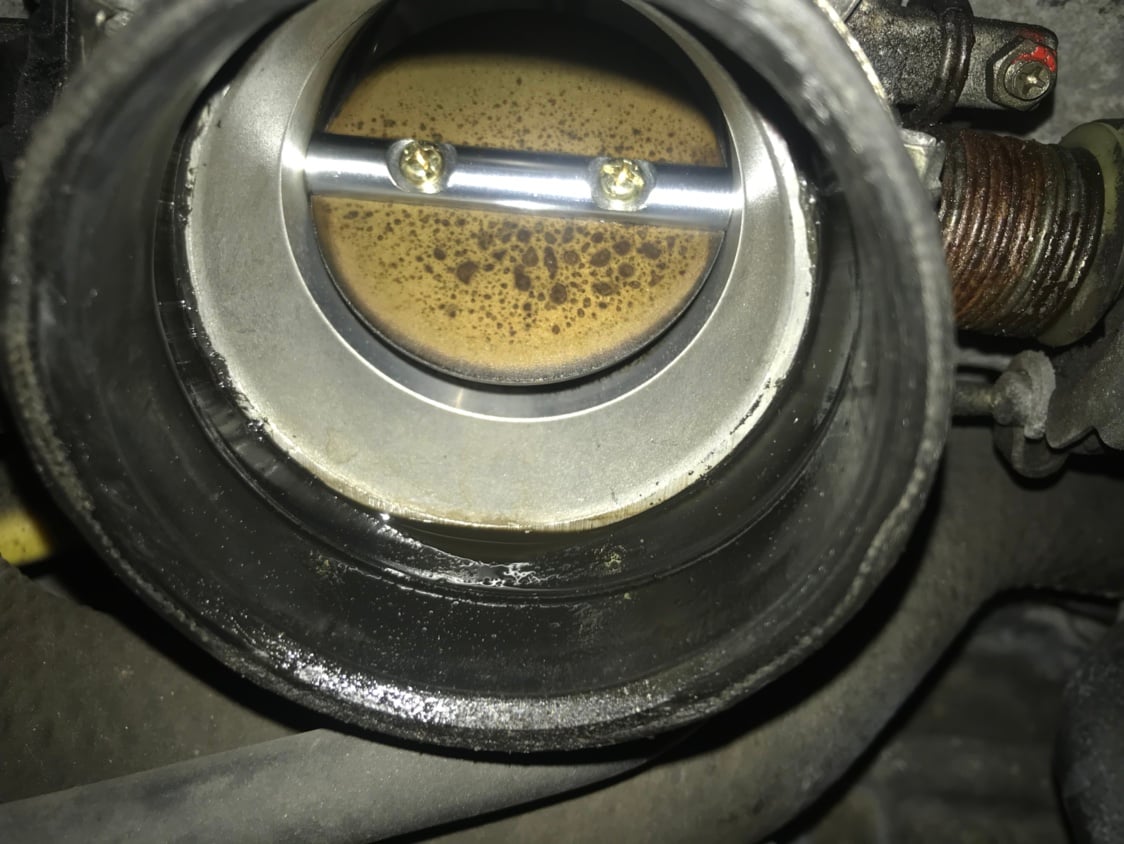
Throttle body

6c6351f3ac4db5b1a8749fbf989146f6.jpg


Could be worse, but could be better. I imagine there’s decent amount in the intercooler too because of the lack of it on the TB.


Sent from my iPhone using Tapatalk

 
Last edited:
After saying what I said earlier. It really isn’t all that harmful in general, possibly depending on the condition of the engine.

But if you’re a person that buys vehicle and keeps it, it is a preventative measure. I think it’s something that should help keep the intake track cleaner, possibly helping reduce problems later.

I just pulled the intercooler off my 02 WRX thinking it would help me get to a hose I need to replace.

Stock PCV set up, which is routed in just before the turbo. 280,000 miles

Turbo outlet

68f9f52fa2ce5d96d151c3a1f9985eae.jpg


Throttle body

6c6351f3ac4db5b1a8749fbf989146f6.jpg


Could be worse, but could be better. I imagine there’s decent amount in the intercooler too because of the lack of it on the TB.


Sent from my iPhone using Tapatalk

A turbo with a lot of miles on it will leak oil past its seals. At 280k miles, that shaft probably has a lot of play in it, and likely lets a lot of oil past its seals.

Every turbo car will burn oil, which means it is also putting it into the intake system as well.

So yes, if you look in your intercooler, it will have oil in it. Its also why those rubber intake hoses feel oily... the pressure eventually makes them leech oil.
 
Easy install. First I bought the catch can below on Amazon. After doing research on catch cans and decided what kind of internal construction was best for catching contaminates.

Second, I removed that factory bolt on front of engine in picture, it had a small lip sticking out on factory bracket that kept my bracket from sitting flush so i ground that tab off, drilled a hole in my catch can bracket and bolted it back on.

Third, replace the pcv hose with your own hose going from the pcv to the catch can, then run a second hose from catch can to where the PCV valve originally went back into engine.

https://www.amazon.com/gp/product/B07647RBC8/ref=ppx_yo_dt_b_asin_title_o00_s01?ie=UTF8&psc=1

What size / type hose did you use?
 
Its a 3/8 OD vacuum line but the fitting from the crankcase is slightly smaller then the one going into the upper manifold. For the smaller one you might want to use a ring gear to tighten it down. I used the spring that was one it and a zip tie to tighten it down even more so. I put mine in yesterday.
 

Attachments

  • catchcan2.jpeg
    catchcan2.jpeg
    86.9 KB · Views: 6,564
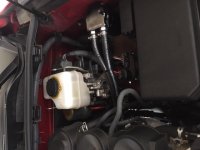
Installed mine today. I have too much other crap mounted in various places around my engine bay, so I had to come up with an alternative and secure spot. The drivers side intake bracket works quite well and the whole assembly is easily removed when I need room to work. [MENTION=106176]wfo9[/MENTION] thanks for the Moroso recommendation.
 

Attachments

  • IMG_4423.jpg
    IMG_4423.jpg
    65.1 KB · Views: 6,953
  • IMG_4422.jpg
    IMG_4422.jpg
    61.5 KB · Views: 6,581
Last edited:
Coming from a high boost direct injection platform where it was common to us an oil catch can to keep thing clean and running smooth. The occ should be mounted so it is the lowest point in the system so any oil vapors in the hose run back into the catch can.
 
ugh I thought my days of catch cans were over since this aint a turbo motor. Ugh.. guess the little bastard is coming back. :rant:
 
Because that oil vapor condenses in the in the intake system and coats it. It can build up in the intake runners and on the back of the valves, more so on direct injection engines. It can coat and cause issues with the throttle body if it’s plumed in before it. The vaporized oil mixture is also probably not great for the combustion process, because it’s messing with the air/fuel ratios

The system is there for emissions/EPA.


Sent from my iPhone using Tapatalk

Honestly, most of the folks with catch-cans are OCD control freaks... which describes most car guys... lol. But still, it's not needed, bro.

NEITHER of the million-mile Tundras had a catch can.

Yes a little oil circulates, but not stuff that looks like what slowly congeals in that catch can. We're talking a tiny vapor that naturally lubricates the valves, intake plenum, etc. And the valves get washed by the gas detergents and heat.

Last, the throttle body is no big deal. Every 100k miles you just pop it off, wipe it with some cleaner, and reassemble. Not anything to be concerned about.

Now, direct injection engines? Eh, maybe. But tbh, that's the whole other end of the spectrum -- the catch cans DON'T DO ENOUGH to save the valves from build-up. It happens anyways.

Best bet is to do the below:
-ride it out with your port injection engine, and skip getting a direct-injected engine until everything is electric.
-if you really have to get a direct-injection engine, pray the next 4runner uses dual-injection like the Toyota 3.5L uses now, so that you get the cleaning effect of port injection and the better power of direct.
 
just a update to installing a catch can about 10k miles ago.

It seems to help with quieting the valve ticking at startup, and i've probably collected a ounce or two of sludge.

I use to hear the ticking in the cabin at startup on some days, I don't hear it anymore.

The ticking is probably still there if i pop the hood, and stick my head in the engine bay but I'm to lazy to do that.

Not sure if it does anything else, but i'm still happy with my purchase.:banana:
 
Last edited:
Watched a tear down video of a 4.7L V8 w/200K miles on youtube yesterday, no catch can and the intake ports/valve heads were clean as a whistle. The tear down guy was impressed, he said that's what port injection does for the engine.
 
Watched a tear down video of a 4.7L V8 w/200K miles on youtube yesterday, no catch can and the intake ports/valve heads were clean as a whistle. The tear down guy was impressed, he said that's what port injection does for the engine.

broski, you are probably right.

This catch can business is like voodoo to me.

I don't understand it at all.

Just saying i got less ticking on start up but then again, i dunno if it has to do with the catch can, or its my mind playing tricks on me to validate my purchase...ROFL.
 

Members online

Forum statistics

Threads
278,312
Messages
3,554,084
Members
248,016
Latest member
Advally Service

Trending content

Back
Top