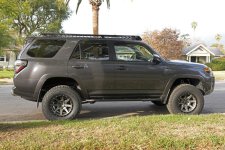
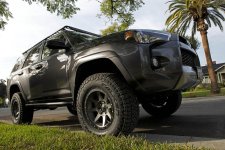
Just something to keep in mind and this is specific to the 4Runner.
Your ride height differs from when your 4Runner is parked vs. driving. If you look at a stock 4Runner on the road, it will look nearly level. When it's parked- stinkbug. Few reasons for this 1. cargo carrying capability 2. towing 3. ride comfort. When the 4runner is parked it is sitting more than halfway through it's up travel or compression cycle in front. The rear however is sitting less than half way through its compression cycle. So when the 4Runner is in motion the suspension is even through its cycle front to rear. Giving you 50/50 up and down travel. Now when you level the 4Runner (as I did the first time), when it is in motion the 4Runner will squat or yaw, reducing the up travel in the rear, and reducing the down travel in the front. Add weight to the rear, and this condition is increased. Think of a boat when its moored vs. planing. Ultimately this reduces ride quality. Now keeping the rear end just 1/4" higher will allow the 4Runner to yaw the way it was designed. Once I propped the rear end, the 4Runner rode completely different. My settings Front: 6112 @ 6th Perch or 2.2" and Rear: T13 + OME 10mm Shim* I've done this because I've added a drawer system in the rear and added a rack which brought the rear end down a little bit. Bottom line, a little rake is good. Just my experience, thought it might help.
Oh and any KDSS lean as a result of lifting is easily corrected with a 10mm wrench. So don't sweat it. The lean is a result of an imbalance of hydraulic fluid between the rams and hydraulic actuator. Opening the valves allows the fluid to move past the actuator freely, allowing you to manipulate the rams and the amount of fluid between the actuator. Once you've eliminated the lean by either putting wood blocks under the tires opposite the lean or having someone sit inside on the opposite side of the lean and then close the valves, the fluid is locked, and you've got a even 4Runner.
Sorry rambling/





 hwell: