Leaking rear axle seals

practical

New member
Greetings. Bottom line is my recently replaced inner rear axle seals are both (left and right side) leaking. Here's the story.

On my '97 4Runner the rear axle housing was rusting out badly at the differential. I read this is common in the eastern states with road salt. So, this summer I found a used axle housing out of OR, had it shipped in and did the full swap. This included:
- new differential breather
- new inner seals (National #1960 from Advance Auto as opposed to Toyota #310-5006).
- new Toyota parts for both sides: bearing, outer dust seal, big O-ring, snap ring (I was able to re-use the retainers)
- for the removal and installation I did not use a press but rather was able to perform the overhead slam on concrete approach (Replace rear wheel bearing...) to separate the two retainers, speed cnt. rotor, and snap ring.

Everything went back into place fine. The new inner seals were no problem to install and seemed to be in correctly. The truck probaby only has 600 miles on since rebuild. Now I find leaks on both sides (soaked the new shoes too.) So I removed the axles and have both on the bench. Inner seals look fine. The outer retainers have polished rings suggesting the inner seals are riding properly. I do note there is play in the bearings but don't know if is normal or not.

Could it be:
- Should have used Toyota inner seals vs. Nationals?
- I saw a post by someone who replaced seals 6 times to no avail and finally deduced the whole axle housing was bent. Seems like a long shot?
- Maybe the new bearings are bad having play that in turn leads to leaks at the inner seals? With the axles now on the bench I find there is play in the bearings when holding the backing plate and moving the axle up and down. I don't know if play is normal.

Thanks for insights you might offer.
 
Register to hide this ad
One long shot question... but have you driven thru water since your seals were done?

2. do you have your diff breather extended??

not sure if thats your issue or not, but just thought I would start there considering the low mileage since your seals were done
 
2. do you have your diff breather extended??

Why would you ask that? Do you think a breather extension can cause a leak?

The reason I'm asking is that I have a leaky left seal on the rear end and I have the breather extended.
 
Sorry for my confusion, but if it's leakin diff fluid to the shoes then u have an outer seal problem. I have advance auto seals and ive been fine for a few months with heavy wheeling and full submersion to salt water for several hrs and I've been fine. First instal I did have a leak since I didn't have a socket big enough to nock it in. Get a bigger socket!/ flat piece of stock.
 
Why would you ask that? Do you think a breather extension can cause a leak?

The reason I'm asking is that I have a leaky left seal on the rear end and I have the breather extended.

no, Im asking because if he got his seals changed and then went thru a couple feet of water without an extended diff breather, he could have gotten water in his diff which would cause his seals to leak so soon after replacing them.

of course, it could be cuz he got crap ones installed last time, but Im giving the seals the benefit of the doubt right now. LOL
 
no, Im asking because if he got his seals changed and then went thru a couple feet of water without an extended diff breather, he could have gotten water in his diff which would cause his seals to leak so soon after replacing them.

of course, it could be cuz he got crap ones installed last time, but Im giving the seals the benefit of the doubt right now. LOL

Why would a couple feet of water, even for a few hours cause the seals to leak? Wouldn't the factory breather let the ingested water out, or not? Sure there would be added pressure from the extra volume of internal space but isn't that what the breather is for, at least as vapor goes? I never sank my rear end without the thankful breather extension so I wouldn't know. I can see a breather mod backfiring if it was too short and kinked in a "long left" flex, as the rear was already very hot and then someone left it in a distorted position where the breather was kinked and could not do it's job for I don't know how long but maybe blew out a seal.

If you've had these installed and not done it yourself then I don't mean to be the A-hole that says "that's why I do it myself" but you need to bring it back to the installer and have them do it again and again until it's right. If they dont do it right then take ur $ back and go to someone that knows what they're doin! Good luck man, hope all goes well. I used to work in a small Corvette shop and we did a lot of other vehicles that we weren't "certified" on but still knew our way around the grease and wrenches. That being said, if we "mechanics" F'd sumthin up on a non-Vette vehicle it was on the boss and we'd take it back and fix it, if not then $ was delt with and the customer was sent to the nearest expert.
 
Why would a couple feet of water, even for a few hours cause the seals to leak? Wouldn't the factory breather let the ingested water out, or not? Sure there would be added pressure from the extra volume of internal space but isn't that what the breather is for, at least as vapor goes? I never sank my rear end without the thankful breather extension so I wouldn't know. I can see a breather mod backfiring if it was too short and kinked in a "long left" flex, as the rear was already very hot and then someone left it in a distorted position where the breather was kinked and could not do it's job for I don't know how long but maybe blew out a seal.

If you've had these installed and not done it yourself then I don't mean to be the A-hole that says "that's why I do it myself" but you need to bring it back to the installer and have them do it again and again until it's right. If they dont do it right then take ur $ back and go to someone that knows what they're doin! Good luck man, hope all goes well. I used to work in a small Corvette shop and we did a lot of other vehicles that we weren't "certified" on but still knew our way around the grease and wrenches. That being said, if we "mechanics" F'd sumthin up on a non-Vette vehicle it was on the boss and we'd take it back and fix it, if not then $ was delt with and the customer was sent to the nearest expert.

its all about temp with the diff breather, with cold water and a hot diff a quick temperature change would cause a diff to cool quickly and suck in air, if the diff tube is under water, it would suck water into the diff...

thats why you do a diff breather, theres no point otherwise.

again, I only asked the OP if he went thru water due to the quick nature of his seals failing. Giving the axle seals the benefit of the doubt til we know if the OP was galavanting thru streams shortly after without an extended diff breather...
 
I replaced my drivers side due to leaking, for preventive maintenance I replace the passenger side. Now the pass. side leaded within a few hundred miles. I replace the wheel bearing since it had some play in it upon closer examination. It still leaked. Found that I put the seal in backward, replaced it again and it's been fine. I've also read about not hammering it in too far, but it's been awhile since I was reading about this.
 
First: When the axle seals go bad on these gens it is almost always the inner seal, not the outer seal. It seems counterintuitive that an inner seal would be easier to replace than an outer, but that's the way it is on these runners. Replacing the outer seals requires destroying some otherwise good parts and using a press. Inner seals can be replaced in your driveway with ordinary hand tools.

Second: If you keep going through axle seals as described then you have a bad axle housing. The entire housing will need to be swapped. I'm on my 3rd now. 1st went with an accident. 2nd was a bad salvage. 3rd is a good salvage. No e-locker housings should be easier to come by and relatively cheaper.
 
Thanks. I am indeed focused on the inner seals. A Toyota rep today validates that Toyota had trouble with the original seals and has since changed the specs and offers an updated seal #301-5006. Speculation is that aftermarket seals #1960 may be based on the old specs and thus be prone to fail.

As to your bad experience with a replacement axel housing, that has me concerned as noted, I replaced my housing with a used one. It sure appeared fine. Any way to further determine if this is a factor? At this point I am inclined to replace my bearings (despite being practically new they seem to have play - Toyota rep will likely warranty them) and put in new seals (OEM this time) then see how it all holds up.
 
As to your bad experience with a replacement axel housing, that has me concerned as noted, I replaced my housing with a used one. It sure appeared fine. Any way to further determine if this is a factor? At this point I am inclined to replace my bearings (despite being practically new they seem to have play - Toyota rep will likely warranty them) and put in new seals (OEM this time) then see how it all holds up.

You could have a machine shop test axle runout just to be certain that the axles are fine. I had an axle replaced believing that was the problem, but leaks just kept happening. I don't know of a way to test the actual housing though. Even the FSM states that if seals keep leaking, replace the housing.
 
Rear axle leak fixed!

My story closely matches that of practical.
I dismantled my rear axle because of an axle leak. I found my wheel bearing was toast on the driver side. I had Toyota press on a new outter seal, bearing, both retainers and ABS rotor onto the shaft. After installing a new Toyota inner seal and putting it all back together again it was only a few days before I noticed the smell and drips on the driveway from gear oil.....again!
I found, after much head scratching and digging, that on an ABS rear axle the ABS rotor and the bearing retainer #2 that the inner seal rides on should be pressed a certain distance onto the axle shaft. You (or Toyota service technicians) can press the ABS ring and bearing retainer #2 too far. The dimension given in the Toyota service manual is 122.2mm +/-1mm or 4.811" +/-0.039" from the face of the flange where the brake drum seats (rear axle hub with wheel studs protruding) to the inside (opposite side) of the #2 bearing retainer. To clarify further, the order of parts on the axle shaft starting from the outside working in is the outter seal, wheel bearing, bearing retainer #1, C-clip (or snap ring?), ABS rotor, bearing retainer #2.

I found there should be a space between the C-clip and the ABS rotor (about 3/16" on my axle). Toyota pressed the retainer #2 and ABS rotor all the way down to the C-clip. The inner seal had nothing to ride on to seal the axle.

I took the axle back to Toyota and the "head" mechanic looked at it and instantly said "hmm those parts are pressed onto the axle too far". they reworked the axle for free and provided me with a new inner seal. (I should have gotten half off on brake shoes too!)

I have the axle back together and no more leaks.
 
Thanks. I am indeed focused on the inner seals. A Toyota rep today validates that Toyota had trouble with the original seals and has since changed the specs and offers an updated seal #301-5006. Speculation is that aftermarket seals #1960 may be based on the old specs and thus be prone to fail.

As to your bad experience with a replacement axel housing, that has me concerned as noted, I replaced my housing with a used one. It sure appeared fine. Any way to further determine if this is a factor? At this point I am inclined to replace my bearings (despite being practically new they seem to have play - Toyota rep will likely warranty them) and put in new seals (OEM this time) then see how it all holds up.

Agreed. I did the same thing. Now I have Toyota seals and they seem to be holding up. Good luck.
 
Axil seals leak

I had mine apart 3 times before I got the right distance for the seal and seal ring to work. It did work out and quit leaking. Use a caliper for exact measurement. Measure everything before you take anything apart. Record these measurements.
 
I'm having the same problem. I'm not a mechanic, but I will try to tackle any problems with my vehicle as long as I'm confident. I had helped a friend replace his axle seals and bearings a couple of years ago so when my 4runner started leaking I decided to pull the axles myself, replace the inner seals myself, and take the axles into a garage for the bearings etc. Before I took the axle in to the garage I took some photos and I also recorded precise measurements, just in case. I had a friend pick up the axle when it was ready and bring it to me. As soon as I looked at it I could see that everything was pressed further down than it was before. Sure enough when I measured it there was a 10mm difference. Then I compared the before and after pictures and I can clearly see the difference. I called the garage and the guy, in not so many words, told me there's no way they did it wrong, his mechanic has done this same job hundreds of times, and the 10mm difference doesn't matter so I just need to put the axle back in and use the 4 nuts to suck the axle into the housing if it doesn't go all the way in easily. This is all happening currently so that's where I'm at now.
 
I'm having the same problem. I'm not a mechanic, but I will try to tackle any problems with my vehicle as long as I'm confident. I had helped a friend replace his axle seals and bearings a couple of years ago so when my 4runner started leaking I decided to pull the axles myself, replace the inner seals myself, and take the axles into a garage for the bearings etc. Before I took the axle in to the garage I took some photos and I also recorded precise measurements, just in case. I had a friend pick up the axle when it was ready and bring it to me. As soon as I looked at it I could see that everything was pressed further down than it was before. Sure enough when I measured it there was a 10mm difference. Then I compared the before and after pictures and I can clearly see the difference. I called the garage and the guy, in not so many words, told me there's no way they did it wrong, his mechanic has done this same job hundreds of times, and the 10mm difference doesn't matter so I just need to put the axle back in and use the 4 nuts to suck the axle into the housing if it doesn't go all the way in easily. This is all happening currently so that's where I'm at now.


OK, this is the easiest, fastest, most precise way to tell if your inner retainer is in the correct position. Lightly smear some grease on the inner retainer and insert the axle in the housing all the way and turn it once or twice then carefully pull it out and in if the retainer is positioned perfectly, half the retainer will be coated with grease. The retainer position is THEE most important aspect of a successful axle seal repair. There are other things that can be done wrong also including, grooving the axle while cutting off the inner retainer, damaging the seal or not inserting it correctly. Bad bearings can also cause leakage. Some in this thread may have improperly diagnosed bad bearings. If you take the axle out there will be a little movement if you grab the backing plate and rock it back and forth - this is normal.
There are a couple of really good threads on the site including this must read:


http://www.toyota-4runner.org/3rd-g...on-replacement-thread-3rd-gen.html#post571040

As far as your mechanic and his assessment, he obviously is not owning up to his mistake. Do the grease test an show him the results. If he argues with you at that point then he just being an D%^K and tell him you'll put it together an check for leaks (the BFAD thread shows you how to check without waiting for it to leak onto your rear brakes) and the moment it leaks your bringing it back.

Good luck!
 
Last edited:
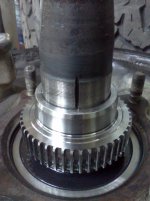
Thanks for the advice. So I put everything back together (the axle with new bearings, new seal, new ABS rotor, new retainers, a new inner seal in the housing, and a new o-ring). It didn't leak at first but after about 400 miles it started leaking again. I decided that before I took the axle back to the garage I would first replace the inner seal again just in case. Had the guy from the garage not had such a bad attitude when I tried talking to him about the parts being pressed further down than they had originally been I would have just taken the axle back in. Unfortunately I had not learned about greasing the retainer to see where it's sitting at this point. This time it started leaking soon after. Now I'm about to take the axle out again and do the grease test, then take it back to the garage. I'm glad you mentioned the groove from the cut-off wheel possibly causing a leak. I've been wondering about that because the groove they left on mine looks like it could cause a leak. Here's a picture. Any input is appreciated. I've also read a lot of different opinions about which brand of seal is the best. I used Napa brand. They looked identical to the originals to me. Should I use a different brand? 061315182408.jpg
 

Attachments

  • 061315182408.jpg
    061315182408.jpg
    129.4 KB · Views: 376
That mechanic should be shot. Any update on your situation? I have the same thing happening now but only 80k miles on my ride. Not sure if I bite the bullet and buy bearings tone rings and do it or just do seals and replace the breather.
 

Members online

No members online now.

Forum statistics

Threads
278,309
Messages
3,554,071
Members
248,016
Latest member
Advally Service

Trending content

Back
Top