4.7L V8 Bank 2 Sensor 1 Location
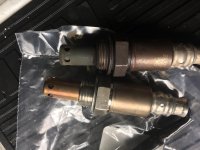
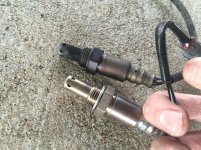
I just replaced this sensor on my 2003 4Runner (4.7L V8). I didn't snap any pictures or take any video, but I was "lucky" because the fender splash shield on my 4Runner was missing and I discovered that the Bank 2 Sensor 1 is easily accessible just by reaching over the passenger side tire. If you think of the tire as being a clock face, you would be reaching over it at about 10 O'clock. I didn't even buy the sensor wrench attachment, I just reached past the tire with an open ended wrench and was able to tap the sensor loose with a hammer. I soaked the sensor with Liquid Wrench a couple of days ahead of time and it came out with about 10 taps of the hammer to loosen the sensor then removed it with my hand. The only two things that were a little tricky were removing the old wire connector, which I accomplished with the use of a long slotted screwdriver to depress the tab on the housing and my other hand pulling on the wire to remove it. You're working blind on this since you've got both hands in a tight space. The other thing that was tough was hand threading the new O2 sensor since you're hand is in a tight spot and you have to align the sensor by feel. Counterintuitively, if you use your left hand to do this it is easier because your left hand allows you to turn the sensor more easily with your fingers. The whole job took about 40 minutes, and if it weren't for the stinking Houston heat (105 degrees in my garage!) I would rate it extremely easy. Oh, and I picked up a Denso sensor from Wal-Mart for $45 which was nice. Autozone and O'reillys wanted over $90 for the part. So if you're facing this job, rather than taking it to a shop, or putting it on a hoist or crawling under it, just remove the fender splash shield (mine was already missing) which is the shield that faces the back of the tire, not the shield above and around the tire, and approach the job from that access point. $45 and 40 minutes later and you'll have a new sensor in there. One other thing I did was to ensure that the wrench I was using was a tight fit (if you're not buying the sensor wrench attachment) by fitting it over the new, uninstalled sensor before I started the job. This helps to ensure you don't strip the old sensor when you're removing it.
Hope this helps.