
Not Satisfied With Today's Brake Bleed Job

FD7683

Member
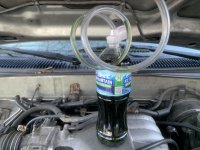
I bled the brakes on my 4Runner today since it was close to being due and was bored and had nothing to do. I was able to bleed them but the problem is that I just wasn't satisfied with the work done to it. The rear drums didn't like to be bled - the RL one had fluid coming out slow and didn't want to be messed with, and the RR was also kind of the same. I had issues opening the RL due to rust and age. I was able to break it open but it barely wanted to move - I think both rear bleeders are shot. Both front calipers bled great.

The steps I used were RR, RL, FR, FL which I saw on another forum and took my time to bleed them. I used a whole bottle of Prestone Dot 3 fluid and works great on both my cars (Civic). My pedal has a stronger bite now but the travel is still the same. I have adjusted the rear drums, replaced the bell cranks, and bled the system and my brake pedal is still low. My master cylinder was replaced with a used one from another 4Runner and it hold pressure just fine. What else can I do to restore my trucks brake pedal engagement? I'm confused.
 

Attachments

  • 0.jpeg
    0.jpeg
    91.4 KB · Views: 1,094
Register to hide this ad
Dont have a fix but i feel your pain. I did the tundra brake mod and have bled the brakes multiple times and I even used techstream to run the booster since I have a 2002.

Always has a very long push for the first pump then tightens up after. Im sure there is still air in there somewhere but I gave up since it still works. sigh..
 
Did you emptied or allowed air into the ABS pump?

Not that I know. My low brake pedal has been a problem for years. I did hear that if I remove my ABS fuse, then maybe that could fix it? I was wondering if this could fix it as I saw it on another forum. I'm sure my ABS doesn't work anyways. The bite is very good - its just the travel that irritates me.
 
Dont have a fix but i feel your pain. I did the tundra brake mod and have bled the brakes multiple times and I even used techstream to run the booster since I have a 2002.

Always has a very long push for the first pump then tightens up after. Im sure there is still air in there somewhere but I gave up since it still works. sigh..

It does seem to be a common problem on these trucks. I probably won't even budge anymore until I get another solution/advice for the problem
 
The best thing on these trucks for solid brakes is a perfectly set up e-brake cable, bell crank and brake shoes as per the FSM. You can remove the bleeder completely and clean out the orifice if its not cooperating. I'm on original drums and calipers, bigger tires, and it stops like a brand new SUV with a solid pedal, everyone one of these trucks I've seen with a soft pedal was because of a rear drum brake issue.
 
Try bleeding with the engine running. Also what made a real difference for me was to replace the front brake lines with stainless ones.
 
If I were you, I'd replace the rear rubber brake line running to the rear axle with a braided steel line and see if that helps with the fluid delivery to the rear. The fact that both rear wheel cylinders aren't moving much fluid is a major red flag you have some type of constriction. The lining of a brake line can fail causing a problem not readily apparent because you can't see it.

If the brake line replacement doesn't improve the fluid delivery, I'd replace both wheel cylinders. I'd also follow the metal brake line path from the front to the rear looking for any damage to the lines that could be the reason you have poor fluid delivery to the rear brakes.

But, maybe it's just due to the rust and the bleeders aren't working like they should. Maybe it would be smart to start off with new bleeder nipples. If that doesn't do it, maybe do the wheel cylinder replacements second.
 
Last edited:
My master cylinder was replaced with a used one from another 4Runner and it hold pressure just fine. What else can I do to restore my trucks brake pedal engagement? I'm confused.
This is the key issue! You likely have at least two issues... First, read the factory procedure for the '96-'00 4runners with ABS:

BFS1dvk.jpg


The OEM master cylinder has internal parts that need the procedure above to pre-charge the drums with fluid before applying pressure to the front and the rear. If you bleed incorrectly, it disables that feature and makes the brakes basically not work. Also, if you go in the wrong order, you can't even get fluid out the rear (what you are experiencing). Make sure the fluid level in the master stays very high, it is easy to lose the fluid to half of the master if you aren't careful (the reservoir is split internally).

Also, if you pushed air through the lines, likely some got stuck in the ABS system. Go get the ABS to engage on a loose surface and bleed again (after the procedure above is followed). It might take a few rounds of bleeding to get it all right.

-Charlie
 
This is the key issue! You likely have at least two issues... First, read the factory procedure for the '96-'00 4runners with ABS:

BFS1dvk.jpg


The OEM master cylinder has internal parts that need the procedure above to pre-charge the drums with fluid before applying pressure to the front and the rear. If you bleed incorrectly, it disables that feature and makes the brakes basically not work. Also, if you go in the wrong order, you can't even get fluid out the rear (what you are experiencing). Make sure the fluid level in the master stays very high, it is easy to lose the fluid to half of the master if you aren't careful (the reservoir is split internally).

Also, if you pushed air through the lines, likely some got stuck in the ABS system. Go get the ABS to engage on a loose surface and bleed again (after the procedure above is followed). It might take a few rounds of bleeding to get it all right.

-Charlie


I actually did follow the first step when installing the master cylinder on my truck. I bled it by having a helper press the brake while I loosen the nut to squirt out fluid. I had no improvement from before and after - it was the same result. I also followed the bleeding steps with the engine off being a 2000. ABS always engages in the snow... well it should, nothing changes and the lines come out with no bubbles. Hmm, maybe i'll give it the disconnect/finger method a shot next.

I might go ahead and torch/quench both rear bleeders and replace them with new ones. Are speed bleeders cheaper than the OEM stuff and can I just have the rear ones on and the factory bleeders in the front? My concern right now is the rear drums not bleeding nice and fast like the front.
 
Last edited:
The best thing on these trucks for solid brakes is a perfectly set up e-brake cable, bell crank and brake shoes as per the FSM. You can remove the bleeder completely and clean out the orifice if its not cooperating. I'm on original drums and calipers, bigger tires, and it stops like a brand new SUV with a solid pedal, everyone one of these trucks I've seen with a soft pedal was because of a rear drum brake issue.

My drums are worn but not worn enough to cause an issue. Both my drums spin with a good amount of drag per Tim's video that I watched.
 
The fact that both rear wheel cylinders aren't moving much fluid is a major red flag you have some type of constriction. The lining of a brake line can fail causing a problem not readily apparent because you can't see it.

If the brake line replacement doesn't improve the fluid delivery, I'd replace both wheel cylinders. I'd also follow the metal brake line path from the front to the rear looking for any damage to the lines that could be the reason you have poor fluid delivery to the rear brakes.

This is what i'm really hinting at as well. I've watched your video on the brake bleeding job and your rear brakes bled a lot better and faster than my 4Runners rears. My truck is a rusted shitbox and bleeding something that should be easy turns out to be hard. My 06 Civic also gave me a hard time by snapping the bleeder valve clean off the surface and having to replace the whole caliper after. One of the perks of living in the midwest. I don't mind bleeding the brakes again since brake fluid is $ and won't really bother cleaning the old bleeders, i'll just replace them.
 
Last edited:
Try bleeding with the engine running. Also what made a real difference for me was to replace the front brake lines with stainless ones.

x2 on engine running, even for those of us that have boosters and not pumps.

What brake line kit did you buy? That's actually on my list of things to do next month. I need stronger brakes beyond just the TBU.
 
I actually did follow the first step when installing the master cylinder on my truck. I bled it by having a helper press the brake while I loosen the nut to squirt out fluid. I had no improvement from before and after - it was the same result. I also followed the bleeding steps with the engine off being a 2000. ABS always engages in the snow... well it should, nothing changes and the lines come out with no bubbles. Hmm, maybe i'll give it the disconnect/finger method a shot next.
Good start - the trick there is that fluid needs to come out and then sealed when the pedal is released, which sucks the front/rear bias adjust thing to the right location for the actual brake bleed. You might even hear it move when you do it. My brakes went from barely able to stop the truck to usable with that - I still need to bleed a time or two more now that I have gotten a couple ABS engagements on them.

-Charlie
 
I'll give the master cylinder bleeding a shot, as well as new brake bleeders in the back and with the engine on this time. Thanks for the suggestion guys!
 
I have not bled a 3rd gen. With all other vehicles I start with a gravity bleed. Let the system push air out by itself. Keep the master cylinder topped off. This is a simple and effective start to bleeding the brakes. It takes some patience and a large bottle of Dot3.
 
Could get speed bleeders, makes brake bleeding a one person job.

I cannot recommend this enough. I got so fed up with bleeding my system after a rear drum brake job that I bought 4 speed bleeders, installed them all around and the system bled like a dream.

Install speed bleeder, attach little hose to it, open bleeder, pump brake pedal, top off reservoir, repeat, close bleeder.
 
I cannot recommend this enough. I got so fed up with bleeding my system after a rear drum brake job that I bought 4 speed bleeders, installed them all around and the system bled like a dream.

Install speed bleeder, attach little hose to it, open bleeder, pump brake pedal, top off reservoir, repeat, close bleeder.
That's great, but it will make your master cylinder go bad if it was on the edge (poor previous maintenance, basically). Just be prepared for that eventuality.

I have also use a vacuum bleeder with varying levels of success.

-Charlie
 
That's great, but it will make your master cylinder go bad if it was on the edge (poor previous maintenance, basically). Just be prepared for that eventuality.

I have also use a vacuum bleeder with varying levels of success.

-Charlie

Maybe I misread/misinterpreted but speed bleeders make your master cylinder go bad?
 

Members online

Forum statistics

Threads
278,316
Messages
3,554,120
Members
248,016
Latest member
Advally Service

Trending content

Back
Top