Ok Air Scoops Snorkels are a GO!! Need your opinion!!

blazingshadow

New member
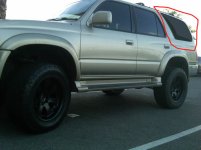
I first saw this on "Repo Men" VW and thought it looked cool, BUT can it be made functional....I know I know, some of you are going to say it's stupid, but whatever, it's all crazy ideas you people are coming up with, that makes me to be different too...So I want my air intake Higher, without the dorky snorkel look, that says "look how high I can go" :frisky:....I must give Thanks to Clown Meat for inspiring me...

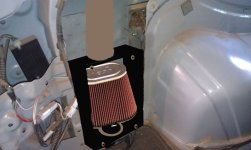
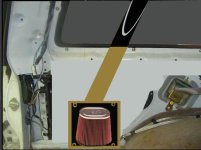
This will have a prefilter in the scoop, and a small drain hole in the bottom back corner.

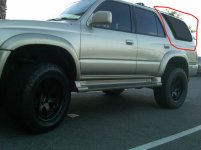
So the first two are of the VW scoops.

The second two pictures are the design of the scoop one is more of a tear drop and the second is more straight angled, which one looks better to you???

and last is the filter box, with a plexi glass sealed cover. This setup will be all aluminum. For the opposite side scoop, I'm trying to decide if I should do a solar powered exhaust fan with slide cover to block it off during winter...Mainly because I'll be hauling my dog with me.. the nice thing about this, I can put the glass back in...

 

Attachments

  • 2364_D004_00007.jpg
    2364_D004_00007.jpg
    42.6 KB · Views: 7,938
  • 2364_D016_00041.jpg
    2364_D016_00041.jpg
    57.5 KB · Views: 4,097
  • Scoop.jpg
    Scoop.jpg
    63.6 KB · Views: 2,197
  • Scoop #2.jpg
    Scoop #2.jpg
    63.8 KB · Views: 2,489
  • Air box.jpg
    Air box.jpg
    56.3 KB · Views: 1,829
  • airbox2.jpg
    airbox2.jpg
    53.1 KB · Views: 1,800
Register to hide this ad
best option is to mount the intake on the roof and a scoop, its closest to the engine, and it's the highest point of the truck, kinda like this one but better built
MFEST-20110031DSC7136-L.jpg
 
You're introducing a number of problems in that setup...

Problem 1:
The old VW buses used to have air intakes in a similar location (rear engined if you didn't know). The earlier generation (google image search a photo of any bus between '49 and '67) of buses had vents down about thigh level, and the later generation (do the same for '68 to '79) had them up higher about the level you're looking at. The lower vents were commonly flush pressed louvres at about the longitude you've illustrated, while the later generation had some pretty sizable scoops at the same latitude, but all the way at the rear corners. It was pretty common to put "Jersey scoops" over the older generation's vents to "improve air flow"(/look cool). The problem was that the longitudinal location placed the scoops in a location that decreased the amount of air that actually flowed to the engine (I can't remember if it was due to a low pressure condition or the decreased volume available due to the smaller opening created by the scoop, but my gut tells me it was the former). When VW changed the design for the '68 model year, they moved the vents up higher with scoops like you have, but all the way at the back. Air pressure way back there is positive at the corner close to the body as the air is rushing over the body to fill the low pressure zone created by the newly vacated space behind the bus, so it worked in that case. What you've illustrated puts your effective intake at a position high like the later generation, but forward and close like the modified earlier generation. Due to the reasons illustrated, you're going to have issues getting enough air.

Problem 2:
There will be lots of turns and corners and such between your intake start and the cylinders. Air flow doesn't like corners. You're also likely going to find yourself fighting for real estate for plumbing of an appropriate diameter. You can only flow as much air as the smallest bit of plumbing will allow. For reference on the difference a single turn in a reasonably sized diameter tube does on air flow, check out the second external link in the thread about how the deck plate mod is no good. A guy did some thoroughly documented testing on various improvements to the intake system on his SC'd 4Runner, and the single biggest improvement was removing the elbow that connects the intake box to the fender well area. Additionally, the amount of energy required to force a fluid down a tube/pipe increases with the length of the tube/pipe. By making it the length of the car, in addition to the turns, chokes, and low pressure zones, you have a really long straw for the engine to pull air through.

My personal intention for snorkels is to emulate the basic concept found in this thread. Air is high, cold, and clean (the whole point of a snorkel) and in a high pressure location. The installation is clean and allows for the use of larger diameter tubing as deemed necessary to make up for the losses induced by the introduction of length and turns in the plumbing. Not sure what to do for a topper yet (not a fan of the ARB design), but that project is a bit down the road.

On an unrelated note, the hood scoops on that Tiguan are just the ****ty FLAPS stick-on variety painted to match the hood... You could do that really easy!
 
Not only the turns but mainly the distance to the engine.

If you every tried to breath thru a full length garden hose, you will suffocate.
If you cut that same hose to a foot or two, you probably could breath thru it.
On a NA engine, it has to suck the air in. a long tube will greatly reduce power and efficiency.
 
That VW looks pretty bad@$$(!), but I don't think it'd work as well on a 4Runner (looks and functionality), imho. I agree with T4R4Life, a functional hood scoop would be much more realistic.
 
I'm my opinion if you wanted to do an "integrated snorkel" you should get a sport hood and build kind of a ram air style intake.

I looked into the hood mod, But still where do you see most peoples hoods when going threw water? Answer: Under the water..

best option is to mount the intake on the roof and a scoop, its closest to the engine, and it's the highest point of the truck, kinda like this one but better built
MFEST-20110031DSC7136-L.jpg

I looked into the roof mod, As much as I'd love to do that, there's no way to hide the air ducks back to the engine, Plus I'd be cutting into the body...

You're introducing a number of problems in that setup...

Problem 1:
The old VW buses used to have air intakes in a similar location (rear engined if you didn't know). The earlier generation (google image search a photo of any bus between '49 and '67) of buses had vents down about thigh level, and the later generation (do the same for '68 to '79) had them up higher about the level you're looking at. The lower vents were commonly flush pressed louvres at about the longitude you've illustrated, while the later generation had some pretty sizable scoops at the same latitude, but all the way at the rear corners. It was pretty common to put "Jersey scoops" over the older generation's vents to "improve air flow"(/look cool). The problem was that the longitudinal location placed the scoops in a location that decreased the amount of air that actually flowed to the engine (I can't remember if it was due to a low pressure condition or the decreased volume available due to the smaller opening created by the scoop, but my gut tells me it was the former). When VW changed the design for the '68 model year, they moved the vents up higher with scoops like you have, but all the way at the back. Air pressure way back there is positive at the corner close to the body as the air is rushing over the body to fill the low pressure zone created by the newly vacated space behind the bus, so it worked in that case. What you've illustrated puts your effective intake at a position high like the later generation, but forward and close like the modified earlier generation. Due to the reasons illustrated, you're going to have issues getting enough air.

Problem 2:
There will be lots of turns and corners and such between your intake start and the cylinders. Air flow doesn't like corners. You're also likely going to find yourself fighting for real estate for plumbing of an appropriate diameter. You can only flow as much air as the smallest bit of plumbing will allow. For reference on the difference a single turn in a reasonably sized diameter tube does on air flow, check out the second external link in the thread about how the deck plate mod is no good. A guy did some thoroughly documented testing on various improvements to the intake system on his SC'd 4Runner, and the single biggest improvement was removing the elbow that connects the intake box to the fender well area. Additionally, the amount of energy required to force a fluid down a tube/pipe increases with the length of the tube/pipe. By making it the length of the car, in addition to the turns, chokes, and low pressure zones, you have a really long straw for the engine to pull air through.

My personal intention for snorkels is to emulate the basic concept found in this thread. Air is high, cold, and clean (the whole point of a snorkel) and in a high pressure location. The installation is clean and allows for the use of larger diameter tubing as deemed necessary to make up for the losses induced by the introduction of length and turns in the plumbing. Not sure what to do for a topper yet (not a fan of the ARB design), but that project is a bit down the road.

On an unrelated note, the hood scoops on that Tiguan are just the ****ty FLAPS stick-on variety painted to match the hood... You could do that really easy!

The research I've done seems to show that it's a proven positive airflow area, I may need to tweak it to catch the air just right, then again vehicles have come a long was since the VW van, and having a top speed of....45mph I think it was ? LoL What I'm hoping is the that the forced air will compensate for the longer pipping. maybe keep the filter located under the hood would be better. ..
 
Not trying to be mean, but I think the whole idea is stupid. Looks stupid, functionally questionable putting the intake that far from the engine. If you really want to ford deep water, get a diesel and put the air intake in the glovebox. As far as any "ram air effect," you might get some on the highway, but that's not going to do a lick of good in any offroad environment.
 
I've always liked the H1 (hummer) intake setup, would be cool to somehow work that onto the small 4runner fender, somehow.

Whtson, are you talking about the tall intake of short intake for the H1?


Not only the turns but mainly the distance to the engine.

If you every tried to breath thru a full length garden hose, you will suffocate.
If you cut that same hose to a foot or two, you probably could breath thru it.
On a NA engine, it has to suck the air in. a long tube will greatly reduce power and efficiency.

Gerdo, What if someone is standing at the other end end of the hose blowing air.. now you have equal pressure....Now the question is changed, if you supply to much air to the S/C is it a bad thing?
 
Not trying to be mean, but I think the whole idea is stupid. Looks stupid, functionally questionable putting the intake that far from the engine. If you really want to ford deep water, get a diesel and put the air intake in the glovebox. As far as any "ram air effect," you might get some on the highway, but that's not going to do a lick of good in any offroad environment.

You have do idea how close I came to buying a Diesel, But I have this 4runner , and it's paid off, and I would be getting around the same gas mileage. :violin:
 
and not to kick your idea down but some water crossing i've been through the water level is above the windows so having the rear window as the intake would not be ideal.
 
Unique...

If you are worried about water going over the hood, then why would you choose to go with the window scoop? The bottom of your "snorkel" would be level with the hood. I think it's awesome you're trying to find something different, but this doesn't seem beneficial at all over a conventional snorkel other than maybe looking a little better.
 
Wow guys, come on. He's dropped two hints already (two that I could spot).
Hes planning on remote turbocharging his runner. This isn't just designed to solve the problems that a snorkel solves, this is to get the turbo's air from somewhere other than the underside of the truck. Doesn't anyone remember the problems Clownmeat faced?

And Damn we have a lot of negative-nancys on here.
"Always with you it cannot be done"
-Yoda
 
Wow guys, come on. He's dropped two hints already (two that I could spot).
Hes planning on remote turbocharging his runner. This isn't just designed to solve the problems that a snorkel solves, this is to get the turbo's air from somewhere other than the underside of the truck. Doesn't anyone remember the problems Clownmeat faced?

And Damn we have a lot of negative-nancys on here.
"Always with you it cannot be done"
-Yoda

I agree ... who gives a fuuck what someone else does to their rig. Half the time, on paper the idea sounds dumb and then we see the end result and up doing it to our trucks. To the OP ... do it, and then do a diesel conversion. Thanks in advance.
 
I still think it's possible to make the sport hood functional. All you need is some good fab skills. I think of you could fab up some sort of plastic cover that goes over the top of your engine (like they have on all the new cars) and then some how channel an air inlet to the air box?? mayyybe? maybe not? sorry i think a lot
 
I can see "ME" going threw water at least covering the hood, any further, and the air intake is going to be the LEAST of my problems. So moving the air intake at least above the hood is what I'm shooting for..

ON THIS SUBJECT, I have yet to see anyone with a snorkel go up to the roof in water on a 3rd gen and survive....
 

Members online

Forum statistics

Threads
278,316
Messages
3,554,124
Members
248,016
Latest member
Advally Service

Trending content

Back
Top