Question about locking center diff

gsrthomas

New member
Say you locked your center diff in 4x4 low. 3 wheels are on ice one wheel isn't. You are on a incline also.

Will the 4x4 system transfer all the power to the wheel that has traction??
 
Register to hide this ad
The simple answer is "No". It can transfer most of the power to the axle that has traction, and then from there ATRAC will engage the brakes on the wheel that is slipping so the one with traction starts to bite.

I know Jeep markets their QuadraDrive 4-wheel drive system as one that can transfer all the power to one wheel with the combination of the QuadraTrac transfer case and limited slip differentials, but in reality that is simply not the case. Regardless of the manufacturer, most transfer cases and differentials cannot transfer all the power from the wheels that are slipping, just most of the power.

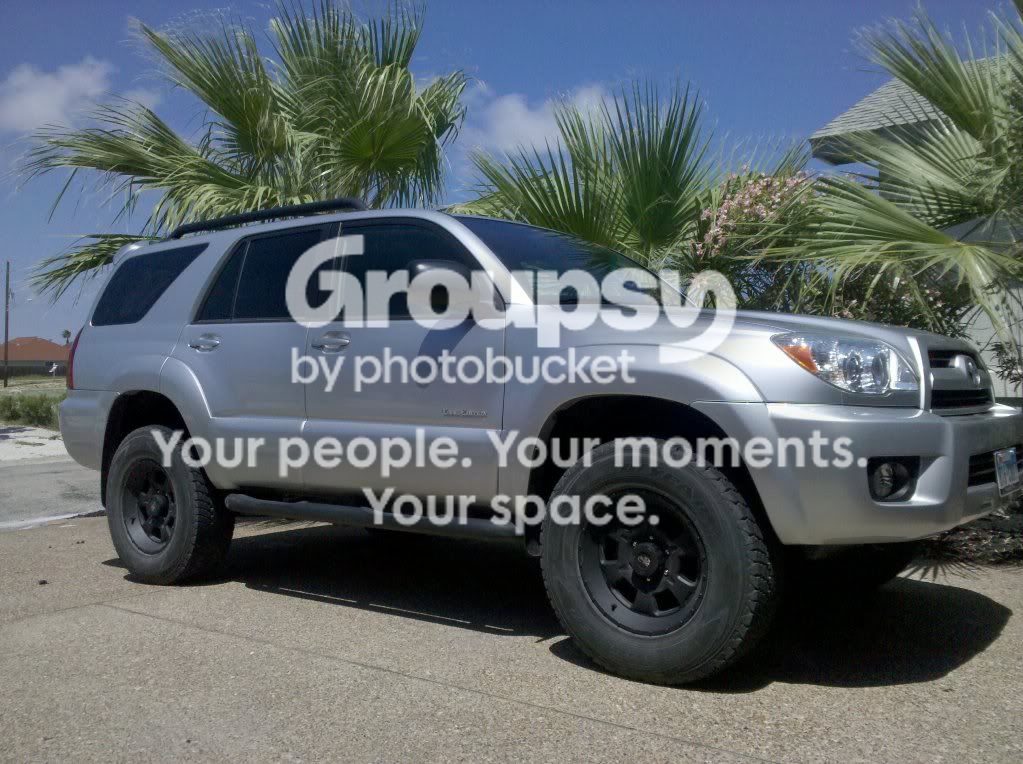
In reality, there isn't much I haven't been able to get through with my 4Runner and a good set of A/T tires. Be it steep, 4-wheel drive trails with loose rocks or gnarly, unplowed roads with deep snow. My 4Runner actually does better in most poor traction situations than my old Grand Cherokee did that had QuadraTrac (same transfer case as the QuadraDrive equipped Jeeps, just minus the limited slip diffs). Although both 4-wheel drive systems are more than adequate for most situations.
 
Say you locked your center diff in 4x4 low. 3 wheels are on ice one wheel isn't. You are on a incline also.

Will the 4x4 system transfer all the power to the wheel that has traction??

Sorry, just caught the "locked" portion of your question.

It definitely won't transfer all the power to 1 wheel when the center diff is locked. When the center diff is locked, it is a 50/50 power split between the front and rear axles, disabling the ability to transfer power to the axle that is slipping more.

The cool thing about the 4Runner's 4-wheel drive system is that you can be in 4-Lo without the center diff locked if you choose. That's an option that not many 4-wheel drive systems offer.
 
Thanks for the response. You just confirmed what I thought.

I'm in the market for a 4runner so just wanted to know more about the 4x4 system in the 4runner.
 
To get all the torque to one wheel you need locking differentials in both axles. Land Cruisers had that option from '91 to '97, Jeep Rubicons, and I think there might have been another vehicle or two. My '97 Land Cruiser was a tank with everything locked, but you could hardly steer it, and I wouldn't want to get over maybe 10mph like that. The modern alternative of using traction control to transfer torque is easier to live with for a daily driver.
 
Thanks for the replys.

Love the 4runner when its leveled and slightly lifted. Hate looking at them with their stock rake.

I'm looking to buy a silver 2009 4runner TE. Hard to fine one in the color you want but I am in no hurry. Willing to fly and travel also.

I have a mint condition low mileage 2002 Tacoma xcab, 4x4, TRD, manual, right now. These things are selling for $15k plus in my area. I should have no problem selling the truck. Crazy how lots of people still want a 1st gen truck.
 
The cool thing about the 4Runner's 4-wheel drive system is that you can be in 4-Lo without the center diff locked if you choose. That's an option that not many 4-wheel drive systems offer.

I understand the center lock 50 / 50 option, but don't quite follow what happens in 4LO when used normally and how that differs. Can anyone explain??

Thanks.
 
I understand the center lock 50 / 50 option, but don't quite follow what happens in 4LO when used normally and how that differs. Can anyone explain??

The 4th gen 4Runner has a two-speed transfer case. You can be in 4WD Lo or 4WD high. The center diff can be locked or unlocked, whether in 4WD lo or 4WD high.
 
4LO offers just that, a lower gear ratio for more mechanical advantage and slower speed. Its a crawl type gearing that allows for more slow speed control over rough terrain. I gotta say, this thread just made me go out and mess around with all the 4WD settings on my rig. I coulda sworn that 4LO automatically locked the center diff but lo and behold its selectable. The combinations on these torsen diffs are amazing, especially when you throw in ATRAC and a rear locker.

gsrthomas, a man after my own heart. Took me a year to find mine and it was very much worth the one way plane ticket and 750 mi drive back home.

2010-08-08150207.jpg~original
 
Last edited:
so all that being said, when is the best time to lock the center diff? It sounds like its better not to in the ice, if like the poster said 3 wheels are slipping and one is not. what scenario(s) would be the best to lock the center diff?
 
The cool thing about the 4Runner's 4-wheel drive system is that you can be in 4-Lo without the center diff locked if you choose. That's an option that not many 4-wheel drive systems offer.

:iagree:It's a real 4th gen differentiater as neither FJ nor 5th gen has this option on the full-time models.
 
so all that being said, when is the best time to lock the center diff? It sounds like its better not to in the ice, if like the poster said 3 wheels are slipping and one is not. what scenario(s) would be the best to lock the center diff?

I drive on the beach for a couple weeks each year. I always lock the center diff prior to going out on the beach. Locking the center diff turns off ESP -- spin protection. That's not an issue on the beach.

If I was going to do serious offroading (i.e., rock hopping), I'd lock the center diff. If I needed to make a sharp turn, I'd unlock the center diff.

Driving on slippery roads (rain, slush, snow, etc.), I leave the center diff unlocked. I want ESP on, and locking the center diff makes the truck tail happy (oversteers easily). If I was on a slippery road and nearly stuck, yes, I might lock the center diff.
 
I drive on the beach for a couple weeks each year. I always lock the center diff prior to going out on the beach. Locking the center diff turns off ESP -- spin protection. That's not an issue on the beach.
for a month or so next Spring I'll be driving on the beach a lot, and hadn't heard using the center diff was a good idea. Can you be a little more specific how it helps on sand?

Thanks to all for replies in this thread....very helpful.
 
for a month or so next Spring I'll be driving on the beach a lot, and hadn't heard using the center diff was a good idea. Can you be a little more specific how it helps on sand?
It allows a little more slip of the tires before the traction control/spin control starts braking and shutting down the throttle.

Try it both ways and decide for yourself.
 
That's not really true. In an 80 series land cruiser with the center diff locked and both front and rear diffs locked - each wheel is mechanically bound to the driveline and thus is receiving 25% of the rotational force.
----------------------

To get all the torque to one wheel you need locking differentials in both axles. Land Cruisers had that option from '91 to '97, Jeep Rubicons, and I think there might have been another vehicle or two. My '97 Land Cruiser was a tank with everything locked, but you could hardly steer it, and I wouldn't want to get over maybe 10mph like that. The modern alternative of using traction control to transfer torque is easier to live with for a daily driver.
 
That's not really true. In an 80 series land cruiser with the center diff locked and both front and rear diffs locked - each wheel is mechanically bound to the driveline and thus is receiving 25% of the rotational force.
----------------------

With everything locked, and three wheels in the air, the wheel on the ground would get all of the torque, while the three in the air would rotate with the wheel on the ground, not spinning free. So the wheel with traction in this situation would get all of the power, which was the original question.

 
Yes in the situation you describe, the other three wheels would spin in unison with the one wheel with traction, because they are each receiving 25% of the power output from the transmission. However, there is no shifting of power from one wheel to another or one axle to the other due to traction loss in a ff/rr & center diff locked situation. In this situation all 4 wheels spin at the same rate - regardless of traction. If any of the 4 wheels has traction the truck will move - if none of the wheels have traction the truck will not move.

I think we are really saying the same thing, just trying to avoid the OP thinking that 100% of the power goes to one wheel in a fully locked rig. Just as a locked center diff takes power 50:50 front to rear axle, front and rear lockers take that 50:50 and make it 25:25 at each wheel front and rear.

With everything locked, and three wheels in the air, the wheel on the ground would get all of the torque, while the three in the air would rotate with the wheel on the ground, not spinning free. So the wheel with traction in this situation would get all of the power, which was the original question.
 
for a month or so next Spring I'll be driving on the beach a lot, and hadn't heard using the center diff was a good idea. Can you be a little more specific how it helps on sand?

Thanks to all for replies in this thread....very helpful.

Driving on a flat beach it may not matter one way or another, I see minivans driving on some of them.. Now if you have sand dunes to climb you will want to lock the center diff. Otherwise as you give floor the gas pedal to get the wheels spinning the brakes will apply to stop the wheel spin and forward motion will stop . Lock the center diff and you can get the tires spinning fast to get you over the dune. In sand low tire pressure and lot of tire speed is what keeps you moving.
 
I think we are really saying the same thing, just trying to avoid the OP thinking that 100% of the power goes to one wheel in a fully locked rig. Just as a locked center diff takes power 50:50 front to rear axle, front and rear lockers take that 50:50 and make it 25:25 at each wheel front and rear.

100% of the power does go to one wheel when fully locked with three wheels in the air. It's as if the other three wheels don't exist, they're no longer putting out any force, so no force comes into them. The only thing resisting the engine force is that one wheel with traction.

In my 4R with the center diff locked, I would have one wheel with traction, and the opposite wheel on that axle would get matching resistance from the brake, so those two wheels would each get 50% of the engine power.
 
Last edited:
I think we are really saying the same thing, just trying to avoid the OP thinking that 100% of the power goes to one wheel in a fully locked rig. Just as a locked center diff takes power 50:50 front to rear axle, front and rear lockers take that 50:50 and make it 25:25 at each wheel front and rear.

Scottm has this. I'm not a fan of the oft repeated phrase "50/50 torque split" to describe center lock because it's very misleading. Torque can only follow traction because in order for there to be any torque, there has to be something to push against. So with only center diff locked, front or rear can receive 0-100 percent torque depending on traction.

The equal split is actually what an open diff does. One wheel spins and another, connected by differential, receives the same amount of torque -- which may not be enough to move the vehicle.
 
Last edited:

Members online

Forum statistics

Threads
278,305
Messages
3,554,041
Members
248,016
Latest member
Advally Service

Trending content

Back
Top