First off I recommend reading the following threads, if you aren't already familiar with leaking seals and repair-
http://www.toyota-4runner.org/3rd-g...e-information-replacement-thread-3rd-gen.html
http://www.toyota-4runner.org/3rd-gen-t4rs/114743-possible-solution-leaking-axle-seals.html
Summary:
Two years ago my 99 Ltd w/ ABS, 170k miles started spraying oil onto the left rear wheel. Inspection of the right side also showed oil starting to leak onto the brake shoes. First I checked to see if the diff vent was plugged (it wasn't). Then I removed the axle shafts and took them to a local axle shop to have replaced all affected parts using Toyota oem stuff. I replaced the seals myself and reassembled the axle.
One month ago, and after 20k miles I'm again getting oil spraying on the wheel. I took the axle shafts out and took them to the same shop. This time I specified that the retainers be sealed to the shaft. So far (1.5k miles) the axle ABS cavity is still dry.
Long story:
When I found my rear axle leaking I referred to the extremely helpful ultimate seal replacement thread. I ordered up the Toyota parts online and found a local shop willing to R&R the bearings on my axle shafts with my supplied parts. A number of shops declined to use my parts and the one accepted the work is a big reputable shop.
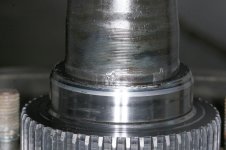
After the shop completed the work I glanced over the axles and noticed the placement of the tone ring/bearing retainer and asked if they had been installed in the right location. The shop said they located those parts in the same location as the old parts, by measuring before and after. I also noticed some gouges in the axle shafts and the old retainers that the shop returned to me. When I got the axles home I did a rough measurement and the placement appeared in spec (122.2 +/- 1.0 mm from brake drum flange to top of tone ring ).
I drove in new seals using the appropriate diameter seal driver and assembled the axles. I have to admit I had trouble getting the seals to go in true. I dimpled one seal driving it in crooked and replaced it on the spot. I checked the seals to see if the were in flat and found they had a bit of runout (0.010 - 0.015"). When I installed the axle shafts I noticed the tone rings appeared off center to the ABS sensor port. The ring was inboard to the point where inner edge of the cut gear lined up with the inner edge of the ABS port. At this point I'm wondering if the parts were pressed on far enough.
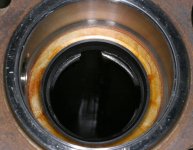
I drove the truck for a few hundred miles and inspected for leaks by removing the ABS sensors. There was oil showing on the left side. By 1000 miles oil was showing on the right side. After 1400 miles I pulled the axles and replaced the seals. There were witness marks on the retainer rings showing the seals were engaging the retainers properly so I wasn't concerned about the ring placement on the axles.This time I made a seal driver on a lathe that fit the axle bore in order to drive in the seals squarely. Despite this I was never able to drive in a seal to better than about 0.005" runout. I'm guessing the radius at the bottom of the bore allows one side to slip past, but not the entire seal.
After another 1k miles I was still seeing oil get past the seal. I replaced them a third time, this time with permatex red on the seal OD.
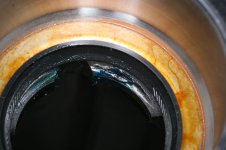
I continued to drive the truck and monitor the leak. Oil was again showing up in the ABS cavity, both sides. Each time I cleaned out the oil and replaced the seal, the left side would leak more than the right. l no longer had access to a garage and and could not disassemble the axles myself. I contacted the shop who pressed on the new bearings and they requested I bring in the truck. At this point I suspected the scratched axles were the cause of the leak, and declined to bring the entire truck in. I crossed my fingers the leak was slow enough to be inconsequential. Not so. 15k miles after the third seal replacement there was oil on the left wheel and the right side was drooling onto the brakes. By now however I again had a garage.
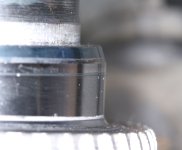
I ordered another round of Toyota parts and again pulled the axle shafts. Before I brought the axles back to the shop, I measured how far the retainers were pressed onto the axle. The left side showed 3.5mm of machined axle, the right side 3.0mm. Compare that with 5mm shown in the first picture of the possible solution thread. Close inspection showed the right side retainer ring was making contact with the axle housing. The witness marks on the retainers showed 2.5 - 3.0 mm of seal engagement from the inboard ege of the polished surface of the retainer. I took the axle shafts back to the same shop as before and had them press on the new parts. This time I had them press the retainer on to show 4.0mm of machined axle. That is slightly outboard of where the shop had placed them before, and only enough to clear the housing by 1mm. I also had them put sealant under the retainer. They chose to use Loctite 648. They also welded up some deep scratches. I installed new seals and checked them with grease (bolt the axles in without the oring) and got witness marks ~1.5 - 2.0 mm of engagement on the ring. That's a _very_ narrow sweet spot. I did not reverse the retainer like Drcoffee and the seal still hits the retainer, but barely.
I've been inspecting the ABS cavities for leaks and so far so good. 1.5k miles on the new seals and still dry. I'm confident at this point that the main issue for me was scratches on the axle shafts allowing oil to leak under the retainer. Sealing the retainer to the shaft to begin with would have saved me quite a bit of labor and hundreds of dollars. In hindsight I can't believe I allowed the leak to continue until the new bearings had been contaminated with oil and required replacing. (There were other problems that went along with lack of a garage, but still...) A second issue was retainer placement. The right side had 3.0mm machined axle showing and it was hitting the housing. The gouge in the housing was noticeable.
Bottom line:
Be very careful where you locate your retainer on the axle shaft. Check it with grease to determine the seal is engaging properly before final installation. Make sure the retainer is sealed onto the shaft.
http://www.toyota-4runner.org/3rd-g...e-information-replacement-thread-3rd-gen.html
http://www.toyota-4runner.org/3rd-gen-t4rs/114743-possible-solution-leaking-axle-seals.html
Summary:
Two years ago my 99 Ltd w/ ABS, 170k miles started spraying oil onto the left rear wheel. Inspection of the right side also showed oil starting to leak onto the brake shoes. First I checked to see if the diff vent was plugged (it wasn't). Then I removed the axle shafts and took them to a local axle shop to have replaced all affected parts using Toyota oem stuff. I replaced the seals myself and reassembled the axle.
One month ago, and after 20k miles I'm again getting oil spraying on the wheel. I took the axle shafts out and took them to the same shop. This time I specified that the retainers be sealed to the shaft. So far (1.5k miles) the axle ABS cavity is still dry.
Long story:
When I found my rear axle leaking I referred to the extremely helpful ultimate seal replacement thread. I ordered up the Toyota parts online and found a local shop willing to R&R the bearings on my axle shafts with my supplied parts. A number of shops declined to use my parts and the one accepted the work is a big reputable shop.
After the shop completed the work I glanced over the axles and noticed the placement of the tone ring/bearing retainer and asked if they had been installed in the right location. The shop said they located those parts in the same location as the old parts, by measuring before and after. I also noticed some gouges in the axle shafts and the old retainers that the shop returned to me. When I got the axles home I did a rough measurement and the placement appeared in spec (122.2 +/- 1.0 mm from brake drum flange to top of tone ring ).
I drove in new seals using the appropriate diameter seal driver and assembled the axles. I have to admit I had trouble getting the seals to go in true. I dimpled one seal driving it in crooked and replaced it on the spot. I checked the seals to see if the were in flat and found they had a bit of runout (0.010 - 0.015"). When I installed the axle shafts I noticed the tone rings appeared off center to the ABS sensor port. The ring was inboard to the point where inner edge of the cut gear lined up with the inner edge of the ABS port. At this point I'm wondering if the parts were pressed on far enough.
I drove the truck for a few hundred miles and inspected for leaks by removing the ABS sensors. There was oil showing on the left side. By 1000 miles oil was showing on the right side. After 1400 miles I pulled the axles and replaced the seals. There were witness marks on the retainer rings showing the seals were engaging the retainers properly so I wasn't concerned about the ring placement on the axles.This time I made a seal driver on a lathe that fit the axle bore in order to drive in the seals squarely. Despite this I was never able to drive in a seal to better than about 0.005" runout. I'm guessing the radius at the bottom of the bore allows one side to slip past, but not the entire seal.
After another 1k miles I was still seeing oil get past the seal. I replaced them a third time, this time with permatex red on the seal OD.
I continued to drive the truck and monitor the leak. Oil was again showing up in the ABS cavity, both sides. Each time I cleaned out the oil and replaced the seal, the left side would leak more than the right. l no longer had access to a garage and and could not disassemble the axles myself. I contacted the shop who pressed on the new bearings and they requested I bring in the truck. At this point I suspected the scratched axles were the cause of the leak, and declined to bring the entire truck in. I crossed my fingers the leak was slow enough to be inconsequential. Not so. 15k miles after the third seal replacement there was oil on the left wheel and the right side was drooling onto the brakes. By now however I again had a garage.
I ordered another round of Toyota parts and again pulled the axle shafts. Before I brought the axles back to the shop, I measured how far the retainers were pressed onto the axle. The left side showed 3.5mm of machined axle, the right side 3.0mm. Compare that with 5mm shown in the first picture of the possible solution thread. Close inspection showed the right side retainer ring was making contact with the axle housing. The witness marks on the retainers showed 2.5 - 3.0 mm of seal engagement from the inboard ege of the polished surface of the retainer. I took the axle shafts back to the same shop as before and had them press on the new parts. This time I had them press the retainer on to show 4.0mm of machined axle. That is slightly outboard of where the shop had placed them before, and only enough to clear the housing by 1mm. I also had them put sealant under the retainer. They chose to use Loctite 648. They also welded up some deep scratches. I installed new seals and checked them with grease (bolt the axles in without the oring) and got witness marks ~1.5 - 2.0 mm of engagement on the ring. That's a _very_ narrow sweet spot. I did not reverse the retainer like Drcoffee and the seal still hits the retainer, but barely.
I've been inspecting the ABS cavities for leaks and so far so good. 1.5k miles on the new seals and still dry. I'm confident at this point that the main issue for me was scratches on the axle shafts allowing oil to leak under the retainer. Sealing the retainer to the shaft to begin with would have saved me quite a bit of labor and hundreds of dollars. In hindsight I can't believe I allowed the leak to continue until the new bearings had been contaminated with oil and required replacing. (There were other problems that went along with lack of a garage, but still...) A second issue was retainer placement. The right side had 3.0mm machined axle showing and it was hitting the housing. The gouge in the housing was noticeable.
Bottom line:
Be very careful where you locate your retainer on the axle shaft. Check it with grease to determine the seal is engaging properly before final installation. Make sure the retainer is sealed onto the shaft.