Reverse gear more capable than center lock?

Clifford

Member
Hey guys,

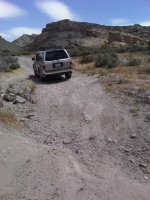
A few weeks ago I spent 4 great days in Mojave desert north of the 58 and east of the 395. I was checking out some trails from "so cal suv trails vol 1" and discovered very beautiful and remote areas. lots of flowers and open space- no power lines- almost no other folks.

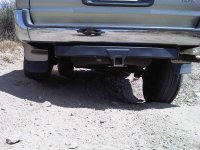
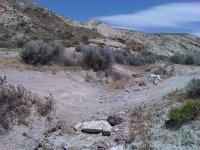
So here is my query. I was heading towards Bird Spring and came upon a small gully. I entered and upon gettng the front tires started up the other side I had diag opposite tires spinning on front and rear. I had 4wd on, center locked, 4lo. It was frustrating to be in center lock and low gear but still spin. Interestingly, when I would go to reverse out and try again reverse gear felt super positive like I could climb half dome! ;)
Seriously though- reverse is different somehow- climbed out of the recess soo easy unlike in drive.
QUESTION--> Why was getting out of the gully so easy in reverse but caused wheels to spin in drive? is reverse gear essentially locked with no slip? Rear axle only? Both?

So eventually I put my mind to it and figured out how to get through it while keeping all 4 tires with the most contact. Enter extreme left, steer hard right, once front hits bottom steer left- up and out.

I read this thread about 4x4 modes and such which sort of explains that center lock is not any better-
http://www.toyota-4runner.org/3rd-g...rs-3rd-gens-transfer-case-awd-multi-mode.html

In any event- I'm tempted to try reverse for tricky spots in the future! Half kidding. I am curious as to the purpose for center lock aside from the need to turn off VTC in deep sand etc.
 

Attachments
  • IMG00185-20110508-1146.jpg
    IMG00185-20110508-1146.jpg
    143.6 KB · Views: 690
  • IMG00184-20110508-1138.JPG
    IMG00184-20110508-1138.JPG
    101.2 KB · Views: 682
  • IMG00187-20110508-1152.jpg
    IMG00187-20110508-1152.jpg
    140.4 KB · Views: 698
Last edited:
Register to hide this ad
Use the tranny in LOW with the t-case in 4Lo. Your 01 has TRAC, so that with the correct shifting position should do it.
 
Oh, interesting- I never thought the tranny position made any difference once you were in 4lo. Do you know what exactly changes between 4lo/Drive and 4lo/Low(1)?
 
Last edited:
I'm guessing that the reason why you popped out so easily was that the change of direction distributed weight over your front axle enough so that you were able to gain traction and back out.

Doesn't seem to be a whole lot more to it then that...
 
yes ironhippy I took a risk going on that last trip on those bald ass tires- and got 2 flats to sober me up. hah- the trip and the experience was totally worth it though- and I was prepared enough to be able to patch both and get a spare on as well. The first was in the middle of Cuddeback Dry Lake which was kind of a miracle.

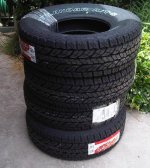
The good news is I have a set of 265/75/16 - Load D- Yokohama Geolander A/T-S tires being delivered today!

It makes sense about load change with direction- but I need to research more on TRAC and what is different in 4lo/D vs 4lo/1.

Thanks for all the replies.
C

PS- look what arrived as I was typing this message! woot! They look huge- ruh roh.
 

Attachments

  • tiresSM.jpg
    tiresSM.jpg
    59.4 KB · Views: 574
Last edited:
The center lock, locks your transfer case. Un-locked and it allows all the wheels to have different rotational speeds. This makes the vehicle AWD. If you were un-locked you probably would only have one wheel spinning and still go nowhere.

The reason you couldn't go anywhere is because both the front and rear differentials are "open". Open means that the diff allows a differential (different speeds/paths) between the two tires.

Two options thru that type of obstacle are:
*Try to keep the suspension from un-loading from being crossed-up. You may have to weave thru the obstacle to keep from un-loading tires.
*Lock the diffs.

Learning how to execute obstacles with open diffs builds trail skill. This is why learning to wheel with a vehicle that is open/open is important. Once you have those skills, adding a locker will get you thru harder obstacles safer.

Back to your question. There is zero difference in the drivetrain from drive to reverse, as far as traction. You probably could back out because of the incline you were on. As you sat there your tires were probably touching the dirt. As you try to move forward you further crossed-up the suspension and further un-loaded the two tires. Backing up allowed the tires to grab and climb the dirt hills that they were touching. They were also getting less crossed-up.

It is always easier to go thru an obstacle going down hill too.
 
what is different in 4lo/D vs 4lo/1.

Nothing is different as far as the gear you start out in. 4lo/D will still start out in the tranny's 1st gear, but it will still be able to upshift/downshift through the rest of the tranny gears automatically. 4lo/L just locks the tranny into the 1st gear so it won't ever upshift to 2nd, 3rd, etc..

The center lock, locks your transfer case. Un-locked and it allows all the wheels to have different rotational speeds. This makes the vehicle AWD. If you were un-locked you probably would only have one wheel spinning and still go nowhere.

The reason you couldn't go anywhere is because both the front and rear differentials are "open". Open means that the diff allows a differential (different speeds/paths) between the two tires.

Two options thru that type of obstacle are:
*Try to keep the suspension from un-loading from being crossed-up. You may have to weave thru the obstacle to keep from un-loading tires.
*Lock the diffs.

Learning how to execute obstacles with open diffs builds trail skill. This is why learning to wheel with a vehicle that is open/open is important. Once you have those skills, adding a locker will get you thru harder obstacles safer.

Back to your question. There is zero difference in the drivetrain from drive to reverse, as far as traction. You probably could back out because of the incline you were on. As you sat there your tires were probably touching the dirt. As you try to move forward you further crossed-up the suspension and further un-loaded the two tires. Backing up allowed the tires to grab and climb the dirt hills that they were touching. They were also getting less crossed-up.

It is always easier to go thru an obstacle going down hill too.

Exactly^^.
 
The center lock, locks your transfer case. Un-locked and it allows all the wheels to have different rotational speeds. This makes the vehicle AWD. If you were un-locked you probably would only have one wheel spinning and still go nowhere.

The reason you couldn't go anywhere is because both the front and rear differentials are "open". Open means that the diff allows a differential (different speeds/paths) between the two tires.

Two options thru that type of obstacle are:
*Try to keep the suspension from un-loading from being crossed-up. You may have to weave thru the obstacle to keep from un-loading tires.
*Lock the diffs.

Learning how to execute obstacles with open diffs builds trail skill. This is why learning to wheel with a vehicle that is open/open is important. Once you have those skills, adding a locker will get you thru harder obstacles safer.

Back to your question. There is zero difference in the drivetrain from drive to reverse, as far as traction. You probably could back out because of the incline you were on. As you sat there your tires were probably touching the dirt. As you try to move forward you further crossed-up the suspension and further un-loaded the two tires. Backing up allowed the tires to grab and climb the dirt hills that they were touching. They were also getting less crossed-up.

It is always easier to go thru an obstacle going down hill too.

Good post. /\ /\
 
Ok so your first comment is still confusing to me- as it sounds like locked should prevent certain tires from rotating independently as you then state unlocked: tires can all rotate independent. Maybe I just need to understand further what locking the transfer case does vs lockers that lock front or rear axles.

Re: options- as I described- I did end up weaving and it worked beautifully.

Re: reverse- makes sense- as I started climbing up the other side rear right lost traction as did front left- makes sense.

Re: open vs locked for experience- I agree and am glad to get more and more exp getting good at understanding how travelling over the given road in front of me will work.

Re: 4lo/1 - I had learned that from experience there really was no difference- and if I am in 4lo there is no way I am able to go fast enough for it to shift into 2/D, etc.

Thanks for the great reply and info!

In other news- I got the 265/75/16 Geolander A/T-S installed yesterday and I love them. No rubbing at all- super quiet- and even though D range they feel nicer than the old tires. I'm stoked.

The center lock, locks your transfer case. Un-locked and it allows all the wheels to have different rotational speeds.

Two options thru that type of obstacle are:
*Try to keep the suspension from un-loading from being crossed-up. You may have to weave thru the obstacle to keep from un-loading tires.
QUOTE]
 
Last edited:
Ok so your first comment is still confusing to me- as it sounds like locked should prevent certain tires from rotating independently as you then state unlocked: tires can all rotate independent. Maybe I just need to understand further what locking the transfer case does vs lockers that lock front or rear axles.

Think about it this way:

All open - if 1 tire spins, all 3 of the others lose power (0 wheels have power)
Center Locked - if 1 tire spins, 1 other tire loses power, other axle unaffected (2 wheels have power)
Rear and center locked - 1 rear tire spins, no other tires lose power (3 wheels have power), front spins, 1 other wheel loses power, rear axle still fine (2 wheels have power)
Fully Locked - 1 tires spins, no other tires lose power (3 wheels still have power)
 
Excellent! So I had a tire on each axle spinning so I was going nowhere as all power lost. If I had had only 1 tire spinning I would have likely experienced much more traction and prob pulled through. Very interesting. Thanks mucho. I love this forum.

Think about it this way:

All open - if 1 tire spins, all 3 of the others lose power (0 wheels have power)
Center Locked - if 1 tire spins, 1 other tire loses power, other axle unaffected (2 wheels have power)
Rear and center locked - 1 rear tire spins, no other tires lose power (3 wheels have power), front spins, 1 other wheel loses power, rear axle still fine (2 wheels have power)
Fully Locked - 1 tires spins, no other tires lose power (3 wheels still have power)
 
Ok so your first comment is still confusing to me- as it sounds like locked should prevent certain tires from rotating independently as you then state unlocked: tires can all rotate independent. Maybe I just need to understand further what locking the transfer case does vs lockers that lock front or rear axles.

My understanding is that unlocked all 4 tires can be moving independantly of each other, different speeds, AWD. Whereas with the center diff locked there is the same power going to the front diff as there is the rear diff, but each of those diffs is still open, 4x4 w/ open f&r diffs. The effect is that the front tire that is spinning would be moving at the same speed as the rear tire that is spinning, if you managed to unload a tire on each axle, or on ice, etc.

Edit: I see NelsonMD did a better job of this while I was typing, lol.
 
I thought that the 2001 and 2002 models had electronic traction control. It was my understanding that when you lock the center differential, it automatically shuts down the electronic traction control.

So basically, when center diff is open, power goes to wheel with less resistance, The Traction control will apply the brakes to that wheel transferring power to the next wheel with with the least resistance.

With the center diff locked, All the traction control systems are turned off and with the 4runner caddy cornered in a ditch (one tire on each axle is up in the air), the motor is sending power to both the front and rear wheels causing them to spin.

I might be wrong in this system and i am sure some will correct me.
 
Yes, traction control is turned off with center locked. I learned this hard way with my first deep sand experience on Mojave Road trip- when the truck started braking/cutting the engine when the wheels started spinning causing me to slow down- not what you want to be doing in deep soft sand. On the other hand you bring up a very interesting point which is in cases like the one I described above, it just might be better to not be center locked in that the traction control might actually help- although I am doubtful as part of the traction control system involves throttling the engine down- so sort of a catch 22 sitch possibly instead.

I thought that the 2001 and 2002 models had electronic traction control. It was my understanding that when you lock the center differential, it automatically shuts down the electronic traction control.

So basically, when center diff is open, power goes to wheel with less resistance, The Traction control will apply the brakes to that wheel transferring power to the next wheel with with the least resistance.

With the center diff locked, All the traction control systems are turned off and with the 4runner caddy cornered in a ditch (one tire on each axle is up in the air), the motor is sending power to both the front and rear wheels causing them to spin.

I might be wrong in this system and i am sure some will correct me.
 
You are getting two different electronic systems confused. Both of which are only on the 01-02 models.

-VSC (vehicle skid control) is disabled when you lock the center diff. Vehicle skid control is the one that kicks in when you start sliding sideways on ice or stuff like that.

-TRAC (traction control) is NOT able to be disabled from the factory. And is ALWAYS on no matter what form of 4x4 you are in.
TRAC is the one you want on for offroading, it uses the brakes to act as a sort of limited slip differential.

(You can add a switch to disable both of these simultaniously, andymod 2.0)
 
Last edited:
I'm sure most of the folks that have already posted in this thread have already read/seen or gone over all of this 100 x before, but this was one of the first things that brought me to this site in the first place (and I think it should be posted in as many places as possible :D):

http://www.toyota-4runner.org/3rd-gen-t4rs/78448-t-case-differences-all-years-3rd-gens-transfer-case-awd-multi-mode.html

Lots of good info if you're curious about why your 3rd gen does/doesn't lock while others do things differently.
 
Last edited:

Members online

Forum statistics

Threads
278,307
Messages
3,554,054
Members
248,016
Latest member
Advally Service

Trending content

Back
Top