?s about locking hubs ...

speedmaster

New member
I remember years ago as a kid seeing people get out of the truck and manually locking hubs on a truck. If I understand correctly, the idea was the leaving them unlocked most of the time, they were disconnected from the axles up front and could free-wheel, less drag and wear?

Is that still a thing? How does that work for 5th gen 4Runners?

Thanks for putting up with my questions. :)
 
Register to hide this ad
Pretty much right.

Locking hubs are good in their simplicity, but it sucks to unexpectedly need to lock them knee-deep in mud.

Auto-locking hubs are more complicated, but more convenient, not sure how prevalent they are anymore.

We have auto driveshaft disconnect, it's a compromise. More constantly moving parts than locking hubs, but sturdier and more reliable. It is a vacuum-operated sliding sleeve which connects/disconnects one of the front axles ( DS, I think).
 
Last edited:
Not sure about 5th gens, but in the 3rd gens switching to manual hubs is popular for guys doing big lifts which causes more extreme CV angles. With a manual locking hub, when unlocked, the CVs/axles aren't turning and so don't get much wear like they would be with the stock fixed hubs. People with big lifts without manual locking hubs deal with more CV/boot wear and damage over time. Diff drops can help a little, but aren't a total cure for CV wear when lifted 3+ inches.
 
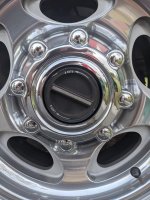
funny, I just took this picture yesterday of my buddies Excursion. Reminded me of my 1992 Toytota 4x4
 

Attachments

  • PXL_20201022_004305995_resized.jpg
    PXL_20201022_004305995_resized.jpg
    133.6 KB · Views: 1,156
There's a kit offered by a Hawaii Tacoma owner but it's over a grand. The only benefit I see is being able to drive home if you break an axle shaft. You would still have the ADD in the front diff.
 
The latest 4Runners don't have locking hubs, and in my opinion, don't need them. Modern lubricants keep the wear down so that is no longer a concern, and since the 4Runner is a big, heavy, SUV, you would not gain much of anything in fuel economy. If you have a significant lift on the front, I can see need to add them as noted above due to the increased angle of the CV joints.
 
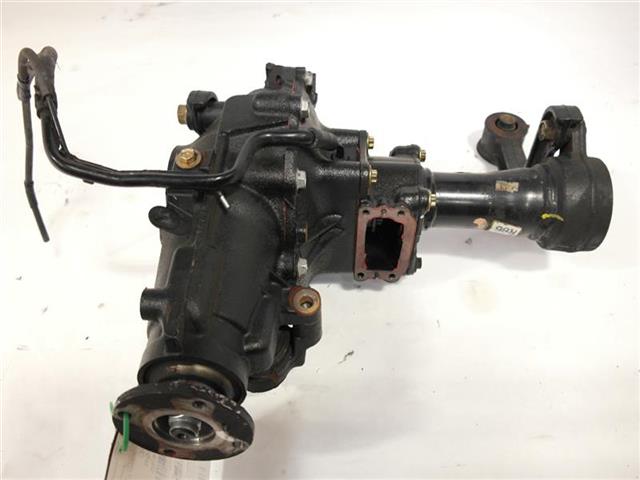
In your 5th gen 4Runner - if it's not a limited - it has two things that disconnect. The front differential has an intermediate shaft between the differential and the passenger side axle/CV shaft. In 2wd the shaft has a disconnect that is a sliding gear mechanism. The passenger side axle assembly still spins at full speed driven by the wheel. The driver's side front is also still connected.

The transfer case disconnects the front drive shaft in the transfer case at the same time as the front axle shaft disconnect. So what you end up with is the front two sides are disconnected from each other and from the rear wheels and transfer case.

The driver's side axle spins, but since the passenger side is disconnected it generally does not spin the differential - the internal spider gears basically free spin. So the resistance is pretty low. Not quite as good as traditional locking hubs would be - but not too far off from there.

It looks like this:
toyota_tacoma_2004_carrier_assembly_191769_02.jpg


2007-toyota-hilux-10_600x0w.jpg


Here's a good video of how the systems work generally:
Four Wheel Drive Operation (4WD) - YouTube
 
Last edited:
Ok, now I am confused.

If there is a disconnect for the RH prop shaft and the transfer case disconnects the front, everything would still be turning but no binding would occur. Am I right?

The driver side wheel is still connected to front diff and the front driveshaft, so the moving ground would turn everything connected to it. The passenger wheel would be turning the RH prop shaft up to the disconnect.

Confusious...
 
Ok, now I am confused.

If there is a disconnect for the RH prop shaft and the transfer case disconnects the front, everything would still be turning but no binding would occur. Am I right?

The driver side wheel is still connected to front diff and the front driveshaft, so the moving ground would turn everything connected to it. The passenger wheel would be turning the RH prop shaft up to the disconnect.

Confusious...

The transfer case engages/disengages the rear input shaft on the front differential. When the transfer case is engaged/disengaged, there is an electronic actuator which connects/disconnects the passenger side axle shaft.

This allows the front differential to only be influenced by the drivers side tire when the vehicle is in 2WD. When the vehicle is in 4WD both the transfer case and the actuator are engaged, tying everything together.

The reason this is different from a limited is the limited has a center differential in the location of the transfer case, I believe. I'm sure [MENTION=118321]Jetboy[/MENTION] can confirm or deny this :)
 
Yes, I have a limited, so its not an issue for me.

I just like to understand how things work and it surprised me that the non-limiteds doesn't use some sort of automatic hubs or at least something to disengage both Left and right wheels. This would give a tiny bit of fuel efficiency back.

I guess having everything still spinning at relatively the same speeds would allow shifting on the fly.

Ryan

The transfer case engages/disengages the rear input shaft on the front differential. When the transfer case is engaged/disengaged, there is an electronic actuator which connects/disconnects the passenger side axle shaft.

This allows the front differential to only be influenced by the drivers side tire when the vehicle is in 2WD. When the vehicle is in 4WD both the transfer case and the actuator are engaged, tying everything together.

The reason this is different from a limited is the limited has a center differential in the location of the transfer case, I believe. I'm sure [MENTION=118321]Jetboy[/MENTION] can confirm or deny this :)
 

Yes, but the 5th gen 4Runner doesn't have the same design as the 70 series Landcruiser.

The 70 series landcruiser with the hubs locked spins the axle shafts, front differential, and the driveshaft between the T-case and the front differential. The only time this design is actually providing power to the front axle, is if the T-case is in 4wd hi or 4wd low.

The 5th gen avoids some slight parasitic drag, because of the A.D.D. (Automatic Disconnecting Differential) between the passenger-side CV-axle and the differential. The driver's side CV-axle enters the front diff housing, but just spins the spider gears in the differential when the vehicle is moving in 2wd. The driveshaft between the T-case and the front diff housing stays stationary, until the T-case is shifted into into 4wd. (As previously noted by Jetboy)

The design on the Limited which allows Full-Time 4wd, is that there is a differential in the T-case, which allows the front and rear driveshafts to turn at different speeds. That differential in the T-case of the Limited can be locked for better traction in slippery conditions, but being locked can also cause binding (just like the Part-Time T-case in the SR5, Trail, TRD models which have no differential in the T-case) if used in high traction situations.
 
Ok, now I am confused.

If there is a disconnect for the RH prop shaft and the transfer case disconnects the front, everything would still be turning but no binding would occur. Am I right?

The driver side wheel is still connected to front diff and the front driveshaft, so the moving ground would turn everything connected to it. The passenger wheel would be turning the RH prop shaft up to the disconnect.

Confusious...

Everything doesn't spin. But a lot of it does. The axle shaft doesn't directly connect to the differential ring gear. There is a set of "spider" gears internally in the differential carrier housing. So what happens when the two sides are disconnected is that the left front shaft spins the left side spider gear - and because the right hand side output from the differential is disconnected, instead of spinning the whole differential carrier, ring gear/pinion/drive shaft - it basically just spins the right hand side uncoupled shaft backwards.

It's sort of the same effect as if you lift the rear axle off the ground and spin one tire forward - it will spin the other side backward. If there was almost no resistance on the other side - it would spin pretty freely. And that's basically how it's working.

The result of that is that the front drive shaft and the front ring and pinion along with the front diff internal carrier housing very slowly rotate only because of the friction in the spider gears. But essentially they're disconnected. So the rotating mass up front is actually significantly reduced to only the two shafts and the spider gears. Also the two front sides are totally disconnected from each other.

In a Limited - the front shaft is never disengaged. And the two sides are always connected. There is no disconnect in the intermediate shaft. This works because there's a center differential also that can allow the vehicle to turn without any binding anywhere.

Because the limited does not ever experience that freewheel scenario where the carrier is more or less fixed, but the axle is spinning at high speed, it does not have or need an internal carrier needle bearing where the axle rides inside the carrier to the spider gears. The non-limited models spend most of the time with the passenger side axle spinning on that needle bearing. And that's why the needle bearing issue only exists on non-limited models. Even if there were a needle bearing and it did go bad on a limited - you'd never know because that bearing is effectively never used. The axle shaft and the carrier are rotating at the same rate - so relative to each other - they aren't moving.

Hope that makes sense.
 

Members online

No members online now.

Forum statistics

Threads
278,306
Messages
3,554,045
Members
248,016
Latest member
Advally Service

Trending content

Back
Top