This Is What Happens When You Don't Drive Your V10 Audi Hard Enough

NoDak

Senior Member

Attachments

  • carbon DI buildup.jpg
    carbon DI buildup.jpg
    43.4 KB · Views: 1,070
  • ford ecoboost DI.jpg
    ford ecoboost DI.jpg
    40.9 KB · Views: 1,287
Last edited:
Register to hide this ad
interesting article. its not directly related to the 4Runner, but I might be relevant if we get the new v6 from the Tacoma with direct injection.

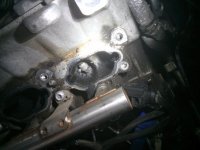
1st pic : carbon build up on the audi v10

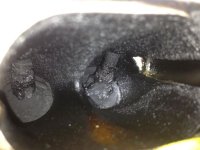
2nd pic : carbon build up on a ford ecoboost

For those of us that are or were police offices when we drove crown vics, carbon build up was a big problem. Driving around on patrol at little more than idle for hours a day. then when you would get on it hard for any reason, you would have a smoke screen.

Fact is, carbon builds up, and at lower RPMs it builds up worse. So from time to time, you "need" to hit the limiter on your 4runner......for maintenance purposes. Just pray you get pulled over by a crown vic so you can explain yourself..... :pray:
 
interesting article. its not directly related to the 4Runner, but I might be relevant if we get the new v6 from the Tacoma with direct injection.

1st pic : carbon build up on the audi v10

2nd pic : carbon build up on a ford ecoboost

.
This Is What Happens When You Don't Drive Your V10 Audi Hard Enough

I thought part of the point of Toyota's D4D Injection System was to help reduce the carbon buildup, seen in other DI systems. A quick search does show carbon buildup in toyota's D4D Turbo Diesels though, of course that doesn't give us an idea of how their N/A Petrol D4D systems will fair.

Now that alot of manufactures are using Direct Injection, and mating Auto Transmissions to these DI Engines, I have a feeling we will see alot more carbon buildup issues, as these Autos and CVTs are programmed for Fuel Economy, making it difficult to drive "Hard Enough" to blow out that carbon!

I know my 4runner rarely sees anything above 2000rpm during normal daily driving. I will floor it every once and awhile to give it a workout though. I have always wondered what the long term effects will be, with all of these newer cars with Autos and CVTs, who will almost never see RPMs above 2000, for 99% of their lifetime operation. I guess we will see how it goes...
 
I don't think it works the same with direct injection as it works with the old Crown Vic's. For example, people on the VW forum say that the problem gets worse the harder you drive the car. This is because it's oil mist from the PCV valve that is what builds up on the intake side (particularly if you use the wrong oil). This is just one example. But in general, with no fuel coming in there is nothing to clean the intake.
 
I just had my wife's 2010 Mini Cooper S de-carbonized, they used crushed walnut shells and blasted it out. It was $650.00 for this service at a reputable BMW shop, the Mini dealer wanted $1200.00 for the same service.It runs like a scalded dog now.
 
interesting article. its not directly related to the 4Runner, but I might be relevant if we get the new v6 from the Tacoma with direct injection.

The 3.5 V6 in the '16 Tacoma utilizes their D-4S technology, which basically is Direct and Port injectors. The port injectors are to keep the valves clean.
 
I don't think it works the same with direct injection as it works with the old Crown Vic's. For example, people on the VW forum say that the problem gets worse the harder you drive the car. This is because it's oil mist from the PCV valve that is what builds up on the intake side (particularly if you use the wrong oil). This is just one example. But in general, with no fuel coming in there is nothing to clean the intake.

This is partially true for European cars because they tend to ingest quite a bit of oil and have very odd oil separator systems that frequently fail (*Cough* BMW *Cough)

The real reason is actually because with GDI and Variable Valve Timing, these engines run with insane valve overlap. Without injectors spraying fuel on the back of the intake vales and the various flame fronts you can achieve with GDI, carbon soot cakes the intakes very quickly. Between tumbler valves and other things that change airflow, the carbon soot is slowed down and thrown about the intake to coat everything all the way up to the throttle body.

Toyota's D4S is not a true GDI if I remember right since the GDI injector part of the vehicle is not used as heavily as the standard port injectors, but as a result they experience less carbon fouling then GDI systems.

Another interesting and potentially worrisome thing is that the GDI engine produce "Micro-Soot" that is not filtered out by even the best oil filtering media and is basically extremely fine carbon suspended in the engine oil. There's some research out there that postulates Micro-Soot being the cause of many of the reliability issues found in modern GDI engines in terms of prematurely worn/failing components. It was an interesting read and I will try and find the link when I get a chance.

All in all GDI engines have benefits, but there is an inherent design flaw within the severe sooting issue as well as the fact these are gross NOx polluters since they're forcibly tuned to reduce CO2, which as a result turns them into NOx factories. Also, if spattering of reading material I has seen is to be believed, micro soot will probably cause a backwards step in engine reliability since it requires finer filtering media than even high end filters use and possibly a change in how engine oil is handled in an engine.
 
Another interesting and potentially worrisome thing is that the GDI engine produce "Micro-Soot" that is not filtered out by even the best oil filtering media and is basically extremely fine carbon suspended in the engine oil. There's some research out there that postulates Micro-Soot being the cause of many of the reliability issues found in modern GDI engines in terms of prematurely worn/failing components. It was an interesting read and I will try and find the link when I get a chance.

That, and most of them call for synthetic with extended oil change intervals.
 
I'm no engineer

Is this so called new direct injection really that great that they are willing to sacrifice long term reliability? Maybe i'm just too old to learn new tricks in this wrenching world. I do this to my own cars regardless how many miles,I drive it like i stole it (most of the time). :usa2:
 
All DI engines are not created equal. Just remember that.

This is fairly true, but the basic design is almost standard. All GDI engines use in cylinder injectors, all GDI engines use VVTi of some type, some are turbo, some are NA, a large majority use tumbler valves or some form of airflow control in the intake, ect.

The biggest exception is Toyota's D4S (the D4 is actually pretty much a standard GDI system) which uses a Port and Direct injector to spray fuel during operation.

Is this so called new direct injection really that great that they are willing to sacrifice long term reliability? Maybe i'm just too old to learn new tricks in this wrenching world. I do this to my own cars regardless how many miles,I drive it like i stole it (most of the time). :usa2:

I hear you, but look at the forum. How many people want "Power this and power that" and all these gadgets and gizmos. Plus you have MPG fever, Emissions, manufacturers trying to squeeze every last bit of performance they can; ect. It just gets more and more complicated, there's bound to be growing pains. When it comes to GDI, while they're not reinventing the wheel; they are taking it in a very new direction.
 

Members online

Forum statistics

Threads
278,316
Messages
3,554,121
Members
248,016
Latest member
Advally Service

Trending content

Back
Top