Could anyone share their experience and tips, do and do not when off roading in manual transmission? Hill climbing, down hill, over obstacles... I'm not a pro off roader. I know common sense will take you a long way. But would appreciate someone's knowledge and advice. Thanks. 97 4Runner 5speed converted. So the gears aren't much of but aren't the same as factory 5speed.

You are using an out of date browser. It may not display this or other websites correctly.
You should upgrade or use an alternative browser.
You should upgrade or use an alternative browser.
Tips when off-roading with manual transmission
- Thread starter kolelt
- Start date
Register to hide this ad
I offroad all the time in my '94 5-speed. I love it.
Here are a few things I'll offer.
- Anticipate the need for shifting. If you're coming up to an obstacle you need to climb, get into first gear (lo-range, obviously) before you get there, and then keep moving smoothly while you go over it. Don't wait until you almost stall out to try to shift.
- Use low-range whenever you can, don't wait until it's absolutely necessary. As long as the trail you are on doesn't allow for speeds above 25 mph, low range will give you a much better selection of gears than staying in high range and being restricted to first or second. Low range gives you 5 choices of useful gears below 25 mph instead of two.
- On level ground or mild slopes, you don't need to start out in first gear if you're in low range. 3rd gear low is roughly equivalent to 1st gear high.
- Use engine braking on steep downhills. One of the great things about a manual is that it will go very slowly down a steep hill in 1st gear low, under complete control.
- By the same token, recognize that, on a steep downhill using engine braking, you will pick up speed quickly if you step on the clutch. Be ready for that.
- Understand the "clutch start cancel" switch. This can help you out of some tricky situations. For example, you are on a steep upslope and trying to get started without rolling back. Simply shut off the engine, put the vehicle in first gear low range, turn on the ignition, press "clutch start cancel", and hit the starter while giving it a small amount of gas, with your foot off the clutch. The engine will start and you'll be moving with no roll back. The starter easily has enough power to move the vehicle in first gear low on any conceivable slope, and you won't hurt a thing by doing this. In fact, Toyota offroad classes teach this. It's also a good way to get over a big rock or ledge. Just put the front wheel firmly against the rock, shut off the engine, and go through the procedure above. It will climb right over the rock. Saves a lot of clutch slipping.
- Practice all of this stuff in safe situations. Don't wait until you are trying to make a 5 point turn on the edge of a cliff.
For safety,
- Keep your e-brake in top notch condition. It will help for hill starts and general safety.
- By the same token, when you park on a steep hill and get out, always shut off the engine and leave the truck in gear. Do not leave the engine idling and rely on the e-brake to hold the vehicle.
- When driving on steep terrain, always keep the transmission in gear. If the engine should stall, simply take your foot off the clutch and you will come to an immediate stop, even if the power brakes disappear on you.
Here are a few things I'll offer.
- Anticipate the need for shifting. If you're coming up to an obstacle you need to climb, get into first gear (lo-range, obviously) before you get there, and then keep moving smoothly while you go over it. Don't wait until you almost stall out to try to shift.
- Use low-range whenever you can, don't wait until it's absolutely necessary. As long as the trail you are on doesn't allow for speeds above 25 mph, low range will give you a much better selection of gears than staying in high range and being restricted to first or second. Low range gives you 5 choices of useful gears below 25 mph instead of two.
- On level ground or mild slopes, you don't need to start out in first gear if you're in low range. 3rd gear low is roughly equivalent to 1st gear high.
- Use engine braking on steep downhills. One of the great things about a manual is that it will go very slowly down a steep hill in 1st gear low, under complete control.
- By the same token, recognize that, on a steep downhill using engine braking, you will pick up speed quickly if you step on the clutch. Be ready for that.
- Understand the "clutch start cancel" switch. This can help you out of some tricky situations. For example, you are on a steep upslope and trying to get started without rolling back. Simply shut off the engine, put the vehicle in first gear low range, turn on the ignition, press "clutch start cancel", and hit the starter while giving it a small amount of gas, with your foot off the clutch. The engine will start and you'll be moving with no roll back. The starter easily has enough power to move the vehicle in first gear low on any conceivable slope, and you won't hurt a thing by doing this. In fact, Toyota offroad classes teach this. It's also a good way to get over a big rock or ledge. Just put the front wheel firmly against the rock, shut off the engine, and go through the procedure above. It will climb right over the rock. Saves a lot of clutch slipping.
- Practice all of this stuff in safe situations. Don't wait until you are trying to make a 5 point turn on the edge of a cliff.
For safety,
- Keep your e-brake in top notch condition. It will help for hill starts and general safety.
- By the same token, when you park on a steep hill and get out, always shut off the engine and leave the truck in gear. Do not leave the engine idling and rely on the e-brake to hold the vehicle.
- When driving on steep terrain, always keep the transmission in gear. If the engine should stall, simply take your foot off the clutch and you will come to an immediate stop, even if the power brakes disappear on you.
Last edited:
NoVAphotog
New member
Could anyone share their experience and tips, do and do not when off roading in manual transmission? Hill climbing, down hill, over obstacles... I'm not a pro off roader. I know common sense will take you a long way. But would appreciate someone's knowledge and advice. Thanks. 97 4Runner 5speed converted. So the gears aren't much of but aren't the same as factory 5speed.
Here is my first experience with a "real" obstacle in my factory v6 5MT:
https://vimeo.com/183884156
You can see where the tips above would have helped knowing them. I will try the clutch start cancel method next time on this type of obstacle instead of the e-brake hold and hammer down while slipping the clutch method.
I will concur that engine braking and using 4lo the majority of the time has been what I've learned by doing and second that.
Here are few videos of my no so first but after little bit of experience wheeling videos.
https://youtu.be/f7Wff8PeA2E
https://youtu.be/17SZ98_LHhw
First time I went down. I was on the brake to much. Almost stalled it. This is the second time. 4lo no brakes.
https://youtu.be/eC5DMyKCOS4
I have to get out of the habit of, being in gear and going down hill and sometimes pressing the clutch pedal and then the brake pedal.
https://youtu.be/f7Wff8PeA2E
https://youtu.be/17SZ98_LHhw
First time I went down. I was on the brake to much. Almost stalled it. This is the second time. 4lo no brakes.
https://youtu.be/eC5DMyKCOS4
I have to get out of the habit of, being in gear and going down hill and sometimes pressing the clutch pedal and then the brake pedal.
What tips do you have when approaching a down hill obstacle. Let's say it has some ruts and trees in the way, where if in 4lo it might a little to fast and little to rough for the suspension. How do you approach a small rut/drop on one side of the vechicle. Where if it was auto. You'd brake, then slowly go up the obstacle and continue going down.
Tips for if approaching a mud hole/water
Tips for if approaching a mud hole/water
Downhill obstacles: At some point you will have to use the clutch and the brake. At 1000 rpm, a normally geared 4runner will go about 2 mph in low range first gear. If you try to go much slower by using the brake, you may well stall the engine unless you depress the clutch at the same time. Then it's just a matter of rolling down hill using the brake to control speed, and reapplying power with the clutch and accelerator if you hit an obstacle or rock that you need power to get over. It can get tricky some times, but again, practice helps a lot.
2 mph is actually pretty slow - most times you can just brake down to that speed and roll over the obstacle without using the clutch. Keep in mind that, with a manual, you are geared about 30% lower in first gear than you are with an automatic, so that helps quite a bit.
Mudholes and water you also need to think ahead. You want to be in a high enough gear to achieve the speed you need, but not so high as to stall. You don't want to be shifting in the middle of the mud.
One of things you'll want to do is to learn what speeds go with each gear. For example, in my '94, for an rpm range of 1000-3000 rpm, in low range,
1st gear = 2-6mph
2nd = 4-12 mph
3rd = 5.5-17 mph
4th = 8-25 mph
5th = 10-30 mph
If you kind of have a speed range in mind, that will help you select the proper gear in advance. Example, if I wanted to hit a patch of mud at 10mph, I'd use 2nd gear and keep the rpms up to around 2500 so I had good power reserve. If I was crossing a moderately deep stream bed with a firm bottom, I'd use 1st and proceed at about 5mph for a good bow wave.
In first gear the 2nd and 3rd gen 4runners with manual transmissions have a "torque to weight" ratio of greater than 1, meaning that they can theoretically climb a vertical cliff if you could somehow maintain traction. You'll never run out of torque on a hill. In second gear it will climb almost any hill, but on a rough road you might have to go too fast for the suspension in order to keep the engine in the power band.
2 mph is actually pretty slow - most times you can just brake down to that speed and roll over the obstacle without using the clutch. Keep in mind that, with a manual, you are geared about 30% lower in first gear than you are with an automatic, so that helps quite a bit.
Mudholes and water you also need to think ahead. You want to be in a high enough gear to achieve the speed you need, but not so high as to stall. You don't want to be shifting in the middle of the mud.
One of things you'll want to do is to learn what speeds go with each gear. For example, in my '94, for an rpm range of 1000-3000 rpm, in low range,
1st gear = 2-6mph
2nd = 4-12 mph
3rd = 5.5-17 mph
4th = 8-25 mph
5th = 10-30 mph
If you kind of have a speed range in mind, that will help you select the proper gear in advance. Example, if I wanted to hit a patch of mud at 10mph, I'd use 2nd gear and keep the rpms up to around 2500 so I had good power reserve. If I was crossing a moderately deep stream bed with a firm bottom, I'd use 1st and proceed at about 5mph for a good bow wave.
In first gear the 2nd and 3rd gen 4runners with manual transmissions have a "torque to weight" ratio of greater than 1, meaning that they can theoretically climb a vertical cliff if you could somehow maintain traction. You'll never run out of torque on a hill. In second gear it will climb almost any hill, but on a rough road you might have to go too fast for the suspension in order to keep the engine in the power band.
Last edited:
Another comment after watching those videos:
It's easy to lose control of the throttle and forget what you're doing in the excitement of getting over an obstacle. You don't need more than 1500 rpm or so to keep the engine from stalling, and in NoVAphotog's video, he was probably revving double that. Again, that's just a matter of practice so that you can think of multiple things at once while steering and maintaining control of the vehicle. Newer 4runners have "crawl control" to do all that thinking for you, but what's the fun of that!?
Learning to wheel the "old-fashioned way" is a satisfying art form. I seldom use a spotter anymore, and it's really cool to ease through a gnarly section of trail without contacting the ground with anything but the tires, and making it seem routine. (Which is not to say I'm always 100% successful
For the obstacle in NoVAphotog's video, I would have approached it like this;
- ease up to the obstacle in 1st gear low range, at about 1000 rpm (2mph)
- Just as the tire contacted the rock, give it about 1/4 throttle to provide enough power to climb it. If done right, the vehicle would readily climb it. Then remember you need to do the same thing when your rear wheels get to the rock.
- There's always the chance I wouldn't judge the power requirement correctly, and I would stall the engine. In that case I would back up, slowly come up to the obstacle again, but this time feed a bit more power when the wheels contacted the rock.
- If the rock is truly almost vertical and the front just wants to bounce off, I would try the starter trick.
Finally, airing down your tires to 18-20 psi really helps with stuff like this. It allows the tire to climb rather than bouncing off.
It's easy to lose control of the throttle and forget what you're doing in the excitement of getting over an obstacle. You don't need more than 1500 rpm or so to keep the engine from stalling, and in NoVAphotog's video, he was probably revving double that. Again, that's just a matter of practice so that you can think of multiple things at once while steering and maintaining control of the vehicle. Newer 4runners have "crawl control" to do all that thinking for you, but what's the fun of that!?
Learning to wheel the "old-fashioned way" is a satisfying art form. I seldom use a spotter anymore, and it's really cool to ease through a gnarly section of trail without contacting the ground with anything but the tires, and making it seem routine. (Which is not to say I'm always 100% successful
For the obstacle in NoVAphotog's video, I would have approached it like this;
- ease up to the obstacle in 1st gear low range, at about 1000 rpm (2mph)
- Just as the tire contacted the rock, give it about 1/4 throttle to provide enough power to climb it. If done right, the vehicle would readily climb it. Then remember you need to do the same thing when your rear wheels get to the rock.
- There's always the chance I wouldn't judge the power requirement correctly, and I would stall the engine. In that case I would back up, slowly come up to the obstacle again, but this time feed a bit more power when the wheels contacted the rock.
- If the rock is truly almost vertical and the front just wants to bounce off, I would try the starter trick.
Finally, airing down your tires to 18-20 psi really helps with stuff like this. It allows the tire to climb rather than bouncing off.
NoVAphotog
New member
Tips for if approaching a mud hole/water
Pick the appropriate gear and 4wd/2wd position and go for it. I was taught not to use the clutch when in higher water or mud. So make sure it's something you feel like you can get through effectively.
I was in 1st gear / 4Hi here:
https://vimeo.com/183900168
Great tips. Thanks a lot. Few questions. I assume you shouldn't switch gears in 4lo if your going up hill? Just choose a correct gear from gecko? Why is not good habit to press on the clutch and hold it when going down hill? Does it burn up the clutch ? What would you use 4HI besides driving on snow in city. It's safe to stall if you have to? Should you ever switch gears in 4lo?
You can shift the transmission in 4lo just like you do in 4hi or 2hi. I just pointed out it's not generally a good idea to shift in the middle of a mudhole, creek, or halfway up a really steep hill or obstacle. You lose all your momentum and risk getting stuck or hung up. But, on (relatively) smooth ground, shift all you want. I shift gears more or less continually when offroading. I just plan ahead so that I do my shifting before the driving gets tricky. Example: I'm driving along on relatively smooth dirt at 15 mph in 4th gear, lo range. Up ahead is a gnarly mess of rocks. As I get close, I slow down, drop it into first or second (depending on the obstacle), and continue on at an appropriate speed. Once clear of the obstacle, shift back up to whatever gear works for the next patch of smoother road.
4hi is indeed useful for snow. That's primarily what I use it for. Just be careful, it can cause the front wheels to break loose more easily than 2wd. Practice that as well in an empty snow-covered parking lot to get a feel for what it does.
When you press in the clutch and hold it going down hill, you are relying purely on the brakes for speed control. In general engine braking will be smoother, safer, and certainly will generate less wear and heat in the brakes. Going really slow, you'll need to press in the clutch and rely on the brakes, as pointed out above in my first post.
Stalling the engine hurts nothing except your pride and possibly your ability to get out of whatever you're stuck in. As pointed out earlier, one advantage of a manual is that when the engine stalls, the vehicle stops - right now. By comparison, if for some reason the engine dies in your automatic, you're in freewheel mode and the power assist on your brakes lasts for only one or two pedal pushes.
4hi is indeed useful for snow. That's primarily what I use it for. Just be careful, it can cause the front wheels to break loose more easily than 2wd. Practice that as well in an empty snow-covered parking lot to get a feel for what it does.
When you press in the clutch and hold it going down hill, you are relying purely on the brakes for speed control. In general engine braking will be smoother, safer, and certainly will generate less wear and heat in the brakes. Going really slow, you'll need to press in the clutch and rely on the brakes, as pointed out above in my first post.
Stalling the engine hurts nothing except your pride and possibly your ability to get out of whatever you're stuck in. As pointed out earlier, one advantage of a manual is that when the engine stalls, the vehicle stops - right now. By comparison, if for some reason the engine dies in your automatic, you're in freewheel mode and the power assist on your brakes lasts for only one or two pedal pushes.

Scramble
New member
Here is my first experience with a "real" obstacle in my factory v6 5MT:
https://vimeo.com/183884156
You can see where the tips above would have helped knowing them. I will try the clutch start cancel method next time on this type of obstacle instead of the e-brake hold and hammer down while slipping the clutch method.
I will concur that engine braking and using 4lo the majority of the time has been what I've learned by doing and second that.
That's not even a tough obstacle. I probably would have just crawled over that in 4-lo 1st gear & just tap the gas if I felt like I was going to stall. If you do stop, you have to let off the clutch gently as to not spin the tires. A lot depends on your tires too. Worn AT's will spin & new MT's will grip like a mother.
Scramble
New member
Answers in Red
Great tips. Thanks a lot. Few questions.
I assume you shouldn't switch gears in 4lo if your going up hill?
If the hill isn't that steep & your RPM's are too high you can go into second gear.
Why is not good habit to press on the clutch and hold it when going down hill? Does it burn up the clutch?
I dont understand why you would want to press the clutch going down hill. Then you would roll to fast & have to use the brakes. Just keep it in gear & crawl down the hill, no brakes or gas pedal.
What would you use 4HI for besides driving on snow in city.
Flat easy trails, no need for 4-lo
It's safe to stall if you have to?
Yes, to avoid an accident. If you have to slam those brakes, do it!
Should you ever switch gears in 4lo?
Yes, I use 1, 2 & 3 depending on the trail.
NoVAphotog
New member
That's not even a tough obstacle. I probably would have just crawled over that in 4-lo 1st gear & just tap the gas if I felt like I was going to stall. If you do stop, you have to let off the clutch gently as to not spin the tires. A lot depends on your tires too. Worn AT's will spin & new MT's will grip like a mother.
True. Now I know the truck is lot more capable and these things don't look as intimidating but at that point I was definitely still getting the feel for getting over things at a steeper grade.
Sent from my iPhone 6S using Tapatalk
An example of some 3rd gen 4runner 5 speed crawling with stock gears.
You can see how even though Im often not moving, the drivetrain is engaged the whole time and I'm keeping the engine as close to the stalling point as possible (yes I stall occasionally). You can see at 1:17 how I do put the clutch in fully and disengage the drivetrain. When you crawl like this, yes the clutch is slipping but with just enough friction to keep the drivetrain under tension. This will give you the most traction and save your vehicle.
You can see how even though Im often not moving, the drivetrain is engaged the whole time and I'm keeping the engine as close to the stalling point as possible (yes I stall occasionally). You can see at 1:17 how I do put the clutch in fully and disengage the drivetrain. When you crawl like this, yes the clutch is slipping but with just enough friction to keep the drivetrain under tension. This will give you the most traction and save your vehicle.

I offroad all the time in my '94 5-speed. I love it.
Here are a few things I'll offer.
- Anticipate the need for shifting. If you're coming up to an obstacle you need to climb, get into first gear (lo-range, obviously) before you get there, and then keep moving smoothly while you go over it. Don't wait until you almost stall out to try to shift.
- Use low-range whenever you can, don't wait until it's absolutely necessary. As long as the trail you are on doesn't allow for speeds above 25 mph, low range will give you a much better selection of gears than staying in high range and being restricted to first or second. Low range gives you 5 choices of useful gears below 25 mph instead of two.
- On level ground or mild slopes, you don't need to start out in first gear if you're in low range. 3rd gear low is roughly equivalent to 1st gear high.
- Use engine braking on steep downhills. One of the great things about a manual is that it will go very slowly down a steep hill in 1st gear low, under complete control.
- By the same token, recognize that, on a steep downhill using engine braking, you will pick up speed quickly if you step on the clutch. Be ready for that.
- Understand the "clutch start cancel" switch. This can help you out of some tricky situations. For example, you are on a steep upslope and trying to get started without rolling back. Simply shut off the engine, put the vehicle in first gear low range, turn on the ignition, press "clutch start cancel", and hit the starter while giving it a small amount of gas, with your foot off the clutch. The engine will start and you'll be moving with no roll back. The starter easily has enough power to move the vehicle in first gear low on any conceivable slope, and you won't hurt a thing by doing this. In fact, Toyota offroad classes teach this. It's also a good way to get over a big rock or ledge. Just put the front wheel firmly against the rock, shut off the engine, and go through the procedure above. It will climb right over the rock. Saves a lot of clutch slipping.
- Practice all of this stuff in safe situations. Don't wait until you are trying to make a 5 point turn on the edge of a cliff.
For safety,
- Keep your e-brake in top notch condition. It will help for hill starts and general safety.
- By the same token, when you park on a steep hill and get out, always shut off the engine and leave the truck in gear. Do not leave the engine idling and rely on the e-brake to hold the vehicle.
- When driving on steep terrain, always keep the transmission in gear. If the engine should stall, simply take your foot off the clutch and you will come to an immediate stop, even if the power brakes disappear on you.
good info!
NoVAphotog
New member
Just wanted to say thanks for this thread and tips! Went back to Flagpole on Saturday. I was one of only THREE other people with manual trucks out of a group of 20 or so taco's and 4runners. I led the way up the trail as I was one of the few who had done it before and knew where to go. People complimented my going up through some of the same sections that had given me issues before. It definitely helped to know the trail, but still:
The biggest tip I utilized and learned from before was on approach, recognize the need to shift, once in 4Lo and in 1st gear know that you do not need to rev high and can just crawl forward up and over slowly. Never needed to test the clutch start cancel as the former method worked for everything I attempted.
I also used 4Lo and shifted up higher (starting in 3rd, etc) when I could.
The best feature I still LOVE about 5MT is on steeper downhill sections...the 4Lo/1st gear 'crawl control' engine braking. ABSOLUTE control and you have your brakes IF you need them instead of riding them. Otherwise, don't have to touch anything, just steer.
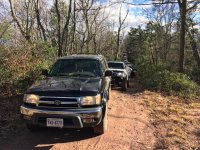
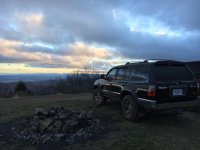
The biggest tip I utilized and learned from before was on approach, recognize the need to shift, once in 4Lo and in 1st gear know that you do not need to rev high and can just crawl forward up and over slowly. Never needed to test the clutch start cancel as the former method worked for everything I attempted.
I also used 4Lo and shifted up higher (starting in 3rd, etc) when I could.
The best feature I still LOVE about 5MT is on steeper downhill sections...the 4Lo/1st gear 'crawl control' engine braking. ABSOLUTE control and you have your brakes IF you need them instead of riding them. Otherwise, don't have to touch anything, just steer.
Attachments


Similar threads


- Replies
- 9
- Views
- 2K


