Tire Tech 101

CR has dozens of test facilities and products can and do get tested by engineers. However as stated in this excerpt from CR.ORG. Ratings are also based on surveys.

"Consumer Reports is the world’s largest independent product-testing organization. Using its more than 50 labs, auto test center, and survey research center, the nonprofit rates thousands of products and services annually. Founded in 1936, Consumer Reports has over 8 million subscribers to its magazine, website and other publications. Its advocacy division, Consumers Union, works for health reform, product safety, financial reform, and other consumer issues in Washington, D.C., the states, and in the marketplace."

There is no question it is more helpful than "ratings" sites. But fact is, they are a publication. They may be a not for profit but they sell advertising space, lobby in DC and report product related news. As with this thread and others like it, CR simply cannot be the end all be all decision maker. And as you mentioned, not every tire was or can be rated, leaving giant gaps product coverage and information availability.

When did they start to do this? It was always a point of pride of theirs that they didn't sell advertising. (I admit it's been a while since I looked at one of their issues.)
 
I should have been more clear. When they rolled out full access online subscriptions they started allowing retailer advertising space on the web version of the magazine.

CR has been sued for fumbled testing practices and false reporting. For instance in the child safety seat scandal.

Too keep on topic. As I said before, CR is a good source of some information on some specific tires and can and should be used as a research tool. It is not the end all be all in product quality, so take the reports lightly.
 
good info here.. question, considering im in Arizonas desert, and that the 120 degree summer heat can kill tires pretty quick, what type would be best for long lasting mt that will not get eaten up out there in the hills. on my other custom vehicle, ive downgraded from a quality tire over the years because it seems that this heat was the main factor of tire replacement( no sense in buying an expensive tire if it wont last any longer than a cheap one due to heat).

I just noticed this post, sorry for the slow response.

In hot dry weather natural rubber tires perform better than cooler wet environments due to the fact that the warmer the rubber is, the better it grips. for you a BFG MT or even a Goodyear would likely be a better bet... IN any event a mud terrain tire in hot dry climates will always deteriorate faster than a more seasonal environment because heat destroys all things. The heat will make he tire softer (wear faster) and it will dry the tire (cracking) due to thermal breakdown.

Hope this helps
 
Thread Zombie alert...

How does Goodyear stack up in the silicate level in their tires?

Depends on the Goodyear you are talking about. The MTR and MTR with Kevlar are both considered high silicate compounds, but I suspect it is marginally due to the fact this tire is used by the military . Something I would like to know is if they are mixing compounds across the face of the tire. Not likely, but it is possible. However the original MTR was mostly natural rubber, heck on the Jeep Rubicons that came with them, the vehicle was light enough, they could last 50-60k.

Mickey Thompson was the first super high silicate Off road tire with the BAJA claw. Paving the way for tires like the (unavailable to non sponsored drivers) KTM2 red label tires.

You will notice on Goodyears site, the MT/R w/Kevlar says "Advanced silica rubber" but if you go to the AT w/Kevlar it just says "tread compound".

The consumer is becoming very aware of tire compounds and the manufactures know this. So read between the lines, if it says something like "Advanced silica rubber" it because they are capitalizing on the advantage of silicate, if it says noting about the silicate, it likely is not a high silicate tire.
 
HanKook Dynapro ATM's

Regarding Toy2G's excellent info on tires...I have 30K on HK Dynapro ATM's P265/70R17...They started out quiet but gradually got louder...even Louder at 30K+...the Tread feels relatively soft and has plenty of it (I think they're rated at 50K). I originally had Firestone Destination AT's when I bought my 2005 4Runner and will go back to them since I drive 80% Road & 20% Trail. Other than that, they are very good tires!
 
Great write up!
I quit using BFG years ago due to their ultra hard compound on and off road. Sure, the tire lasted 60k. But had no grip. I went to other brands which had a high quality compound and loved it!
I switched back to the new BFG KO2, but only after speaking at length with a BFG engineer. I am running the new KO2 and I can tell you, its the best all terrain tire I have ever used for my exact style of driving. I use my rig and my tires hard. Im very particular about my air pressures. I air down properly for the different types of terrain I come across. I love grip and I spend the money to make sure me and my family are safe, and the more grip you have the safer you are.
 
What I don't understand about tire tech is how to answer a relative's question about her tires and handling on windy mountain roads.

She goes through tires every two years, even though she drives like (and is) a little old lady.
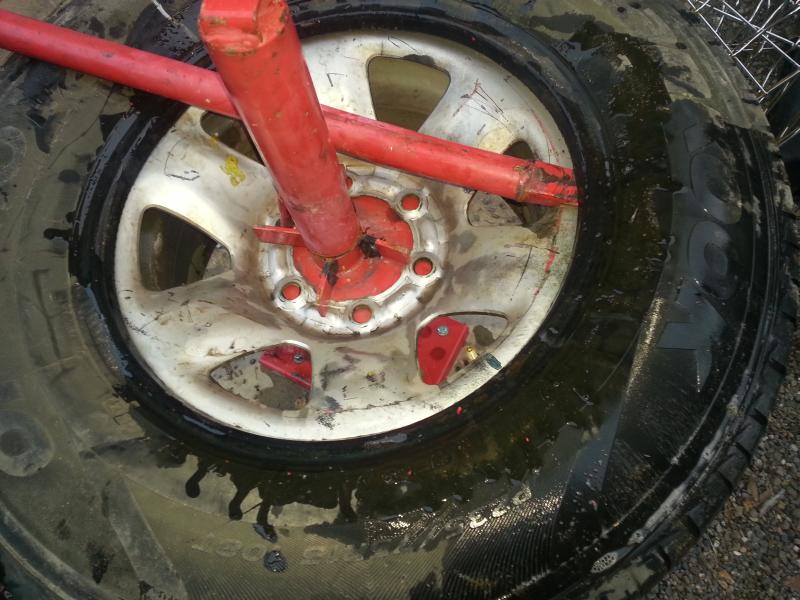
230650d1481687318-advice-requested-those-you-who-have-mounted-tires-balanced-wheels-home-09_adding_dish_detergent_and_water_helped.jpg


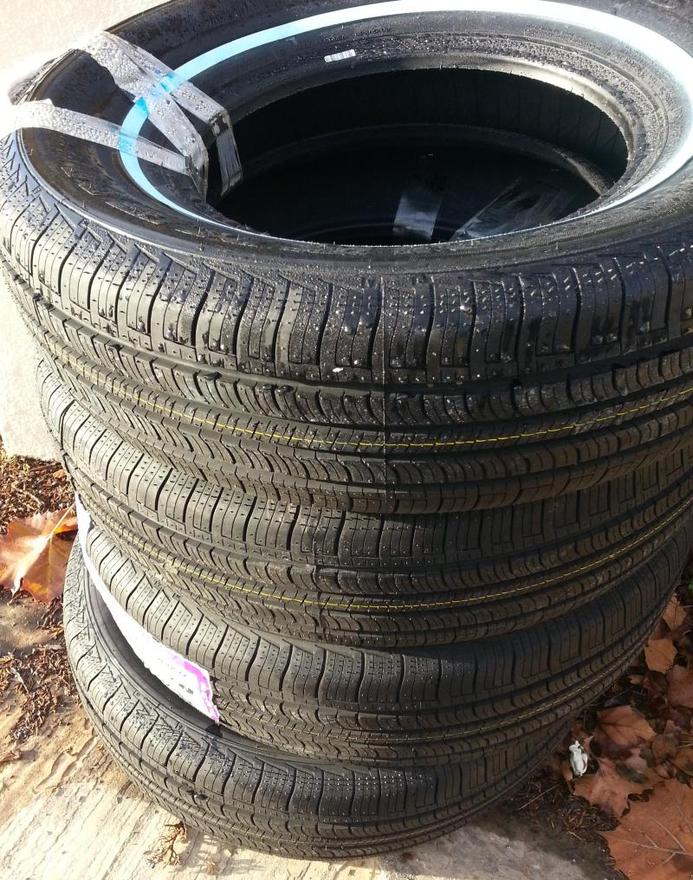
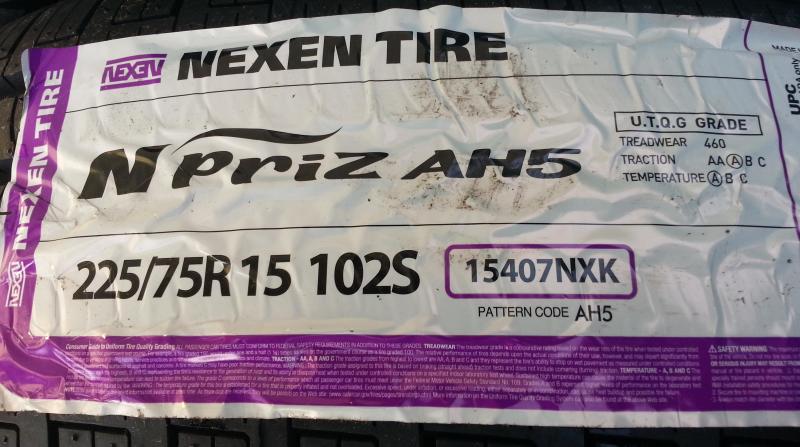
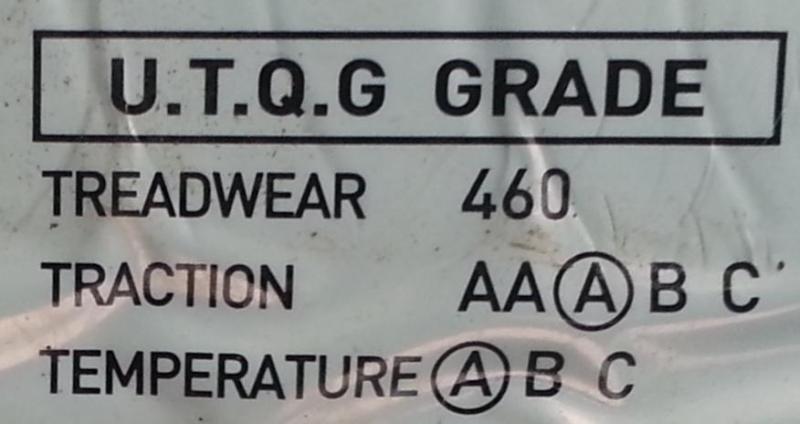
Up until now, she has been using P235/75R15 108T tires (Treadwear 700, Traction A, Temperature B) but we are switching her back to the stock size of P225/75R15 (Treadwear 460, Traction A, Temperature A).
230391d1481561333-advice-requested-those-you-who-have-mounted-tires-balanced-wheels-home-toyota_mounting_tires_01.jpg


She seems to get less than 10K miles for every UTQG 100 points in treadwear, so we expect these new tires to be worn out in less than 46K miles (i.e., 460% of 10K).
230392d1481561337-advice-requested-those-you-who-have-mounted-tires-balanced-wheels-home-toyota_mounting_tires_02.jpg

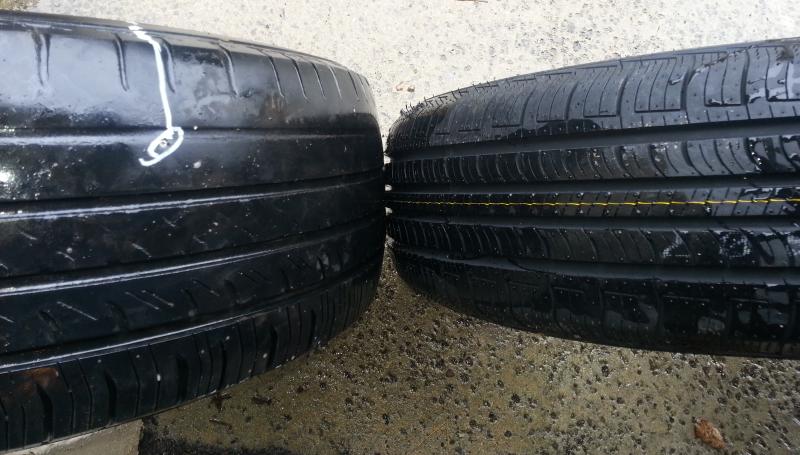
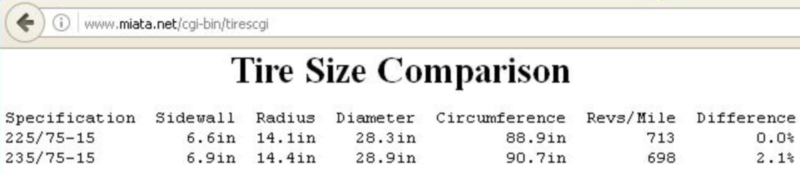
But my tire tech quesion is how to answer her when she asked me how these two differently sized tires (old and new) will handle on the one-lane 30mph windy mountain roads she drives every day?
230750d1481751039-what-would-you-tell-owner-expect-handling-changes-between-these-two-tires-0_tire_size_handling_question.jpg

230783d1481760808-before-up-sizing-your-tires-read-tire_size_comparison.jpg

230395d1481561348-advice-requested-those-you-who-have-mounted-tires-balanced-wheels-home-toyota_mounting_tires_05.jpg

Based only on the SIZE difference, and knowing that she drives mountain roads, what would you tell her the handling characteristics will be between these two tires?
  • (old) P235/75R15 108T (this is the stock OEM size)
  • (new) P225/75R15 102S
 
I am passing on some information that I have learned over the years selling bulk tires via a little company called PepBoys. I had the opportunity to spend two full days in a class with Hankook tires, and took away some valuable information that may be useful to people who……buy tires. Below is a recap of my 10 years of training and personal experience. Please remember I am trying to be as ambiguous as possible to avoid an outpouring of opinions.

Tires rubber is made of compounds, some hard, some soft and some in the middle, much like porridge. All tires are not created equal, and all compounds do not have the same purpose. As an example a high natural rubber compound is hard, this gives you a long lasting tire (think older BFG ATs). With the harder rubber and higher tread life there are a few draw backs. Natural rubber will dry out and crack between the treads much faster, they will also get harder over time making them a handful on wet roads, and lastly they are loud on hard pack. Many Companies still use a higher rubber compound for a couple reasons, it’s cheaper, and the tread does last longer. When marketing tires, a high tread life number is important to the end user for the longest lasting tire. Known manufactures that use a low silicate (or high natural rubber) compounds include; BFG, Bridgestone, Firestone, Maxxis and Michelin too name a few. Now I am referring only to AT and MT tires most common used in the off road market. Most, if not all of these guys do offer a high silicate tire, but in the passenger car lineup. These tires are called UHP or ultra-high performance tires, and are intended for luxury and or performance cars.

Several companies (including BFG) recognized the need for a higher silicate tire in the Off-Road and SUV market in recent years. Some have responded with new offerings and some have not. For instance BFG offers a KM2 mud tire. The KM2 tire that you can buy is a high natural rubber tire intended to get as many miles out of a mud tire as possible. So there is no mistaking, the KM2 does use a silicate compound; it is just very low silicate. What you may not know is that BFG make a KM2 that is a high silicate compound called “red label” and it is avail only to a handful of people on a list of…well…..very few people. I have had these on a friends Jeep and they are amazing. However BFG is no dummy, they know that the general public will look past things like noise and pavement traction if it gets them 6 more months out of a tire.

That said, there are tires out there that have gone to high silicate across the board; AT, MT, and HT tires alike. I will not venture to guess who “all” have made this change but I can name a couple. Hankook tires (mostly made in Korea and China) is a massive tire company, that up until recent years was an ORT (over the road truck) tire company. They broke into the passenger car light truck market and have continued to make an incredible tire. The Hankook RT03 (mud tire) is among if not the highest silicate tire on the market avail to the general public. They however are not alone. Cooper tires (USA made) are also high silicate tires, and our friends at Interco (AKA Super Swamper) have even pushed on the market a little with its Irok tire. Off brands like ProComp and Definity are made by Cooper but they do not use the same compound by any stretch of the imagination, lest anyone should tell you otherwise. Other known tires with higher silicate include (but not limited to) Pirelli, Nitto, and Toyo however it is not across the entire product line on many if any brand.

So what does a higher silicate get you? Well, for starters less noise, A LOT less. I have run Cooper, Hankook and Irok Mud tires on my vehicles and I can tell you that the Cooper and Hankook are as quite as an AT or HT and for the most part remain that quite for the full life. Mud tires tend to get louder as they wear down, but this can be due to air displacement and compound age, more than any other factor. UHP tires also offer the absolute best “BEST” wet traction. You will notice a direct relation with car tires: increase traction and wet performance = decreased tread life. It is not a secret science, race cars use a super soft compound that you can stab with your finger, they grip awesome, but it takes 3 sets to go 1000 miles. The principle does not change because you are not on a race track.
So in conclusion, you do have to make a choice and find the right compromise for your particular needs. Don’t let some guy at a counter tell you what tires are best for your vehicle. There is no escaping the physics behind it…softer grips better…..harder last longer. So find something that is “just right” for you.

This thread is for information only, what matters is what tire you want, so if you love Nitto and hate BFG that is a wonderful opinion and does not necessarily need to be expressed here on this thread.

:lookout::roadkill::angel:

Great post, curiousif in the last 5 years since you wrote this any changes in the industry or new insight?
 
Great post, curiousif in the last 5 years since you wrote this any changes in the industry or new insight?

Their has been little change, however I have noticed that it's becoming increasingly difficult to find an AT or MT tire that is low silicate. There are several budget brands (treadright, radar, master craft exc) that still make good old natural rubber tires for off road, but most manufactures have gone to a higher silicate compound, high enough anyway to claim it in marketing. HOWEVER, BFG and Michelin remain the big players in the AT and MT market that still used natural hard rubber. This is why Michelin offers a 90k mile tire, and the reason BFG still sells ATs to good ol' boys like it's crack in Oakland.

Everyone wants to reinvent the wheel (or tire as it were), and a few companies have, just google (twheel) or (airless tire). I honestly don't expect the fundamentals to change drastically over the next decade or so, or at least until a new compound is invented that stays soft, but last 100k miles.
 

To put it simple, there is a fine line between stable in wind and tread lasting. In this particular case you are fighting two forces, lateral stability and friction.

For her application a narrower higher natural rubber tire is going to be the best fit.
The taller the sidewall, and the wider the tread the less stability she is going to have.
The narrower tread will equate to higher PSI on the ground, meaning the car will bight the ground harder.
The lower sidewall will translate into less side to side roll also aiding in lateral stability and more control (the point behind low profile tires).
The harder natural rubber will help fight tread wear, but will tend to be much slicker rain, snow or ice covered roads. It's reasonable to sacrifice a bit of tread life to gain traction.
 
This was a great read, thank you for posting and glad it got resurrected. It totally makes sense that the softer rubber tires would grip the best and your original post matches up well with the findings of the tire test performed by Expedition Portal (https://expeditionportal.com/where-the-rubber-meets-the-road/).
They stated, "On the rock climb, the Cooper was successful, along with the Toyo and Falken." You specifically pointed out that Cooper had been one of the companies to move over to a silica based compound and that some Toyos had as well. May be Falken is also doing this. Getting up the rock climb hinged on adhesion and certainly a softer compound would have helped. The KOs, Grabbers and Wranglers did not make it up the rock climb.

I wish more companies were forthcoming with this kind of hardness/softness information. I, for one, would be willing to purchase an advertised softer tire that would net me 25-50% less miles if it offered a similar increase in traction. I'm ok changing tires every 30-40k if I know I'm not changing it because it's a crap tire that wears poorly but rather I'm changing it because I'm getting enhanced traction off-road, on snow and in the rain.

Any way, thanks to you I am reconsidering a pending tire purchase. I was looking at the KO2s and Duratracs but I would see posts on both tires commenting about traction in wet conditions. They both are incredible looking tires, with seemingly great tread patterns that will probably work great in snow and mud due to their shoulder lugs, but I think I'd rather have a softer tire that will help with traction in daily driving, on rocks off road and in adverse weather conditions. I think I'm leaning more towards the Coopers now, will also look at Hankooks, I'm just not very familiar with the brand so I'll need to see some reviews on overall quality.

If Goodyear or BFG said, hey, here's our awesome tire and you can have it in a high mileage version or a high traction version, I'd buy the high traction version in a jiffy...
 
This was a great read, thank you for posting and glad it got resurrected. It totally makes sense that the softer rubber tires would grip the best and your original post matches up well with the findings of the tire test performed by Expedition Portal (https://expeditionportal.com/where-the-rubber-meets-the-road/).
They stated, "On the rock climb, the Cooper was successful, along with the Toyo and Falken." You specifically pointed out that Cooper had been one of the companies to move over to a silica based compound and that some Toyos had as well. May be Falken is also doing this. Getting up the rock climb hinged on adhesion and certainly a softer compound would have helped. The KOs, Grabbers and Wranglers did not make it up the rock climb.

I wish more companies were forthcoming with this kind of hardness/softness information. I, for one, would be willing to purchase an advertised softer tire that would net me 25-50% less miles if it offered a similar increase in traction. I'm ok changing tires every 30-40k if I know I'm not changing it because it's a crap tire that wears poorly but rather I'm changing it because I'm getting enhanced traction off-road, on snow and in the rain.

Any way, thanks to you I am reconsidering a pending tire purchase. I was looking at the KO2s and Duratracs but I would see posts on both tires commenting about traction in wet conditions. They both are incredible looking tires, with seemingly great tread patterns that will probably work great in snow and mud due to their shoulder lugs, but I think I'd rather have a softer tire that will help with traction in daily driving, on rocks off road and in adverse weather conditions. I think I'm leaning more towards the Coopers now, will also look at Hankooks, I'm just not very familiar with the brand so I'll need to see some reviews on overall quality.

If Goodyear or BFG said, hey, here's our awesome tire and you can have it in a high mileage version or a high traction version, I'd buy the high traction version in a jiffy...

I've been doing some research and am in the same boat as you, don't forget to add the Falken AT3 P rated into your list with the Coopers. From what I've read they are silica based compound and have a great tread pattern similar to the K02. The Falken LT tire I believe is a different compound with less silica.
 
I've been doing some research and am in the same boat as you, don't forget to add the Falken AT3 P rated into your list with the Coopers. From what I've read they are silica based compound and have a great tread pattern similar to the K02. The Falken LT tire I believe is a different compound with less silica.

*sigh* I wanted to but I’m looking to go slightly larger diameter on this tire and Falken doesn’t make a tire in 255/75r17 (preferred) or 275/70r17 (alternate) sizes.
 
This was a great read, thank you for posting and glad it got resurrected. It totally makes sense that the softer rubber tires would grip the best and your original post matches up well with the findings of the tire test performed by Expedition Portal (https://expeditionportal.com/where-the-rubber-meets-the-road/).
They stated, "On the rock climb, the Cooper was successful, along with the Toyo and Falken." You specifically pointed out that Cooper had been one of the companies to move over to a silica based compound and that some Toyos had as well. May be Falken is also doing this. Getting up the rock climb hinged on adhesion and certainly a softer compound would have helped. The KOs, Grabbers and Wranglers did not make it up the rock climb.

I wish more companies were forthcoming with this kind of hardness/softness information. I, for one, would be willing to purchase an advertised softer tire that would net me 25-50% less miles if it offered a similar increase in traction. I'm ok changing tires every 30-40k if I know I'm not changing it because it's a crap tire that wears poorly but rather I'm changing it because I'm getting enhanced traction off-road, on snow and in the rain.

Any way, thanks to you I am reconsidering a pending tire purchase. I was looking at the KO2s and Duratracs but I would see posts on both tires commenting about traction in wet conditions. They both are incredible looking tires, with seemingly great tread patterns that will probably work great in snow and mud due to their shoulder lugs, but I think I'd rather have a softer tire that will help with traction in daily driving, on rocks off road and in adverse weather conditions. I think I'm leaning more towards the Coopers now, will also look at Hankooks, I'm just not very familiar with the brand so I'll need to see some reviews on overall quality.

If Goodyear or BFG said, hey, here's our awesome tire and you can have it in a high mileage version or a high traction version, I'd buy the high traction version in a jiffy...

I have to agree with you on this one, I will always pick traction over tread wear. You cannot get the gravity of how important traction is until you need it and don't have it.

I've been doing some research and am in the same boat as you, don't forget to add the Falken AT3 P rated into your list with the Coopers. From what I've read they are silica based compound and have a great tread pattern similar to the K02. The Falken LT tire I believe is a different compound with less silica.

Both the Falken and Cooper AT3 are a higher silicate tire. I have actually spoke with the Falken reps at the FJ summit and I can attest to the fact the AT3 is a good tire. Once you shop apples to apples on tire style and compound, the rest is just personal brand preference.
 
*sigh* I wanted to but I’m looking to go slightly larger diameter on this tire and Falken doesn’t make a tire in 255/75r17 (preferred) or 275/70r17 (alternate) sizes.

Are the Coopers in LT the same silica compound as their P rated sizes? That's one thing that is frustrating about the Falkens, they went with a harder compound on the LT.
 
Are the Coopers in LT the same silica compound as their P rated sizes? That's one thing that is frustrating about the Falkens, they went with a harder compound on the LT.

It doesn't look like it from what I can tell. I was researching these tires after reading this thread, but found the following on their website:

"SILICA TREAD COMPOUND
delivers superior wear life and wet performance (non‐LT sizes)."
 
I have a 2017 Toyota 4 runner. I need new tires. Right now I have Yokohama Geolandar G96 245/60/R20. Has anyone found a tire as good as these but not as expensive?
Thank you


Sent from my iPhone using Tapatalk
 
This information is gold!

Coming from motorcycles and cycling I've always understood that softer obviously means more grip. However, I had no idea about the compounds and their combinations.

But three sets of tires to go 1,000 miles.......
 

Members online

Forum statistics

Threads
278,308
Messages
3,554,057
Members
248,016
Latest member
Advally Service

Trending content

Back
Top