Transmission cooling options

JRZEE2000TR4LTD

Senior Member
I've read an unbelievable amount of threads on this subject. I started researching this after I got my Scangauge and noticed my trans temps getting very high (240*). Right about the same time (but not because of the tranny temps) I replaced my radiator (Toyota OEM) hoses, thermostat, oil cooler hoses and seals and flushed the coolant and replaced with same (Toyota Red). When I disconnected my tranny lines, that's when I noticed my fluid did not look right. I did a full "exchange" of the fluid six months prior. It was a dark color, almost grayish. It scared me a bit to be honest. I honestly don't know why the fluid looked like this or why the temps were so high. I did another fluid exchange and don't see the temps I was seeing before but they still get up there around 220+ going up hills and such. One thing I don't know is where the temp sensor is on my 99, but comparing temps to some of the temps reported on here I definitely would like to lower them. I saved some of the old fluid which I might send out to get analyzed.
Anyways, I've been researching the external cooler vs. new radiator vs. cooler and radiator in series and, Man, there's a lot of "information" out there. But one common theme was that people mostly decide what they're going to do based on climate conditions, how they use their truck, and, well how afraid they are of the "pink milkshake" For me, I live in a climate that gets pretty hot and pretty cold. I don't tow now, but I plan on towing a trailer with a couple quads in the next year or so. I'm not really fearful of the PM because I am very diligent with maintenance but I do acknowledge the possibility of it happening.
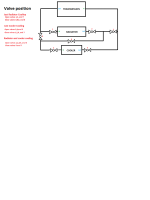
So, I had an idea that I'm not sure if anyone's ever done before. I want to put an external cooler in and plumb it so that I have the flexibility to run it as radiator cooling only, external cooler cooling only, or both run in series. I can easily accomplish this with a few tees and valves (7 to be exact) You might be imagining hose s running all over the place but really probably wont add much more than another 2 or 3 feet of hose and I can get some nice stainless steel thumb valves which are very reliable. I mocked up a flow chart below. Tell me what you think. It's just an idea but if it works I can probably at least get some good data about the best set up for me (and maybe some others) then once I figure that out I have the option of permanently plumbing the right set up for me.
 

Attachments

  • 4Runner Cooling Flow Chart.png
    4Runner Cooling Flow Chart.png
    28.5 KB · Views: 572
Register to hide this ad
I have pondered the trans cooling issue, and my favorite set up would be to add an external cooler ahead of the stock radiator cooler. This way, the excessive heat is released via the external cooler first, then the radiator cooler will maintain operating temps when the weather is cold. Good luck if you go forward with your plan, but also remember that every turn in the system affects flow (so I have heard).
 
After seeing my trans temps rise to 230 degrees while loaded down with gear and towing a motorcycle trailer, I decided to install an external cooler in-series with the stock cooler in the radiator. The way I set it up is the fluid runs through radiator first and then through the cooler. Since setting it up this way I've read how people run the fluid through the external cooler first and then through the radiator cooler to keep the temps at a better operating temperature range. My set-up seems to be working well, but I haven't run it in very cold temps yet and I'm wondering if I'll be running too low of temps in cold climates.

Here's a couple threads I started that might be worth a read if you haven't checked them out yet:

http://www.toyota-4runner.org/3rd-gen-t4rs/217667-trans-temps-bypassing-using-external-cooler.html

http://www.toyota-4runner.org/3rd-g...sion-temperatures-how-relates-life-fluid.html
 
Why not just install the cooler through the radiator? That way it still warms up when cold but still cools when hot. All coolers worth the money have a bypass system that allows cold fluid to pass right through without going to the fins.
 
Why not just install the cooler through the radiator? That way it still warms up when cold but still cools when hot. All coolers worth the money have a bypass system that allows cold fluid to pass right through without going to the fins.

So you ran it through the cooler first, then the radiator?
 
I plumb mine from the tranny to a remote spin on filter, then through a 70264, and then finally though the radiator. I have been running it this way for six years without any problems.

The sensor is located above where the external lines run to and from the transmission, near the neutral safety switch.

What is your coolant temps?
 
I plumb mine from the tranny to a remote spin on filter, then through a 70264, and then finally though the radiator. I have been running it this way for six years without any problems.

The sensor is located above where the external lines run to and from the transmission, near the neutral safety switch.

What is your coolant temps?

So the sensor is reading the fluid outlet of the transmission?

My coolant temps are normal 190
 
I plumb mine from the tranny to a remote spin on filter, then through a 70264, and then finally though the radiator. I have been running it this way for six years without any problems.

The sensor is located above where the external lines run to and from the transmission, near the neutral safety switch.

What is your coolant temps?

I ran mine the opposite. The fluid runs into the radiator cooler first, then through a Magnafine filter, then to a B&M 70264 external cooler mounted to the AC condensor and then back to the transmission.

I understand the theory of your set-up is the trans fluid temps will be more consistently in the optimum temperature range which I've learned is between 150-180. I wonder what the end result difference really is between our two set-ups. Like [MENTION=78997]Drcoffee[/MENTION] has reported, I've seen a consistent 20 degree temperature drop with my cooler using a mountain road as my testing ground. I'm guessing your temps will not drop quite as low as mine in hard running conditions but you'll see consistently higher trans temps than me when running in cold climates. I know our coolers have that bypass that allows the colder, thicker fluid to not reach the cooling fins until it gets hotter but I wonder how well it actually works. I guess I'll have to see what my trans temps look like next winter when I visit the snow.

From my research, running below 150 for long periods allows condensation to build up in the transmission which isn't good for it and possibly the viscosity of the fluid isn't optimum for lubrication. Supposedly, if you could operate at 180 degrees all the time, ATF could theoretically last 100,000 miles or more. But, from what I've read and experienced first hand, it's common for auto transmissions to reach temps around 230 if you do any mountain driving or towing which is probably why it's recommended to renew your trans fluid at a minimum every 30,000 miles because supposedly trans fluid will last around 36,000 miles if you've reached that temperature.
 
Hmmm, I thought the debate was whether to run a cooler by itself or radiator by itself or in series with the cooler, not which order the cooler and radiator go. Another thing to ponder...
 
I have always run the ATF out of the trans through either a spin on filter or the cooler and then the ATF exchanger in the radiator. In twenty years everything has worked well doing such.

Yep, the sensor reads the highest temp of the ATF in the whole system.

The key is the correct fluid, the correct LEVEL, and most important that the fluid is clean.
 
If you put a tee after the cooler with two shutoffs(#4) and run the extra leg to the radiator and put another shutoff(#1) you can run it either way. I like the idea , it gives you a lot of flexibility. Just make sure the shutoffs are not restricting flow
 
I assume that you possibly think that Toyota feels that is a better setup?

I'm sort of thinking either way will give you good results. Trans, external cooler, radiator cooler, back to trans OR Trans, radiator cooler, external cooler, back to trans.

What [MENTION=69868]LittleCaesar[/MENTION] said is very true and it goes for all the fluids on your rig. Change your trans oil frequently enough to keep it clean, use the right fluid and don't overfill it.

The overfill part can be the hardest one to get right though because the level on the dipstick changes a lot depending on the temperature you check it at. Before I had the Torque Pro app, I would just drive my vehicles down the freeway a bit, come back and then add fluid until I was at the top hot line. Now that I can monitor my trans temp, I try to check mine when the trans temp is at a normal operating temperature (Somewhere around 150). Out of curiosity, I checked my trans fluid after climbing a mountain road and the trans temp was around 190 degrees. The level was way above the upper hot line. At around 150 degrees, the level is right at the top hot line.

Since doing a drain and refill of the trans is so easy to do, I do it every 10,000 miles. I'm consistently draining out around 5 quarts which is around 40% of the capacity (I've read our trucks have a 12 quart capacity).
 
[What remote filter mount are you guys using? I found a couple on eBay that look tempting for ~$50 and includes a Fram Ultra filter.

And for the record, I vote external cooler. I'm about to finish mounting mine using about $7 in hardware + the cost of hose for a factory look.
 
Is it best to put the filter in line before or after it goes through the coolers? I am assuming before cause that way it keeps debris from entering the coolers.


Sent from my iPhone using Tapatalk
 
Is it best to put the filter in line before or after it goes through the coolers? I am assuming before cause that way it keeps debris from entering the coolers.


Sent from my iPhone using Tapatalk

What the filter is doing is picking up fine particulates that aren't being caught by the metal mesh strainer filter on the bottom of the transmission. I could be wrong but I don't think it really matters where you put it in the system. Your thinking of putting it in before the coolers does seem logical but I don't know if there would be debris large enough to get stuck in one of the coolers. I put mine in after the fluid runs through the radiator cooler but before it runs through the external B&M 70264 cooler. I chose this spot just out of ease of installation and future filter changes. I've got it ziptied to the mount on the fan shroud where the return line use to be connected to.

Screen Shot 2016-06-06 at 5.53.26 AM.jpg
 

Attachments

  • Screen Shot 2016-06-06 at 5.53.26 AM.jpg
    Screen Shot 2016-06-06 at 5.53.26 AM.jpg
    55.6 KB · Views: 348
Last edited:
Is it best to put the filter in line before or after it goes through the coolers? I am assuming before cause that way it keeps debris from entering the coolers.


Sent from my iPhone using Tapatalk

You know once you install the filter, the fluid will be cleaner overall. So there wont be crud to clog the cooler. I chose to install the filter after the cooler primarily to make sure the last leg of the fluid path was filtered before re-entering the transmission. But also to add a slight back pressure to the fluid to allow the fluid to stay longer in the cooler to extract more heat. It works for my truck.

In hindsight, I would have installed the filter in front of the radiator close to the aux cooler instead of behind the radiator. Having to drop the aftermarket skid plate to gain access is a real PITA.
 
Last edited:

Members online

No members online now.

Forum statistics

Threads
278,307
Messages
3,554,050
Members
248,016
Latest member
Advally Service

Trending content

Back
Top