I noticed on mine I lost torque. Like when I punched it I lost back pressure or something. It also sounded kind of farty when it got into 5th gear.
Let me tell you about exhaust theory...
The perfect exhaust system would have zero back pressure and 100% exhaust velocity but it is not easily feasible. First what exactly is exhaust theory? Your exhaust system is designed to evacuate gases from the combustion chamber quickly and efficiently. Exhaust gases are not produced in a smooth stream; exhaust gases originate in pulses. A 4 cylinder motor will have 4 distinct pulses per complete engine cycle, a 6 cylinder has 6 pules and so on. The more pulses that are produced, the more continuous the exhaust flow. Back pressure can be loosely defined as the resistance to positive flow - in this case, the resistance to positive flow of the exhaust stream.
The other reason why people say "backpressure is good" is because they hear that cars (or motorcycles) that have had performance exhaust work done to them would then go on to burn exhaust valves. Now, it is true that such valve burning has occurred as a result of the exhaust mods, but it isn't due merely to a lack of backpressure.
The valve burning occurs as a result of a very lean-burning engine, not lack of back pressure and this is only true in older vehicles with carburetion often could not adjust because of the way that backpressure caused air to flow backwards through the carburetor after the air already got loaded down with fuel, and caused the air to receive a second load of fuel.
Modern EFI engines that have a computer that controls the engine will detect that the engine is burning leaner than before, and will adjust fuel injection to compensate. So, in effect, reducing backpressure really does two good things: The engine can use work otherwise spent pushing exhaust gas out the tailpipe to propel the car forward, and the engine breathes better.
Now a little talk about the role exhaust velocity plays in relations to exhaust back pressure. Many people mistakenly believe that wider pipes are more effective at clearing the combustion chamber than narrower pipes. It's not hard to see how this idea would be appealing - as wider pipes have the capability to flow more than narrower pipes. However, this omits the concept of exhaust VELOCITY. Here is an analogy...a garden hose without a spray nozzle on it. If you let the water just run unrestricted out of the hose it flows at a rather slow rate. However, if you take your finger and cover part of the opening, the water will spray out at a much much faster rate.
Then there is the idea that bigger exhaust pipes will increase power. I believe it is/was a misunderstanding of what is going on with the exhaust stream as pipe diameters change. For instance, someone with a Honda Civic decides he's going to upgrade his exhaust with a 3" diameter piping. Once it's installed the owner notices that he seems to have lost a good bit of power throughout the power band. He makes the connections in the following manner: "My wider exhaust eliminated all back pressure but I lost power, therefore the motor must need some back pressure in order to make power." What he did not realize is that he killed off all his flow velocity by using such a ridiculously wide pipe. It would have been possible for him to achieve close to zero back pressure with a much narrower pipe - in that way he would not have lost all his flow velocity.
The faster an exhaust pulse moves, the better it can scavenge out all of the spent gasses during valve overlap. The guiding principles of exhaust pulse scavenging are a bit beyond the scope of this post but the general idea is a fast moving pulse creates a low pressure area behind it. This low pressure area acts as a vacuum and draws along the air behind it. Conclusion. Each engine will before function its best best with a exhaust system balanced to its needs and characteristics with a goal of to producing the the highest exhaust gas speeds.
in a nut shell, exhaust back pressure is bad and exhaust velocity is good. this is the exact science that flowmaster claims they build their mufflers with. Now personally i do not like flowmaster mufflers and have seen some reports of certain engines actually creating less peak HP/TQ than stock with a flowmaster muffler.
-----------------------------------------
anywho my personal recommendations for muffler type in no particular order is
-- Borla
-- Bassani
-- Corsa
-- Magnaflow


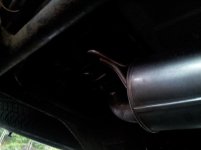
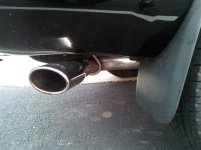
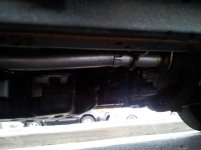
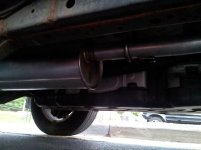


 Oh well. It sounds cool and I did notice an improvement in response time.


