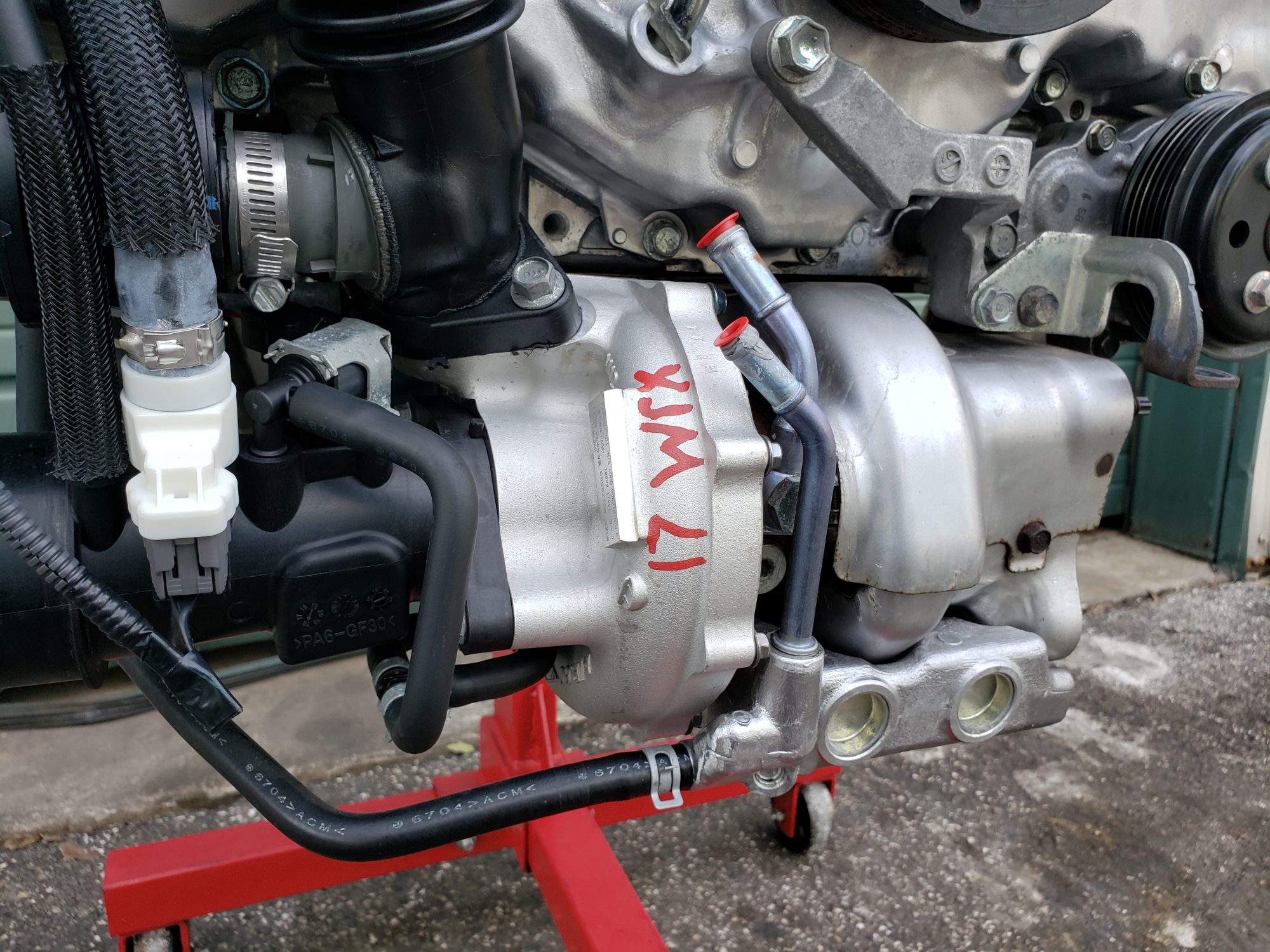
Turbo Build

I don’t understand what you’re trying to do with the heat? Usually you want to limit your heat input, which is an advantage of the rear mount (ie no need for an intercooler).
You want to maximize heat into the turbine (or, rather, wasted heat loss between the engine and turbine). This allows for the maximum energy extraction from the exhaust.

I've always seen the 'downpipe' area as a good possible spot for a turbo - especially coming from the Subaru world... Packaging is always an issue. I'd love to watch a build done that way.

-Charlie
 
You want to maximize heat into the turbine (or, rather, wasted heat loss between the engine and turbine). This allows for the maximum energy extraction from the exhaust.

I've always seen the 'downpipe' area as a good possible spot for a turbo - especially coming from the Subaru world... Packaging is always an issue. I'd love to watch a build done that way.

-Charlie

That doesn't really clear it up for me, unless my understanding on the physics of turbos is really off.

The turbo isn't anymore efficient with more heat, I'd wager it's less because that's a higher heat transfer to your incoming air, making it less dense and require cooling before putting it in the motor (ie an intercooler or meth injection).

Heat is just a byproduct of combustion, but a turbo would still work the same if the air coming out of the motor was cold.
 
That doesn't really clear it up for me, unless my understanding on the physics of turbos is really off.
Sounds like it is.

Higher heat for the same mass = more pressure (or volume). This is basic PV=nRT.

More pressure/volume from the same mass is more energy. The turbine acquires from the exhaust based on the pressure ratio between the inlet and outlet of the turbine (which is based on pressure and flow). More energy into the turbine = more energy available to be extracted.

Temperature on the compressor side of the turbo is (nearly) completely disconnected from temperature on the turbine side. The oil and water cooling, along with distance makes sure of that.

Look how literally EVERY OEM that is making turbo engines does everything they can to put the turbo as close to the engine as possible... Subaru low-mounts them now, many turbo v-engines are 'hot-vees" now, etc.

-Charlie
 
Sounds like it is.

Higher heat for the same mass = more pressure (or volume). This is basic PV=nRT.

More pressure/volume from the same mass is more energy. The turbine acquires from the exhaust based on the pressure ratio between the inlet and outlet of the turbine (which is based on pressure and flow). More energy into the turbine = more energy available to be extracted.

Temperature on the compressor side of the turbo is (nearly) completely disconnected from temperature on the turbine side. The oil and water cooling, along with distance makes sure of that.

Look how literally EVERY OEM that is making turbo engines does everything they can to put the turbo as close to the engine as possible... Subaru low-mounts them now, many turbo v-engines are 'hot-vees" now, etc.

-Charlie

I’d love to see some data on how much efficiency/energy is gained from that. In principle that makes sense though.

Curious how the temperature on the compressor side is disconnected from the turbine side? Just because the connection between the two sides isn’t that bulky and heat soak isn’t that bad?

How does Subaru handle oil return on the low-mounts?
 
To put it another way, heat is energy. Hot gas expands in volume and when the gas cools (loses energy) it contracts and takes up less volume. In the terms of an exhaust pipe, the pipe cannot expand with heat but the gas does which translates to higher pressure and velocity which then in turn increases the RPM of the turbine. I agree on the concerns on heat dissipation from the intake charge though and that would be the part that would take the most time to figure out. In theory, the science of having a turbo as close to the exhaust as possible does increase power.
 
I can assure you that if you were to turn a cold engine with a turbo at max engine rpm with an electric drive to keep the "exhaust" air cold vs the same engine running normally and monitored boost pressure, it would be no contest as to which would produce more boost!
 
I’d love to see some data on how much efficiency/energy is gained from that. In principle that makes sense though.

Curious how the temperature on the compressor side is disconnected from the turbine side? Just because the connection between the two sides isn’t that bulky and heat soak isn’t that bad?

How does Subaru handle oil return on the low-mounts?
The calculation is non-trivial for the energy available lost/gained since the exhaust isn't a closed system... But we can get an idea:
Hold pressure, n (mass), R (constant) all the same. Drop the temp by 100*C (180*F) from 1520F/825C/1100K to 1340F/725C/1000K. For PV=nRT, that means the volume of the air drops by 1000/1100 to 91% of the previous volume.
Hold volume constant, same calculation - absolute pressure drops to 91% of what it used to be. If you are working in pressure ratio with say 14.7psi into the turbine and atmospheric out (pressure ratio of 2), then you'll drop to 13.4psi in to a pressure ratio of 1.91 - you just lost ~5% of your available energy to extract from the exhaust... So, not huge - but it is FREE energy you are wasting. Then you just have to compare that to the packaging and other hassles and make your decision.

For heat across the turbo - There's multiple reasons. Yes, there is the physical disconnection. If the center section got as hot as the exhaust, the shaft bearings would just coke up and stop the turbo - so you *know* that it isn't as hot as the exhaust... So, already you aren't at 1400*F - you are more like 200-300*F (also below coolant boiling, if water cooled) then, the air flowing through the compressor doesn't actually have time to absorb heat from the compressor. It is there for a tiny fraction of a second. All the heat put into the air through the compressor comes from the ideal gas law + the compressor efficiency (or, inefficiency).
Turbocharger Compressor Calculations


Subaru puts a little sump below the turbo to catch the extra oil after shutdown:
20200423_181151-scaled.jpg

Also note the vent line that runs to the PCV system to keep the turbo sump from pressurizing while running.

Hope that helps.

-Charlie

 
I did a turbo build on my old Honda Civic because I wanted it to be stronger for towing stuff. It was a big project that took a lot of effort, learning, and searching for the right parts like the turbo itself, some coolers, and pipes to make it all fit and work well together.

During my build, I found the best deals on turbo kits by comparing prices and reviews online, ultimately settling on a GT35 turbo kit which cost me around $1200. It took me a few weekends and some evenings after work to get it all put together. Doing it myself was cool because I learned a lot about how my car works and what it can do.
 
Last edited:

Members online

Forum statistics

Threads
278,310
Messages
3,554,080
Members
248,016
Latest member
Advally Service

Trending content

Back
Top