Voltage Booster for 20-22 T4R's to optimize your AGM battery

Saker

Senior Member
Found one company in San Antonio, TX that states is has a Voltage Booster for early and later 4Runners.

Voltage Booster PRO O.G. Edition (5th Gen 4Runner & GX460)

I am trying to get some updated photos for the 20-22 applications, the ALT-S fuse is located in a different location than their published photos.
ModelBSideview.jpg


VBpro-in-20184R-scaled.jpg


sand.jpg

Has anyone used them, if so, do you have any photos in the 20+ 4Runners?
 
Last edited:
Register to hide this ad
Updated information (photo)

312428045_479115347522454_6347048609714533026_n.jpg
 

Attachments

  • VB_21.jpg
    VB_21.jpg
    80.3 KB · Views: 2,203
Last edited:
Hello,

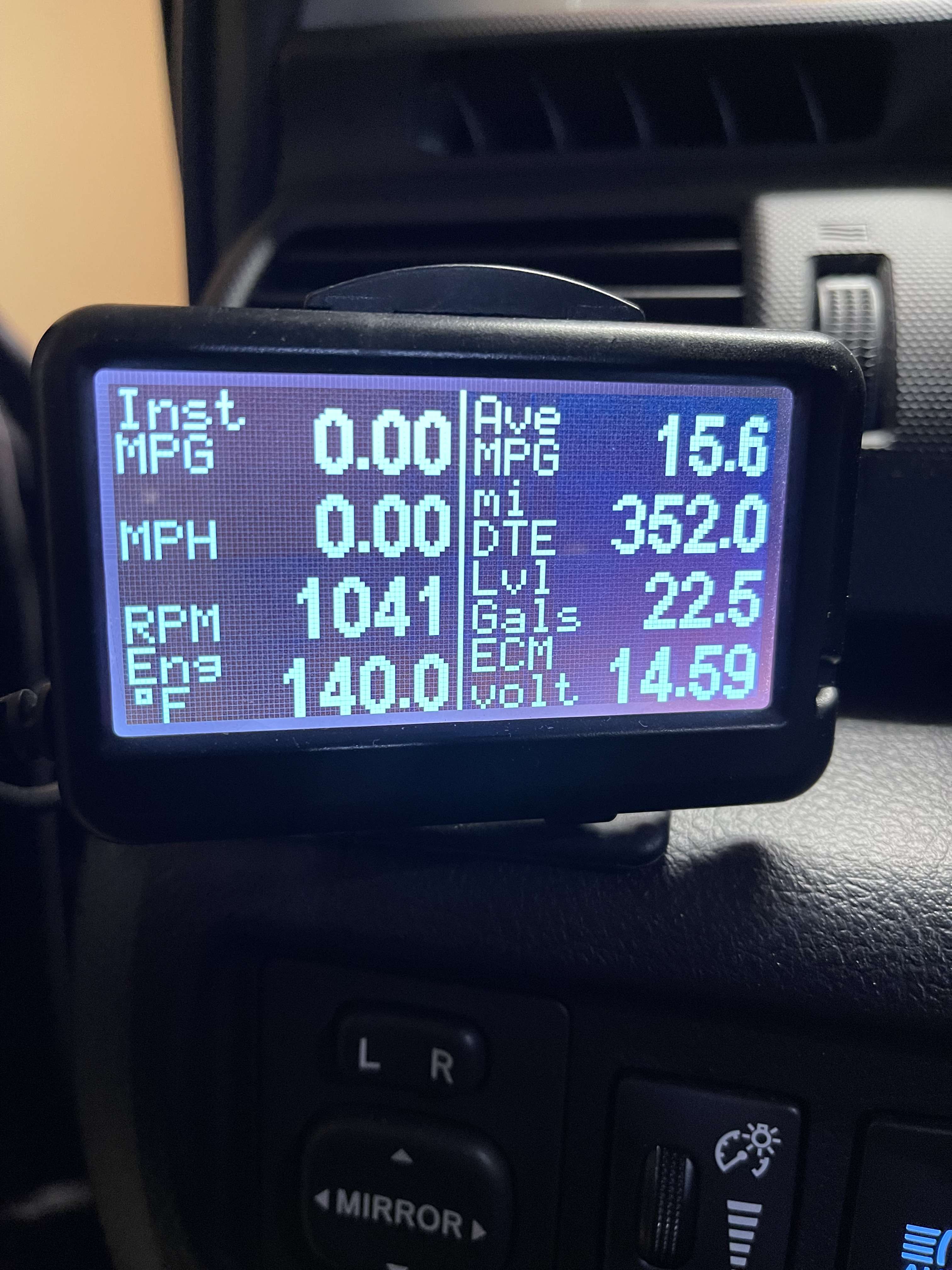
Just checking in to see what is the latest/best option for the 20+ 4runners. My 2021, purchased in late 2020, just had its battery fail and I replaced it with a AGM. I measured the voltage at the battery with the engine at idle and it was 13.6 volts.

Thanks,

Jeremy
 
Full charge for AGM battery

The AGM battery requires 14.2 to 14.5 to achieve a full charge. If your alternator cannot provide this it is recommended you manually charge with a charger once in a while to maintain the advantage of an AGM. There is also a GM diode that looks like and replaces the alternator fuse. I have the one you desribe on my 2015 LTD and it works flawlessly. IIFC the GM diode only cost about $8 USD on Amazon. Look for GM alternator diode. I have no experience with this but many do. Do a search.
 
Hello,

Just checking in to see what is the latest/best option for the 20+ 4runners. My 2021, purchased in late 2020, just had its battery fail and I replaced it with a AGM. I measured the voltage at the battery with the engine at idle and it was 13.6 volts.

Thanks,

Jeremy

Hello Jeremy,
The one in this thread is the only one I found that is made for the later models like ours. The other company makes one that fits in a different location on the fuse box.
 
I got a Arclightleds booster with 3 settings OEM/+.5v/+1.0v. Doesn't work for 2020+ though.

It was suggested to put it at +.5v in summer and 1.0v in winter but it seems I need the 1.0v boost all year.
 
I got a Arclightleds booster with 3 settings OEM/+.5v/+1.0v. Doesn't work for 2020+ though.

It was suggested to put it at +.5v in summer and 1.0v in winter but it seems I need the 1.0v boost all year.


Logo.png

"IMPORTANT:
VOLTAGE BOOSTERS ARE NOT COMPATIBLE WITH 2020+ 4RUNNERS DUE TO CHANGE IN FUSE BOX LAYOUT"

Hence, the purpose of this thread!
 
Logo.png

"IMPORTANT:
VOLTAGE BOOSTERS ARE NOT COMPATIBLE WITH 2020+ 4RUNNERS DUE TO CHANGE IN FUSE BOX LAYOUT"

Hence, the purpose of this thread!

My apologies, i thought that pointing out it doesn't work for 2020+ would be sufficient but thank you for calling it out anyway with such bold tone.

Any thoughts on my comment/question "It was suggested to put it at +.5v in summer and 1.0v in winter but it seems I need the 1.0v boost all year."

If not, again, my apologies for pointing out a Booster model that doesn't work with 2020+.
 
Just wanted to update everyone on the voltage booster and maintaining the AGM Batt.
Holding voltage at approx 14V after a few minutes on the road and initial change of about 14.75V.
 
Just adding 2cents for anyone researching this topic now or in the future. I've been running the GM diode as a replacement for this fuse for over 3 years with zero issues. AGM battery charges perfectly and is always topped up when I check it.
 
Just adding 2cents for anyone researching this topic now or in the future. I've been running the GM diode as a replacement for this fuse for over 3 years with zero issues. AGM battery charges perfectly and is always topped up when I check it.

So, you replace your fuse protection with a diode?

Logic please?


Pulled this from the interwbz.......

When it comes to charging AGM batteries, both GM diodes and voltage boosters are used to address the issue of insufficient voltage from the stock alternator. Let’s explore the differences between them:

GM Diode:
The GM diode is a substitute for an actual voltage booster.
It tricks the alternator into seeing less voltage than the battery actually has, which raises the alternator voltage output.
However, the GM diode does not provide as much voltage as some AGM batteries require, especially in cold conditions.
Some users have reported limitations with the GM diode in maintaining AGM battery charge.
Safety Note: The GM diode removes the safety fuse of that circuit, which can be risky.

Voltage Booster:
A dedicated voltage booster is designed specifically to address the AGM battery charging issue.
It increases the alternator voltage output to charge AGM batteries at the optimal level.
Unlike the GM diode, a voltage booster maintains the safety fuse of the circuit.
It ensures that the alternator provides sufficient voltage without overworking it.
Recommended: If you’re using an AGM battery, investing in a quality voltage booster is a safer and more effective solution3.
In summary, while the GM diode can be a makeshift solution, a dedicated voltage booster is the better choice for maintaining AGM battery health and performance. Consider your specific needs and budget when making your decision.

:popcorn:
 
Last edited:
So, you replace your fuse protection with a diode?

Logic please?


Pulled this from the interwbz.......

When it comes to charging AGM batteries, both GM diodes and voltage boosters are used to address the issue of insufficient voltage from the stock alternator. Let’s explore the differences between them:

GM Diode:
The GM diode is a substitute for an actual voltage booster.
It tricks the alternator into seeing less voltage than the battery actually has, which raises the alternator voltage output.
However, the GM diode does not provide as much voltage as some AGM batteries require, especially in cold conditions.
Some users have reported limitations with the GM diode in maintaining AGM battery charge.
Safety Note: The GM diode removes the safety fuse of that circuit, which can be risky.

Voltage Booster:
A dedicated voltage booster is designed specifically to address the AGM battery charging issue.
It increases the alternator voltage output to charge AGM batteries at the optimal level.
Unlike the GM diode, a voltage booster maintains the safety fuse of the circuit.
It ensures that the alternator provides sufficient voltage without overworking it.
Recommended: If you’re using an AGM battery, investing in a quality voltage booster is a safer and more effective solution3.
In summary, while the GM diode can be a makeshift solution, a dedicated voltage booster is the better choice for maintaining AGM battery health and performance. Consider your specific needs and budget when making your decision.

:popcorn:

Well, you may not like my answer but here it is.

The diode works by adding resistance on the circuit using a resistor inline, which causes the voltage regulator to increase output.

The Voltage booster works by adding resistance on the circuit using a resistor inline, which causes the voltage regulator to increase the output.

The difference: The voltage booster has 2 resistors of different capacities soldered to a circuit board with a switch to change the resistance, which for me is unnecessary as the alternators voltage regulator still functions normally from baseline voltage depending on the load. My charge output is 14.2-14.4 volts when the battery needs a top up or my electrical load increases (lights, etc.), but reduces to 13.8volts when the battery is topped up and electrical load is lower.

The safety circuit issue: I've yet to see, hear of or read of anyone having any issues. It would be quite easy to add a fuse to the system if a person were worried about it. That's quite literally what voltage boosters are, except someone else assembled it nicely on a small circuit board.

**Food for thought**
I live in Canada, near the Rockies and experience -40C temps every winter. My alternator output is the same in summer as it is in winter using the DM Diode. I know several people using the GM diode in varying year 4Runners with varying electrical loads and we all have similar experiences. I've had my AGM battery and GM diode combo for over 3 years and everything still functions normally with zero maintenance.
 
Well, you may not like my answer but here it is.

The diode works by adding resistance on the circuit using a resistor inline, which causes the voltage regulator to increase output.

The Voltage booster works by adding resistance on the circuit using a resistor inline, which causes the voltage regulator to increase the output.

The difference: The voltage booster has 2 resistors of different capacities soldered to a circuit board with a switch to change the resistance, which for me is unnecessary as the alternators voltage regulator still functions normally from baseline voltage depending on the load. My charge output is 14.2-14.4 volts when the battery needs a top up or my electrical load increases (lights, etc.), but reduces to 13.8volts when the battery is topped up and electrical load is lower.

The safety circuit issue: I've yet to see, hear of or read of anyone having any issues. It would be quite easy to add a fuse to the system if a person were worried about it. That's quite literally what voltage boosters are, except someone else assembled it nicely on a small circuit board.

**Food for thought**
I live in Canada, near the Rockies and experience -40C temps every winter. My alternator output is the same in summer as it is in winter using the DM Diode. I know several people using the GM diode in varying year 4Runners with varying electrical loads and we all have similar experiences. I've had my AGM battery and GM diode combo for over 3 years and everything still functions normally with zero maintenance.

Me liking or not liking the answer doesn't even play into this conversation.
I wanted to know the logic of removing the protective fuse, no more than that.

Personally, I haven't heard of any fuses blowing out there, but how many people would post that anyway......

Thanks for the reply.
 
Installed Voltage Booster PRO "The O.G." (5th Gen 4Runner) - B (2020-2023 4Runner)

T6TjI0.jpg


6hym6n.jpg

Sorry for reviving an old thread... but I just got an AGM battery for my 2020 since the factory unit wasn't cutting it after I added a dash cam. I have two questions:

1. Do you have this in "HIGH" or "LOW" setting?

2. Does the voltage booster unit prevent you from putting the fuse box cover back on?

Thanks a bunch, Saker.
 
Sorry for reviving an old thread... but I just got an AGM battery for my 2020 since the factory unit wasn't cutting it after I added a dash cam. I have two questions:

1. Do you have this in "HIGH" or "LOW" setting?

2. Does the voltage booster unit prevent you from putting the fuse box cover back on?

Thanks a bunch, Saker.

Greetings [MENTION=586541]Adi4runner[/MENTION]

Answers:
1. It's set to "HIGH"

2. No, the cover is not hindered by adding this Voltage Booster.

I am well satisfied with its performance. It keeps the battery well charged!

Cheers
 
Last edited:
Sorry for reviving an old thread... but I just got an AGM battery for my 2020 since the factory unit wasn't cutting it after I added a dash cam. I have two questions:

1. Do you have this in "HIGH" or "LOW" setting?

2. Does the voltage booster unit prevent you from putting the fuse box cover back on?

Thanks a bunch, Saker.

The cover goes back on without issue. The OG Voltage Booster Pro is shorter than some of the relays and other stuff already in that box.

The high or low setting should be driven by the voltages your battery supplier recommends and testing the voltage at the battery with either position while holding a few revs (ie, not at idle).

I only drive the truck once or twice a week, and typically for short (less than 30 mins) periods so I leave it on high. If I were to take a longer trip, like say my upcoming wilderness off-road and camping trip, I'd swap it to low since it will have plenty of time to keep the battery at float charge.
 
I'm going to pick a few nits here, mostly of a technical nature. Obviously different strokes for different folks.

The diode works by adding resistance on the circuit using a resistor inline, which causes the voltage regulator to increase output.

No, there are no resistors involved. A diode has a voltage drop of ~0.4 volts across it so it achieves this reduction in voltage in that fashion.

The Voltage booster works by adding resistance on the circuit using a resistor inline, which causes the voltage regulator to increase the output.

No, see below.

The difference: The voltage booster has 2 resistors of different capacities soldered to a circuit board with a switch to change the resistance...

No, the Voltage Booster has two diodes on it. Selecting the "high" setting puts both diodes in series leading to a voltage drop of ~0.8v; in the "low" setting, only one diode is in the circuit.

The safety circuit issue: I've yet to see, hear of or read of anyone having any issues. It would be quite easy to add a fuse to the system if a person were worried about it. That's quite literally what voltage boosters are, except someone else assembled it nicely on a small circuit board.

Be that as it may, it's not advisable to run any circuit in the vehicle unfused. If there was no need for it, think of how much money the manufacturers could save by elimination of all safety items. Certainly it's not unheard of for fuses to prevent electrical fires.

The assembly of it on a nice circuit board with the switch to select the desired level of voltage compensation, the fuse, and the compact packaging is worth something, hence why they're popular and (for some) a more elegant solution than just jamming a diode in a fuse holder.
 
Greetings [MENTION=586541]Adi4runner[/MENTION]

Answers:
1. It's set to "HIGH"

2. No, the cover is not hindered by adding this Voltage Booster.

I am well satisfied with its performance. It keeps the batter well charged!

Cheers

Thank you!

The cover goes back on without issue. The OG Voltage Booster Pro is shorter than some of the relays and other stuff already in that box.

The high or low setting should be driven by the voltages your battery supplier recommends and testing the voltage at the battery with either position while holding a few revs (ie, not at idle).

I only drive the truck once or twice a week, and typically for short (less than 30 mins) periods so I leave it on high. If I were to take a longer trip, like say my upcoming wilderness off-road and camping trip, I'd swap it to low since it will have plenty of time to keep the battery at float charge.

Thank you, as well!
 
thank you for this. this post saved me a ton of time and headache. just picked up a 2020 and the battery went on me today just sitting in the driveway. this will a nice new 31m AGM will go a long way.
 

Members online

Forum statistics

Threads
278,316
Messages
3,554,120
Members
248,016
Latest member
Advally Service

Trending content

Back
Top