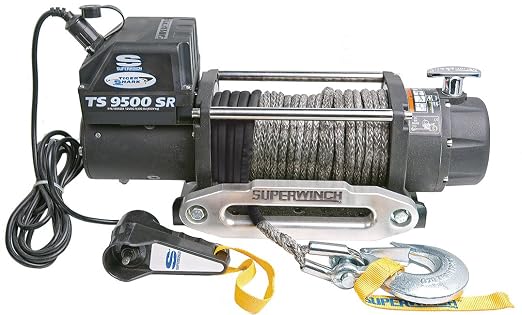
FWIW - I'll take a hook on a winch rope over a thimble. Hooks are faster. When you're buddy is tipped off a road and it's another 40 feet to the river below, fast can make a big difference. It's also a lot safer in those scenarios to toss a hook around a roll cage than fumbling with a shackle.
In slow speed kinda scenarios the thimble is a good option. To each his own.![]()
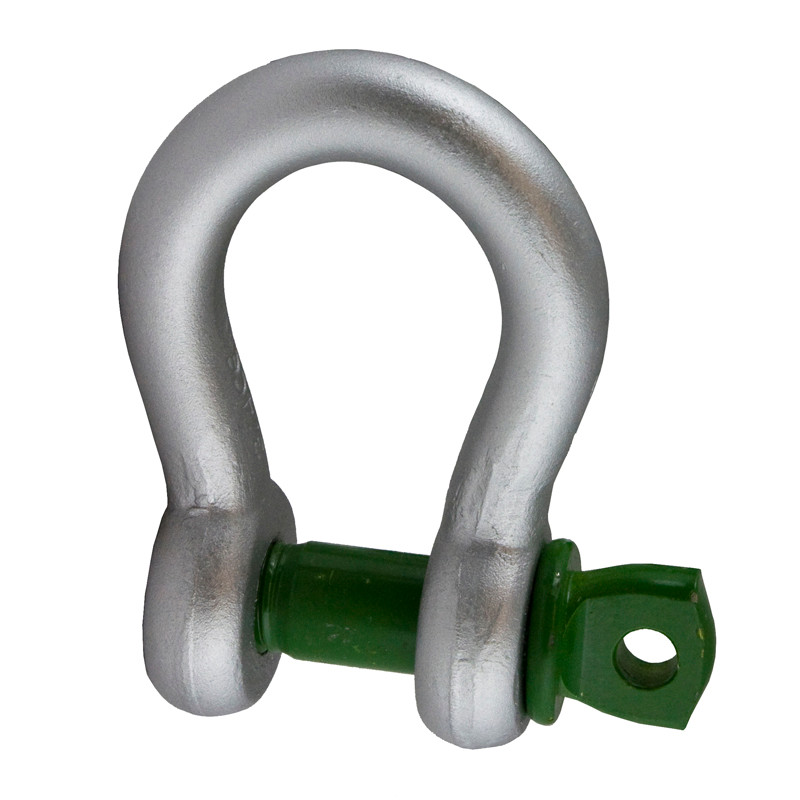
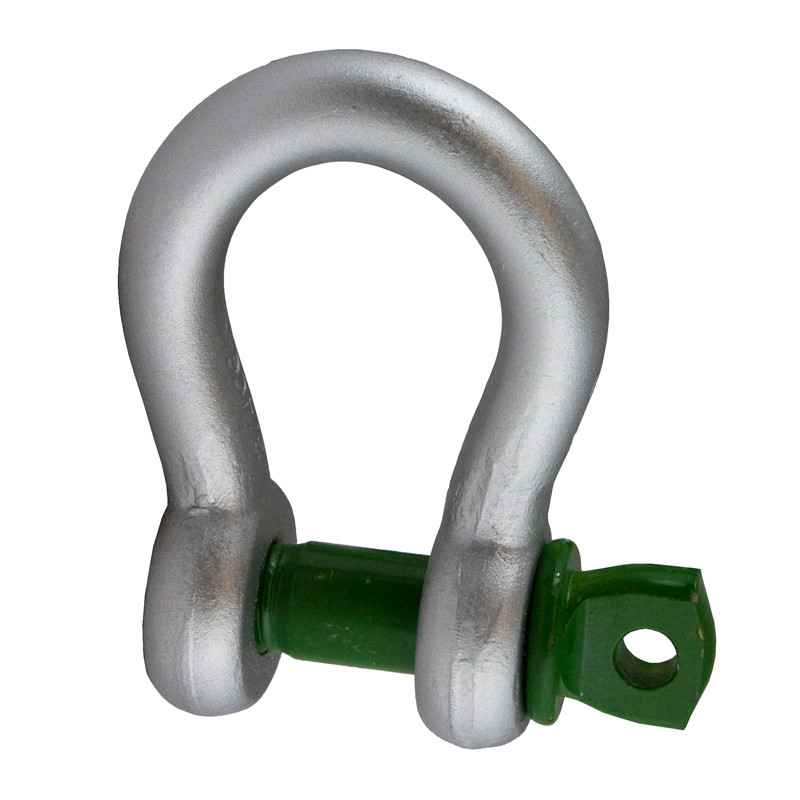
I was cruising around Amazon and found that there are various 3/4 and 7/8 in shackles or D-rings with different working load ratings. Why is it that with two 3/4in shackles can have different ratings? Most 3/4in are rated at 4 & 3/4 tons or 9,500lbs. There are other, more expensive, 3/4 in shackles that are rated lower though. Thoughts as to why? Is it as simple as different grades of metal? Or different break test research and development? I googled this with no luck. Same goes for the 7/8in D-rings....two different manufacturers, two different working loads. I'd like to get a few more, but want more info before buying.
I have the same.
agreed. for quick connects, I have a masterpull cobra sling hook attached with another 3/4 shackle to my prolink. for any major pulling, we go directly to the prolink shackle.FWIW - I'll take a hook on a winch rope over a thimble. Hooks are faster. When you're buddy is tipped off a road and it's another 40 feet to the river below, fast can make a big difference. It's also a lot safer in those scenarios to toss a hook around a roll cage than fumbling with a shackle.
In slow speed kinda scenarios the thimble is a good option. To each his own.![]()
Good points - that's the one major negative about using the thimbles. My brother's jeep was taking on water and we could have been that much faster without the thimble.
I noticed the same thing, I finally landed on the masterpull d shackles. they seem to be very high quality, and not terribly expensive. bonus is, they have a bit of a larger opening than other shackles of the same size.I was cruising around Amazon and found that there are various 3/4 and 7/8 in shackles or D-rings with different working load ratings. Why is it that with two 3/4in shackles can have different ratings? Most 3/4in are rated at 4 & 3/4 tons or 9,500lbs. There are other, more expensive, 3/4 in shackles that are rated lower though. Thoughts as to why? Is it as simple as different grades of metal? Or different break test research and development? I googled this with no luck. Same goes for the 7/8in D-rings....two different manufacturers, two different working loads. I'd like to get a few more, but want more info before buying.
Yes, it's partly about the grade of steel. Structural steel varies in yield strength from 36,000 psi to 70,000 psi (or higher) in commonly used grades.
There's more to it and engineers call it strength of materials.
The other part is how they rate them based on the breaking strength. Steel should never be used up to the breaking strength, which is much higher than the yield or working strength. Steel is typically tested with a straight rod in tension. The change in length versus the load applied is plotted on a graph of stress versus strain.
Yield is when steel starts to change shape or elongate under load. Yield or elongation is linear, in proportion to the load, within a range. Breaking occurs at the ultimate load, when the steel fails. As the steel exceeds the linear stress versus strain range and approaches the ultimate load, it elongates at a non-linear rate, with almost no increase in load for an increase in length. Breaking strength is often less than the load at the top of the linear stress/strain curve. Breaking occurs very quickly once the linear range is exceeded.
To avoid unexpected failure at a lower stress, materials like steel are used within about 1/4 or 1/5 of the ultimate load. This insures the stress strain relationship is within the linear range and it never begins to elongate faster for a given load. This also ensures the steel will return to it's original length or shape when the load is released. That is, the steel won't get bent out of shape. Steel is tested for the stress/strain relationship and the ultimate failure load. Then it's rated for about 1/4 of that ultimate load, depending on the shape of the curve on the graph.
In my undergraduate years of civil engineering I tested various materials in this manner. We always wanted to know the stress versus strain relationship, and the shape of the curve at ultimate load.

Here is some more practical info on what gear to use. Based on some of this info I now have a snatch strap, D-ring shackles, a snatch block I plan to use with a rope bridle that I have yet to make or buy. I have an old strap with hooks that I will only use like a tree saver strap or when I can be sure it won't move (snap back) if it's released suddenly. I might use it wrapped several times around a desert rock as a winch recovery point. I also acquired a cable come-along winch that is harder to use than an electrical/mechanical winch mounted on the bumper but it was a lot less expensive and can be left in the garage when I'm not offroading.
Here's what I learned:
http://www.toyota-4runner.org/5th-gen-t4rs/213078-recovery-gear-options.html
I have the same.
agreed. for quick connects, I have a masterpull cobra sling hook attached with another 3/4 shackle to my prolink. for any major pulling, we go directly to the prolink shackle.
they make these now. about $250.
![]()
I noticed the same thing, I finally landed on the masterpull d shackles. they seem to be very high quality, and not terribly expensive. bonus is, they have a bit of a larger opening than other shackles of the same size.
3/4" Van Beest Screw Pin Shackle 62,000 lbs - Master Pull
they don't neck down like other shackles do.
![]()
Just curious what everyone is doing for storage of their recovery gear. My old TE used to have the slide out tray with the storage cubby behind the rear seats that was great for straps and such.
The new LE has no slide out or third row and just has the flat rear floor. Not sure what I'm going to do with all my recovery gear yet.
Get a big storage bin and strap it down in the back? The idea of that stuff sliding around/rattling back there is obviously undesirable.
Also, when you tighten the pin on your shackle remember to hand tighten it then back it off about half a turn otherwise you might be looking for someone to cut the shackle off your truck after a recovery.