when is she to heavy??

drtyjerz47

New member
i have a 99 4runner limited 4x4 V6

my question is i want to add a lift and a bulky metal front bumper and possibly a rear....

when is all the weight of those things going to catch up to me and bite me in the rear.

is the motor (stock) strong enough to do all that and some meaty tires and wheels. or does everyone that goes down this road dip into the super charger ro performance road.
 
Register to hide this ad
Increasing your tire size will have the greatest effect on power loss. Going to bigger tires will require regearing if you want to keep your stock power.

If you go to 265 75's and add bumper weight, I think you'd be fine. Once you go to 285's and bigger plus armor, it will start to suck. Many members here run 285's with lots of extra weight on stock gears but I personally wouldn't.
 
I'd suggest keeping the weight as minimal as possible.

31,32, or 33" tires

Front plate bumper like an ARB

Light weight tube bumper like the Savage Offroad

Get a strong front skid but don't do the other skids unless you have solid cause
 
I'd suggest keeping the weight as minimal as possible.

31,32, or 33" tires

Front plate bumper like an ARB

Light weight tube bumper like the Savage Offroad

Get a strong front skid but don't do the other skids unless you have solid cause

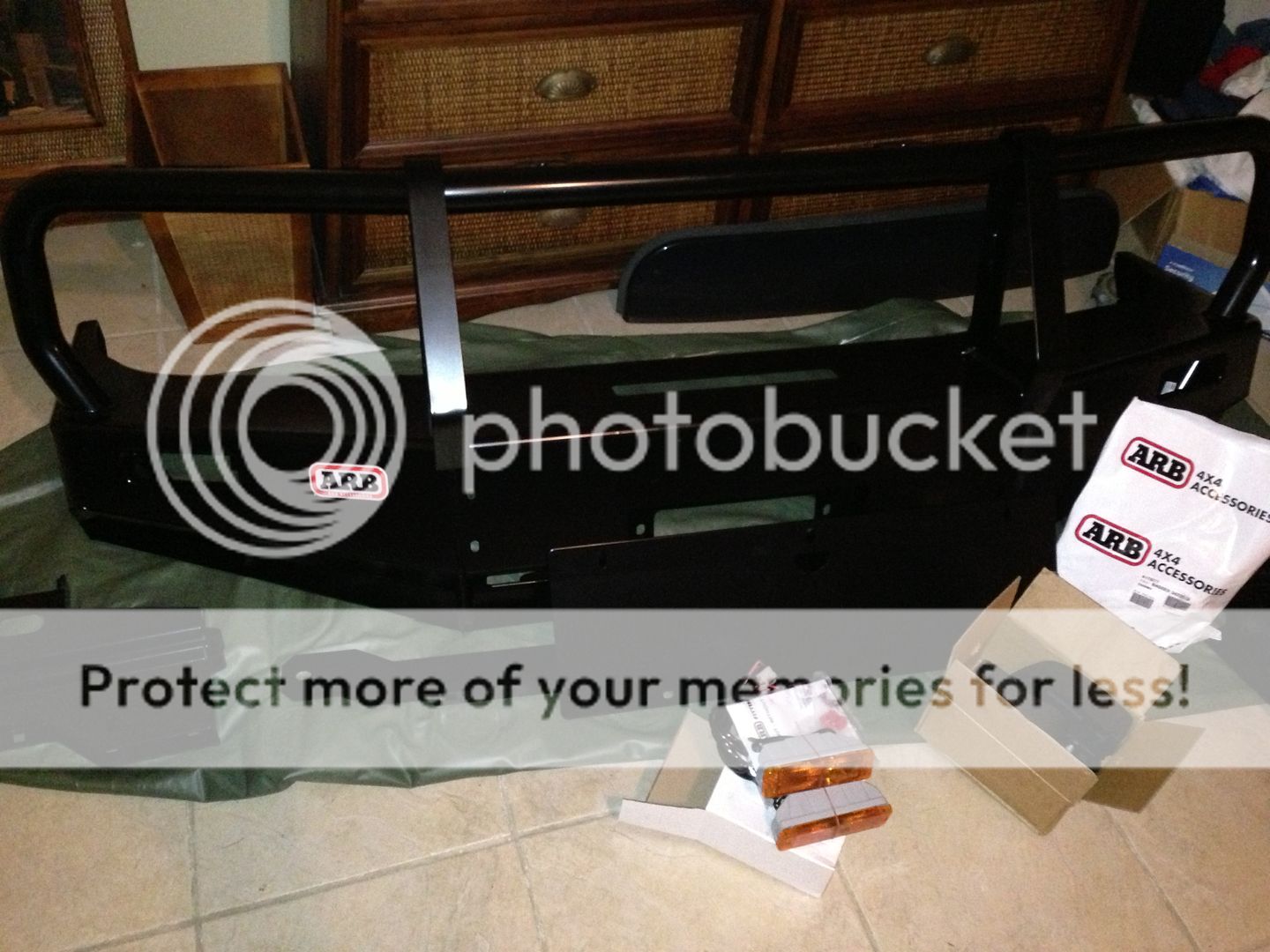
I agree with this advice. Keeping it as light as possible is always a good thing. It could be false, but I read somewhere that the ARB bumper weighs 78 lbs. That is significantly less than many other plate bumbers out there. I wish I weighed mine before I installed it
 
130 lbs. is nothing, my girlfriend weighs that much! There are actually two parts to your question and answers.

First, weight if added significantly will change the driving characteristics differently than larger tires will. You need more POWER to move more weight at the same rate.

Larger diameter tires change the torque multiplication of the gearing. They too add weight, but the rolling radius is what will have the most effect.

The solutions are as varied as can be. How you will use your truck should determine your final drive ratio, and how much weight you actually add would determine if you truly need more horsepower. Personally I recommend you make the gear ratios work, and give up the 85 mph stunt driving.

:couch2:
 
alright, thanks guys

theres no 85 mph driving around here lol, i got some lame kia optima for that.

im not sure if I'm going to re gear yet so i might stick to the tire size that was mentioned above or anything below that to avoid any major problems
 
Oh the joys of being a low lander with lots of oxygen to make power.

Living at over 5000' and driving over 12k sucks the power out. My rig is naturally inspired and I'm fully protected and running 32s. Sure it gets slower at high mountain passes but its not a big deal. When driving at lower altitudes, its no big deal. It's not a race car, if you want that, you bought the wrong rig.
 
The GVWR is 5250 lbs. So anything over that should be considered too heavy.

The heavier a vehicle is, the sooner parts will wear out. If I added significant weight to a 4Runner, I'd pay close attention to the LBJ's, and brakes in particular.
 
130 lbs. is nothing, my girlfriend weighs that much! There are actually two parts to your question and answers.

First, weight if added significantly will change the driving characteristics differently than larger tires will. You need more POWER to move more weight at the same rate.

Larger diameter tires change the torque multiplication of the gearing. They too add weight, but the rolling radius is what will have the most effect.

The solutions are as varied as can be. How you will use your truck should determine your final drive ratio, and how much weight you actually add would determine if you truly need more horsepower. Personally I recommend you make the gear ratios work, and give up the 85 mph stunt driving.

:couch2:
There is truth to what your saying, but it is important to keep in mind that adding 30 lbs of rotational weight to each corner will have a much much greater effect than adding 120 lbs of static weight to the vehicle, not even considering an increase in tire diameter.

Energy must be used to both rotate and translate the wheels/tires in the direction of the vehicle's travel whereas static weight must only be translated.
 
I read somewhere that the ARB bumper weighs 78 lbs

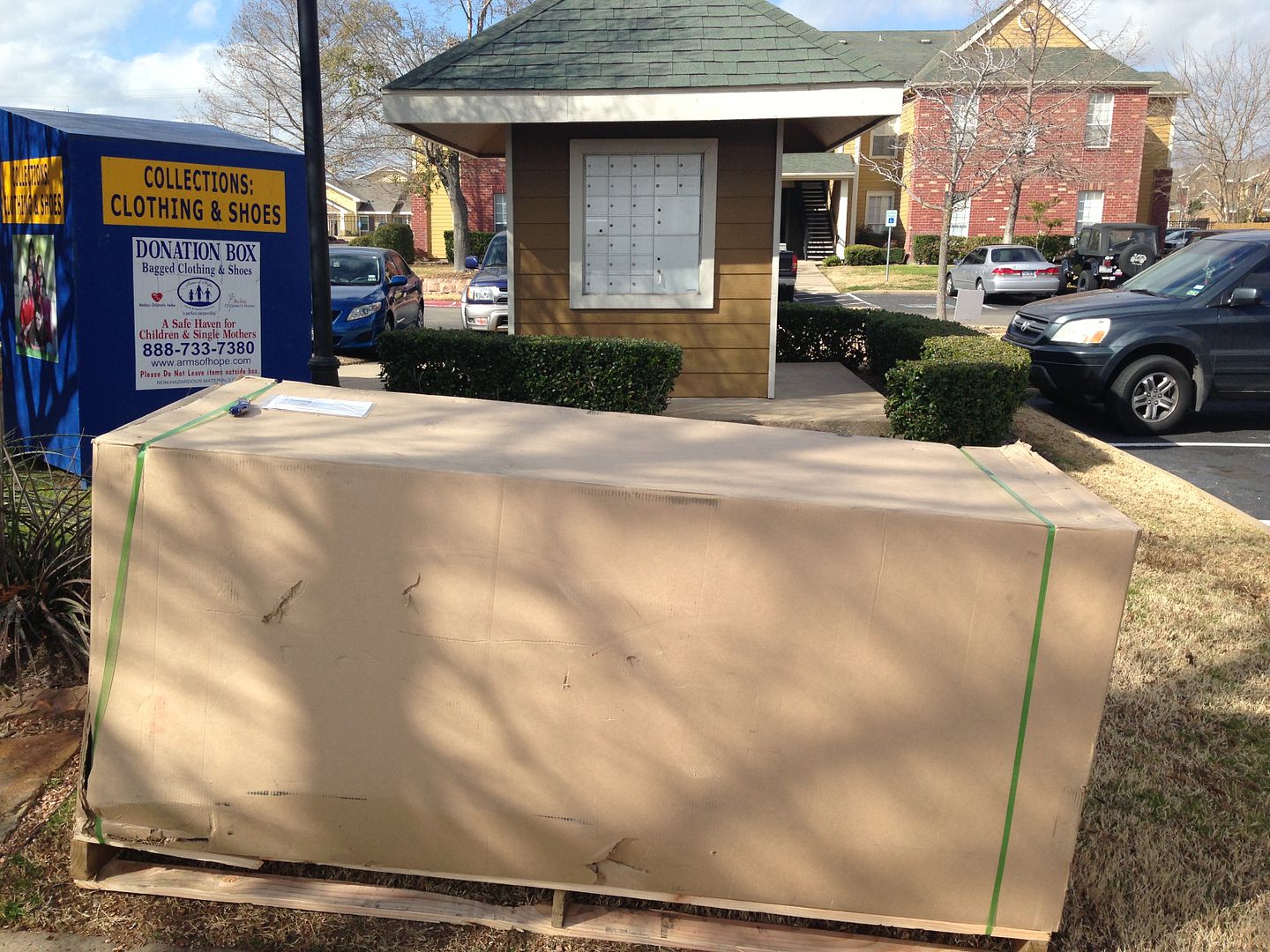
I just bought an ARB bumper (uninstalled as of today) and I think it weighs more than 78 pounds. FedEx had the reinforced cardboard box listed at 220 pounds, Autoplicity had 150 pounds as the shipping weight.

Even if the ARB is heavier than 78 pounds, you get to subtract the weight of the stock bumper. How much does the stock bumper and its related components weigh?

Of course, probably half of the 4Runner owners who get an ARB bumper also get a winch, so for a synthetic M8000 that is about 65 pounds and about 80 pounds for steel rope.

ARB01.jpg~original


ARB02.jpg~original


ARB05.jpg~original


ARB07.jpg~original
 
Last edited:
There is truth to what your saying, but it is important to keep in mind that adding 30 lbs of rotational weight to each corner will have a much much greater effect than adding 120 lbs of static weight to the vehicle, not even considering an increase in tire diameter.

Energy must be used to both rotate and translate the wheels/tires in the direction of the vehicle's travel whereas static weight must only be translated.

Yes, it is 4 times the effect in respect to TORQUE needed to rotate the additional mass/weight. The key here is torque, not horsepower, which can be achieved through gearing. For anyone who wants to learn more about the tire's effect on your vehicle, as well as other rotating parts, you should check out this page!

The Effects of Rotational Inertia on Automotive Acceleration

:couch2:
 

Members online

Forum statistics

Threads
278,310
Messages
3,554,079
Members
248,016
Latest member
Advally Service

Trending content

Back
Top