It’s all about liability ladies & gents……..Federal Motor Vehicle Safety Standards require vehicle manufactures to document capacities to the end user (us) at time of first sale. Exceeding any of these capacities will 1) Potentially cause vehicle failure putting consumer at risk of injury and/or death, 2) Void manufactures warranty.
I have a little experience with what’s going on here, in my industry, modifying vehicles for people with disabilities. We are required to document all changes made to any vehicle. NHTSA has approve a Make Inoperative form for our industry which are exemptions that allow certain changes to be made to a vehicle that may or may not affect crash testing certification by manufactures. Some examples are removal of airbags, removal of safety equipment, installation of hand controls, and drive by wire (electronic) driving equipment to allow somebody with a disability to drive a vehicle.
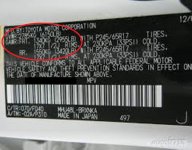
Looking at your driver’s door you will notice VIN tag, it documents Vehicle Identification Number, GVWR (Gross Vehicle Weight Rating) is the maximum amount of weight vehicle is designed to carry……….actual weight of vehicle (full of fluids), all occupants, and cargo. GAWR, Gross Axle Weight Rating front and rear, is maximum allowable weight for front and rear axles. Additional information is also documented e.i. rim and tire size, but not going to elaborate on those at this point. All of these capacities have been designed and engineered to allow for safe operation.
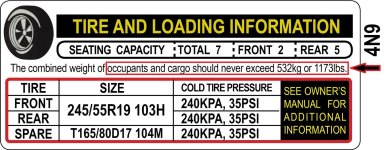
Next, Tire Placard on driver side “B” pillar. Manufactures were required by law to add label in 2006, label documents seating capacity, load carrying capacity, tire/rim size, and tire inflation.
So how is load carrying capacity calculated? Manufacture simply scales vehicle (weigh) to achieve actual weight (curb weight).
Subtract GVWR from Curb weight = Load Carrying Capacity, this is the maximum amount of weight of occupants and cargo that can be added without over rating vehicle. Looking at Tire Placard (highlighted by red arrow) you will notice capacity is noted.
Any change made to vehicle (before time of first sale) that affects Tire Placard, Placard must be replaced with a corrected label. Problem was if a modifier added a component that added weight, they were required to create a new label reflecting change, but if they mistakenly documented incorrect tire inflation say, they were liable. NHTSA (National Highway Traffic Safety Administration) realized this was a potential liability issue for modifiers, they agreed to allow the addition of the yellow label you all are referring to
“LOAD CARRYING CAPACITY REDUCED” label. Now modifiers that add weight reducing Load Carrying Capacity, simply have to add this sticker documenting reduction of weight from original Tire Placard.
To take it one step further, now that Load Carrying Capacity has been calculated we’re not done. Per NHTSA regulations we need to subtract 150 lbs per seating position (I know, who weighs 150 lbs now a day). The remaining weight is technically what can be added for cargo.
So to answer everyone’s question, your Runner was shipped to a port, they added
equipment or accessories that were not installed at the assembly plant, therefore they are required (by law) to document weight reduction, thus informing you, the customer of the change. Basically it’s a cya. Most lawsuits are lost because of “Failure to Notify”……………….so with all these labels, you have been notified!
For those of you that state you’ve added all kinds of weight to your vehicle, that’s fine and dandy. What you do with your truck is your business. Just remember, heavens forbid, if there were ever an accident and it was deemed the result of over rating vehicle, you would be liable..............just sayin'







