
enginelover
Member
It's rare that you fill a bone-dry fuel tank, but I happened to have one to test. Lucky me!
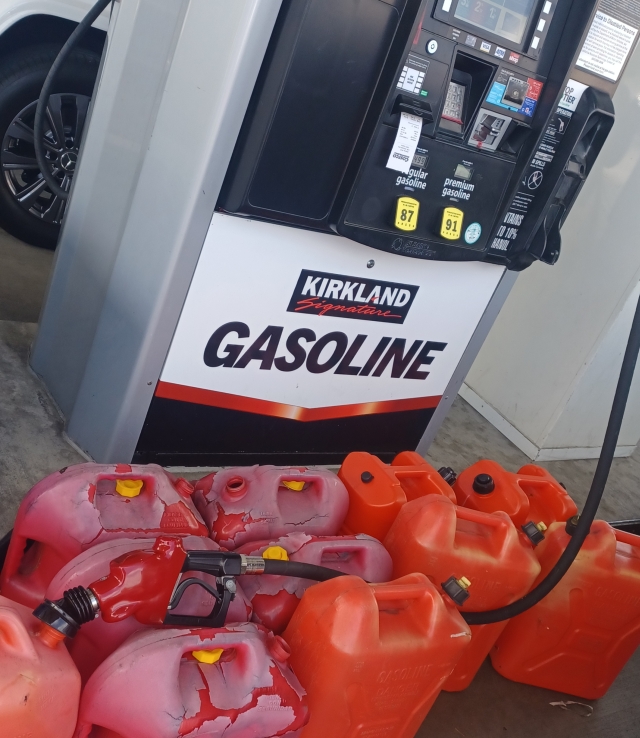
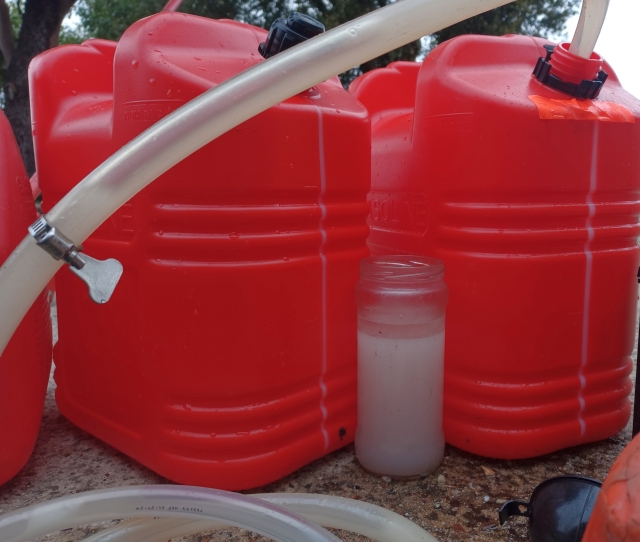
In all tests below, the vehicle was on a flat concrete pad and I left the ignition at the second position for at least five (or more) minutes for the fuel gauge reading to stabilize. I filled the gas cans myself that same day, taking care to ensure the Costco pump read 5.0(something) gallons for each gas jug.
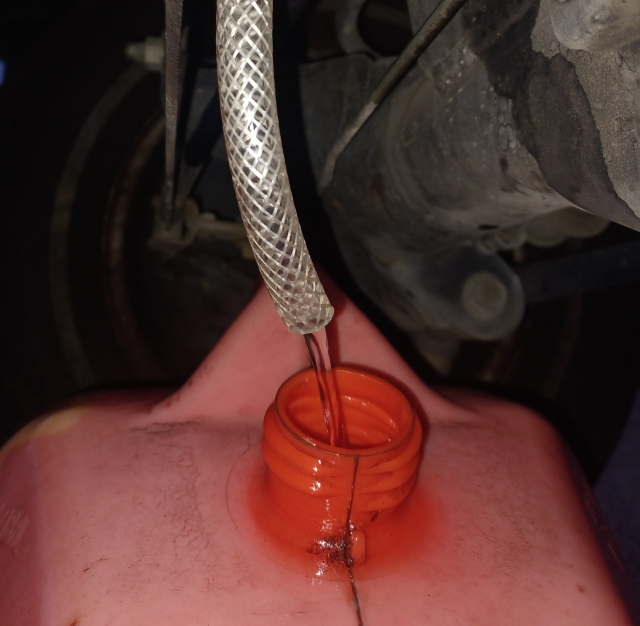
Since I was initially mouth siphoning, and since the suction kept breaking, it took hours of elapsed time to get the first 11.0 gallons out of the tank (which had initially read 3/4 of a tank).
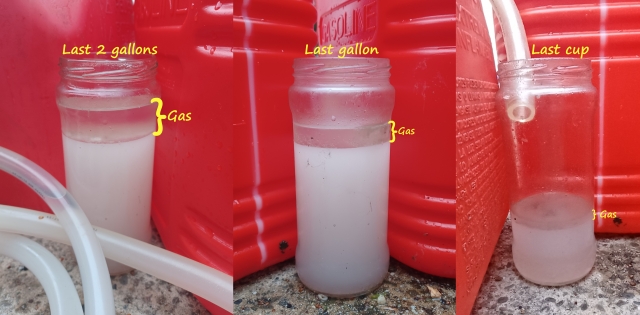
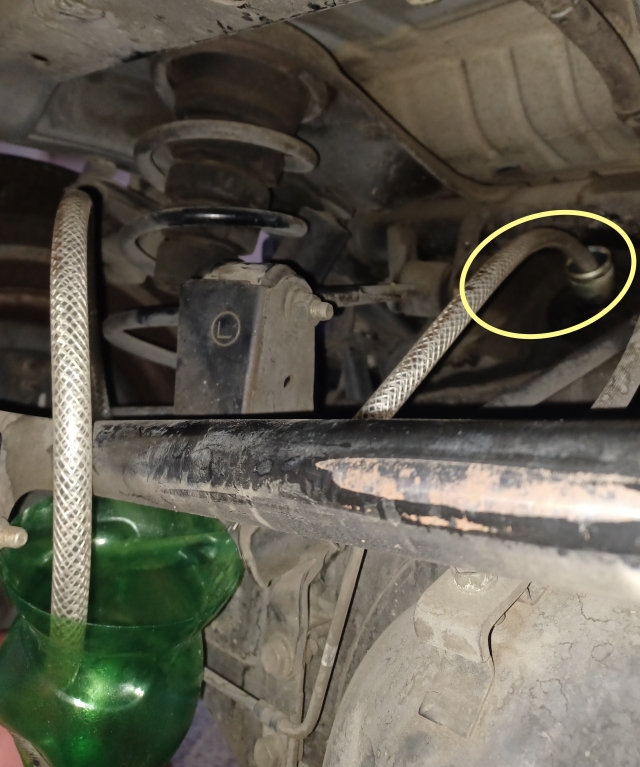
I'm pretty good at siphoning, but even I found it hard to not burp up gas when I used my beer carbonation hose, which was 12 feet long, which kept breaking suction so I had to suck it up, so to speak, if I ever wanted to finish the job. Every time the 12-foot hose broke suction, I rerouted it until I could get no more gas out by suction.
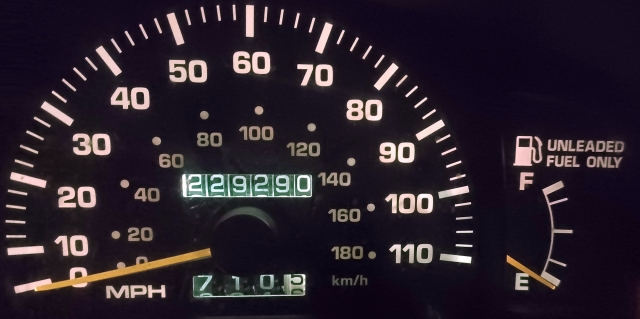
With 2-1/2 gallons still left in the tank, the fuel gauge already read a hair below empty.
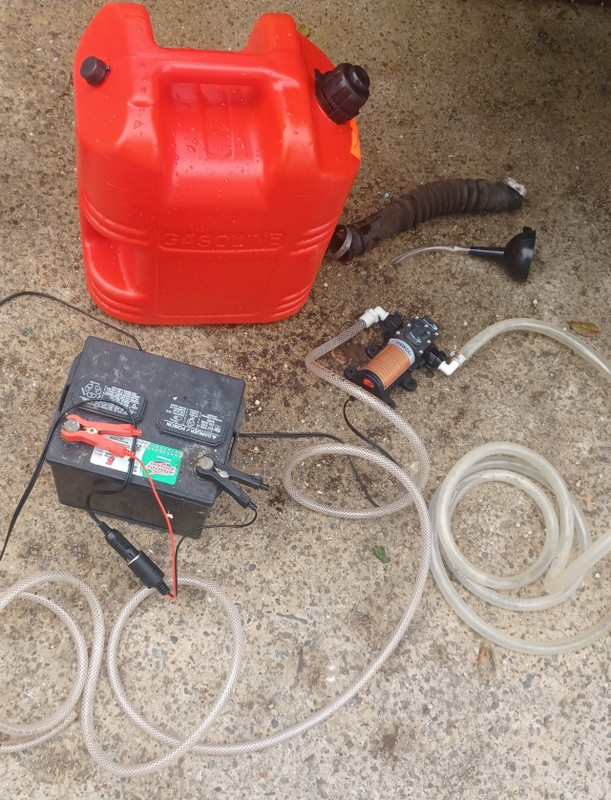
Concluding that siphoning will never get all the water out, the next day I begged my friends for their fuel pumps, and with those in hand, I laboriously pumped out the rest of the fuel (which took a few hours) as I raised and lowered the front and back to angles it has never seen before. (The last cup of water was gotten with the rear wheels on the ground and the front jacked up with a big floor jack with wood blocks on the jack).
Now it was time to FILL 'er up (and get my windshield washed for free in the rain, just like my Dad said they did in the olden days when you got your tank filled for you at the gas station).
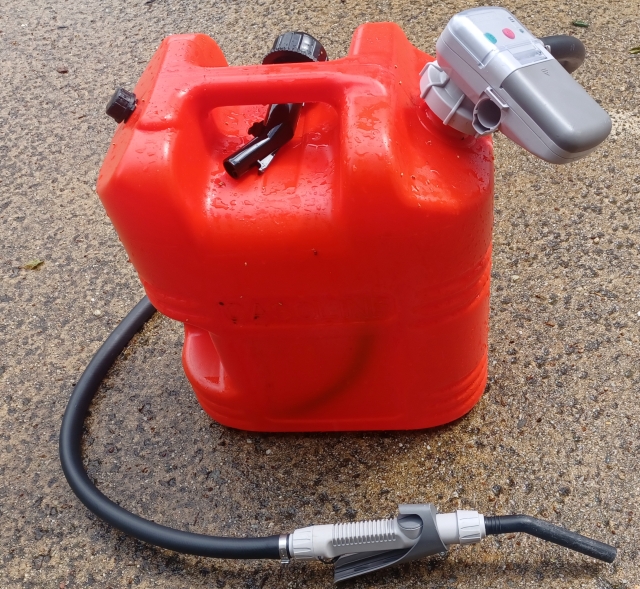
This fuel pump I borrowed from my friend works great.
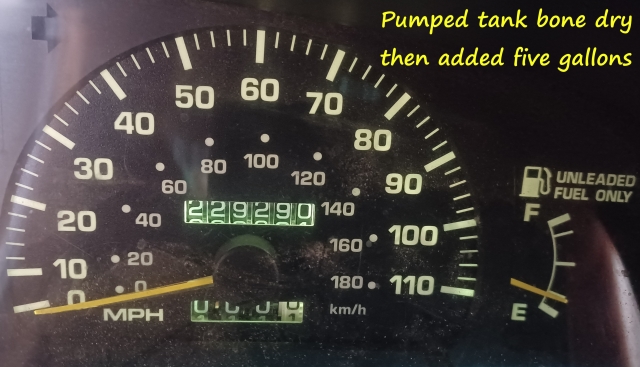
I added the first jug of 5.0(something) gallons of gasoline and checked the gauge reading where I was surprised that it wasn't 18.5 divided by 4. Instead, it read essentially what 20 gallons divided by 4 would read.
Hmm... that's surprising.
Moving on, I drove about 1-1/2 miles (for reasons related to the repair) and then I parked it and added the second jug of 5.0(something) gallons.
The gauge reported the same oddity of almost perfectly half full (with 10 gallons in it now).
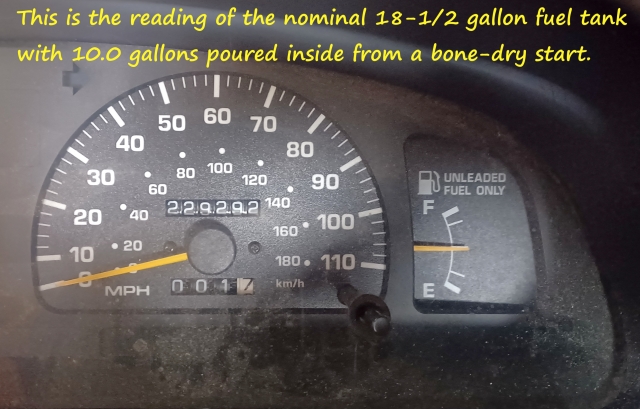
At 15 gallons, it still read oddly in almost-perfect five-gallon increments.
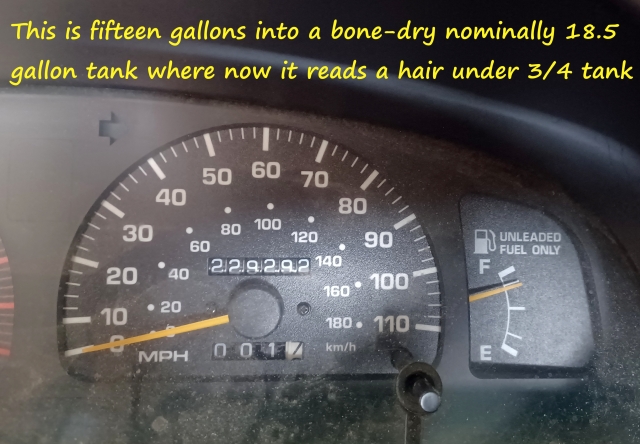
At "around 14" gallons, the gauge was already past the FULL mark, but I decided to slowly pump the rest of the last five-gallon jug in, and it took it all without spilling; so this is the gauge reading at 20 gallons from bone dry.
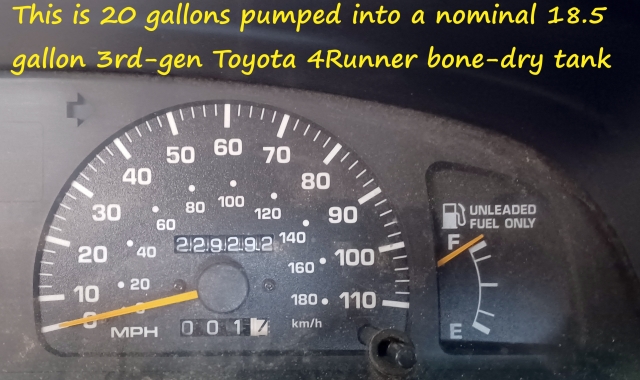
What's my conclusion? Only two things, really:
1. The nominally 18-1/2 gallon tank holds (at least) 20 gallons
2. My sending unit is calibrated for about 5-gallon increments
3. For all but the topmost quarter tank (which is about a 4-gallon increment)
So, my gauge seems to be reading (from full to empty) at 4-5-5-5 gallons respectively (Full, 3/4, 1/2, 1/4).
Actually, if I consider stopping at the empty line, and the fill line itself, it's probably reading closer to 3-5-5-3 gallons (Full line, 3/4 line, 1/2 line, Empty line).
Some caveats are I could fill it until it spills out, but I'm worried about the EVAP system getting drunk on pure fuel.
And, of course I know 5 gallons is close enough to 4.625 gallons because there is slop everywhere.
I also assume you can't use all the fuel in the tank (but I don't know how much fuel is left when you run the tank "empty").
If someone can post how much fuel the 18.5 gallon tank takes after you've run it empty to the point that the engine quit and then you filled it up to full, that would be a useful volume as it tells us how much the fuel pump can't get out.
Since I still had the remaining almost pure water in the fuel lines (and in the fuel filter, which I did not replace yet), I calculated in the original repair thread that there are about 3 ounces of water in the 5/16-inch supply line and 1/4-inch return line (assuming they're both about 30 inches long). Half of that would be in the supply line, where I calculated it would take about 3 minutes of idling to evacuate the 1-1/2 ounces of water in that supply line (but of course it took much longer of cranking to inject the 1-1/2 ounces of water into the engine until the fuel was clean enough to allow the engine to start).
I'm still not sure how to properly dispose of my 13-1/2 gallons of cleaning fluid. (Can the gas be re-used? I suspect not.)
In all tests below, the vehicle was on a flat concrete pad and I left the ignition at the second position for at least five (or more) minutes for the fuel gauge reading to stabilize. I filled the gas cans myself that same day, taking care to ensure the Costco pump read 5.0(something) gallons for each gas jug.
Since I was initially mouth siphoning, and since the suction kept breaking, it took hours of elapsed time to get the first 11.0 gallons out of the tank (which had initially read 3/4 of a tank).
I'm pretty good at siphoning, but even I found it hard to not burp up gas when I used my beer carbonation hose, which was 12 feet long, which kept breaking suction so I had to suck it up, so to speak, if I ever wanted to finish the job. Every time the 12-foot hose broke suction, I rerouted it until I could get no more gas out by suction.
With 2-1/2 gallons still left in the tank, the fuel gauge already read a hair below empty.
Concluding that siphoning will never get all the water out, the next day I begged my friends for their fuel pumps, and with those in hand, I laboriously pumped out the rest of the fuel (which took a few hours) as I raised and lowered the front and back to angles it has never seen before. (The last cup of water was gotten with the rear wheels on the ground and the front jacked up with a big floor jack with wood blocks on the jack).
Now it was time to FILL 'er up (and get my windshield washed for free in the rain, just like my Dad said they did in the olden days when you got your tank filled for you at the gas station).
This fuel pump I borrowed from my friend works great.
I added the first jug of 5.0(something) gallons of gasoline and checked the gauge reading where I was surprised that it wasn't 18.5 divided by 4. Instead, it read essentially what 20 gallons divided by 4 would read.
Hmm... that's surprising.
Moving on, I drove about 1-1/2 miles (for reasons related to the repair) and then I parked it and added the second jug of 5.0(something) gallons.
The gauge reported the same oddity of almost perfectly half full (with 10 gallons in it now).
At 15 gallons, it still read oddly in almost-perfect five-gallon increments.
At "around 14" gallons, the gauge was already past the FULL mark, but I decided to slowly pump the rest of the last five-gallon jug in, and it took it all without spilling; so this is the gauge reading at 20 gallons from bone dry.
What's my conclusion? Only two things, really:
1. The nominally 18-1/2 gallon tank holds (at least) 20 gallons
2. My sending unit is calibrated for about 5-gallon increments
3. For all but the topmost quarter tank (which is about a 4-gallon increment)
So, my gauge seems to be reading (from full to empty) at 4-5-5-5 gallons respectively (Full, 3/4, 1/2, 1/4).
Actually, if I consider stopping at the empty line, and the fill line itself, it's probably reading closer to 3-5-5-3 gallons (Full line, 3/4 line, 1/2 line, Empty line).
Some caveats are I could fill it until it spills out, but I'm worried about the EVAP system getting drunk on pure fuel.
And, of course I know 5 gallons is close enough to 4.625 gallons because there is slop everywhere.
I also assume you can't use all the fuel in the tank (but I don't know how much fuel is left when you run the tank "empty").
If someone can post how much fuel the 18.5 gallon tank takes after you've run it empty to the point that the engine quit and then you filled it up to full, that would be a useful volume as it tells us how much the fuel pump can't get out.
Since I still had the remaining almost pure water in the fuel lines (and in the fuel filter, which I did not replace yet), I calculated in the original repair thread that there are about 3 ounces of water in the 5/16-inch supply line and 1/4-inch return line (assuming they're both about 30 inches long). Half of that would be in the supply line, where I calculated it would take about 3 minutes of idling to evacuate the 1-1/2 ounces of water in that supply line (but of course it took much longer of cranking to inject the 1-1/2 ounces of water into the engine until the fuel was clean enough to allow the engine to start).
I'm still not sure how to properly dispose of my 13-1/2 gallons of cleaning fluid. (Can the gas be re-used? I suspect not.)
Last edited:


