2007 Model Year Information

Thai said:
I think that Toyota has gotten as much power as it can from the old 4.7L V8 engine.

What's sad is that the 2007 Lexus GX470 still does NOT have LED taillights!

There is an easy 50 more hp to be had out of a 4 valve V8!

Koz
 
Koz said:
There is an easy 50 more hp to be had out of a 4 valve V8!

Koz

What makes you say that?? Remember, we're talking about a very old V8. I would assume that if Toyota could get more, then we would have seen it when they added VVTi to it. I hope that you're not basing your assumptions on other manufacturer's engine output.
 
Koz said:
There is an easy 50 more hp to be had out of a 4 valve V8!

Koz
I agree, a 4.7L V8 should be able to make 300+ HP. As a counterpoint, however, its important to note that the engine is tuned to have max torque which will make it suffer in the HP dept. The torque this engine is putting out is comprable to other similar sized 32 valve V8 engines.
 
Thai said:
What makes you say that?? Remember, we're talking about a very old V8. I would assume that if Toyota could get more, then we would have seen it when they added VVTi to it. I hope that you're not basing your assumptions on other manufacturer's engine output.

Toyota has ALWAYS been conservative in making HP (reliability and efficiency). Look at how much HP all the other manufacture's V8s are making, with only two valves. Things are changing. If they can make 306 hp out of a 3.5 V6 they could very easily make 50 more hp out of a 4.7 V8 regardless of how old the engine is. It would require modern tech tuning (higher comp, more aggressive VVTi cams on both intake/exhaust, direct injection, etc.).

Koz
 
Last edited:
Koz said:
Toyota has ALWAYS been conservative in making HP (reliability and efficiency). Look at how much HP all the other manufacture's V8s are making, with only two valves. Things are changing. If they can make 306 hp out of a 3.5 V6 they could very easily make 50 more hp out of a 4.7 V8 regardless of how old the engine is. It would require modern tech tuning (higher comp, more aggressive VVTi cams on both intake/exhaust, direct injection, etc.).

Koz

Kox, you're talking about modern engines designed for direct injection and dual variable valve timing, like the current IS350 and near future GS460/LS460 engines. Modern engines that were designed from the very beginnings to have these state-of-the-art technologies.

The 4.7L V8 is an old engine that was designed before the above technologies even existed (and possibly even thought up).

If you notice, neither the 4.7L V8 nor LS/GS430's 4.3L V8 current engines have direct injection or dual variable valve timings...even when almost every luxury manufacturers have surpassed Lexus in power output with these technologies for several years now. You can't teach an old dog new tricks...as the saying goes. Trust me, from a business aspect, Toyota would have done it if they could...Toyota is conservative, but certainly NOT stupid.

As was pointed out above, the Lexus 4.7L V8 was made primarily with torque at low rpm in mind, not HP. So, you will not see a 320 HP output from this engine...and this is clearly seen recently when Toyota added VVTi to the engine.

As for other manufacturers making more power with only two valves, they are making more power via displacement, not through modern technologies squeezing more power from relatively small engines. Mercedes 5.0L V8 is a classic example of this. Chevy's small block pushrod designs is another example of getting power thru large displacements (Hummers, Caddys via Corvette engine's design). Thus, these examples cannot be used in comparing power output with the Lexus 4.7L V8 engine.
 
Thai said:
Kox, you're talking about modern engines designed for direct injection and dual variable valve timing, like the current IS350 and near future GS460/LS460 engines. Modern engines that were designed from the very beginnings to have these state-of-the-art technologies.

The 4.7L V8 is an old engine that was designed before the above technologies even existed (and possibly even thought up).

If you notice, neither the 4.7L V8 nor LS/GS430's 4.3L V8 current engines have direct injection or dual variable valve timings...even when almost every luxury manufacturers have surpassed Lexus in power output with these technologies for several years now. You can't teach an old dog new tricks...as the saying goes. Trust me, from a business aspect, Toyota would have done it if they could...Toyota is conservative, but certainly NOT stupid.

As was pointed out above, the Lexus 4.7L V8 was made primarily with torque at low rpm in mind, not HP. So, you will not see a 320 HP output from this engine...and this is clearly seen recently when Toyota added VVTi to the engine.

As for other manufacturers making more power with only two valves, they are making more power via displacement, not through modern technologies squeezing more power from relatively small engines. Mercedes 5.0L V8 is a classic example of this. Chevy's small block pushrod designs is another example of getting power thru large displacements (Hummers, Caddys via Corvette engine's design). Thus, these examples cannot be used in comparing power output with the Lexus 4.7L V8 engine.

Thai,

The GM (Chevy 350) small block is a classic example of how an engine can be tuned to make more and more power. It started out in 1968 and lasted to 2002. It made anywhere from 125 to 370 hp depending on how it was tuned. This is NOT changing displacement, this is changing basic tuning components such as; compression, cams, fuel delivery, intake and exhaust. Again, a basic two valve engine. This engine is NOWHERE near the design of the 4 valve Toyota V8. The only reason Toyota will not further develop the 4.7 is because it is easier and cheaper to develop a larger displacement engine that keeps/improves its reliability and efficiency while producing more power. Thus, the 5.7 V8.

Koz
 
Koz said:
Thai,

The GM (Chevy 350) small block is a classic example of how an engine can be tuned to make more and more power. It started out in 1968 and lasted to 2002. It made anywhere from 125 to 370 hp depending on how it was tuned. This is NOT changing displacement, this is changing basic tuning components such as; compression, cams, fuel delivery, intake and exhaust. Again, a basic two valve engine. This engine is NOWHERE near the design of the 4 valve Toyota V8. The only reason Toyota will not further develop the 4.7 is because it is easier and cheaper to develop a larger displacement engine that keeps/improves its reliability and efficiency while producing more power. Thus, the 5.7 V8.

Koz

4 valve tech is not always the best thing nor the best design. A Corvette "old-tech" pushrod engine is similar in weight, lower center of gravity, more power, more torque, easier to boost, easier to work on than most modern engines, including M3 and previous gen M5 engines! And guess what...it gets better fuel economy than both of them!

So, i would suggest you keep your comparison to same category engines. You last statement says it all why the 4.7L has reached it's maximum potential.
 
For a given displacement, large horsepower gains come primarily by increasing maximum engine rpm and tuning engine intake and exhaust systems for best breathing in the high rpm ranges. It all comes down to how much air can the engine pump through it in a given amount of time.

Direct injection, variable valve timing, and even higher compression can only help so much.

Building an engine capable of higher rpms generally requires much more expensive parts and assembly - better and lighter connecting rods and bolts, lighter pistons, stiffer and better supported crankshaft, etc. etc.

Peak horsepower is not really the most important consideration for our trucks, at least to the majority of the market. You could put a 12,000 rpm 600 hp Formula 1 engine in your T4r, maybe, but you would absolutely hate the way it drove around town.
 
Thai said:
4 valve tech is not always the best thing nor the best design. A Corvette "old-tech" pushrod engine is similar in weight, lower center of gravity, more power, more torque, easier to boost, easier to work on than most modern engines, including M3 and previous gen M5 engines! And guess what...it gets better fuel economy than both of them!

So, i would suggest you keep your comparison to same category engines. You last statement says it all why the 4.7L has reached it's maximum potential.

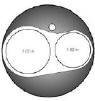
The fact is a 4 valve head flows more and better then a 2 valve. Yes, the 2 valve is less complex but it is "OLD SCHOOL". There are many other reasons why the vast majority of race engines use 4 valves. Just to illustrate one of the most important differences, look at this Chevy small block, 2 valve set up.

1 - 2.02" intake valve = 3.46 sq. in. of area
1 - 1.60" exh. valve = 2.01 sq. in. of area
 

Attachments

  • 2v.jpg
    2v.jpg
    2.9 KB · Views: 526
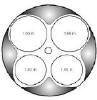
Now look at the 4 valve set-up which has a 36% increase in area.

2 - 1.65" intake valve = 4.27 sq. in.
2 - 1.40" exh. valve = 2.99 sq. in.

You could gain 100 more hp with the right porting alone!
 

Attachments

  • 4v.jpg
    4v.jpg
    3.2 KB · Views: 782
Light_Mania said:
You could put a 12,000 rpm 600 hp Formula 1 engine in your T4r, maybe, but you would absolutely hate the way it drove around town.
Yeah, but it would have great passing power, and it would sound cool!!:D :D

Light's right. RPM's buy HP. Generally this means the engine has to have a shorter stroke than bore (which the 2uz has) but will decrease overall torque output. Still, I think the 2UZ should be able to rev to 7000+ rpm, not the pedestrian 5600 rpm redline its set at now...
 
Last edited:
Koz said:
Now look at the 4 valve set-up which has a 36% increase in area.

2 - 1.65" intake valve = 4.27 sq. in.
2 - 1.40" exh. valve = 2.99 sq. in.

You could gain 100 more hp with the right porting alone!

Yeah, but the Corvette engine still kicks the crap out of BMW M engines in almost all categories...and i used to be a M owner, so no bias towards the Chevy.

As i always say...the Toyota engineers who designed the 4.7L V8 VVTi engine knows best...if they cannot get more power from it, then who are we (as neophytes in engineering; or "couch engineers") to say otherwise.:)
 
Thai said:
This is expected since 2006 was the midcycle update. You probably won't see much changes until the end of the 4th gen cycle (probably 2009).

Autoweek.com stated the redesign for the T4R is slated for 2009... curious to see what they do.
 
Pricing for the 2007 model is now available on http://www.edmunds.com The dealerships still don't have pricing for some reason. I want to buy the V8 4wd, they only have pricing for the V6. I was planning on signing a sales contract today. Strange how Toyota does things.
 
Last edited:
cdoyle said:
When will the 07 V8 models be listed?

I went to build one, but only V6 models there.

Same here... could it be that the UR engine will be available, possibly a mid-year switch? I doubt it and say Toyota will introduce the new engine in a redesign truck. But Toyota has switched engine series in the same generation, i.e. the RX from 3MZ to 2GR.

Also, for my region Salsa and Shadow aren't available.
 
Mark86 said:
I was hoping for a small tweak here and there, but there is not much Toyota can add to these trucks. I wanted to see a bump in horsepower and torque, but I guess we will have to wait until 2008. This must really make the 2006 owners feel good! :D

Speaking of "bump". I wonder if they fixed the infamous "bump from the rear" sensation we get a stoplights? The one they fixed on the Lexus but so far refuse to fix on the 4-Runner.
 

Members online

Forum statistics

Threads
278,308
Messages
3,554,057
Members
248,016
Latest member
Advally Service

Trending content

Back
Top