
You are using an out of date browser. It may not display this or other websites correctly.
You should upgrade or use an alternative browser.
You should upgrade or use an alternative browser.
4runner cargo payoad
- Thread starter orcking
- Start date
Register to hide this ad

rightyouareken
New member
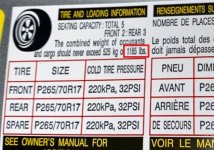
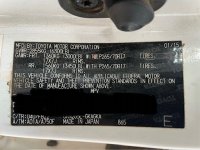
Is that what the sticker on your door jam says, or is that just what you're reading online? The actual curb weight will vary by trim/options, so always best to verify with the sticker on your door. I've attached a picture of what it looks like. This is the sticker for my 2020 Venture (TRD OR Premium essentially). I've got 1,165lbs payload.
Attachments

badattitude
Member
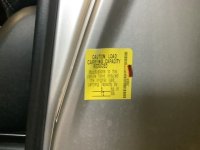
Is that what the sticker on your door jam says, or is that just what you're reading online? The actual curb weight will vary by trim/options, so always best to verify with the sticker on your door. I've attached a picture of what it looks like. This is the sticker for my 2020 Venture (TRD OR Premium essentially). I've got 1,165lbs payload.
I came across this article.
it seems that 1165lb is conservative..
Understanding Gross Vehicle Weight Rating in your 4Runner, 5th Gen 4Rs
if you think about it
if you have 5 adults 200lb each and 2 kids 50lb each
that is 1100lb.
I would think that the capacity should be more than that.....
the 1165lb could be the tire max capacity, can an expert shed lights in this?
Last edited:
My 2019 ORP's sticker says 835 lbs. Just double-checked it. I'm not really sure why it's so low compared to even 1165 that OP has listed. Assuming that his venture and my ORP are pretty similar equipment-wise (locker, etc.), it just doesn't make sense to me.
In my case, two passengers with two dogs is 450 lbs. Plus camping gear and supplies, two mountain bikes, recovery gear and other misc stuff and I'm easily approaching my payload. Now if you consider I have sliders and skids on mine, plus a heavier 33" spare tire, I'm easily over my payload. I'm probably near my payload just driving with me and two dogs... :behindsofa:
In my case, two passengers with two dogs is 450 lbs. Plus camping gear and supplies, two mountain bikes, recovery gear and other misc stuff and I'm easily approaching my payload. Now if you consider I have sliders and skids on mine, plus a heavier 33" spare tire, I'm easily over my payload. I'm probably near my payload just driving with me and two dogs... :behindsofa:

thennen
New member
It likely is conservative. Probably wouldn't be wise for a manufacturer to list the absolute total capacity that the vehicle can possibly handle. That would put them at greater risk of liability. They have to consider stability/tipping, braking distances, etc. If you decide you want to carry more, then in the event of an accident or some weight-related failure, that label will win every argument.I came across this article.
it seems that 1165lb is conservative..
Understanding Gross Vehicle Weight Rating in your 4Runner, 5th Gen 4Rs
if you think about it
if you have 5 adults 200lb each and 2 kids 50lb each
that is 1100lb.
I would think that the capacity should be more than that.....
the 1165lb could be the tire max capacity, can an expert shed lights in this?
Limited has this sticker added. I assume for the extra trim pieces.
The yellow sticker is added for port installed items, such as cross bars.
The yellow sticker is added for port installed items, such as cross bars.
its still confusing why the 1165lb vs the 1495lb that is calculated from GVWR
rightyouareken
New member
its still confusing why the 1165lb vs the 1495lb that is calculated from GVWR
The stickers are generally very accurate in my experience. The weight of each trim/option set can change the curb weight quite a bit and the curb weight you find online generally is a generic average for a wide range of trims and options. Options like sunroofs, KDSS, 3rd row seats, stereo systems, larger screens, power seats, etc all add weight. It's conceivable that a manufacturer could put a dynamic curb weight system on their website that changes the weight based on the options you select, but none seem to bother. To get the REAL payload of a vehicle you really have to open the door and look at the door jam sticker. This is especially important for pickup truck buyers planning on towing, since hitch weight counts against a vehicle's payload too.
If you go weigh your vehicle with a full tank of fuel at a CAT scale (at a truck stop) and subract that weight from your GVWR, you should get a number very close to that tire loading sticker (unless you've added any heavy mods, at which point the payload is now less).
Also, that loading sticker really has nothing to do with the tire ratings which will usually add up to be higher than GVWR by a decent amount. It's strictly a GVWR - actual curb weight of the vehicle = payload.
I wonder if the TRD ORP above with the 835lb sticker has KDSS? Those components probably add quite a bit of weight.
Last edited:
badattitude
Member
:nod:The yellow sticker is added for port installed items, such as cross bars.
Agreed that makes sense. However, this limited has no port installed options. No mud flaps, no crossbars, no remote start, no running boards. My best assumption is still that its the Limited additional trim pieces that weigh 12lbs.
Perhaps some of the limited trim is installed at port.
Agreed that makes sense. However, this limited has no port installed options. No mud flaps, no crossbars, no remote start, no running boards. My best assumption is still that its the Limited additional trim pieces that weigh 12lbs.
Perhaps some of the limited trim is installed at port.
Last edited:

ScoMey
New member
It’s the locking differential...
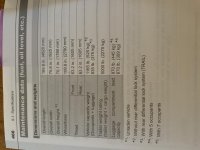
It’s the locking differential that apparently reduces the payload. Pic from the owners manual... sorry for the sideways picture!
The stickers are generally very accurate in my experience. The weight of each trim/option set can change the curb weight quite a bit and the curb weight you find online generally is a generic average for a wide range of trims and options. Options like sunroofs, KDSS, 3rd row seats, stereo systems, larger screens, power seats, etc all add weight. It's conceivable that a manufacturer could put a dynamic curb weight system on their website that changes the weight based on the options you select, but none seem to bother. To get the REAL payload of a vehicle you really have to open the door and look at the door jam sticker. This is especially important for pickup truck buyers planning on towing, since hitch weight counts against a vehicle's payload too.
If you go weigh your vehicle with a full tank of fuel at a CAT scale (at a truck stop) and subract that weight from your GVWR, you should get a number very close to that tire loading sticker (unless you've added any heavy mods, at which point the payload is now less).
Also, that loading sticker really has nothing to do with the tire ratings which will usually add up to be higher than GVWR by a decent amount. It's strictly a GVWR - actual curb weight of the vehicle = payload.
I wonder if the TRD ORP above with the 835lb sticker has KDSS? Those components probably add quite a bit of weight.
It’s the locking differential that apparently reduces the payload. Pic from the owners manual... sorry for the sideways picture!
Attachments

ElectroBoy
Banned
It’s the locking differential that apparently reduces the payload. Pic from the owners manual... sorry for the sideways picture!
My 18 ORP (with locking diff) user manual has the same info table as yours.
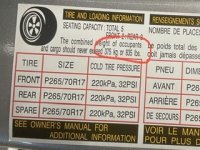
And the door sticker has the same info, max payload is 835 lbs, plus the yellow sticker to subtract 12 lbs for crossbars.
That includes passengers plus cargo, so for two lightweight people 835-12-170-140 = 513 lbs for cargo like tools, camping gear, food, etc. Not a whole lot left if you subtract weight for sliders, bumpers, ladders, jacks, shovels, etc.
PS: There’s another thread discussing this topic:
Lets address the "elephant"/ weight in the room!
Attachments
rightyouareken
New member
My 18 ORP (with locking diff) user manual has the same info table as yours.
And the door sticker has the same info, max payload is 835 lbs, plus the yellow sticker to subtract 12 lbs for crossbars.
That includes passengers plus cargo, so for two lightweight people 835-12-170-140 = 513 lbs for cargo like tools, camping gear, food, etc. Not a whole lot left if you subtract weight for sliders, bumpers, ladders, jacks, shovels, etc.
PS: There’s another thread discussing this topic:
Lets address the "elephant"/ weight in the room!
Strange. My Venture (essentially a ORP) has the locker and crossbars and has the 1165lb payload sticker.
Sent from my iPhone using Tapatalk
ElectroBoy
Banned
Strange. My Venture (essentially a ORP) has the locker and crossbars and has the 1165lb payload sticker.
Sent from my iPhone using Tapatalk
Hmmm... I looked at the 2020 online manual, it has the same specs.
1165lbs without locker, 835 lbs with locker.
Wrong sticker installed? Maybe check with the dealer, they should track this down for you.
ElectroBoy
Banned
Anyone has any insight on why the locker reduces the payload so much? I’d guess it’s something to do with axle weight limits but it can’t be that the locker makes the axle weaker.
It’s just the weight of the locker hardware itself.
It’s just the weight of the locker hardware itself.
The weight of the locker hardware is negligible. However, the torque that can be applied to one axle shaft with a locker, is significant.
I've never seen a definitive comment from Toyota regarding why the payload is reduced so much with the locker, but limiting the potential load on a single axle shaft by reducing payload, makes sense.
ElectroBoy
Banned
The weight of the locker hardware is negligible. However, the torque that can be applied to one axle shaft with a locker, is significant.
I've never seen a definitive comment from Toyota regarding why the payload is reduced so much with the locker, but limiting the potential load on a single axle shaft by reducing payload, makes sense.
What you said sounds right. It must be so you don’t destroy the rear axle shaft when locked under worst case conditions. I’d imagine if you don’t engage the locker you could increase your payload to the 1165 lbs spec.
Looking around the forum it seems no one has found the official answer but this thread and the [MENTION=118321]Jetboy[/MENTION] posts cover your assessment, and it makes sense.
Vehicle weight capacity with Diff Lock
syedlink27
Junior Member
Does the lower payload of the TRD ORP have anything to do with KDSS?
I have KDSS and the rear locker and my stick says 880 lbs.
Will KDSS be damaged/affected if you overload the vehicle or tow?
I have KDSS and the rear locker and my stick says 880 lbs.
Will KDSS be damaged/affected if you overload the vehicle or tow?

El Dusty
Member
Old thread but my 2015 SR5 4x4 with third row has the 12 lbs yellow reduction sticker and the 1165 payload rating.
I would have thought an additional row would have reduced the rating significantly. My 3rd row has since been removed and converted into fridge / proper storage space.
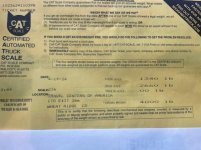
This really got me wondering if I was approaching my payload / gvwr with mods and newly added RTT so I took it to the Cat Scales. With me not in the vehicle, half a tank of gas and all my permanent items in or on the rig:
Front Axel weighed 1340, rated for 3000
Rear Axel weighed 2660, rated for 3450
Gross weight 4000, GVWR of 6300, 2300lbs remaining
My guess it to toss out what the scales are reading as I am 400 lbs lighter than the lightest factory curbweight. I have 200lbs on my roof, 150lbs of armor, at least 20lbs heavier per tire x5 and 150lbs of items in the trunk. With my 3rd row removed Im guessing I am at 500 lbs over the curb weight...
Anyway according to the payload I'm probably right at capacity when I get in the car with the gf and camping gear. Will try to get another weight elsewhere.
Edit 4/22/24: I was able to measure the front two tires and then the rear axle on a calibrated freight scale.
Drivers Tire 1513, Passenger 1369 for a total of 2882
Rear Axel 2633
Gross 5515, GVWR 6300, 785 Remaining
Im guessing the "weighmaster" at the cat scales fudged up my front axel numbers or they are in serious need of calibration.
I would have thought an additional row would have reduced the rating significantly. My 3rd row has since been removed and converted into fridge / proper storage space.
This really got me wondering if I was approaching my payload / gvwr with mods and newly added RTT so I took it to the Cat Scales. With me not in the vehicle, half a tank of gas and all my permanent items in or on the rig:
Front Axel weighed 1340, rated for 3000
Rear Axel weighed 2660, rated for 3450
Gross weight 4000, GVWR of 6300, 2300lbs remaining
My guess it to toss out what the scales are reading as I am 400 lbs lighter than the lightest factory curbweight. I have 200lbs on my roof, 150lbs of armor, at least 20lbs heavier per tire x5 and 150lbs of items in the trunk. With my 3rd row removed Im guessing I am at 500 lbs over the curb weight...
Anyway according to the payload I'm probably right at capacity when I get in the car with the gf and camping gear. Will try to get another weight elsewhere.
Edit 4/22/24: I was able to measure the front two tires and then the rear axle on a calibrated freight scale.
Drivers Tire 1513, Passenger 1369 for a total of 2882
Rear Axel 2633
Gross 5515, GVWR 6300, 785 Remaining
Im guessing the "weighmaster" at the cat scales fudged up my front axel numbers or they are in serious need of calibration.
Attachments
Last edited:
Similar threads
- Replies
- 0
- Views
- 2K
- Replies
- 4
- Views
- 712
- Replies
- 8
- Views
- 6K

- Replies
- 0
- Views
- 4K


