4Runner failed me today

Whether I proved your point or not, you're still incorrect. Wheel spin as a speed could be decreased due to the speed reduction, but you have multiplied the available power by 2.73:1 thus increasing the likelyhood of wheel spin. Your actions are multipled by that same figure. So going by your logic, 4low should actually decrease the available "traction" because there is too much power.

Weight shouldn't really matter, as the 4Runners have near perfect 50/50 weight distribution. The only weight shift that would matter is based on grades, and if the direction of the vehicle allows for a benefit of that weight shift or not.

So really, the use of 4low in your case is simply a difference in driving habits and control - not an actual gain of traction, which would violate the laws of physics.

I agree with this. Available traction is a function of the tire contact with the earth and not the drivetrain. The primary benefit to 4-lo is 'control' and getting into the engine power band low down. The second benefit to modern vehicles with the whiz bang electro gizmos are features such as A-trac to prevent slippage which increases the friction / traction / power distribution at the expense of momentum.
 
Ok, [MENTION=103267]Saker[/MENTION] wins this round of solve the Internet/life/off-roading dummy's problem. This morning became the 2nd time I ever engaged 4L following the proper and critical point (for me) to press DOWN on the selector. My apologies for my stupidly - stick around I'll have more. And yes it was a grade and not a slope. My buddy drives a Ford F-150 and he's a normal guy who likes busting balls (just like I would have if his Mexican? built Ford got stuck). I take full ownership of my failure to know how to operate my own vehicle and my lack of offroad experience. But at least this unnecessary thread made some readers aware of what was probably an Antman post about "use it or loose it" and the need to engage 4H monthly.

As always, thank you T4R members.

Lately, it's refreshing to see members ask a question, other members help him out while having a little fun with him, and the OP doesn't get hurt and defensive, but rather is honest about their mistake, humble, and appreciative. Kudos to you and glad it wasn't anything major with your 4R!
 
Whether I proved your point or not, you're still incorrect. Wheel spin as a speed could be decreased due to the speed reduction, but you have multiplied the available power by 2.73:1 thus increasing the likelyhood of wheel spin. Your actions are multipled by that same figure. So going by your logic, 4low should actually decrease the available "traction" because there is too much power.

Weight shouldn't really matter, as the 4Runners have near perfect 50/50 weight distribution. The only weight shift that would matter is based on grades, and if the direction of the vehicle allows for a benefit of that weight shift or not.

So really, the use of 4low in your case is simply a difference in driving habits and control - not an actual gain of traction, which would violate the laws of physics.

You know...I encounter many engineers in my work and I typically just let them go on as I have here. (clears throat)...however since you for some reason insist on being correct (another thing I encounter with engineers) I will share with you that in the real world where trucks get stuck in snow, mud left, right, nose plants, rear end plants, 4lo works for all the reasons I've pointed out. Whether that is "compatible" with the laws of physics really doesn't carry weight (pun intended) as the driver typically does not give a damn about them. They are happy to have their ass out of the ditch.

I suspect that the torque (twisting force) applied to the embedded tire and the torque vector to whichever wheel is gripping helps. Bear in mind you've got 4 wheels all working together and with sophisticated torque vectoring strategies this happens very quickly. Whether the tyre is new or not whether its a snow tire on and on. In addition, one has the skill of the driver to modulate these forces. However NOT being an engineer I can't be sure or CORRECT (wipes sweat off brow) so while I'm standing here incorrect that's ok cuz I'm out of the ditch while you (perhaps) are still trying to calculate why it's not gonna work.
 
Last edited:
You know...I encounter many engineers in my work and I typically just let them go on as I have here. (clears throat)...however since you for some reason insist on being correct (another thing I encounter with engineers) I will share with you that in the real world where trucks get stuck in snow, mud left, right, nose plants, rear end plants, 4lo works for all the reasons I've pointed out. Whether that is "compatible" with the laws of physics really doesn't carry weight (pun intended) as the driver typically does not give a damn about them. They are happy to have their ass out of the ditch.

I suspect that the torque (twisting force) applied to the embedded tire and the torque vector to whichever wheel is gripping helps. Bear in mind you've got 4 wheels all working together and with sophisticated torque vectoring strategies this happens very quickly. Whether the tyre is new or not whether its a snow tire on and on. In addition, one has the skill of the driver to modulate these forces. However NOT being an engineer I can't be sure or CORRECT (wipes sweat off brow) so while I'm standing here incorrect that's ok cuz I'm out of the ditch while you (perhaps) are still trying to calculate why it's not gonna work.

I'm not an engineer, in fact - I never finished my bachelors.

My point is that 4 low doesn't magically generate traction, your control of the scenario might lend its hand to being able to use what traction you have available - but there is only so much friction your tires can generate and shifting to a lower gear range doesn't add more friction. Any time there is a sloppy or wet substance, the rule of thumb is to keep the tires spinning so that the lugs clear themselves and have a fresh face to bite. So based on that, the fact that you're able to get out of a ditch in 4low vs 4high doesn't make any sense to me at all unless there are unspecified variables, like the excessive amount of slate and volcanic shale that is present on the coasts of Alaska, which would lend itself to slower wheel speeds.
 
This thread needs to discuss if a plane will take off from a treadmill.


Is the treadmill running?

Assuming it is, and based on this hypothetical lets assume it can support the weight of the plane and can go insanely fast (for a tread mill). While I am not involved in aviation I am under the impression that the general stall speed for a large commercial aircraft is in the low 100's so lets say 120mph for take off. large commercial aircraft can easily run 4-500mph so the thrust is there even given the increased density of the air at take off vs. altitude and the additional friction on the tires I am going to say yes, but I think the distance required would be noticeably longer then on a normal runway and my main concern would be heat build up in the tires due to the longer take off time and the increase speed the tires would see.
 
I'm not an engineer, in fact - I never finished my bachelors.

My point is that 4 low doesn't magically generate traction, your control of the scenario might lend its hand to being able to use what traction you have available - but there is only so much friction your tires can generate and shifting to a lower gear range doesn't add more friction. Any time there is a sloppy or wet substance, the rule of thumb is to keep the tires spinning so that the lugs clear themselves and have a fresh face to bite. So based on that, the fact that you're able to get out of a ditch in 4low vs 4high doesn't make any sense to me at all unless there are unspecified variables, like the excessive amount of slate and volcanic shale that is present on the coasts of Alaska, which would lend itself to slower wheel speeds.

Your'e a bright person whether degreed or not imho. All that I can tell you is that 4lo will work when 4hi does not. In any case it's fun to think about. Volcanic ash certainly could congeal the surface somewhat especially with the heat generated by friction to produce a gradiant which might help but I think that you're on to something with the weight balance issue. It would make sense that when the front is in the ditch the rear would grip more forcefully and "pull" the Runner out.
 
Is the treadmill running?

Assuming it is, and based on this hypothetical lets assume it can support the weight of the plane and can go insanely fast (for a tread mill). While I am not involved in aviation I am under the impression that the general stall speed for a large commercial aircraft is in the low 100's so lets say 120mph for take off. large commercial aircraft can easily run 4-500mph so the thrust is there even given the increased density of the air at take off vs. altitude and the additional friction on the tires I am going to say yes, but I think the distance required would be noticeably longer then on a normal runway and my main concern would be heat build up in the tires due to the longer take off time and the increase speed the tires would see.

Yes, but will the tires blow up due to the additional centrifugal force? Do we need to install LT tires and what pressure should we run?
 
Is the treadmill running?

Assuming it is, and based on this hypothetical lets assume it can support the weight of the plane and can go insanely fast (for a tread mill). While I am not involved in aviation I am under the impression that the general stall speed for a large commercial aircraft is in the low 100's so lets say 120mph for take off. large commercial aircraft can easily run 4-500mph so the thrust is there even given the increased density of the air at take off vs. altitude and the additional friction on the tires I am going to say yes, but I think the distance required would be noticeably longer then on a normal runway and my main concern would be heat build up in the tires due to the longer take off time and the increase speed the tires would see.

Pffft! Rookie mistake. You clearly did NOT factor in the increased magnetic field generated by the electric motor of the treadmill.:becky: The faster the treadmill the harder it would be for the plane to take off.
 
einstein-and-the-bee.jpg


<img src="http://boardofwisdom.com/cachetogo/images/quotes/18097.png" alt="According to the laws of aerodynamics, the bumblebee can’t fly either, but the bumblebee doesn’t know anything about the laws of aerodynamics, so it goes ahead and flies anyway."/>
 
Last edited:
I'm not an engineer, in fact - I never finished my bachelors.

My point is that 4 low doesn't magically generate traction, your control of the scenario might lend its hand to being able to use what traction you have available - but there is only so much friction your tires can generate and shifting to a lower gear range doesn't add more friction. Any time there is a sloppy or wet substance, the rule of thumb is to keep the tires spinning so that the lugs clear themselves and have a fresh face to bite. So based on that, the fact that you're able to get out of a ditch in 4low vs 4high doesn't make any sense to me at all unless there are unspecified variables, like the excessive amount of slate and volcanic shale that is present on the coasts of Alaska, which would lend itself to slower wheel speeds.

Your'e a bright person whether degreed or not imho. All that I can tell you is that 4lo will work when 4hi does not. In any case it's fun to think about. Volcanic ash certainly could congeal the surface somewhat especially with the heat generated by friction to produce a gradiant which might help but I think that you're on to something with the weight balance issue. It would make sense that when the front is in the ditch the rear would grip more forcefully and "pull" the Runner out.

[MENTION=104049]marshal[/MENTION] you are correct.
[MENTION=11280]alaskaman[/MENTION] you are correct too.

The one point neither of you (unless I missed it) brought up, and it is a biggie, is torque available at specific engine rpm. Torque is a simple equation of power times a constant divided by 2pi times RPM.

In a "stuck" condition, when you put the vehicle in 4LO you automatically will shift the torque curve down the X axis because of the gear reduction. What this means is you will have more torque available at a lower wheel rpm. Now, in some cases and in the hands of an inexperienced operator this just means you will get even more stuck! For the experienced operator this means you will have "finer" control of that torque at a lower wheel RPM.

Sure, traction is simply the amount of friction between the tire and the driving surface, be it mud, snow, etc. The KEY though is controlling the torque to the point of slip. Using 4LO gives you more available torque at a lower engine RPM and having that ability, along with being able to have better control of that torque, can mean the difference between being stuck... or not.

So you are both right. Using 4LO won't improve traction, but using 4LO can get you out of a bind because you have more torque at a lower engine RPM and that means it's easier to control the application of that torque up to wheel slip condition.
 
...So you are both right. Using 4LO won't improve traction, but using 4LO can get you out of a bind because you have more torque at a lower engine RPM and that means it's easier to control the application of that torque up to wheel slip condition.[/QUOTE]

Thanks. However.....:lalala:
 
Ok, [MENTION=103267]Saker[/MENTION] wins this round of solve the Internet/life/off-roading dummy's problem. This morning became the 2nd time I ever engaged 4L following the proper and critical point (for me) to press DOWN on the selector. My apologies for my stupidly - stick around I'll have more.

...

As always, thank you T4R members.

Glad to hear it all worked out for you.

Perhaps add this to the first post.
 
Is the treadmill running?

Assuming it is, and based on this hypothetical lets assume it can support the weight of the plane and can go insanely fast (for a tread mill). While I am not involved in aviation I am under the impression that the general stall speed for a large commercial aircraft is in the low 100's so lets say 120mph for take off. large commercial aircraft can easily run 4-500mph so the thrust is there even given the increased density of the air at take off vs. altitude and the additional friction on the tires I am going to say yes, but I think the distance required would be noticeably longer then on a normal runway and my main concern would be heat build up in the tires due to the longer take off time and the increase speed the tires would see.
You didn't outright say it, but you do understand that there is no drive line attached to the wheels and there for the treadmill almost becomes a moot point outside of rolling resistance of the tires, assuming they're able to holed themselves together and 2-3 times their Normal speed.

Like I said, just checking because I know you're smart
 
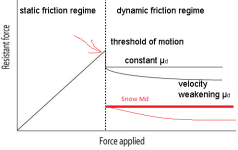
It's most of the time the difference between moving and not is about how close you can approach the threshold of motion - and really the peak threshold at all 4 tires. (That's why lockers have the physical properties of mechanical coupling that allow more peak traction than any traction control system. Also why you can in fact stop faster on snow/ice with a 4x4 than a 2x4 - often quite a bit shorter stopping distance.) In snow this is one reason automatics are not as capable as manual transmissions. You simply cannot control an automatic as well as a manual with very low gearing.

Anyway the goal in most cases is to get as close to the peak as possible - without going over. Having greater control allows you to potentially approach the peak and maintain near peak drive force better than in 4hi.


Also 4 low changes shift points significantly and keeps your engine much deeper into the rpm range at a given speed so you have a lot better throttle response at 20mph and much quicker application of power.
 

Attachments

  • Untitled.png
    Untitled.png
    31.6 KB · Views: 259
(at least on ice). When you are stopping, engaged drivetrain/ locker or otherwise would have no bearing on the braking system. Assuming the pads are all applied in equal force, 2 or 4 wheel drive will slide equally on ice. Stopping is based on the friction of the tire/surface. Brake pads, maybe, studded or snow tires maybe, lockers/torque, no way.

Unless you are strickly speaking of engine braking.


Mechanically coupled tires can approach the net threshold of motion of all 4 tires. Uncoupled tires do not with current brake systems that balance hydraulic pressure and therefore stopping force, not rotational velocity.

The easy example is to take a single axle. (I'm not using units to make this very simple) Let's say for example that the right side has a static friction of 10 and kinetic of 2. The left has static of 5 and kinetic of 1. When you apply a force of 7 to each tire, the left will lose static friction and only provide 1 unit of braking force. The left will provide 7. If the differential is locked the left tire cannot exceed the threshold of motion due to the mechanical coupling with the right tire. It acts as a single system, not two independent systems. So the left will in fact provide 4.5 units of force while the remaining braking force transfers to the right through the axle shafts and the right will provide 9.5 units of stopping force, providing the full 14 units of braking force.

To recap - in open diff scenario you get 8 units of braking friction, in the mechanically coupled axle, you get 14. 14 units of brake force stops faster than 8. Ergo - mechanically coupled drive trains can in many cases stop faster on snow and ice.
 

Members online

Forum statistics

Threads
278,308
Messages
3,554,057
Members
248,016
Latest member
Advally Service

Trending content

Back
Top