5th Gen 4Runner Head Gasket

Rpede

New member
I hear many more 5th gens go crazy mileage without an issue with a blown head gasket. However, I’m reading more reports of this issue lately on here, other forums, social media app groups, etc.

What can be done to prevent a blown head gasket?
1. Extreme condition driving creating high heat
2. Not changing engine coolant at correct intervals. Using wrong type of coolant.
3. Catastrophic failure of radiator hoses, water pump or radiator. (Usu show signs)
4. Bad radiator cap or thermostat.

Anything else that I’m missing? Would appreciate the advice and knowledge here. Also, for radiator does it make sense to just replace it after so many miles?
 
Register to hide this ad
The years before and after 2005 had the head gasket problems. Since then, it has gotten better. I'm not aware of any recent head gasket problems.
 
I hear many more 5th gens go crazy mileage without an issue with a blown head gasket. However, I’m reading more reports of this issue lately on here, other forums, social media app groups, etc.

What can be done to prevent a blown head gasket?
1. Extreme condition driving creating high heat
2. Not changing engine coolant at correct intervals. Using wrong type of coolant.
3. Catastrophic failure of radiator hoses, water pump or radiator. (Usu show signs)
4. Bad radiator cap or thermostat.

Anything else that I’m missing? Would appreciate the advice and knowledge here. Also, for radiator does it make sense to just replace it after so many miles?

Where are the reports of 5th gen headgasket issues? Links?
 
Just maintain it and don't abuse it. I supercharged my Tacoma at 90K miles and it made it to 145K after hard driving and many 4wd launches but only died when someone ran a red light.
 
I hear many more 5th gens go crazy mileage without an issue with a blown head gasket. However, I’m reading more reports of this issue lately on here, other forums, social media app groups, etc.

What can be done to prevent a blown head gasket?
1. Extreme condition driving creating high heat
2. Not changing engine coolant at correct intervals. Using wrong type of coolant.
3. Catastrophic failure of radiator hoses, water pump or radiator. (Usu show signs)
4. Bad radiator cap or thermostat.

Anything else that I’m missing? Would appreciate the advice and knowledge here. Also, for radiator does it make sense to just replace it after so many miles?

This;
Where are the reports of 5th gen headgasket issues? Links?
 
Seems like you have a good idea of how to maintain your head gasket integrity. I would not swap a radiator unless it leaked.

Drive More. Worry Less.
 
Reddit - Dive into anything

Reddit - Dive into anything

There are HG posts for 5th gens here as well and also on the other 4Runner forum too.

The Reddit links (I only read a few replies) doesn't necessarily indicate a bad headgasket. It could be, but it could also be a bad thermostat, radiator cap, a radiator with the fins plugged with debris, etc.

They need to get it to a competent mechanic who can diagnose the problem. Not make guesses sight unseen.
 
No engine is invincible.

But cherry picking a few Reddit threads (same goes for any forum) is just automotive hypochondria and not indicative of a trend.

Change the oil, keep an eye on the fluid levels, be on the look out for any leaks and enjoy the vehicle. Statistics are on your side.
 
I think the best advice is above: Don't overheat it. I'm not actually sure what it would take because I could tow my 5500lb travel trailer over the biggest mountain passes in the southwest at 100* summer temps and the engine temp never moved more than plus or minus 1-3 degrees - but if you can find some way to overheat a 4Runner engine - don't do it. For perspective on the radiator - the 4Runner radiator has about 580 square inches of radiator cooling area. An F150 with the 3.5EB has about 510 square inches. They are very comparable in size. But the 3.5 EB will be generating a lot more heat. Probably twice as much. The 4R cooling system is very large relative to the cooling demand. A Tundra 5.7 radiator is around 700. A Powerstroke F250 is about 810. Toyota builds to a higher standard of reserve capacity.

I don't know that acidity is a big issue with modern extended life coolants. High quality carboxylate-based coolants like basically all new OEM coolants last a long time. They do not use silicate based protection and so they do not need to be refreshed with new fluid with a fresh level of silicate rust inhibitor additive every few years like legacy green silicate based antifreeze did in the past. Do they last forever? no. But 100k miles should be no problem. Especially in an engine like a 1GR that isn't going to have extreme heat. Few people ever flush or change coolant. And very few engines have problems resulting from that.
 
I'm not actually sure what it would take because I could tow my 5500lb travel trailer over the biggest mountain passes in the southwest at 100* summer temps and the engine temp never moved more than plus or minus 1-3 degrees - but if you can find some way to overheat a 4Runner engine - don't do it.
Pretty sure the only way is some mechanical failure. Lose coolant or obstruction of air flow.

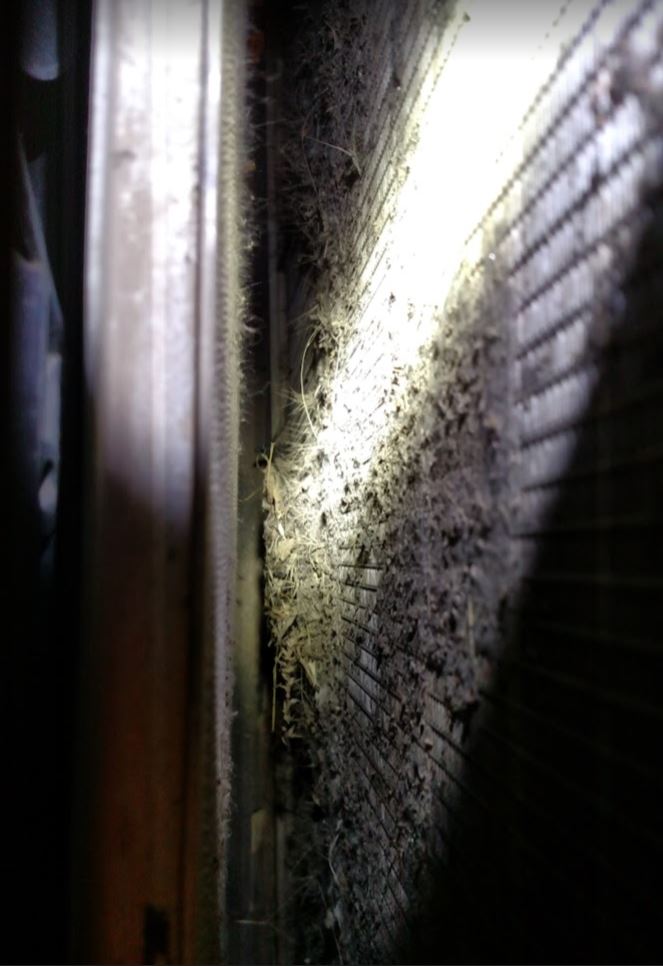
I've had mine get hot a few times - the fan sucks up leaves, dirt and debris between the rad and condenser where the foam seal rotted out. This makes a nice blockage the size/shape of the fan. Its not an issue when moving at normal speed as the radiator still has tons of surface area and works fine even with like 70% of it blocked off, but in 4lo going uphill and the fan basically doing nothing, the temps will go up. Quick and easy to fix to stop by a car wash and blow it out every year or so.
 
What is the purpose of the foam seal down there?
Keeps airflow from the fan pulling air through the a/c condenser and radiator. When the seal rots away, the fan pulls air through the radiator, but some from where that foam is, pulling in crap.

Sorry for the poor picture, but it's from several years ago before cell cameras were very good
radiator.JPG
 
Keeps airflow from the fan pulling air through the a/c condenser and radiator. When the seal rots away, the fan pulls air through the radiator, but some from where that foam is, pulling in crap.

Sorry for the poor picture, but it's from several years ago before cell cameras were very good
radiator.JPG

Thank you. I had never known the exact reason after reading through a bunch of threads about it.
 
Wow, this is why I love this forum and the people in it!! So many great response and I appreciate them all…gives me better insight. I know someone noted earlier that they wouldn’t replace the radiator if it had no sign of failure. How about the water pump with 130k? Nothing showing in the weeping hole. No abnormal bearing noise etc. I’m assuming it’s gotta be soon for it to start failing unless if the 4Runner water pumps have incredible longevity. I’ve been avoiding a preventive replacement for awhile because I’ve had not the best experiences with the Toyota dealer mechanics, some are incredible I’m sure just not in my area. I’m unable to find someone like an independent mechanic that knows a lot about 4Runners yet. I’m assuming that’s because they rarely break down and I think the 4Runner community on a whole does more of their own DIY maintenance compared to others but this is just an assumption. Changing the water pump DIY looks intimidating to say the least and I’ve done basic maintenance like replacing spark plugs, engine belt and brakes. I appreciate again all the responses and I’m amazed at how much one can learn on this forum.
 
I think the best advice is above: Don't overheat it. I'm not actually sure what it would take because I could tow my 5500lb travel trailer over the biggest mountain passes in the southwest at 100* summer temps and the engine temp never moved more than plus or minus 1-3 degrees - but if you can find some way to overheat a 4Runner engine - don't do it. For perspective on the radiator - the 4Runner radiator has about 580 square inches of radiator cooling area. An F150 with the 3.5EB has about 510 square inches. They are very comparable in size. But the 3.5 EB will be generating a lot more heat. Probably twice as much. The 4R cooling system is very large relative to the cooling demand. A Tundra 5.7 radiator is around 700. A Powerstroke F250 is about 810. Toyota builds to a higher standard of reserve capacity.

I don't know that acidity is a big issue with modern extended life coolants. High quality carboxylate-based coolants like basically all new OEM coolants last a long time. They do not use silicate based protection and so they do not need to be refreshed with new fluid with a fresh level of silicate rust inhibitor additive every few years like legacy green silicate based antifreeze did in the past. Do they last forever? no. But 100k miles should be no problem. Especially in an engine like a 1GR that isn't going to have extreme heat. Few people ever flush or change coolant. And very few engines have problems resulting from that.

Incredible info. You must be a mechanic or an engineer. This is actually a very reassuring post.
 

Members online

Forum statistics

Threads
278,309
Messages
3,554,071
Members
248,016
Latest member
Advally Service

Trending content

Back
Top