
Another No Heat/Warm heat thread.. please help troubleshoot

bentos1

New member
I have not had proper heat in my 1997 4Runner since I've owned it. The heat has always been warm but never hot. The front and back are both the same temp which makes me think it’s the cooling system and not the front heater core or controls. I have read all the threads on this site but most fixes are: air in the system, thermostat, one of the HVAC cables was disconnected.

Months ago I had a high idle issue, 1500 RPM that would not go away. I decided to change my thermostat to see if it would fix the issue which had no effect. I wanted to test the original thermostat afterwards which appeared to be working and opened fine when testing with boiling water.
The fix ended up being my temp sensor.
While troubleshooting the above issue I had tried two thermostats, flushed the coolant and replaced with Toyota red.

My current no heat/warm heat issue (front and back are warm)

- I have attempted to burp the system with the front of the truck in the air. Have also used a hose from the rad to ensure it was the highest point. Squished upper and lower radiator hoses to help get air out of the system. No effect

- My coolant level is constant and reservoir level stays steady

- No signs of a leaking heater core, no damp carpet, no steam coming from vents, no coolant smell

- Coolant valve to heater core works with the HVAC controls and moves easily. Blend door under dash (by glovebox) is connected and you can hear the “thunk” when switching the HVAC from cold to hot

- Flushed heater core both directions 2 times. Upon flushing, the core was filled with coolant and everything flowed nicely. Some crud/particulate came out from the core but it has not changed the heating issues.

- Both hoses to heater core are warm, not really hot. I can keep my hand on there.

- The temp gauge in the dash stays constant at the halfway mark. I have never seen it get past half which I believe is normal.

- Top radiator house is hot but not extremely burning. Lower hose is fairly cold (The rad is doing a good job?)

- OBD scan shows coolant level being 87 C (188.6 F) after driving for 30 minutes. Only takes a few minutes to get up to temp when idling in the driveway though.


I have not bypassed the heater valve by the firewall as the warm heat issue affects both front and back. I understand that the 4Runner has a heater core for each.
The age of the radiator is unknown. There are not markings that I was able to see aside from “PA66-GF25” which pertains to the material.
• PA66-GF25 is a glass fibre reinforced injection moulding, it can withstand temperatures up to 310C, sounds ideal for use in the end tanks of car radiators!
Seems my truck would be overheating if the water pump was failing. No signs of this happening at all.

I would like to try my best to troubleshoot the issue instead of replacing parts hoping they fix the issue. I am just looking for ideas of what I should be troubleshooting and the best way to do so.

:)
 
Register to hide this ad
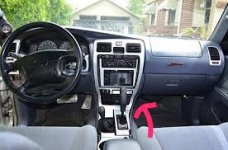
Under the dash on the passenger side there's a little servo (I believe it's SERVO 2/ it could be SERVO 1 but I don't think so) that controls how much outside (cold air) is combined with heated air to get the right temperature well if that servo stops working and the outside air vent was partially (or completely) open then it can't heat it up enough resulting in warm but not hot air, I took my servo out and unplugged it and just by hand moved the piece it turns until it was not pulling outside air in.
(Also my servo was making a clicking noise and wouldn't move)
I will attach a pic of about where it is...
Hope this helps!
 

Attachments

  • IMG_0179.JPG
    IMG_0179.JPG
    11.9 KB · Views: 11,887
Under the dash on the passenger side there's a little servo (I believe it's SERVO 2/ it could be SERVO 1 but I don't think so) that controls how much outside (cold air) is combined with heated air to get the right temperature well if that servo stops working and the outside air vent was partially (or completely) open then it can't heat it up enough resulting in warm but not hot air, I took my servo out and unplugged it and just by hand moved the piece it turns until it was not pulling outside air in.
(Also my servo was making a clicking noise and wouldn't move)
I will attach a pic of about where it is...
Hope this helps!

Thank you RockyrT4R. Just for clarification I have 1997 which uses all cables from what I can tell. The cable which moves this area is part of the HOT/COLD HVAC slider on my truck. This is connected and I can hear and see the parts moving via the cable.

It is possible that the part is not moving enough though.

Its my understanding that the front and rear heat have separate heater cores. This servo/mechanical linkage under the glove box only controls the front heater core, is that correct? I believe this actuates the blend door.

Would my rear heat be affected by this area?
 
The rear heater is 100% separate. You can see the lines (small) come off the main heater core lines in the engine bay, run to hard lines that go under the truck, then to the blower assembly under the passenger seat. The rear core is full-flow at all times, and the 'heat' adjustment operates a blend door that bypasses the core. All the switches, blower, etc. is separate from the main HVAC.

Your engine temps seem correct. You have the manual controls, so this is an odd one... not a whole lot to go wrong. I wonder if it something really whacky like a somewhat crushed hard line on the back of the engine?

-Charlie
 
Thank you RockyrT4R. Just for clarification I have 1997 which uses all cables from what I can tell. The cable which moves this area is part of the HOT/COLD HVAC slider on my truck. This is connected and I can hear and see the parts moving via the cable.

It is possible that the part is not moving enough though.

Its my understanding that the front and rear heat have separate heater cores. This servo/mechanical linkage under the glove box only controls the front heater core, is that correct? I believe this actuates the blend door.

Would my rear heat be affected by this area?

Yes the front linkage only controls front, although a pinched line would make a lot of sense , the rear heater has a manual cable line that lets more coolant flow through the little radiator type thing that it blows through and if you turn heat down it just restricts flow to that radiator thing, so I you had a main line that was pinched it would be a lot like the rear heaters function, and it still wouldn't let the truck overheat because it's just as if the heater was off
 
The rear heater is 100% separate. You can see the lines (small) come off the main heater core lines in the engine bay, run to hard lines that go under the truck, then to the blower assembly under the passenger seat. The rear core is full-flow at all times, and the 'heat' adjustment operates a blend door that bypasses the core. All the switches, blower, etc. is separate from the main HVAC.

Your engine temps seem correct. You have the manual controls, so this is an odd one... not a whole lot to go wrong. I wonder if it something really whacky like a somewhat crushed hard line on the back of the engine?

-Charlie

This is why I find it more difficult to solve. If the rear was poor heat or the front was only poor then I would have better idea of where to search.
The bit of heat I have feels the same front and rear at all times.

I have been leaning towards an air pocket but the tricks I tried to burp the system have not made any improvements.

Do you think blocking the rad with cardboard to attempt to get coolant temps up would help, or should my current coolant temp be good?
 
You flushed the heater core but not the entire cooling system. Within few seconds again, dirt gets into the heater core.

I am sure until you do a complete coolant flush (remove Thermostat), you will not get hot air from the vents.

You'll even have to get a new radiator.
 
Last edited:
If your coolant temp is really 188 then putting cardboard in front of the rad won't help.

I run at 190 and both my heaters blow hot.
 
You flushed the heater core but not the entire cooling system. Within few seconds again, dirt gets into the heater core.

I am sure until you do a complete coolant flush (remove Thermostat), you will not get hot air from the vents.

You'll even have to get a new radiator.

When I replaced the thermostat I did have to remove lots of the coolant.
Are you suggesting to do this again and clean the block out this time? You are thinking this will cause tons of particulate that it will clock the existing radiator which will need to be replaced?
 
If your coolant temp is really 188 then putting cardboard in front of the rad won't help.

I run at 190 and both my heaters blow hot.

Thank you for confirming that.

My OBD reader shows temp reaching 87 C. You can watch the temp rise as it warms up. I dont think I saw it go over 87 C though.
 
I'm following this as well. My 1998 from AZ now living in VT is freezing this winter. Reversed flushed the core numerous times as well I let it sit for a few hours with CLR inside it to try and clear out the core. It looked like it was clean and flowing nicely so I put the piping back together and burped it as everyone has mentioned by raising the front end and running it to try and get rid of any air pockets. Still chilly in here this winter.
 
[MENTION=145977]vt325xi[/MENTION] is your rear heat the same temp as the front?

Sometimes yes. Sometimes no. Like there is an airpocket in there or little to no flow. One of these days when it warms up again I will try to reverse flush both cores.
 
Sometimes yes. Sometimes no. Like there is an airpocket in there or little to no flow. One of these days when it warms up again I will try to reverse flush both cores.

you could try bleeding the air out like this guy: https://www.youtube.com/watch?v=lFA0tDZlm9Y&t=7s

I tried that the other day for 20+ min. Squished the hoses and had the front of the truck up in the air. Made no difference for me, but it might help you if there is air down there.
 
Yes

When I replaced the thermostat I did have to remove lots of the coolant.
Are you suggesting to do this again and clean the block out this time? You are thinking this will cause tons of particulate that it will clock the existing radiator which will need to be replaced?

You need a new radiator because it is OEM and original, and may cause the famous pink milkshake if you stay with the old radiator.

I'd flush the engine block. Remove upper radiator hose and thermostat housing. Using the garden hose, let water to run from top to bottom. I then close the thermostat outlet by hand and fill the engine block with water and then take the hand off to get more dirt out. Do this several times. Also get water to run from the heater core lines into and out of the engine block. Finally flush the heater core and engine block with 2-3 gallons of distilled water. Now install the new radiator, OEM hoses and fill with right coolant.
This should solve the issue if the heater core is NOT blocked. Avoid getting water into any electronic components.
 
[MENTION=85046]nissanh[/MENTION], thanks for the reply. This was my though process to try and do a full flush on the system next.

I asked about the radiator as mine seems to be working well (even though it is old), but I have a 5 speed. No need to worry about the milkshake.

Hopefully I can flush the system (Rad/Block/Heater Core) this weekend and will post the results. I might try to protect the alternator if I notice water is going to damage it.
 
Yes, make sure you clean the entire cooling system well. Don't forget the rear heater lines. Do you plan to keep the runner for few years? if then it won't harm to get a new radiator. I saw somewhere the Denso radiator is at US$104. Not sure how it is going to be when it crosses the border.

Here is how I burp the system. Have done many and all works great. With a cool engine, remove the radiator cap and fill it about 2-3 cm below its cap level. Start the engine and let it warm up to operating temp. also have the heater on. Having AC on heats up the engine faster. DON'T place your eye above the radiator cap opening (nothing will pop out, but to be safe). With heat going up, you'll see the coolant level going down. Add coolant but keep it below 2-3 cm below; like before. You may also see the level is reaching the cap level (due to expansion). it is OK. Just let it be. after about 10 minutes at proper operating temp, your coolant system is burped. Let the engine to cool and now fill to the level both in the radiator and reservoir; put the cap back on. Do a road test and again allow to cool. Check the coolant level.
 
No Heat !!! 96 4runner - need help bad

I've had this 4trunner for 15 years and it never had the best heat but it did work enough to keep it semi-warm inside. I installed some aftermarket heated seats which made it comfortable enough for the Maryland winters. Over the years the heat has been getting worse. I have flushed the cooling system several times over the years and it was always clean. It now has 188k miles and still runs great. It's a limited with a 3.4. I have the old heater temperature control slide lever that uses cables not the rotating knob type, so no electronics.

On a long trip this winter, the engine overheated and I was able to catch it in time without any damage. I diagnosed it to a partially clogged original radiator. Before changing the radiator, I did a chemical flush and it did have some particulates come out but not too much. I keept draining from the passenger side of the block and bottom radiator hose. Final flush was with several gallons of distilled water.

While I had the cooling system open, I used a fluid pump connected to the heater core and a 5 gallon buck with some CLR and water to keep circulating the cleaner. I back flushed and forward flushed several times for over an hour and had very good flow through the heater core. Some particulates came out though not a huge amount. I attempted this flushing on for the rear heater core, but the pipe running down the firewall sprung a leak, so for now, I just plugged capped them off.

Check the heater core water valve and it has good flow and the cable is adjusted properly.

Installed a new Toyota thermostat with the jiggle valve at 6:00

Installed the new radiator and filled the system with Toyota coolant diluted with 50% distilled water.

With a Lisle radiator funnel and the front of the vehicle on uphill on a steep incline I burped the system by reving the engine and squeezing all the hoses. I think I was able to get all the air out. I then topped of the overflow and put a new cap on the radiator.

I now have heat, super happy, not really hot heat, but it works better than ever. So the next few days the heat gets less and less until it is putting out air colder than my skin, so not good.

I'm thinking the heater core needs to be replace even though it had good flow when I cleaned it. So went through the trouble to replace the heat core. It's a pain and took 6 solid hours. I took the seats out which made it much easier. I also thought that maybe one of the blend doors inside the heater box was not working so with the heater core out, I could clearly see that both blend doors for the heater core operated properly. After putting it all back together and burping the system like I did previously still no heat! Really pissed now.

If I leave the hvac blower off for a while then turn it on, I get heat for 30 seconds or so then it blows cold. I get no heat when stopped or on the highway. I'm getting ready to throw in the towel. I been wrenching for 45 years and have never not been able to figure out a problem. This has really got me stumped. Only thing I can think of is there's a restriction for the flow coming from the block for heater core or the return into block from the heater core? I blew into these inlet and outlets and there wasn't any restrictions though maybe there's some kinda clog in the block? When I feel the hoses at the heater core on the firewall, they are both hot, so there has to be some flow, I just don't know how much.

If I can't get the heat working before the end of summer, I'm going to have to sell the vehicle since I use it for my winter beater here in Maryland and there's not any heat to keep ice and snow from building up on the windshield, besides freezing my a$$ off all winter really sucks.

Someone please give me some ideas since I tried everything I could think of.

  • Here's what I've recently done:
  • Timing belt, water pump and coolant hoses using all Toyota parts
  • Replaced radiator and heater core
  • Replaced thermostat with Toyota brand, jiggle valve at 6:00
  • Checked heater core water valve and properly adjusted cable
  • Checked heater blend doors and cables, adjusted properly
  • Chemical flushed entire cooling system
  • New Toyota coolant
  • Front end up in the air, burped radiator using Lisle funnel, several times weeks apart (highly recommend this funnel)
  • Installed new radiator cap
  • OBD II reader shows coolant temp in the 185-195 degrees
  • Temp gauge in the middle
  • Cooling system holds pressure, hoses are firm when hot. meaning the cap is working
  • No leaks, never have to add coolant
  • Overflow reservoir filled to proper level
 
Have you tried using an IR temp gun to check the temps going to the heater intake and the outlet when the valve is both open and closed?

I've had this 4trunner for 15 years and it never had the best heat but it did work enough to keep it semi-warm inside. I installed some aftermarket heated seats which made it comfortable enough for the Maryland winters. Over the years the heat has been getting worse. I have flushed the cooling system several times over the years and it was always clean. It now has 188k miles and still runs great. It's a limited with a 3.4. I have the old heater temperature control slide lever that uses cables not the rotating knob type, so no electronics.

On a long trip this winter, the engine overheated and I was able to catch it in time without any damage. I diagnosed it to a partially clogged original radiator. Before changing the radiator, I did a chemical flush and it did have some particulates come out but not too much. I keept draining from the passenger side of the block and bottom radiator hose. Final flush was with several gallons of distilled water.

While I had the cooling system open, I used a fluid pump connected to the heater core and a 5 gallon buck with some CLR and water to keep circulating the cleaner. I back flushed and forward flushed several times for over an hour and had very good flow through the heater core. Some particulates came out though not a huge amount. I attempted this flushing on for the rear heater core, but the pipe running down the firewall sprung a leak, so for now, I just plugged capped them off.

Check the heater core water valve and it has good flow and the cable is adjusted properly.

Installed a new Toyota thermostat with the jiggle valve at 6:00

Installed the new radiator and filled the system with Toyota coolant diluted with 50% distilled water.

With a Lisle radiator funnel and the front of the vehicle on uphill on a steep incline I burped the system by reving the engine and squeezing all the hoses. I think I was able to get all the air out. I then topped of the overflow and put a new cap on the radiator.

I now have heat, super happy, not really hot heat, but it works better than ever. So the next few days the heat gets less and less until it is putting out air colder than my skin, so not good.

I'm thinking the heater core needs to be replace even though it had good flow when I cleaned it. So went through the trouble to replace the heat core. It's a pain and took 6 solid hours. I took the seats out which made it much easier. I also thought that maybe one of the blend doors inside the heater box was not working so with the heater core out, I could clearly see that both blend doors for the heater core operated properly. After putting it all back together and burping the system like I did previously still no heat! Really pissed now.

If I leave the hvac blower off for a while then turn it on, I get heat for 30 seconds or so then it blows cold. I get no heat when stopped or on the highway. I'm getting ready to throw in the towel. I been wrenching for 45 years and have never not been able to figure out a problem. This has really got me stumped. Only thing I can think of is there's a restriction for the flow coming from the block for heater core or the return into block from the heater core? I blew into these inlet and outlets and there wasn't any restrictions though maybe there's some kinda clog in the block? When I feel the hoses at the heater core on the firewall, they are both hot, so there has to be some flow, I just don't know how much.

If I can't get the heat working before the end of summer, I'm going to have to sell the vehicle since I use it for my winter beater here in Maryland and there's not any heat to keep ice and snow from building up on the windshield, besides freezing my a$$ off all winter really sucks.

Someone please give me some ideas since I tried everything I could think of.

  • Here's what I've recently done:
  • Timing belt, water pump and coolant hoses using all Toyota parts
  • Replaced radiator and heater core
  • Replaced thermostat with Toyota brand, jiggle valve at 6:00
  • Checked heater core water valve and properly adjusted cable
  • Checked heater blend doors and cables, adjusted properly
  • Chemical flushed entire cooling system
  • New Toyota coolant
  • Front end up in the air, burped radiator using Lisle funnel, several times weeks apart (highly recommend this funnel)
  • Installed new radiator cap
  • OBD II reader shows coolant temp in the 185-195 degrees
  • Temp gauge in the middle
  • Cooling system holds pressure, hoses are firm when hot. meaning the cap is working
  • No leaks, never have to add coolant
  • Overflow reservoir filled to proper level
 

Members online

Forum statistics

Threads
278,315
Messages
3,554,102
Members
248,016
Latest member
Advally Service

Trending content

Back
Top