Ceramic/titanium coating on Super White

engineeer

New member
Ceramic/titanium paint protection coating on Super White

I've read up on the Super White paint and how it might be harder to correct due to it not having a distinct clear coat layer (it's mixed in apparently?). I've reached out to Toyota to see if this is still the case on 2017s in anticipation of the Super White TRD Pro I ordered.

I also read up on ceramic/titanium coatings (e.g. Opti-Coat Pro/Pro+, CS-II Titanium) and their benefits. I've had Opti-Coat applied to a previous vehicle, but it had a distinct clear coat layer that had to be corrected prior to the coating. I'm not sure how this will work with Super White.

I'm not only concerned about adhesion of the coating to the paint, but the paint potentially being removed by the correction and application process. Detailers in my area that are certified for these coatings aren't able to give me a straight answer. Does anyone know if Super White, without it's separate clear coat layer, is compatible with these coatings? Better yet, has anyone with a Super White had Opti-Coat or CS-II Titanium applied?

Edit: I've also reached out to Opti-Coat directly to see if they have any data around adhesion to non-clear coat surfaces.

Edit #2: Toyota's response: "Toyota applies clear coats to metallic and pearl paint finishes. Super White is a base white with no clear coat"
 
Last edited:
Register to hide this ad
I've recently coated a couple of super white 4runners including my personal super white trd pro not with opti coat but with a similar product called Carpro Cquartz ceramic coating. As far as paint correction in my experience with super white it's very similar to working with single stage paint. The super white paint from the factory is very thin but can be corrected as long as the corrections are minimal. One of thr workers ended up costing us a rear bumper paint job not realizing how thin the paint was on the bumpers so be very careful with heavy correction. As long as proper prep prior to coating is done as well as a good alcohol/ distilled water mix solution is used to wipe down all oils and residual polish/compound from the surface the coating should be able to adhere to the surface. We use polishes that have minimal or no oils in them as well as no fillers to get a better leveled surface as well as to help with adhesion due to less contamination into the paint from the oils and fillers itself. As far as cquartz goes I'm satisfied with the results. Super hydrophobic water just sheets off and the beads practically roll off and air dries at highway speeds. Which ever coating you decide to do its a great investment. Here's mines protected with Cquartz.https://vimeo.com/202654125
 
Last edited:
That's super helpful, thanks.

What's the difference between the Cquartz and other similar products (e.g. Opti-Coat) and something a little more different like CS-II Titanium? Any particular reasons you chose Cquartz over other options?
 
I had my 2016 super white coated with Ceramic Pro. It's only been two months so I can't really comment on the durability, but so far I have no complaints. I mentioned the theory of no clear / mixed clear on white 4Runners and the detail shop wasn't familiar with it but they have done multiple white 4Runners / Tacomas without issue.
 
That's super helpful, thanks.


What's the difference between the Cquartz and other similar products (e.g. Opti-Coat) and something a little more different like CS-II Titanium? Any particular reasons you chose Cquartz over other options?


I believe the CS-II titanium will outlast the opti coat being titanium based and the opticoat will outlast the cquartz as far as durability goes. It'll all depend on the amount of layers applied as well as what type of contaminants and environment the coating is exposed to. To be honest it isn't bullet proof and does need to be maintained from time to time. Sitting water spots will still etch into the coating if left on long enough. You can correct the damaged areas of the coating with a abrasive compound and reapply coating and or fillers in that area if you feel you cut it back into the original clear coat. It will how ever enhance the gloss and depth of the color as well as minimize any micro abrasions from daily debris and fine dust when wiped and washed. It will scratch if you really want to test the coating hardness. I've worked with IGL eco quartz, Carpro cquartz, Beeds ceramic, opticoat, and ceramic pro. I chose cquartz being the easiest to install, maintain and correct if needed but that's me. Ceramic pro is real tedious when it comes to prepping but worth it. Beeds ceramic is a great all around one bottle does all from paint plastic and leather. IGL is a good budget friendly coating. It'll come down to how well your installer preps and what you're willing to pay. One thing good about the coatings is some of them are chemical resistant to a certain extent. I've used my t4r as a Guinea pig and washed it with straight degreaser and dish soap after not washing it for 2 months and was amazed by the coating beading off the debris. Which ever you choose find a good installer that will tell you the pros and cons of each and select a coating for your needs and budget instead of just up sell you one off the shelf.
 
Last edited:
Toyota responded to my question:

"Toyota applies clear coats to metallic and pearl paint finishes. Super White is a base white with no clear coat"
 
Toyota responded to my question:

"Toyota applies clear coats to metallic and pearl paint finishes. Super White is a base white with no clear coat"

That is a known fact.

I don't know if you have ever owned a bright white vehicle before but, because of the color, it never will really reflect like a dark color will. No matter what you do you you just cannot see the shine on a white vehicle like you can a dark vehicle. You also can't see scratches, dents and dings on white as well either!

My point is you don't have to do the same corrections or spend near as much time and money on white, clear coated or not, that you do on a darker paint color. I wax mine once every few months with a cleaner wax. Always looks good and gives the same water "sheeting" action as that video above. Also even though there is no clear OVER the paint there is clear coat mixed in the paint. Ultimately it gives the same amount of protection as a separate clear coat.

Just drive it and give it a shot of wax 3-4 times a year and it will look great.

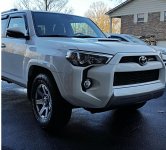
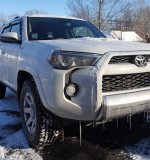
Here's mine after washing yesterday. A year old that has been waxed 3-4 times. This is as good as it gets, reflection wise. The second picture was from a week ago. Salt encrusted and ice bound lol after driving 1200 miles on wet and snow covered roads lol. Notice the reflection?
 

Attachments

  • clean 4runner.jpg
    clean 4runner.jpg
    133.1 KB · Views: 3,959
  • cold 4runner.jpg
    cold 4runner.jpg
    127.5 KB · Views: 3,781
Last edited:
My question would be how do you handle a repair and make it look correct. Can you blend in a repaired area and reapply or do you have to do a much larger area or the whole vehicle?
 
My question would be how do you handle a repair and make it look correct. Can you blend in a repaired area and reapply or do you have to do a much larger area or the whole vehicle?

You can blend. Just takes a decent talent. Back in the day (before clear coat) single stage paint was blended all the time. A top coat clear makes it easier but it can be done with single stage. The good thing about white though is you can just color coat the entire panel and it will still match as it does not fade like a metallic color.
 
I did this to my 4runner last year. Purchased the Pinnacle Black ceramic coat on amazon. My paint looks amazing and doesn't water spot. I am a detail nut, and this stuff works.
 
That is a known fact.

I don't know if you have ever owned a bright white vehicle before but, because of the color, it never will really reflect like a dark color will. No matter what you do you you just cannot see the shine on a white vehicle like you can a dark vehicle. You also can't see scratches, dents and dings on white as well either!

My point is you don't have to do the same corrections or spend near as much time and money on white, clear coated or not, that you do on a darker paint color. I wax mine once every few months with a cleaner wax. Always looks good and gives the same water "sheeting" action as that video above. Also even though there is no clear OVER the paint there is clear coat mixed in the paint. Ultimately it gives the same amount of protection as a separate clear coat.

Just drive it and give it a shot of wax 3-4 times a year and it will look great.

Here's mine after washing yesterday. A year old that has been waxed 3-4 times. This is as good as it gets, reflection wise. The second picture was from a week ago. Salt encrusted and ice bound lol after driving 1200 miles on wet and snow covered roads lol. Notice the reflection?

That's very reassuring. I'm a little OCD (why I opt for white/silver vehicles), so I'm a bit concerned about this lack of clear coat in case there is more significant damage (e.g. scrape, paint transfer, etc.). Something like Opti-Coat would alleviate that concern, especially when off-roading/going through bushes/etc..
 
Last edited:
That's very reassuring. I'm a little OCD (why I opt for white/silver vehicles), so I'm a bit concerned about this lack of clear coat in case there is more significant damage (e.g. scrape, paint transfer, etc.). Something like Opti-Coat would alleviate that concern, especially when off-roading/going through bushes/etc..

I've heard that although I absolutely do not believe it. As far as i know there never has been a test conducted by a 3rd party that tests that function. If I had a product that actually made paint scratch resistant (like a clear bra) I would be having every lab test out there test it! It's not out there for a reason. In addition if that product truly made paint scratch resistant then auto manufacturers would test and apply it for a superior (and competitive edge) paint protector. So far I've only seen some testimonials, and we know how good those are, especially when people spend a lot of money for it. My opinion.

That's why crash tests are not done by manufacturers lol.
 
I like the concept of more paint protection and easy cleaning/low maintenance, so submitted to get a quote from the Ceramic Pro manufacturer for application. Got a call right away from a paint/detail shop quoting $1,750 for 4 coats, and 4-5 days!!! They also quoted $1,100 for single coat. This was for full detail, claybar, 2 stages of color correction, de-grease/wax, then application.

I was thinking more like $500.... so this may be a DIY...

Any other quotes out there for Ceramic pro/Titanium application?
 
That's very reassuring. I'm a little OCD (why I opt for white/silver vehicles), so I'm a bit concerned about this lack of clear coat in case there is more significant damage (e.g. scrape, paint transfer, etc.). Something like Opti-Coat would alleviate that concern, especially when off-roading/going through bushes/etc..


The coating will only prevent future micro scratches from fine grit during washes and give you a hydrophobic effect that won't wash off as easily like normal wax but will still scratch with branches etc and anything you encounter offroad that will scrape paint. Paint transfer will still happen when someone hits your panels but can be polished away alot easier most of the time. The coating itself is cheap if you can DIY. It's mainly the labor involved to correct and apply the coating from a shop that makes the prices ridiculous at times.
 
The coating will only prevent future micro scratches from fine grit during washes and give you a hydrophobic effect that won't wash off as easily like normal wax but will still scratch with branches etc and anything you encounter offroad that will scrape paint. Paint transfer will still happen when someone hits your panels but can be polished away alot easier most of the time. The coating itself is cheap if you can DIY. It's mainly the labor involved to correct and apply the coating from a shop that makes the prices ridiculous at times.

I can believe this. Scratches from branches and brush? Um, no.

Back when I was a kid the coating craze was a product called Liquid Glass. People swore by it. Said it was a actual glass coating lol. Some guys would spend days putting coat after coat on their ride. Didn't help anymore than anything else that comes out of a bottle that you wipe on.
 
I've heard that although I absolutely do not believe it. As far as i know there never has been a test conducted by a 3rd party that tests that function. If I had a product that actually made paint scratch resistant (like a clear bra) I would be having every lab test out there test it! It's not out there for a reason. In addition if that product truly made paint scratch resistant then auto manufacturers would test and apply it for a superior (and competitive edge) paint protector. So far I've only seen some testimonials, and we know how good those are, especially when people spend a lot of money for it. My opinion.

That's why crash tests are not done by manufacturers lol.

The coating will only prevent future micro scratches from fine grit during washes and give you a hydrophobic effect that won't wash off as easily like normal wax but will still scratch with branches etc and anything you encounter offroad that will scrape paint. Paint transfer will still happen when someone hits your panels but can be polished away alot easier most of the time. The coating itself is cheap if you can DIY. It's mainly the labor involved to correct and apply the coating from a shop that makes the prices ridiculous at times.

My logic is that if you apply these coatings they'll act like (the missing) clear coat on the paint. If it does scratch, it will scratch the coating and that is easier to repair than the paint itself. Yes you can still scratch through it and damage the underlying paint, but the added layer of protection can't (theoretically) hurt.

This is assuming these coatings are like clear coat, which is what I've been led to believe.
 
My logic is that if you apply these coatings they'll act like (the missing) clear coat on the paint. If it does scratch, it will scratch the coating and that is easier to repair than the paint itself. Yes you can still scratch through it and damage the underlying paint, but the added layer of protection can't (theoretically) hurt.

This is assuming these coatings are like clear coat, which is what I've been led to believe.

Sorry man. Will they protect the paint better than plain paint with nothing on it? Sure. Better than a good quality wax? Debatable but maybe. Equal to or better than a clear coat or paint with clear mixed in? No way.
 
Sorry man. Will they protect the paint better than plain paint with nothing on it? Sure. Better than a good quality wax? Debatable but maybe. Equal to or better than a clear coat or paint with clear mixed in? No way.

Aren't these coatings supposed to be thicker and significantly harder than a regular wax?
 
Aren't these coatings supposed to be thicker and significantly harder than a regular wax?

They say it is but I don't know of anything that is wiped on and then off that could compare to something that is sprayed over a sanded surface, has multiple coats, sanded again and then polished to a shine. It costs around $50 to have your vehicle waxed. I saw a quote above for $1700. That's 34 waxes. If you pay $50 to have it waxed 4X/yr then you get 8 1/2 years of waxes.

In the end it's your money, do what you want. Just don't fall for a sales pitch. Do some research and if that research only has one source (forget testimonials), the guy selling it, think twice. Just trying to help.
 

Members online

Forum statistics

Threads
278,307
Messages
3,554,056
Members
248,016
Latest member
Advally Service

Trending content

Back
Top