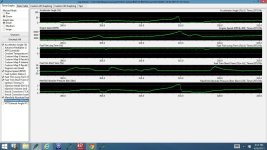
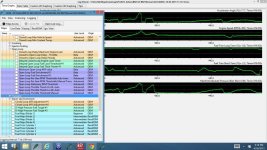
I guess I'm failing to understand how it's so hard to figure out? At WOT (or at least in open loop fueling) using less fuel = leaner AFR = more power. Also using less fuel = using less fuel = more efficiency AT WOT. Therefore it DOES do both, just as my WRX, my two STi's, and my 335xi, all of which were custom tuned did. They made better fuel economy than stock and also made much better power. I believe one of the biggest reasons the OEM's don't do it is because of emissions, not fuel economy. Same reason they stick restrictive catalytic converters in there which also rob power. They could easily do lots of things to free up the engine and make it run quite a bit stronger without any long-term issues.
Actually at WOT you'd typically want more fuel to compensate for the additional airflow being ingested; otherwise the vehicle does not have an efficient enough combustion and that will translate into lack of power (after a certain point.) Then you need to take into consideration things like heat soaking, higher than average temperatures from a much leaner mixture, and/or the large increase in NOx as a result of running too lean/too hot a mixture. Not to mention things like RPM band, low vs. high rotational mass, inertia of the engine, ect.b The issue is far more complex than simply tuning your carburetor a little lean.
Most Japanese vehicles run on the leaner side from what I have seen (while some Europeans like BMW tend to be a bit richer), so leaning it too much further will probably result in thermal issues that could compound over the life of the vehicle. Also Toyota is extremely conservative when it comes to their focus of efficiency, the main goal of their vehicles is emissions and fuel economy; everything else is second in their design goals. The reality is your statement is only partially right under certain circumstances, if running "lean" was the key to additional power and MPG then high performance vehicles would not guzzle fuel down at WOT.
The basic point here is that no one is really saying that the company, Quirt, or the product is outright crap. But with no empirical data and/or independent testing, let alone a verifiable patent; it quickly throws red flags to a lot of the more "experienced" (in this case I am referring mainly to members who are familiar with OBDII, Engine Management, Product Design, Scientific Background, ect. and not denoting intelligence and/or ignorance) members who have come across many similar types of products. If it can't hold up under scrutiny and/or peer review, then it's little more than a pipe dream.
In this case the product is neither proven nor disproven, but because it is neither it automatically is cast with a lack of credibility; something that can easily be rectified with proper data. This is fairly common in science driven industries where something is essentially proven "guilty" until it can prove it's credibility through empirical data.