Grease for Koyo Front Wheel Bearings

mtbtim

Elite Member
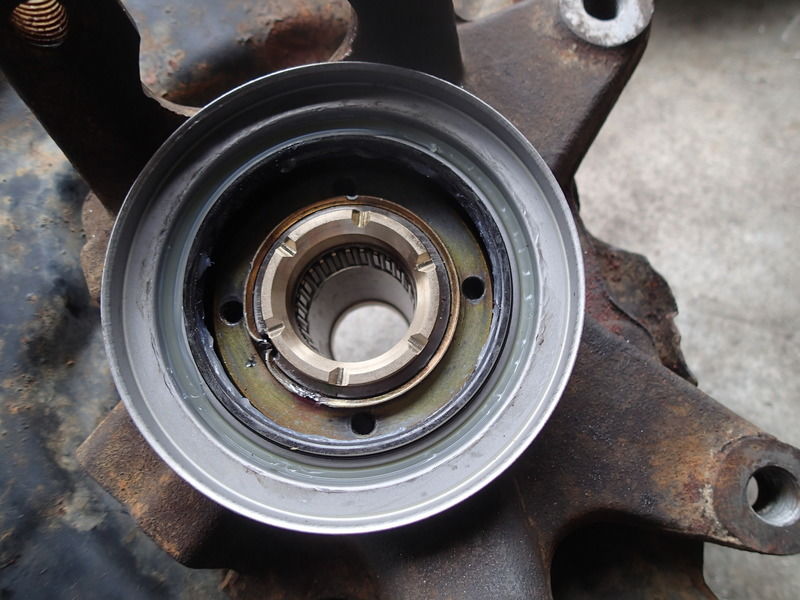
I'm going to be doing a manual hub swap on my 98 very soon. Looking at the OEM Koyo bearings I bought, it's lubricated with some type of white grease. Does anyone know what grease this is and where I could purchase it? The reason why I'm asking is I'm thinking about packing more grease into the bearing before installing it. There's a fair amount of grease in there but I was thinking it couldn't hurt to inject some more in. Timken make a red wheel bearing grease but I don't know if it's prudent to mix two different greases together.
 
Register to hide this ad
I'm going to be doing a manual hub swap on my 98 very soon. Looking at the OEM Koyo bearings I bought, it's lubricated with some type of white grease. Does anyone know what grease this is and where I could purchase it? The reason why I'm asking is I'm thinking about packing more grease into the bearing before installing it. There's a fair amount of grease in there but I was thinking it couldn't hurt to inject some more in. Timken make a red wheel bearing grease but I don't know if it's prudent to mix two different greases together.

here is a good explanation of grease types may be of some help https://www.etrailer.com/faq-grease.aspx
 
Got a pic or two there Tim?

As long as you aren’t color aversive, mixing grease I have found isn’t a killer as long as someone isn’t using proprietary grease.

Koyo USA is owned by JTEKT, and actual makes bearings in South Carolina.

I have found Mobil 1 grease to be superb through the years, even using Mobil XP222 special in our U-joints with great success.
 
Unless some grease came out don’t add any more. The bearing manufacturers know exactly how much they want to be in there. It can’t be 100% stuffed with grease. Needs some space to flow and dissipate heat.
 
I agree with JZiggy on this one. I don't have experience with packing grease in automotive bearings (everything I've worked with so far has been sealed), but from rebuilding bicycle hubs and bottom brackets I've seen that going overboard with grease just means you're gonna have a bunch of it oozing out and getting wasted.

I'd trust that the factory put the correct amount into the bearings, as well as the correct viscosity to prolong life. Google "Stribeck curve" if you want to read about how the grease viscosity affects bearing life. I guarantee Koyo has a lab where they do this type of testing :thumb:
 
You need space in the bearing for the grease to expand as it gets hot so stuffing it full is not a good idea.

The manual hub conversion uses the same sealed bearings as the ADD hub I would not attempt to pry the seals off to put more grease it and then try to put the seals back on. I don't believe it is really possible.
 
He's talking about that little bearing below the hub bushing...
80-033_zpsr9ltzuac_5584e2c1fde10c473ab34b943ec2572324d64927.jpg


If you ever need those hub bushings, inner or outer:
https://www.offroadsolutions.com/products/ors-replacement-hub-bushing/

So far as I know they are not available any other way *unless* you get a whole new hub.
 
Last edited:
Ah, yes. I always forget there is a bearing in there. I would say any high quality bearing grease should be fine on that.
 
You need space in the bearing for the grease to expand as it gets hot so stuffing it full is not a good idea.

The manual hub conversion uses the same sealed bearings as the ADD hub I would not attempt to pry the seals off to put more grease it and then try to put the seals back on. I don't believe it is really possible.

They make needle attachments for a grease gun that allows you to grease a sealed bearing. But, it seems the consensus is to not add more grease than the bearing came with.
 
He's talking about that little bearing below the hub bushing...
80-033_zpsr9ltzuac_5584e2c1fde10c473ab34b943ec2572324d64927.jpg


If you ever need those hub bushings, inner or outer:
https://www.offroadsolutions.com/products/ors-replacement-hub-bushing/

So far as I know they are not available any other way *unless* you get a whole new hub.

I was actually talking about the big Koyo wheel bearing. However, you brought up something that I've been wondering about though. I also knew there is a replacement brass bushing and needle bearing available but how do you get that brass bushing out?

If someone knows how to do it, please share. I did a search just now and I found some discussion on the needle bearing and brass bushing but nobody showing how to remove the bushing to replace the needle bearing. Here's how I'd try to do it if one of my needle bearings was wasted. I'd put the hub in a vice with soft jaws. I'd get a long punch or brass drift, come in from the opposite side with the punch and rest the punch on one edge of the needle bearing and strike with a hammer and then look for movement in the brass bushing. If not, I'd strike again. Once I get a tiny bit of movement, I'd hit on the opposite side and then other sides slowly working the needle bearing and brass bushing out together. You'd have to strike the needle bearing because that's the edge you can actually get onto with the punch. But, the needle bearing isn't a stout thing to hammer on. I'm guessing it would start to deform from the blows unless that brass bushing comes out very easy.

Anyone else have input on this?
 
I am also of the opinion that more grease isn't always better. That said, I also know companies will save wherever they can, and if they save an oz of grease on every bearing, it will net a significant savings! I know there are people employed at any large company whose job is solely to figure out where they can save a penny or two.
Since I am not a professional bearing tester, I can't say if they use the optimal amount of grease, or if they use as little as they can get away with.
I'm sure there are bearing testers out there, and I would love to hear the results of such tests- in regards to grease/lubrication specifics.
 
Sealed bearings are designed to only be 20-40% filled depending on application (eg. orientation, speed, etc...). This is to help with heat dissipation. Also not a good idea to be mixing greases. Alot of times it's not just simple lithium grease in there so unless you know 100% what the chemistry is, then leave it alone. The grease in these are often designed to outlive the bearing.
 
Sealed bearings are designed to only be 20-40% filled depending on application (eg. orientation, speed, etc...). This is to help with heat dissipation. Also not a good idea to be mixing greases. Alot of times it's not just simple lithium grease in there so unless you know 100% what the chemistry is, then leave it alone. The grease in these are often designed to outlive the bearing.

Another reason why I brought this question up is I've now dismantled two sets of Tacoma manual knuckles. Both sets had additional grease filled in around the set nut and spacer. I'm guessing this is a common technique used to help keep moisture out of the bearing if one of the outer seals gets compromised. Since I know the term "sealed" doesn't mean anything can get into them, I was thinking it would be nice to have the same type of grease the Koyo bearing comes with if I decided to also pack some grease in there around the set nut and ABS ring as extra protection. I'm guessing this extra grease is overkill and you'd only get moisture in there if one of your seals on the front or back was in really bad shape.

Post #11 is the question I'd really like answered now if anyone has first hand experience or info on it.

I was actually talking about the big Koyo wheel bearing. However, you brought up something that I've been wondering about though. I also knew there is a replacement brass bushing and needle bearing available but how do you get that brass bushing out?

If someone knows how to do it, please share. I did a search just now and I found some discussion on the needle bearing and brass bushing but nobody showing how to remove the bushing to replace the needle bearing. Here's how I'd try to do it if one of my needle bearings was wasted. I'd put the hub in a vice with soft jaws. I'd get a long punch or brass drift, come in from the opposite side with the punch and rest the punch on one edge of the needle bearing and strike with a hammer and then look for movement in the brass bushing. If not, I'd strike again. Once I get a tiny bit of movement, I'd hit on the opposite side and then other sides slowly working the needle bearing and brass bushing out together. You'd have to strike the needle bearing because that's the edge you can actually get onto with the punch. But, the needle bearing isn't a stout thing to hammer on. I'm guessing it would start to deform from the blows unless that brass bushing comes out very easy.
 
Last edited:
Ah, got it on the big bearing. My needle bearing is Koyo as well...

I had someone press my bearings and they did so right on top of the bushing (!) which is how I know about the replacements. The press completely destroyed the bushing on the hub that fought them. I would have thought they'd have used one of those internal pullers (not sure if I've got the name right) to get the press-fit bushings out first. Not sure how it would have worked with the bushing being next to the bearing like that. Having never pulled it I wouldn't know, just speculating.
Toyota apparently thinks you replace the whole hub, as that's the only way they offer that bushing.

What I did to replace the busted bushings was as you described, it did destroy what was left of the needle bearing but I did get the bushings out. Obviously I am no mechanic.
 
Last edited:

Members online

Forum statistics

Threads
278,316
Messages
3,554,109
Members
248,016
Latest member
Advally Service

Trending content

Back
Top