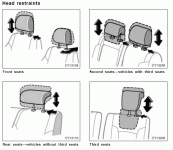
I'd agree with that... most headrests (or more accurately, head restratints) I've seen are not adjusted properly. The back seat is worse than the front, as people either leave them all the way down or remove them. Once you're rear-ended, your impression of headrests changes. They really are functional. A poorly-adjusted one can do more harm - if it's sitting at neck level, it will encourage your neck to bend as your head flies backwards. It should be adjusted such that a substantial portion of the headrest is behind your ears.
The tests assume that the headrest is set for the correct height. What they're testing is how far your head still moves back before it hits the headrest. The industry has become more critical of that distance, because the greater it is means your back is bending more. Not only is your head is moving backward when you get hit from behind, but your torso is also being slammed into the back of the seat.
Active head restraints try to detect this sort of sudden movement in the seat, using hinges or levers to push the headrest forward when force is applied to the back of the seat by your body.