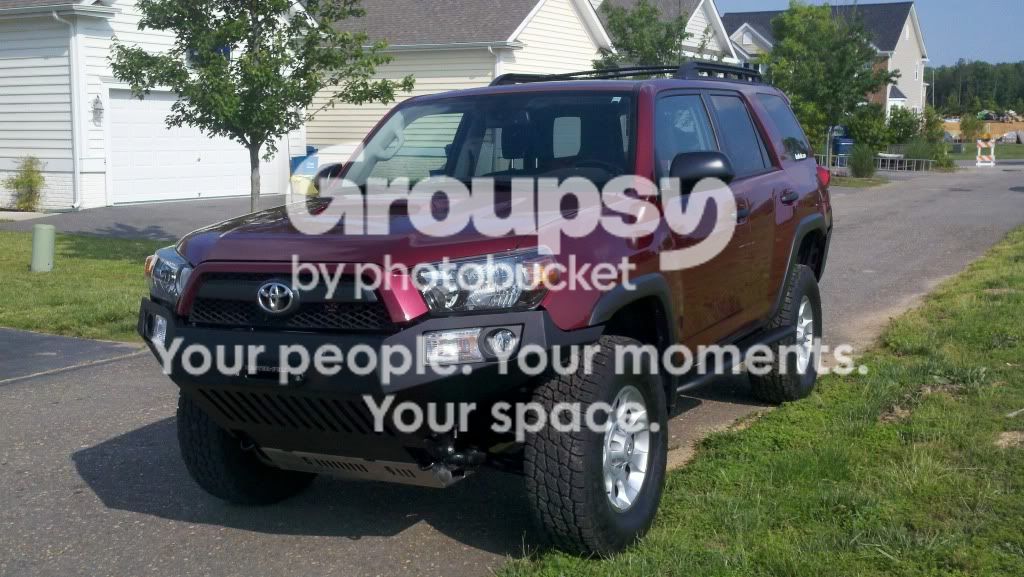
It's not that your airbags won't work, it's that the chances of them deploying in a collision where they shouldn't deploy increase. The ARB has crush cans that absorb impact and decelerate the vehicle more gradually. Without them you jolt to a stop. I'm sure [MENTION=66316]1engineer[/MENTION] could explain it better than I can. Anyhow, believe what you want, it makes no difference to me as I have no stake in this.
From Wiki:
"The design is conceptually simple; a central "Airbag control unit"[48] (ACU) (a specific type of ECU) monitors a number of related sensors within the vehicle, including accelerometers, impact sensors, side (door) pressure sensors,[49][50] wheel speed sensors, gyroscopes, brake pressure sensors, and seat occupancy sensors."
Additionally, "The signals from the various sensors are fed into the Airbag control unit, which determines from them the angle of impact, the severity, or force of the crash, along with other variables. Depending on the result of these calculations, the ACU may also deploy various additional restraint devices, such as seat belt pre-tensioners, and/or airbags (including frontal bags for driver and front passenger, along with seat-mounted side bags, and "curtain" airbags which cover the side glass)."
As you can see airbags deploy, or not, depending on a number of factors with impact sensors and accelerometers being just two of many input signals.
If you remove the OEM bumper completely you are removing a "crush" zone. This crush zone is designed to absorb some of the energy from an impact (there are many crush and crumple zones on the 4Runner) and the result would be a lesser "G" force transmitted to the sensors and you, the occupant.
Adding aftermarket bumpers removes this "crush" zone. You are basically removing an energy absorption portion of the vehicle and replacing it with one that requires a much larger force to crush.
In a high speed impact your aftermarket bumper will not protect any better and could actually hinder the safety features, such as airbag deployment and restraint system activation, by activating them before the correct time. Remember these things are timed to deploy in just a few milliseconds so getting that timing off, either too fast or slow, could really ruin your day quick in an accident. Imagine going 55 MPH, hitting something and having your airbag go off too quickly and the force of the impact continuing as the airbag is deflating.
Low speed impact and accidental deployment is a concern too. Having a crush zone removed by removing the OEM bumper will do nothing except transmit the G forces quicker and higher in the event of a lower speed impact. You as the occupant will be "jarred" quite a bit harder with an aftermarket bumper. I have not looked at the ARB much but it appears they are attempting to add back a "crush" zone to their bumper. I doubt it has been tested as well as the OEM bumper though.
Now, the above is me, the engineer, talking and being properly safety conscious. Me the avid enthusiast, and after modding a lot of vehicles in my past, would do the bumper differently. I would design an aftermarket bumper that incorporated the OEM bumper but "caged" it somewhat in tubular aluminum that mounted to the frame horns. Think Defiant Light Bar on steroids. Yes you would have to cut a few holes in the OEM cover and lower grille but I think the look would be there, you could still mount a winch as you can do with the OEM bumper and the tubular aluminum would be fine for bushes and small saplings and the occasional rock in the trail . Keeping the OEM bumper will keep that additional crush zone in the event of an accident. You guys know just as well as I do that if you are running these steel aftermarket bumpers and you hit a rock wall or tree at any speed you are going to bend the shit out of the frame horns right? You are just moving the damage from one area to another.
Anyway, I think they look cool and will definitely protect the truck better than the OEM bumper on the trail. On the road they could give you a headache, literally.