Yep.
Mobil 1 10-30. More on that below.
Never heard of having to reset the ECU for an oil change on any vehicle I've ever owned. Why would I have to do that??
Took the truck to a local Toyota guru suggested by Preacher. He hooked up a SnapOn scan gauge and found nothing - no codes either current or in memory. What he did say, emphatically (over and over), is that my use of 10-30 is the problem. He says it's causing the VVT to act up. Specifically, he said that the ever so slight change in viscosity is causing the VVT solenoid to keep the cam timing retarded, thus the massive loss of power down low and shitty gas mileage. The guy said our VVT system is extremely sensitive to oil viscosity just like certain F150's, and that all my problems stem from that. As I was getting in my truck to leave he shouted (in his Korean accent) "You go change your oil NOW!"
So I just drained $30 worth of one-day oil and substituted some conventional 5-30 and I'm going to take it for a drive. I'm really dubious about this being the cause, but at this point I'll try anything.
The reason we are asking about the battery is because if the battery is disconnected for about 5~10min or longer the learned values are typically reset/erased. This means that the ECM needs to relearn idle position of the throttle, as well as a few other features. This is also why I recommend everyone to let the vehicle idle for at least 5minutes with NO loads on and then drive it normally (not rough, but don't baby it either) for a good couple miles so that the vehicle can relearn it's base measurements.
If you're disconnecting the battery every time you do a service (Not sure why, perhaps for example to clean the terminals on the battery or whatever) and it's disconnected long enough for the memory to be lost that could cause that issue.
As for running 10w-30 in your vehicle, I have no idea why you're running that oil. According to the owner's manual for a 2008 4Runner, Section 8, page 464; the correct oil is an SAE 5w-30 oil that should cover a temperature range in excess of -30°F to 110°F (the arrows seem to extend beyond the end of the chart, but the last lines on the chart indicate those temperatures). Running a thicker oil than is recommended by the manufacturer will result in possible performance issues and engine issues.
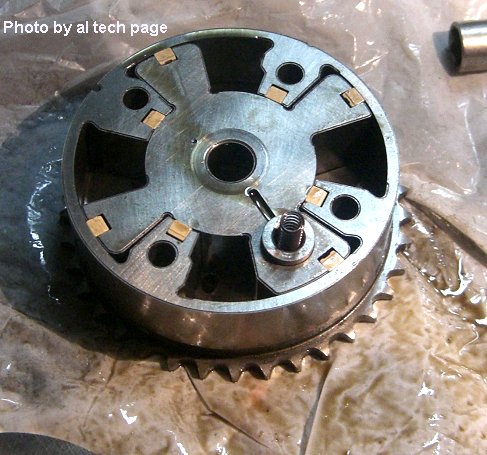
You need to realize something about the VVTi system and why many vehicles with it tend to be sensitive to the oil viscosity. The VVTi system works by using pressurized engine oil to fill a chamber in the VVTi Actuator Assembly and push the internal cam clockwise or counter clockwise.
The ECM calculates the desired amount that the VVTi system will change your camshaft timing and applies oil through passages in the camshaft to fill the actuator chambers. The system is programmed for a 5w-30 oil, so it assumes this is the oil in the vehicle; based on it's internal programming and tables it will calculate how long to keep the VVTi control valves open to allow oil in and drain it out. If the
flow of the oil is incorrect, then not enough or too much oil can enter/drain out and the timing will not be correct. If this occurs enough times or too drastically it will set a DTC for the issue, the direct symptom of this is the vehicle feeling as though it has poor performance; mainly because the valve timing is not correct.
Toyota's system is not as sensitive as I have seen in other vehicle brands that will pretty much pop a check engine light and not run correctly at all (some Chry-crap engines, particularly the Hemis with their cylinder deactivation may even run with completely dead cylinders because of this.) Oil flow is critical in this instance for letting the engine operate as designed, flow is affected by many variables, including what the actual oil is rated for.
What I keep having to point out to people and even my own co-workers is that oil is not the same as it was a few decades ago; it's far more complex today than it was back then. Going strictly by SAE viscosity rating is for the most part a worthless exercise if the manufacturer is calling for a specific type of oil (i.e. VW's 502.00, 504.00, or 507.00; Mercedes 229.5 or 229.51; ect.) Toyota is nice in that they are very easy on oils typically, just run the specified SAE & API rating (typically all Toyota engines call for an API of SN or higher) and they run just fine; unlike say putting a VW 504.00 (5w-40/5w-30 oil meant for VW/Audi Diesels) in a vehicle calling for VW 502.00 (5w-40/5w-30 oil meant for some gasoline VW/Audis), which will basically trash the engine.
Here's a post I made from a thread talking about using 0w-20 in our vehicles. I linked a couple interesting videos to watch about a static flow test at freezing temperature for various 5w-30 oils. It gets far more complicated as the oils warm up, but the basic idea here is to show that oils are not created equal and that 5w-30 barely means that at about -30°C it's a 5 weight and at about 100°C it's a 30 weight. Hell, in between those two measurements the oil might act as a completely different weight all together, it's not at all linear as you would expect.
Something else to note that people don't seem to realize is that not all 5w-30 oils are equal.
5w-30 simply means that at their measured extreme ranges the oil will be roughly those weights. At varying temperatures, depending on it's design it can be much different in between. This is why MANY VW 502.00 oils tend to show up as "5w-30" or "5w-40" but the rating is inconsequential to the oil specified by VW, because their 504.00 diesel oil is also often sold as a 5w-30 or 5w-40. But if you run that oil in a 502.00 spec'd vehicle you're going to have problems and vice versa because the additives and flow characteristics of those oils is vastly different.
What does all that have to do with running 5w-30, 5w-20, or 0w-20 in your vehicle? Well, the engine was designed for an SAE 5w-30 oil that meets API Rating SN or better. Running oil that deviates from specification means that the oil will not have the same flow characteristics that the engine was designed for and could cause issues in the near or far future (VVTi equipped vehicles can be more sensitive to non-specified oils, though most Toyotas seem to be more forgiving than other vehicles I have seen in that respect). The variance between a 5w-20 oil and a 5w-30 oil is not as straight forward as you would think; hell you could grab a half dozen 5w-30's and they'll all flow different than each other at varying temperatures and needs. Oil, like other fluids in the vehicle have gotten far more complicated than they were a few decades ago; back in the old days you'd just throw a thicker or thinner oil in the vehicle because you felt it would help, these days that could be inviting more issues than simply running what the vehicle was designed for.
Some interesting videos for similar 5w-30 oils being test for flow at cold temperatures:
https://www.youtube.com/watch?v=yX7RTLn_QCE
https://www.youtube.com/watch?v=uQ_vxdO_9nc
Note- That's just a static flow test at a cold temperature, in my post I am mainly referring to the dynamic flow of the oil; but the videos show the variance I am talking about at even a basic level.